


Click on the headline (link) for the full text.
Many more articles are available through the Energy Bulletin homepage
Big Idea: Raise Chickens
Rod Dreher, Texas Monthly
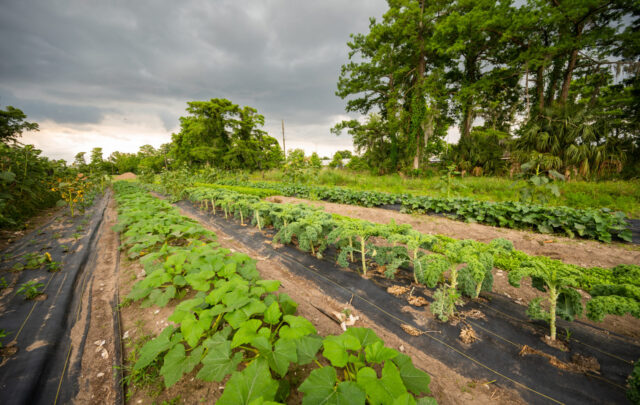
The economic catastrophe is a great excuse for Texans to dive into backyard gardening. Producing and preparing more of your own food is a hedge against shortages, but there’s also philosophical and spiritual liberation to be found in the new agrarianism. We’re all going to have to live poorer, but in some ways, that can mean living better. In Brooklyn, hipsters high on Michael Pollan are pouring their creative energy into building a homemade food culture. If they can pull that off in Babylon, why can’t we do it here in the Promised Land?
Dreher is a columnist for the Dallas Morning News and the author of Crunchy Cons.
(?? April 2009)
For more ideas from Texas Monthly, see: Texas Monthly Brainstorm
Recommended by EB contributor Jeffrey J. Brown (“westexas”) who writes that Rod Dreher is “one of the few Peak Oil aware MSM types who is willing to write about it.”
Corporate Couple Become Permaculture Activists (video)
Janaia Donaldson, Peak Moment
 Asking “wouldn’t it be wonderful if our city could feed itself?” Joe Leitch ponders everybody in Portland planting a chestnut tree. Pam Leitch relates how they both left the corporate world after reading the book “Your Money or Your Life”.
As educators on sustainability and resource depletion, permaculture and social justice, they soon learned of Peak Oil. Pam initiated bringing a Peak Oil resolution to the Portland City Council, who passed it unanimously in 2006 and set up a citizen task force to make recommendations for city action.
See a bit of the permaculture farm Pam and Joe are creating in residential Portland, cultivating fruit trees, vegetables and compost, rainwater catchment, and innovative neighborhood cooperation. If every city were full of such projects, maybe they really could feed themselves! (www.portlandpermaculture.com)
(5 March 2009)
Will recession spark global food crisis?
Paul Waldie, Globe and Mail
As farmers cut back on fertilizer, the impact could reverberate far beyond Potash Corp.’s bottom line
—
Like millions of farmers around the world, David Start is slashing the amount of potash he uses on his Ontario farm and the impact is rattling the agricultural industry.
Mr. Start has cut his potash use by 75 per cent because the price of the fertilizer is just too high. He hopes that by using a limited amount of potash he’ll still produce the same amount of corn, beans and wheat.
“If you can’t afford the input, then you have to start to strategize,” he said from his farm near Woodstock.
Farmers across Canada, the United States and elsewhere are making similar decisions and holding off on fertilizer purchases in the hope prices will fall. Their collective action has sent fertilizer sales into an unprecedented nosedive …
(24 April 2009)
Related from Lester Brown at Scientific American: Could Food Shortages Bring Down Civilization?.
Don’t throw out the biochar baby with the bathwater
Gloria Flora, Post Carbon Institute
When penning his stinging rebuke of biochar and all who support it, George Monbiot not only threw out the baby with the bath water but blew up the bathroom just to ensure no one ever considered bathing again. Admittedly he got in a few good blows but the rest just blows hot air.
open hands with biochar Biochar is simply the charcoal that remains after burning any kind of biomass in a closed oven with limited or no oxygen (pyrolysis). The gases and oils that are emitted are either captured for energy production later or co-fired in the process, maximizing the output of heat. The heat can create steam to drive a turbine, or a Stirling engine, which converts heat into motion to generate electricity.
Biochar is an effective soil amendment because of its resistance to breaking down, its significant porosity, and its affinity for water and nutrients. Holding moisture and nutrients in the root zone typically increases plant growth.
With little in the of way of emissions because of closed-loop burning, biochar captures 50 percent of the carbon in feedstocks, and when put in soil holds carbon there for hundreds, even thousands of years. Since it also attracts and holds gases, biochar’s been proven to reduce greenhouse gases from seeping out of the soil by 50 percent to 80 percent. Science, George, not magic.
Biochar does do most everything its proponents claim. But not everywhere and not every time. Biochar production and use is a work in progress; rather than a ‘simple solution’ as Monbiot mocks, it’s actually quite complex. Not all biochar has the same potential, not all ovens have the same functionality. Researchers across the globe are probing every cation exchange and benzene ring in biochar’s chemistry, every updraft in gasification ovens and characterizing biochar/soil interaction six ways from Sunday.
The jury’s still out on what makes the best biochar and what soils can be improved with its use.
(23 April 2009)


Comments
Welcome to the new Resillience commenting system!
We have moved from the former Disqus commenting system to a new system as of September 10, 2026.
We made this change because of privacy concerns regarding Disqus. It's also part of a set of changes to bring more services to the Resilience community under a single login: commenting, (coming September 2026), and online courses (coming 2027). Unfortunately, your old Disqus comments may not reliably link to your account in this new system. Please contact us if you have any questions or concerns.