


Click on the headline (link) for the full text.
Many more articles are available through the Energy Bulletin homepage
“Lunatic farmer” Salatin in new film, Food, Inc.
Joshua Hatch, USA TODAY
SWOOPE, Va. — The white metal sign over the desk at Polyface Farm reads, “Joel Salatin: Lunatic Farmer.”
Salatin is proud of that label. “I’m a third-generation lunatic,” he boasts while standing in his lush, green central Virginia fields. Brown chickens strut and peck around his feet. “I don’t do anything like average farmers do,” he says.
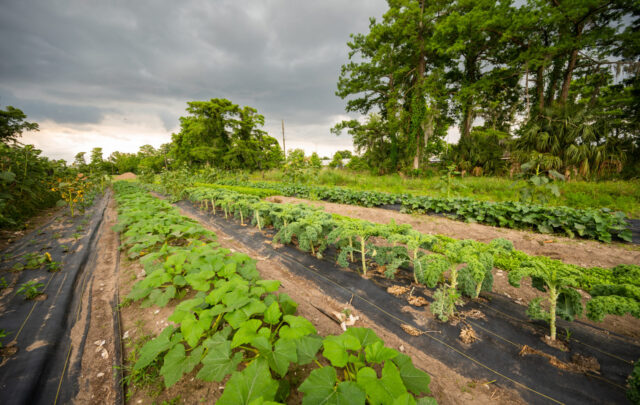
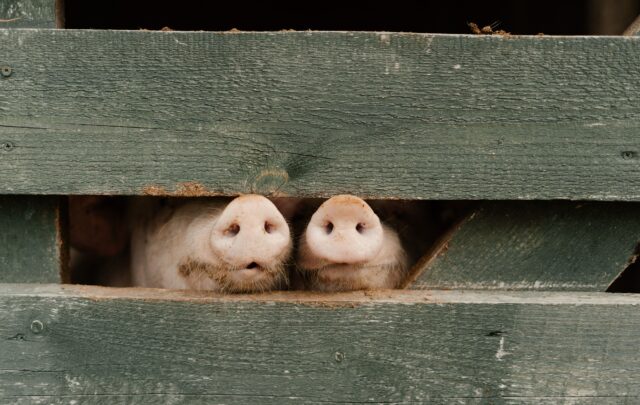
What the 52-year-old farmer does is let his cows feed on grass instead of corn or grain. He moves his cows to new fields daily. Flocks of chickens scratch around open fields, spreading cow droppings, eating flies and larvae, and laying eggs in the Salatin-built eggmobile. Hogs forage in the woods or in a pasture house where they root through cow manure, wood chips and corn. The resulting compost gets spread back over the fields, fertilizing the grass for the cattle. That completes the cycle.
“It’s completely counter to current agricultural wisdom,” he says. Current agricultural practices often encourage using technology — petroleum-based fertilizers, hormones and antibiotics — to spur growth and reduce costs as much as possible.
… Now the “lunatic” is about to come to the big screen in a documentary titled Food, Inc., directed by Robert Kenner. Due to open June 12 in New York, Los Angeles and San Francisco, the documentary takes a critical look at the American food system, contrasting industrial agribusiness with operations like Polyface.
(21 April 2009)
Eating can be energy-efficient, too
Elizabeth Weise, USA TODAY
With Americans looking to reduce their “carbon footprints,” food seems an obvious place to start.
Choosing a diet with a smaller carbon footprint means choosing foods that are processed in ways that emit less carbon dioxide — a heat-trapping “greenhouse” gas — into the atmosphere. In general, experts say, it breaks down to these guidelines:
•Cut down on meat. …
•Eat what’s in season. …
•Organic is good but not always best. …
(20 April 2009)
Shrinking Your ‘Cookprint’
Gerald T. Westbrook, Washington Post
Cookbook author Kate Heyhoe would like you to put down that organic avocado and chew on this morsel for a moment:
When it comes to being green, what you eat is not enough; how you cook it and what you cook with are equally essential to the green equation.
On the first page of her new book, “Cooking Green,” Heyhoe tells us right up that “appliances account for 30 percent of our household energy use, and the biggest guzzlers are in the kitchen.” (She refers to the oven as the “Humvee of the kitchen.”))
As we talk about reducing our carbon footprint on this Earth Day — and going forward — Heyhoe, who’s based in Austin, Tex., would like us to consider shrinking our “cookprint” as well – the energy it takes to prepare food every day. In the interview notes below, she explain what the heck that newfangled word means and how the electric kettle can be your new best friend.
(22 April 2009)
I like this approach. -BA
By/about author Kate Heyhoe:
Interview on Fox (video)
Cookbook profile: Cooking Green
New Green Basics
13 Breathtaking Effects of Cutting Back on Meat
Kathy Freston, AlterNet.
My first post on the effect of eating meat on the environment provoked quite a bit of discussion, so in honor of Earth Day, I thought I should follow up with more information about how our natural resources (e.g., air, water, and soil) are depleted and devastated by animal agriculture.
Of course, Earth Day is also a good time to remember that animal agriculture only exists at astronomical levels because people are purchasing vast quantities of chicken, beef, pork, and fish. The market for meat (i.e., we, the consumers) drives the depletion and destruction.
1. Excrement produced by chickens, pigs, and other farm animals: 16.6 billion tons per year — more than a million pounds per second (that’s 60 times as much as is produced by the world’s human population — farmed animals produce more waste in one day than the U.S. human population produces in 3 years). This excrement is a major cause of air and water pollution. According to the United Nations: “The livestock sector is… the largest sectoral source of water pollution, contributing to eutrophication, ‘dead’ zones in coastal areas, degradation of coral reefs, human health problems, emergence of antibiotic resistance and many others.”
2. Water used for farmed animals and irrigating feed crops: 240 trillion gallons per year — 7.5 million gallons per second (that’s enough for every human to take 8 showers a day, or as much as is used by Europe, Africa, and South America combined). …
(22 April 2009)
EB reader Shivani Arjuna writes:
I’m very surprised to see that on the same day you post about the Joel Salatin film you posted the anti-meat eating piece by the seriously underinformed Alternet writer. All the problems she lists are caused by Industrial Agriculture, not by eating meat. [Shivani posted more in a comment at the original article.]


Comments
Welcome to the new Resillience commenting system!
We have moved from the former Disqus commenting system to a new system as of September 10, 2026.
We made this change because of privacy concerns regarding Disqus. It's also part of a set of changes to bring more services to the Resilience community under a single login: commenting, (coming September 2026), and online courses (coming 2027). Unfortunately, your old Disqus comments may not reliably link to your account in this new system. Please contact us if you have any questions or concerns.