


Click on the headline (link) for the full text.
Many more articles are available through the Energy Bulletin homepage
For Young Japanese, It’s Back to the Farm
Hiroko Tabuchi, New York Times
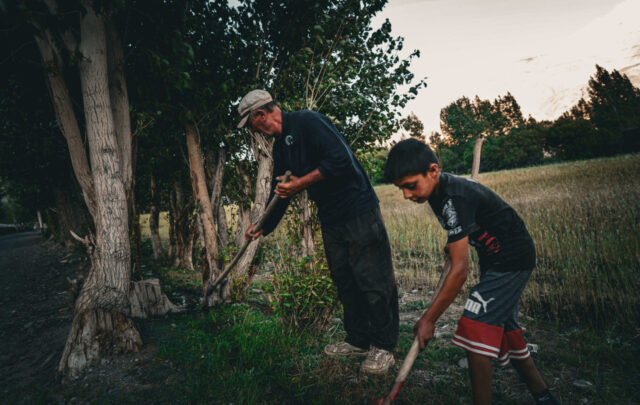
A motley group of unlikely farmers descended on the countryside here one recent Sunday, fresh towels around their necks, shiny boots on their feet.
“This is harder than it looks,” said Tatsunori Kobayashi, a spiky-haired janitor from Tokyo Disney Resort, as he tromped through a mustard spinach patch with a seed planter, irregular furrows stretching out behind him.
He is part of Japan’s 2,400-strong Rural Labor Squad, urban trainees dispatched to the countryside under a pilot program to put Japan’s underemployed youth to work tilling its farms.
Started last month as part of Prime Minister Taro Aso’s stimulus plans, the program stems from growing concern about both the plight of Japan’s younger workers and the dismal state of farms. In a play on words, the squad’s name in Japanese — Inaka-de-hatarakitai — is also its rallying cry: “We want to work in the countryside!”
The predicament of Japanese in their 20s and 30s dates back to the lost decade of the 1990s, when many failed to find good, stable work. Today, a disproportionate number endure low-wage jobs — a potential portent for America’s students and first-time job seekers plunging into a shallow job market in the United States.
… Like the French and the British, whose industrial societies have deep (if distant) rural roots, the Japanese have long romanticized life in the countryside. Only 4 percent of Japan’s labor force works in agriculture, but a reverence for the country’s rice-farming heritage is strong. Japanese children grow up with warnings not to waste a single grain of rice, out of respect for farmers’ labor.
(15 April 2009)
Industrial Hemp
Peter Rothberg, The Nation
It’s hard to talk about hemp without hippie jokes but the plant is actually one of the world’s most versatile crops, and has been used for centuries as a foodstuff, fabric, and fiber.
Grown in colonial New England and Virginia, hemp is today cultivated in every industrialized nation in the world other than the United States. While hemp seeds and oils can be safely consumed and hemp clothes can be bought and worn across the US, all of the hemp used to create these products must be imported from abroad.
Struggling American farmers have missed out on this growing market because, for over sixty years now, the Drug Enforcement Administration has grouped all varieties of the Cannabis sativa plant together in spite of the fact that industrial hemp contains only trace amounts of psychotropic THC–a fraction of what’s present in marijuana.
(15 April 2009)
Hemp is a traditional crob with many uses. Eliminating the ban is a winner for energy in multiple ways. -BA
7 Steps to Solving the Food Crisis
Eric Holt-Gimenez, YES! Magazine
… The solutions to the food crisis are those that make the lives of family farmers easier: re-regulate the market, reduce the power of the agri-foods industrial complex, and build ecologically resilient family agriculture. Here are some of the needed steps:
1. Support domestic food production.
2. Stabilize and guarantee fair prices to farmers and consumers by re-establishing floor prices and publicly owned national grain reserves. Establish living wages for workers on farms, in processing facilities, and in supermarkets.
3. Halt agrofuels expansion.
4. Curb speculation in food.
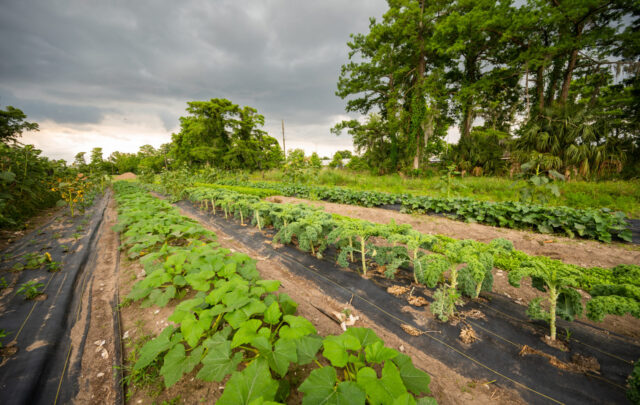
5. Promote a return to smallholder farming. On a pound-per-acre basis, family farms are more productive than large-scale industrial farms. And they use less oil. Because 75 percent of the world’s poor are farmers, this will address poverty, too.
6. Support agro-ecological production.
7. Food sovereignty: Recognize the right of all people to healthy and culturally appropriate food produced through ecologically sound methods and their own food systems.
(Spring 2009)
Also at Common Dreams.
In Praise of Peasants
Jim Goodman, Common Dreams
… La Via Campesina, the international movement of the small farmer celebrates April 17 as the International day of Peasant’s Struggles. The struggle against the evictions, oppression and marginalization of the farmer. The commemoration of the struggles of Cesar Chavez, the United Farm Workers and the indigenous peoples of the world.
Those who farm in the US distance themselves from the term peasant, thinking it connotes a tenant, sharecropper, a small farmer or mere farm worker. I am a small farmer, a peasant and proud of it. Remember, roughly half of the worlds population are farmers who work the land and tend livestock. While I am a minority in the US, worldwide, I am part of the majority.
The vast majority of the worlds small farmers and farm workers continue to struggle against trans-national agribusiness corporations (TNC’s) that control the worlds food supply, they struggle against oppressive government policies that wish to convert local farming to industrialized agriculture.
The peasant farmer struggles for the right to grow what they wish, for access to water, land and credit and for the rights of women farmers who grow most of the world’s food. They struggle for protection from subsidized foreign imports and to protect their crops from contamination by Genetically Engineered seed. They struggle to eliminate food from international trade agreements, because food is different, food is a human right, not a commodity.
US farmers are ambivalent to this struggle, but are we really so distant from it? Do we really control our own destiny? An Iowa farmer notes that in his state most farmers own about 20% of the land they farm, they are tenants.
(17 April 2009)


Comments
Welcome to the new Resillience commenting system!
We have moved from the former Disqus commenting system to a new system as of September 10, 2026.
We made this change because of privacy concerns regarding Disqus. It's also part of a set of changes to bring more services to the Resilience community under a single login: commenting, (coming September 2026), and online courses (coming 2027). Unfortunately, your old Disqus comments may not reliably link to your account in this new system. Please contact us if you have any questions or concerns.