


Click on the headline (link) for the full text.
Many more articles are available through the Energy Bulletin homepage
A Farm for the Future (video on peak oil and agriculture)
Rebecca Hosking, Natural World, BBC
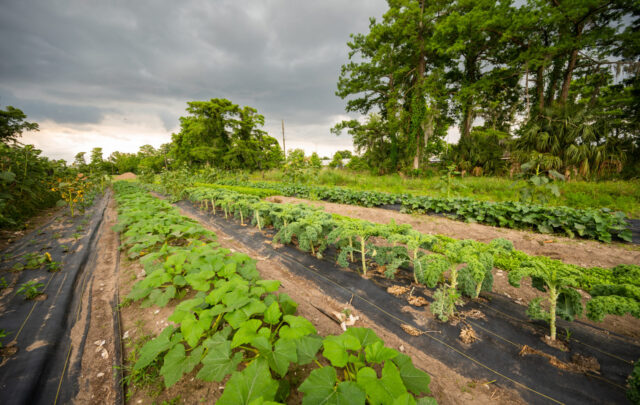
Wildlife film maker Rebecca Hosking investigates how to transform her family’s farm in Devon into a low energy farm for the future, and discovers that nature holds the key. With her father close to retirement, Rebecca returns to her family’s wildlife-friendly farm in Devon, to become the next generation to farm the land. But last year’s high fuel prices were a wake-up call for Rebecca.
Realising that all food production in the UK is completely dependent on abundant cheap fossil fuel, particularly oil, she sets out to discover just how secure this oil supply is. Alarmed by the answers, she explores ways of farming without using fossil fuel. With the help of pioneering farmers and growers, Rebecca learns that it is actually nature that holds the key to farming in a low-energy future.«
(March 2009)
An outstanding video on agriculture and peak oil has finally made it to the web. -BA
Planning for peak oil
Lia Leendertz, The Guardian Gardening blog
I am feeling a little apocalyptic. I have been to a talk, hosted by my local organic gardening group, about ‘feeding ourselves in post-peak oil Britain’. I am now pondering how to raise the cash for a small bothy off of the north coast of Scotland, a trailer full of tinned Spam and a couple of shotguns.
Long before we run out of oil, says Inez Aponte, from Transition Bristol, who gave the talk, we are going to reach ‘peak oil’, the point where oil production goes into terminal decline. From this point on (generally accepted to be by 2020, although many believe it is coming much sooner, or that it has recently been reached) oil becomes increasingly hard to find and expensive.
We are utterly dependent on oil for everything, including our food. The tractors that plough the fields, the fertilisers that prop up the soils, the aeroplanes and lorries that deliver it to the supermarkets, all will become unsustainably expensive to run in the not too distant future. Food riots and hungry, marauding mobs become a distinct possibility. Removing yourself from that system and finding a more sustainable alternative seems like a good way to go, and that is what Transition Bristol and other similar groups are hoping to do, on a grand scale. They are talking to councils about putting land aside for local food production, setting up community growing projects, and generally trying to wean us off our dependence on oil and make Britain more self-sufficient…
Peak Oil invades the Guardian gardening blog! Inez Aponte is a member of my local Transition group coreteam here in Bristol. Yes, we are proud. KS
(24 March 2009)
Why the foodie press needs to do better work on seafood
Tom Philpott, Gristmill
I recently finished Taras Grescoe’s wonderful, vitally important book Bottomfeeder: How to Eat Ethically in a World of Vanishing Seafood. Everyone who loves seafood and would prefer to be able to enjoy it in 20 years must read it.
Basic message: overfishing, pollution, climate change, and abusive aquaculture practices threaten to turn the oceans into vast pools of jellyfish, seaweed, slime and little else, within our lifetimes — unless we change things fast.
And changing things fast means being hyper-conscious about what seafood we eat. For Grescoe, that means focusing mainly on so-called “trash” fish — utterly delicious, low-on-the-food-chain stuff like anchovies and sardines. These magnificent creatures now get harvested en masse, to be ground into meal and oil to feed the ravenous maw of the aquaculture industry and its flavorless “salmon,” “shrimp,” etc.
… Of course, relying on individual consumer choice to save the globe’s fisheries is likely futile. The problems are so dire and immediate that we need concerted, global governmental intervention, as Grescoe makes clear in his conclusion.
Until that happens, there’s an urgent need to educate the public about the dismal state of the oceans. The effort starts with food journalists — people who have a direct impact on the public imagination about fish.
It seems to me that food journalists have generally failed at this task. I see examples all the time of foodie articles blithely extolling the culinary virtues of this or that fish species, without considering the impact of consuming them.
(23 March 2009)


Comments
Welcome to the new Resillience commenting system!
We have moved from the former Disqus commenting system to a new system as of September 10, 2026.
We made this change because of privacy concerns regarding Disqus. It's also part of a set of changes to bring more services to the Resilience community under a single login: commenting, (coming September 2026), and online courses (coming 2027). Unfortunately, your old Disqus comments may not reliably link to your account in this new system. Please contact us if you have any questions or concerns.