


Click on the headline (link) for the full text.
Many more articles are available through the Energy Bulletin homepage
A modest proposal for sustainable eating
Katrina Heron, San Francisco Chronicle
No one knows less about food than us. We, the American people, having inherited an extraordinary and unprecedented wealth of native and immigrant culinary traditions and knowledge – a kind of Alexandrian library of edible wisdom – no longer know how to feed ourselves.
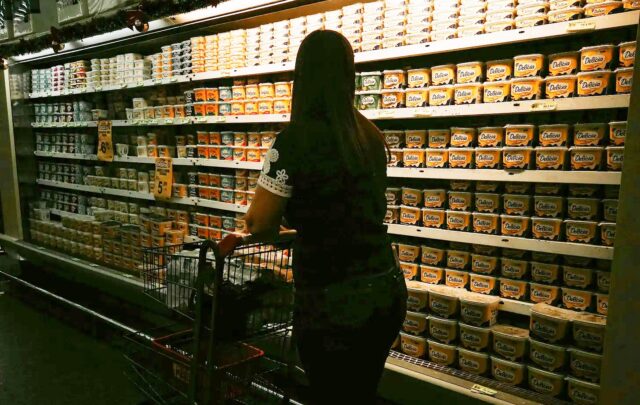
We love fast food, whether it’s from a drive-through or a grocery aisle, and it’s really bad for us. It’s bad for our health, our culture, the environment. In short, it’s unsustainable.
But our once-diverse food lore and skills have been scattered to the four winds. Our taste buds have been jammed on salt, sugar and every conceivable molecular permutation of corn. We literally eat petroleum-derived substances, and ask for more.
This is how we got here: Over the past couple of decades, processed food became more affordable, thanks to economies of scale, logistics and transportation developments, cheap oil and government crop subsidies, especially for corn, which quickly became the staple of our new national diet. This, in turn, further centralized farm operations, threatening the markets for small farmers and the preservation of a diverse food supply.
Essentially, the food economy was turned upside down, so that now, a cheeseburger and fries at a fast-food chain can cost less than a pound of sustainably and locally grown tomatoes.
Katrina Heron is chair of the board of Slow Food Nation and a director of the Chez Panisse Foundation.
(17 August 2008)
Saudi Arabia: Feeding its own people more cheaply
The Economist
WHILE Saudi Arabia sets up its first sovereign wealth fund, ordinary Saudis are more preoccupied with the rising price of food. This is prompting the Saudi government to consider a new direction for foreign investment: buying farms in the poorer parts of the world.
Inflation in Saudi Arabia is running in double digits, its highest rate for three decades. Last December, 19 prominent Saudi clerics gave warning that inflation constituted a crisis that would lead to social unrest and crime. Since then, the poorest Saudis have got poorer, with prices going up across the board because of rapid monetary growth. Food and housing costs are rising fastest.
The Saudis’ need to import food is sure to increase. For decades, their government has poured money into farm subsidies, producing some of the world’s costliest wheat. As a result, the largely desert country is self-sufficient in wheat, though it has to import rice. But the authorities have decided that, with a fast-growing population and mounting industrial needs, they cannot waste costly desalinated water in the wheat fields, so will phase out production by 2016.
(21 August 2008)
Food price rises push 14m to the brink of starvation
Tim Albone and Jack Malvern, The Times (London)
Rapidly rising global food costs have contributed to the worst hunger crisis in East Africa for eight years, with at least 14 million people at risk of malnutrition, aid agencies said yesterday.
In Ethiopia, the worst-affected country in the region, the Government said that 4.6 million people faced starvation, but aid agencies claimed that the true figure was closer to 10 million.
Drought has worsened food shortages, and Oxfam said that the number of acute malnutrition cases had reached its highest level since the droughts of 2000, when mortality rates peaked at more than six people per 10,000 per day. The official definition of a famine is more than four deaths per 10,000 per day.
Ethiopian farmers said that the crisis was caused by the absence of the Belg rains, which were due in February and March. “It’s really hard. People are eating whatever they can find,” said Gemeda Worena, 38, the tribal head of Fendi Ajersai, a village in southern Ethiopia where six children died in one week this month. “We hadn’t had rain for the last eight months. We had to buy water to save our lives, but now we have nothing.”
(18 August 2008)
Charles’s fantasy farming won’t feed Africa’s poor
Paul Collier, The Guardian
In response to 19th-century industrialisation the British aristocracy rediscovered medieval chivalry. The romantic fashion was in part comic: jousts, castles and armour. But it had darker consequences; the privileging of honour over intelligence, which became the bedrock vision of the English gentleman, had its apotheosis in the heroic stupidities of the first world war. Now, in response to modern agriculture, the aristocracy, with Prince Charles in the vanguard, has rediscovered organic peasant farming. Again it has its comic side: organic peasant produce is a luxury – you will find Duchy Originals, the prince’s crested brand, in the better supermarkets; and the lifestyle is for sale in his attractive model village of Poundbury. But my concern is its darker consequences. Organic peasant agriculture is a solution for the angst of affluence, but not hunger. Its apotheosis is the ban on GM crops…
(22 August 2008)
Paul Stamets: 6 ways mushrooms can save the world
Paul Stamets, TED via YouTube
Mycologist Paul Stamets studies the mycelium — and lists 6 ways that this astonishing fungus can help save the world.
(8 May 2008)
Slow burn for a cash crop (Costs spiral for cigar-leaf farms)
Gregory B. Hladky, Boston Globe
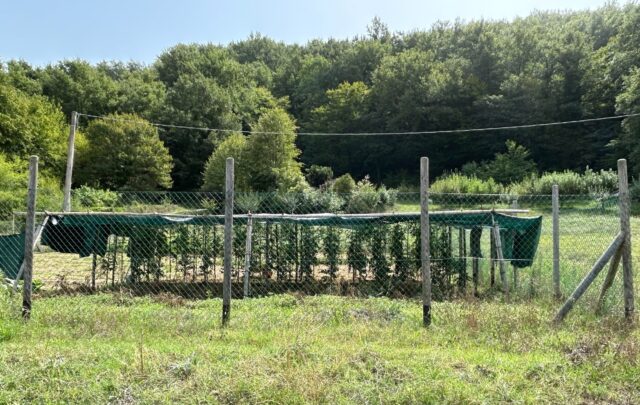
Under white tents in the Connecticut River Valley grows one of the most expensive agricultural commodities in the world – shade-grown tobacco used to wrap cigars bearing pricey names like Davidoff, Macanudo, and Montecristo.
Top-grade leaves can fetch upwards of $60 a pound, a bounty that has helped preserve thousands of acres of farmland in Tobacco Valley – a narrow band of river bottomland that runs from just south of Hartford to as far north as Montague, Mass.
… But tobacco is also one of the most expensive crops to produce. Worried farmers say those costs are going up fast, raising concerns that they will not be able to fend off developers’ bulldozers much longer.
The energy crisis has sent the price of diesel fuel for their tractors soaring. Propane gas used to help dry the leaves in the long tobacco sheds is way up, and organic fertilizer prices have nearly doubled in a year’s time.
(22 August 2008)


Comments