


Click on the headline (link) for the full text.
Many more articles are available through the Energy Bulletinhomepage
Iceland’s coalition struggles to survive protests
Valur Gunnarsson, The Guardian
Iceland’s government was last night scrambling to avoid becoming the first administration to be ousted by the global financial crisis, as ministers huddled to try and hold together a coalition in the face of some of the biggest protests the country has seen for 60 years.
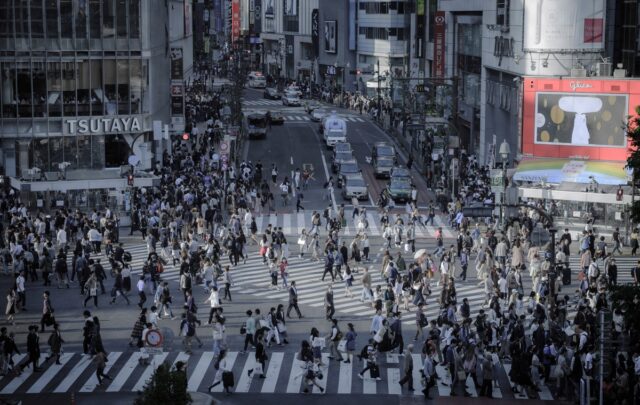
Protesters who have mounted vocal demonstrations in recent weeks against the collapse of the economy squared up to police, spattered parliament with eggs and paint, and at one point surrounded the prime minister’s car as he tried to leave his office.
They pelted Geir Haarde’s car with eggs and banged on the windows, shouting “resign”, in a sign of mounting exasperation at the government’s failure to prevent the economy from imploding under a mountain of billions of dollars of debt.
“These men bankrupted Iceland. It’s ridiculous that they continue as if nothing happened,” the writer Hallgrimur Helgason said. “I want the government to resign and an emergency government to be proclaimed, preferably made up of women. They can’t do worse than men.”
(22 January 2009)
Related:
Iceland protests grow, premier vows to stay on (Reuters)
The heat is on (Guardian), Eirikur Bergmann writes:
While Barack Obama was being sworn in to office on Capitol Hill yesterday, the people of Iceland were starting the first revolution in the history of the republic. The word “revolution” might sound a bit of an overstatement, but given the calm temperament that usually prevails in Icelandic politics, the unfolding events represent, at the very least, a revolution in political activism.
Four months after the collapse of Iceland’s entire financial system, no one has accepted any responsibility. Our currency has lost more than half its value, rampant inflation has already eaten up most people’s savings, property values have dropped by more than a third and unemployment is reaching levels never seen before in the life of our young republic. The fault is clearly shared between the business elite and the government, which failed to regulate the newly privatised financial sector, allowing a few incompetent and egotistical business tycoons to gamble with the nation’s fortune. And yet neither the government nor the bankers – who, by the way, seem to have disappeared into the cold thin air – see anything wrong with their own behaviour.
Renewing Renewables
Agence France-Press, via Gristmill
Germany said on Wednesday it expected more than 100 countries to attend a major conference in Bonn next Monday to establish a new international agency promoting renewable energy (IRENA).
Around half the countries represented would sign a founding treaty for the agency, which aims to boost the use of renewable sources of energy around the globe, Germany’s environment ministry said in a statement.
…The EU is aiming for use renewable sources for 20 percent of its energy needs by 2020. In Germany, 15 percent of electricity consumption comes from renewable sources of energy and the government aims to double this by 2020.
(21 January 2009)
Related:
Abu Dhabi pushes for renewable energy headquarters Chris Stanton and Vesela Todorova, The National
Abu Dhabi will become a founding member of a global organisation dedicated to renewable energy and aggressively push to have the group’s headquarters in the emirate, the chief executive of Masdar said on Wednesday.
Sheikh Abdullah bin Zayed, the Minister of Foreign Affairs, will lead a delegation to Bonn, Germany, next week to sign the founding treaty of the International Agency for Renewable Energies (Irena), said Dr Sultan al Jaber, the Masdar chief who will also attend.
“We will express our keen interest in hosting the Irena in Masdar City,” Dr al Jabar said on the last day of the World Future Energy Summit in the capital. “We are going to aggressively pursue that.”
Irena will compile information on renewables and co-ordinate technology sharing between member states. Irena organisers say that about 40 countries are expected to sign the treaty, including Germany, Spain and Denmark.
Lessons from the Russian Gas Dispute
Jason Bush, Business Week
The acrimonious three-week natural gas dispute between Russia and Ukraine, which left millions of customers in Central and Eastern Europe freezing without gas for heating, is now finally over. Under a face-saving compromise finally hammered out on Jan. 20, Russia’s Gazprom (GAZP.RTS) has achieved its central objective of making Ukraine pay “market prices” for its gas, which will be linked to the European average. But to sweeten the pill, Ukraine has notched a 20% discount during 2009. Other terms of the deal include a one-year freeze on transit fees charged by Ukraine and the elimination of RosUkrEnergo, a controversial trading outfit that has acted as intermediary in the Russia-Ukraine gas trade.
…In any case, the long-term impact of the dispute will go far beyond the immediate implications for energy relations between Russia and Ukraine. Despite similarities with the previous bust-up in 2006, Western energy experts emphasize the latest dispute has been far more serious, with lasting implications for the European energy market. “This has been the most serious security event in relation to gas that has ever happened in Europe,” says Jonathan Stern, director of gas research at the Oxford Institute for Energy Studies. “It cannot be allowed to happen again.”
Exactly what the long-term implications will be are still rather hard to fathom. It doesn’t help that many fundamental facts about the dispute remain clouded in controversy—including the key question of who was ultimately responsible for cutting off Europe’s gas. While Russia accuses Ukraine of blocking Russian gas supplies to Europe during the dispute, the Ukrainians say that it was actually the Russians who turned off the taps.
…Getting to the bottom of such matters has more than purely academic significance. For one thing, the threat of legal action by Gazprom’s European customers remains real—potentially exposing the company to huge claims for damages. The debate about responsibility will also rumble on because it matters for the future of European energy policy. “If it’s a Ukraine problem, then pipelines bypassing Ukraine are one answer to it. If, however, it’s a Russia problem, it doesn’t matter where the pipelines [from Russia] go,” says Oxford’s Stern.
…But experts warn that without radical new steps to enhance Europe’s energy security, the latest crisis to hit Europe’s energy supplies is unlikely to be the last.


Comments
We changed commenting systems on September 10, 2026 as part of a site-wide functionality and security upgrade. Your past comments have not disappeared, and you can still log in with your old Disqus account credentials if you wish. Contact us with any questions.