


Click on the headline (link) for the full text.
Many more articles are available through the Energy Bulletin homepage
Social Movements 2.0
Brendan Smith, Tim Costello & Jeremy Brecher; The Nation
On September 27, 2007, the world experienced its first virtual strike. In response to a wage dispute, IBM workers in Italy organized a picket outside their company’s “corporate campus” based in the 3-D virtual world of Second Life. According to a report in the Guardian, workers “marched and waved banners, gate-crashed a [virtual] staff meeting and forced the company to close its [virtual] business center to visitors…. The protest, by more than 9,000 workers and 1,850 supporting ‘avatars’ from thirty countries,” included a rowdy collection of pink triangles, “sentient” bananas and other bizarro avatars.
While the strike was playful, it was also buttressed by careful planning and organization.
… Stories like this offer a glimpse into the powerful potential of the emerging Web 2.0 world, a place where workers and others use social networking tools to quickly reach across national and workplace borders, outflank bosses and politicians and wield collective power. But right now, the type of virtual solidarity seen in the IBM strike remains more promise than reality. People are willing to sign petitions, donate money, trade information and join in political discussions online, but translating these activities into solidarity built on trust and a willingness to take economic or physical risk on another’s behalf is exceedingly rare.
As a result, political action online has been largely relegated to electoral politics and tepid humanitarianism: it’s been great for raising money for tsunami relief and mobilizing voters, but pretty flaccid when it comes to wielding social movement power.
… What’s New and What’s Not
Social networking is not new and not about technology. It’s not about MySpace, Facebook or YouTube; instead it’s about what all of us do every day: kindle and expand networks of friends, family, co-workers, etc. In the political context it’s about finding and building communities of interest, linking common struggles and acting collectively. Facebook and other online social networking tools are just a new way for people engage in this age-old activity.
But at the same time, the online universe is not simply another place for people to congregate, circulate a petition, debate politics or mail out a newsletter. Nor is it simply a new technology like cable television–merely bringing more channels into the home. Instead, the web is increasingly looking like the invention of the printing press, which radically changed the lives of even those who could not read, by spurring the Protestant reformation and scientific revolution.
During the past several years, the Internet has evolved from its first generation as a static information portal (e.g. websites) to what is now referred to as Web 2.0, marked by the explosion of user-generated and interactive content.
(15 January 2009)
One cord per acres: thoughts on sustainability
John Weber, SunWeb (blog)
Coming to Minnesota in 1973 as a back-to-the-land hippie, I had a lot to learn. Born and raised in Florida, we thought we would die when it got below 45 degrees F. My plan was to heat and cook with wood which I did as a sole source for over 30 years.
The small town (pop. 325) that I lived in while I built my house had a storefront where all the old men would gather. I spent time with the fellows asking them how they did all sorts of things, quite an education. One sample of sustainability concerned the heating with wood. The rule is – one cord of wood (4’x4’x8’) can be gotten from one acre of forest. So if you need 10 cords of wood a year for heating and perhaps cooking then you need 10 acres of forest.
Conceptually, you could start cutting at the front of these 10 acres and by the time you cut to the other end, the process would be ready to start again. Now this is not how it would be done. It would be done with a knowledge of culling the trees and taking any dead fall throughout the ten acres. It would honor the processes of tree ecology. The type of forest would also determine the acreage needed as would the year to year growing seasons. It is clear to me sustainability is a living process and a process of living.
The one cord to one acre example illustrates some of the criteria for sustainability. I have added a few additional. The future may depend on what we mean by sustainable. There are important questions to be asked:
- When we use something from the earth can it regenerate itself as a tree can or is it non-renewable?
- When we use something from the earth how long does it take the earth to regenerate itself as in rotational farming or the example of acres of trees?
- When we use something from the earth how long does it take the earth to assimilate the waste such as computer chemicals and copper processing?
- When we call something “renewable” does that include all the fossil fuels used to create the devices to capture the sun or wind?
- How large a geographical area does the sustainable definition include?
- Is there a holding or carrying capacity to a geographic area and are we willing to discuss it?
- . How should we value non-renewable resources as petroleum from which tractor and ambulance power comes as well as many medicines?
- All life depends on energy. We need an accounting method to determine the value of how we use energy? Instead of payback in money should we assess a payback in energy for any energy devices such as wind and solar collectors?
We are at a crossroads for the future. This requires hard questions and selfless honesty. We need to be clear about what we mean about sustainability. Faulty definitions create false hopes and dead end decisions.
(9 January 2009)
How the city hurts your brain
Jonah Lehrer, Boston Globe
And what you can do about it
—
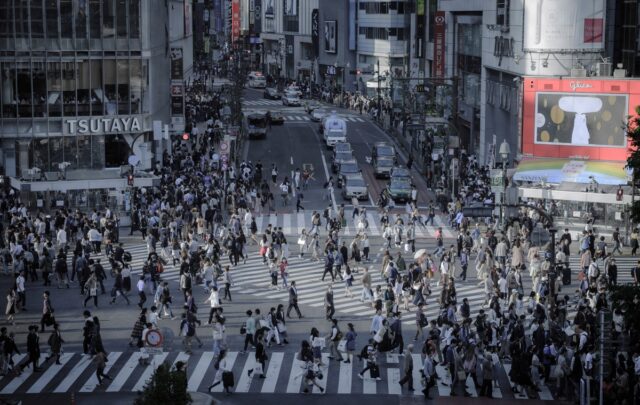
… scientists have begun to examine how the city affects the brain, and the results are chastening. Just being in an urban environment, they have found, impairs our basic mental processes. After spending a few minutes on a crowded city street, the brain is less able to hold things in memory, and suffers from reduced self-control. While it’s long been recognized that city life is exhausting — that’s why Picasso left Paris — this new research suggests that cities actually dull our thinking, sometimes dramatically so.
“The mind is a limited machine,”says Marc Berman, a psychologist at the University of Michigan and lead author of a new study that measured the cognitive deficits caused by a short urban walk. “And we’re beginning to understand the different ways that a city can exceed those limitations.”
One of the main forces at work is a stark lack of nature, which is surprisingly beneficial for the brain. Studies have demonstrated, for instance, that hospital patients recover more quickly when they can see trees from their windows, and that women living in public housing are better able to focus when their apartment overlooks a grassy courtyard. Even these fleeting glimpses of nature improve brain performance, it seems, because they provide a mental break from the urban roil.
This research arrives just as humans cross an important milestone: For the first time in history, the majority of people reside in cities. For a species that evolved to live in small, primate tribes on the African savannah, such a migration marks a dramatic shift.
(2 January 2009)
Recommended by Big Gav.


Comments
Welcome to the new Resillience commenting system!
We have moved from the former Disqus commenting system to a new system as of September 10, 2026.
We made this change because of privacy concerns regarding Disqus. It's also part of a set of changes to bring more services to the Resilience community under a single login: commenting, (coming September 2026), and online courses (coming 2027). Unfortunately, your old Disqus comments may not reliably link to your account in this new system. Please contact us if you have any questions or concerns.