


Click on the headline (link) for the full text.
Many more articles are available through the Energy Bulletin homepage
Don Quixote and Exxon’s Contrarian Gamble
Steve LeVine, The Oil and the Glory
Does Exxon Mobil know something that the rest of Big Oil doesn’t? Or is Exxon on a noble but ultimately quaint and quixotic quest for the old days?
Around the world, Big Oil has been knocked back on its heels by the assertiveness of state-owned oil companies that are both developing their own fields, and competing vigorously in auctions for the rights to oil and gas reserves elsewhere. The upshot is that major oil companies look to be on the verge of a long, unpleasant (for them) decline, with the result that some of them — such as Italy’s Eni — are scrambling to adapt by forming alliances with the state-owned companies.
Exxon is not only refusing to play along with this scenario, but is in battle around the world in a claim that the prior rules hold.
(6 December 2007)
David Fleming’s New Book Provides Death Knell for Nuclear Power.
Rob Hopkins, Transition Culture
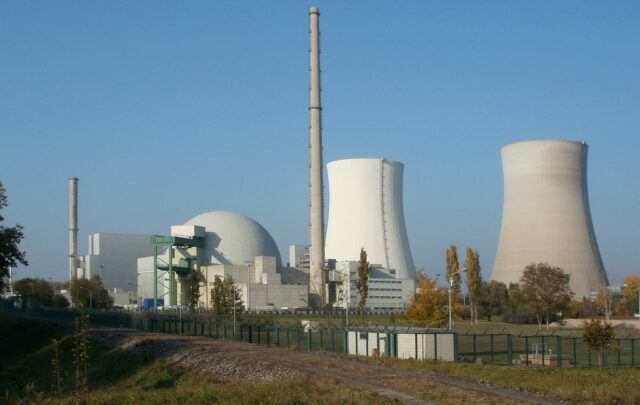
David Fleming, creator of the concept of Tradeable Energy Quotas and author of the forthcoming and rather wonderful “Lean Logic”, has just published The Lean Guide to Nuclear Energy, which is a thorough demolition of the case for nuclear power being a solution to peak oil. and climate change. You can down load the pdf. for free here or you can order printed copies here. Like much of David’s writing, it patiently yet assertively builds its arguments, backed up by exhaustive research, to build a case against nuclear power that looks pretty much bulletproof to me. The report’s key findings are;
- The world’s endowment of uranium ore is now so depleted that the nuclear industry will never, from its own resources, be able to generate the energy it needs to clear up its own backlog of waste.
- It is essential that the waste should be made safe and placed in permanent storage. High-level wastes, in their temporary storage facilities, have to be managed and kept cool to prevent fire and leaks which would otherwise contaminate large areas.
- Shortages of uranium – and the lack of realistic alternatives – leading to interruptions in supply, can be expected to start in the middle years of the decade 2010-2019, and to deepen thereafter.
- The task of disposing finally of the waste could not, therefore, now be completed using only energy generated by the nuclear industry, even if the whole of the industry’s output were to be devoted to it. In order to deal with its waste, the industry will need to be a major net user of energy, almost all of it from fossil fuels.
- Every stage in the nuclear process, except fission, produces carbon dioxide. As the richest ores are used up, emissions will rise.
- Uranium enrichment uses large volumes of uranium hexafluoride, a halogenated compound (HC). Other HCs are also used in the nuclear life-cycle. HCs are greenhouse gases with global warming potentials ranging up to 10,000 times that of carbon dioxide.
- An independent audit should now review these findings. The quality of available data is poor, and totally inadequate in relation to the importance of the nuclear question. The audit should set out an energy-budget which establishes how much energy will be needed to make all nuclear waste safe, and where it will come from. It should also supply a briefing on the consequences of the worldwide waste backlog being abandoned untreated.
- There is no single solution to the coming energy gap. What is needed is a speedy programme of Lean Energy, comprising: (1) energy conservation and efficiency; (2) structural change in patterns of energy-use and land-use; and (3) renewable energy; all within (4) a framework for managing the energy descent, such as Tradable Energy Quotas (TEQs).
Get a copy, have a read. If you think Fleming’s analysis is wrong, tell us about it here. I think this book does us all a great service in setting out the nuclear case in the light of peak oil and climate change, and also in the light of ‘peak uranium’.
(7 December 2007)
Carbon’s rocky road
Olga Galacho, Herald Sun (Australia)
…So far, extracting naturally occurring carbon dioxide and methane from a gas well has been successful.
Not so easy has been transporting it 2km overland to a compression chamber and then injecting it down a 2km pipe through layers of rock into a depleted natural gas layer.
The last thing the technology needs now, Dr Cook says, is the removal of investment incentives such as the CET.
“Now we don’t have any triggers other than emissions trading,” Mr Cook said. “CCS needs more than that. The previous government certainly recognised CCS had a role to play.”
Mr Cook says although the new government had promised to spend $500 million in a Clean Coal Fund to assist the technology’s progress, there was still uncertainty about funding criteria.
“There is lots of churn at the moment with the change in government . . . it is quite hard for us . . . very unclear.”
Dr Cook, who will share the Nobel Peace Prize with Al Gore and hundreds of other scientists because he was a lead author of an IPCC paper on CCS, is incredulous that geosequestration has been left off the main agenda in Bali.
“It should have been an important part of the discussion, especially because of the way this technology could be applied in China and India.”
For coal industries and electricity generators that depend on fossil fuels, geosequestration is the holy grail.
The theory behind it is that carbon dioxide can be harvested before it enters the atmosphere and then put under enormous pressure to turn it into a liquid, before being injected deep into the earth.
Trapped between supposedly impenetrable layers of rock where oil and gas once flowed, it ought to be stored safely and indefinitely.
However that theory has not been tested, as CCS critics often remind the coal lobby, and even if it were to be demonstrated after billions of dollars are spent on creating the technology, it could take another 20 years before it becomes a commercial proposition.
If the climate change science is right, and greenhouse gases need to start declining soon, then CCS will be too little too late to be considered a meaningful form of mitigation.
Former head of the Australian Coal Association Ian Dunlop, who now is deputy convener of the Australian Association for the Study of Peak Oil, said he believed “we have probably left it too late for CCS”.
At the same time he warns that government policy should not pick winners and that there is merit in continuing to encourage research into the technology, if only just to prove whether it will succeed or fail.
(16 December 2007)



Comments
We changed commenting systems on September 10, 2026 as part of a site-wide functionality and security upgrade. Your past comments have not disappeared, and you can still log in with your old Disqus account credentials if you wish. Contact us with any questions.