


Click on the headline (link) for the full text.
Many more articles are available through the Energy Bulletin homepage
Hundreds protest in Myanmar over fuel price hike
Thomson Financial, AFX via Forbes
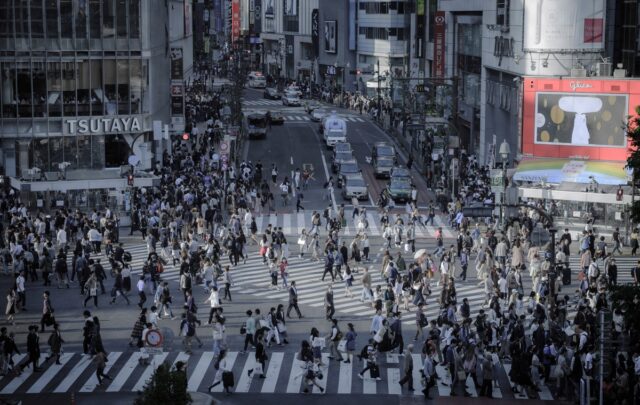
Pro-democracy activists led hundreds of people in a rare march through Myanmar’s main city of Yangon on Sunday, in protest against an enormous hike in fuel prices last week.
Myanmar’s ruling junta doubled key fuel prices on Wednesday without warning, leaving many urban workers unable to afford the cost of simply getting to their jobs.
(19 August 2007)
Myanmar arrests dissidents, squashes fuel protests
Aung Hla Tun, Reuters
Myanmar’s military junta arrested 13 top dissidents and deployed gangs of spade-wielding supporters on the streets of Yangon on Wednesday to halt protests against soaring fuel prices and falling living standards.
Armed police also took up positions across the country’s biggest city alongside truckloads of men from the army’s feared Union Solidarity and Development Association (USDA). Many were carrying brooms and shovels, pretending to be road sweepers.
Despite the clampdown and the overnight arrest of the prominent activists, 100 people staged an hour-long march before being dispersed.
(22 August 2007)
Behind Burma’s Fuel Price Rise (Commentary)
Alfred Oehlers, Irrawaddy News
The fuel price increase in Burma last week has been greeted by shock, amazement, and despair. The question many are asking is, how can this be?
How can a country so rich in gas and oil be unable to provide its own citizens with affordable supplies? How can a government raise prices such a huge extent, especially when it is selling gas for what must be an incredible profit?
So far, various explanations have been put forward by analysts. Some have suggested the economic mismanagement of the regime is largely to blame, while others have pointed to an emerging foreign exchange and budgetary crisis as reasons behind the move.
Some others have warned the political machinations of the regime should not be underestimated. …
All these may perhaps be true. But to fully understand the pressures behind the increase in fuel prices, it is also important to consider some deeper structural characteristics of the Burmese economy and oil and gas sector.
To begin, one bold fact: Burma is essentially a diesel-powered economy. We see this in the buses, trains and trucks that rumble around the country. We also see this in the dilapidated power plants that sometimes generate electricity. Most of all, we see this in the ubiquitous portable generators that exist in nearly every home, factory and shop that can afford one.
For a long time now, diesel prices have been kept artificially low through subsidies. And as demand for diesel has continued to grow in tandem with an expanding economy, the amount spent on these subsidies has similarly expanded, posing an ever increasing strain on the regime’s finances.
In an attempt to increase the supply of diesel, the regime attempted to encourage greater crude oil output from the domestic oil industry in recent years. This has not met with great success, as onshore wells are declining in productivity (the “peak oil” phenomenon) and there are few, if any, offshore wells.
…Again, one might speculate on any number of reasons for the timing and size of the price increases. But sources suggest there may be at least one nefarious motive.
For some time, the regime has been considering a privatization of the fuel distribution system in Burma. Under the terms of this, retail outlets for diesel, gasoline and gas products will be sold to a private company. The company would buy fuel products wholesale from the government then sell them to the public for a profit through this retail network.
(22 August 2007)
Fuel price policy explodes in Myanmar
Larry Jagan, Asia Times
Public protests have broken out across Myanmar’s old capital Yangon after the military government unexpectedly removed fuel-price subsidies, resulting in a 500% spike in rationed fuel prices.
The shock policy is part of the government’s emerging economic and financial reform program and notably coincided with a high-level mission to the country of International Monetary Fund (IMF) and World Bank officials, who have long pressed the junta to reduce or abolish a range of price subsidies.
The move has shocked the country’s already fragile economy and, depending on the eventual scale of the protests and severity of the government’s response, could have grave implications for political stability. Significantly, the spiraling acts of civil disobedience have been led by former political prisoners known as the 88 Generation Students Group, who nearly 20 years ago as student leaders led the pro-democracy demonstrations the junta cracked down on with an iron fist in 1988.
Myanmar’s ruling junta, known as the State Peace and Development Council (SPDC), has for decades maintained strict social controls – though security forces have loosened their grip in certain areas of Yangon since abruptly moving the national capital to a newly built city known as Naypyidaw in November 2005. The numbers joining the marches has grown since. More than a hundred people joined the first demonstration on Sunday demanding that the government intervene to lower fast-rising fuel and food prices.
More than 300 people took to the streets to protest on Wednesday, according to witnesses, and news reports indicate the rallies continued on Thursday. The junta has responded through stick-wielding vigilantes, including members of the pro-government Union Solidarity and Development Association. Some protesters have been beaten and whisked away in unmarked cars, according to witnesses who spoke with Asia Times Online.
“The government has raised fuel prices without giving any prior notice, and due to this hike, all the people are suffering,” said one protester at Sunday’s march.
…There are preliminary indications that the subsidy policy is seizing up the economy. Prices for compressed natural gas, which the government had in recent years promoted for use in commercial vehicles, have increased fivefold, while the price of basic commodities has skyrocketed in line with the higher transportation costs. Bus fares and taxi charges doubled almost immediately in urban centers such as Yangon, Mandalay and Moulmein, resulting in drastically reduced passenger loads.
According to a Yangon-based financial analyst who requested anonymity over concerns of possible government reprisals, the increase in bus fares will disproportionately affect the urban poor.
(24 August 2007)
UPDATE (Aug 23). Just posted. Thanks to Leanan at TOD.


Comments
We changed commenting systems on September 10, 2026 as part of a site-wide functionality and security upgrade. Your past comments have not disappeared, and you can still log in with your old Disqus account credentials if you wish. Contact us with any questions.