


Click on the headline (link) for the full text.
Many more articles are available through the Energy Bulletin homepage
Mexican Company Predicts End of Oil
Prensa Latina (Cuba)
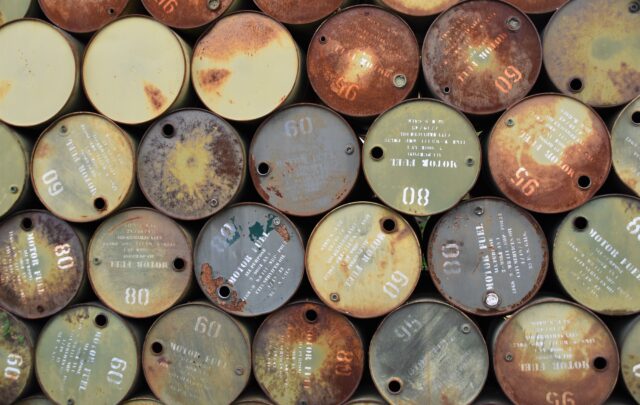
Petroleos Mexicanos (PEMEX) announced that oil reserves may run out in seven years.
“Supplies of this economically exploitable resource are running out,” informed a report sent by the state owned company to the United States stock market.
Until December 31, 2005 the report says proven reserves were about 8.978 billion barrels, while yearly production was 1.322 billion tons. If this rhythm continues oil will run out in the time stipulated..
El Universal newspaper reports that experts of the PFC Energy Advisory company based in Washington pointed out that investments for PEMEX exploration is also running out of time.
Even if heavy investments were made now, new oil fields would take from six to eight years to be ready and, consequently, Mexico may have to import oil to satisfy the internal market, it warned.
The newspaper quotes Carlos Ramirez, PEMEX spokesman as saying that if necessary investments were made, this would provide another 2.9 more years to what is foreseen with the proven developed reserves.
The director of the state owned company, Jesus Reyes, insisted that these are difficult moments due to a reduction of production in Cantareli, the main oil field in the country.
(27 July 2007)
Bombing of Mexican Pipelines Puzzles Security Experts (Audio and text)
Greg Flakus, Voice of America (VOA)
The July 5 and July 10 bomb attacks on natural gas pipelines in central Mexico led to the temporary shutdown of factories in several industrial cities and raised fears about the country becoming a target for terrorists. A small leftist insurgent group took responsibility for the attacks, but security experts are still puzzled over the incident and worry about possible future acts of sabotage. VOA’s Greg Flakus has more from Mexico City.
—
At first, some thought the explosions may have been caused by accidents, but investigators at the bombing sites in north-central Mexico found evidence of sophisticated explosives, and a leftist insurgent group from southern Mexico, the Popular Revolutionary Army (EPR) claimed responsibility. President Felipe Calderon pledged to protect the infrastructure of the state-owned energy company, Petroleos Mexicanos, called Pemex for short, and he dispatched military units to patrol various pipeline routes.
But the attacks remain a mystery, and speculation continues as to who was really responsible. The EPR had never ventured that far north before and never appeared to have access to the explosives and bomb-making skills that were employed in these attacks.
(26 July 2007)
Domestic Demand: The Main Engine of Saudi Arabia’s Growth
Arab News, Menafn
Saudi Arabia’s economic boom is all set to continue after four years of strong growth driven by rising oil revenues, which have stimulated massive project spending. However, domestic demand will take over as the main engine of growth for the period 2007-2010.
According to a report by Jadwa Investment of Riyadh, which was released on Tuesday, megaproject implementation and broad liberalization will push real non-oil private sector growth up to an average of nearly 8 percent with growth will be fastest in manufacturing, communication, finance and construction.
…The report said despite dollar’s recent weakness Saudi Arabia will maintain the riyal’s exchange rate against the US currency. Saudi Arabian Monetary Agency (SAMA) has consistently stated that it has no intention of altering the existing exchange rate arrangement and its vast stock of foreign assets gives it the ammunition to successfully defend the peg from any speculation.
Therefore, while there may be occasional speculative pressure on the peg, it will not change. As a result Saudi interest rates will continue to be broadly in line with corresponding rates in the US.
The report said since Saudi Arabia joined the World Trade Organization (WTO) it has very little direct effect on economy. This will change. As the sustainability of the current period of strong economic performance becomes evident, more and more foreign companies will enter into the Kingdom.
Manufacturing is forecast to be the fastest growing sector over the period to 2010 in Saudi Arabia. This will be led by petrochemicals…
(26 July 2007)



Comments
We changed commenting systems on September 10, 2026 as part of a site-wide functionality and security upgrade. Your past comments have not disappeared, and you can still log in with your old Disqus account credentials if you wish. Contact us with any questions.