


I heard about a village two hours from Chongqing City with old city walls surrounding smoke stained wooden beamed homes, cobble stone streets and stone carvings chiseled into cliff faces 400 years ago. Along the way to Lai Tan, I wanted to gaze out of bus windows and simply compare the differences between Chinese and western methods of fossil fuel use and human power, but first I had to get to the bus station.
Streets in most major Chinese cities are wide and traffic-packed, especially in Chongqing. The only way to cross a street during rush hour is to use the pedestrian bridges and underpasses. Bustling underground walk ways are now full of vendors selling everything from socks to flowers to baskets of puppies to take home as pets. Modern China is racing ahead with mini-capitalism, the land of set-up anywhere businesses. If you have anything extra to sell that you have grown, made, caught or traded, you can go to any place with heavy foot traffic,–sidewalks, underpasses or pedestrian bridges—and set up shop. Set up a stand on a blanket, a piece of cardboard, or a newspaper, and those aren’t even essential; bare ground counts too. Anything goes in modern Chinese sales. Rounding a corner at the escalator leading back to the street level, I spotted a smiling one toothed man with two turtles on strings, a guy playing guitar for tips, and the lady selling Armadillo Counter Poison Pills who continued following me all the way to the bus station ticket counter.
At the bus station I was greeted by what is known as a Bang Bang; these are porters that use bamboo poles to carry goods to or from the station. Their balanced loads on each end of the poles make them appear as large scales from a distance. These guys are all around the city; whenever something needs to be moved or transported that is less than the size of a large refrigerator, call the Bang Bang. It’s a throwback to the days when cargo ships landed here and freight needed to be moved on and off ships. Fast forward to 2007: Jiulong Port, the largest port on the upper reaches of the Yangtze, handles containers and freight in the millions of tons per year. Within the bus station grounds outside, vehicles are forbidden, bags and boxes are walked from place to place by the Bang Bang. I was trying imagine the amount of fuel saved city-wide by the use of foot deliveries, multiplied by thousands of daily deliveries.
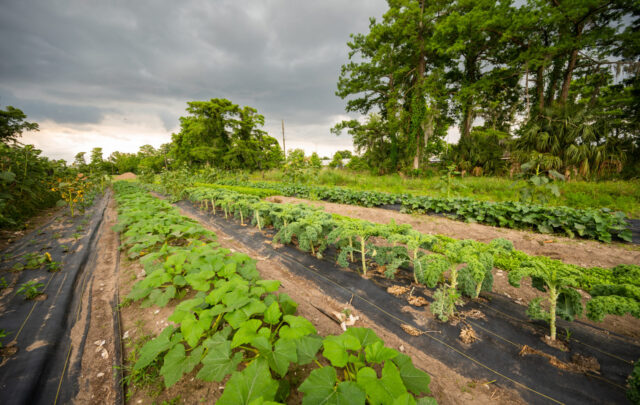
Speeding down the brand new four-lane highway at 100kmh I saw plenty of farm workers harvesting heads of cabbage. In the western world a truck would follow the workers as they proceeded through the fields to collect the harvest, but here the truck stays parked and the produce is walked to the truck. Everything is brought to a central area. That truck stays in the same spot until full—engine shut off instead of idling and moving–and then heads to the wholesale market. The harvesting, planting and fertilizing are all done by hand with dozens of workers in each field at a time. Pesticides and fertilizers are applied by hand walking with a pack sprayer on the back, a completely manually powered pumping system. Irrigation is similar with workers loading water into buckets of various sizes and carrying it to the plants or pouring it into the irrigation troughs. Again most of the fuel usage is taken out of the farming process. I only ever saw tractors called tuo-la-ji–a two wheeled machine doing work in place of humans–and that was plowing the fields.
As I was passing one of the millions of construction sites in China, I stopped to check out the Chinese style of demolition and re-cycling. One front end loader is used to break the walls and foundations or very un-movable pieces into smaller workable segments where the work is all done by hand from there. Men and women with bamboo handled sledgehammers break the cement, brick and tiles from the metal re-bar hidden side. The metals are removed on the premises, separated on premises and loaded onto various trucks waiting at the entrance of the construction site. Work is continually in progress, where pieces of various metals were tossed into ever growing piles of multi-colored scrap. Most striking was the pile of rebar that looked like a giant bird’s nest that could have comfortably accommodated two very large elephants. Each truck collected different metals and scrap. A small pick-up trucks was full of wires, another full of pressure gauges and valves, yet another full of aluminum window frames. The steel collection truck was loaded with pipes, re-bar and beams. All the while a continuous line of workers carrying baskets of cement debris and metal-less chunks of bricks, heaved their contents into a waiting flatbed for non-metal debris only. My immediate thoughts were of the comparison to western-style demolition at a construction site and the amount of fuel each society uses to accomplish the exact same end result: to clear a lot for a new building. In the US, there would have been many more machines loading trucks that would take debris containing both metal and cement to a second location where it would be broken and separated. From there, after separation, the loads of cement debris and metal would be loaded onto two separate trucks and finally delivered to the ultimate destination. Notice the difference? A Chinese construction site is the re-cycling factory.
Garbage collection is also something to behold. In the west we use trucks to roll through the city and collect rubbish from our individual homes, businesses and dumpsters. Again, here it is centralized use of human power as men and women push and pull hand carts around the city using a flat headed shovel to scoop up the trash. These filled carts can hold 25-50 kg per load, and at the end of the day they are brought to a central location where the rubbish is dumped into a waiting truck. At the collection site in this local neighborhood, a line of full trash carts snaked its way down the street, mingling with busses and cars in the bicycle lane while waiting to unload.
These comparisons reminded me of a time living in Hawaii when I went to pick up my Peruvian fiend at his apartment complex to go surfing. As we pulled out of the parking garage there was a landscaper using a gasoline powered blower to clean up the grass clippings. He laughed and said to me, “That’s American style: take a broom and put a motor on it.”
David DuByne is from the United States and is presently living and teaching Business English in Chongqing, China. He along with webdesigner Marc Hastenteufel are translating www.daveseslbiofuel.com an English teaching web site devoted to bio-fuel and oil depletion for those studying English around the planet into Mandarin Chinese. Robert Rapier an expert on cellulose ethanol, gas-to-liquids (GTL), and butanol production also provides technical assistance for content throughout daveseslbiofuel in the renewables and conservation section.



Comments
We changed commenting systems on September 10, 2026 as part of a site-wide functionality and security upgrade. Your past comments have not disappeared, and you can still log in with your old Disqus account credentials if you wish. Contact us with any questions.