


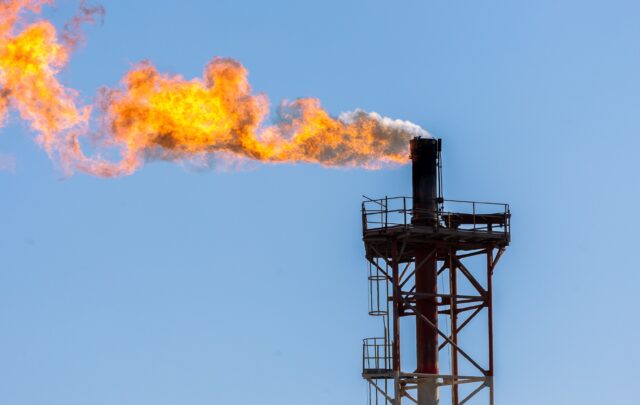
If the Earth were a car, its gas gauge would be approaching E. Some argue that we have miles to go before we hit the empty mark. Others say we’re running on fumes.
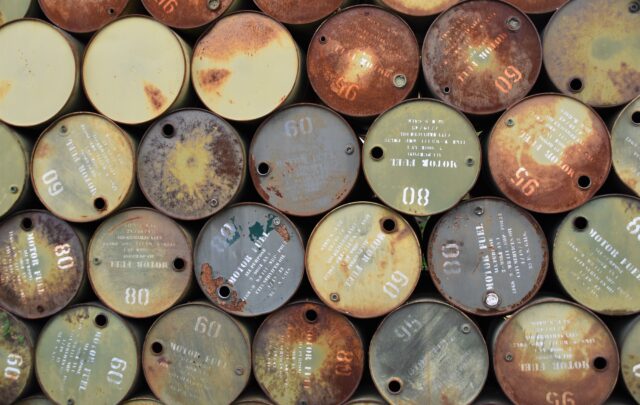
But nobody disputes that the world’s oil supply is finite and that some day the wells will run dry.
What we do between now and then will determine the quality of life for generations. Do nothing – or do something lethargically – and the consequences are catastrophic.
In a world powered by oil and its derivatives, it takes no imagination to see the consequences of life without it – or even less of it. The economy would be the first to go. As oil supplies shrink, the price of everything, from gasoline to groceries, will soar.
Suburbs whose growth was fueled by cheap gas will shrivel and die. The trucks that brought goods to market will sit idle, as will the drivers who operated them. Entire industries will disappear. Our toasty warm homes will go cold.
Of course, we won’t do nothing. But will we do enough? And will we do it fast enough?
Evidence abounds that we won’t. Remem ber the gas shortage of the ’70s? What we did to combat it ? And how quickly we reverted to our gas gulping ways once the crisis passed?
It’s easier to look away when danger appears to be on a far horizon.
That is why this newspaper has launched a yearlong effort to acquaint you with the danger and to make it harder to avert your eyes.
The first installment of this ongoing series ran the Sunday before the National Academy of Engineering held a daylong symposium on the energy question.
Deep thinkers from across the country outlined the fossil fuel problem and discussed alternatives. Unanimity at such gatherings is rare. But all present agreed on this: We face a problem with enormous consequences, and we’d better get busy finding solutions.
It is clear that we are on the cusp of enormous change, just as our forebears were at the dawn of the petroleum age. The current issue of a publication called the Oilfield Journal carries a cover story titled “The High Cost of Whale Oil – and what it led to.”
The article’s gist is simple. Whale oil, which was “the Western World’s most satisfactory illuminant and lubricant,” was in ever-shorter supply and its price was climbing. In 1861, the magazine reports, a 42-gallon barrel of whale oil cost $57.79 – $1,187.16 in today’s dollars.
Scarcity and astronomical pricing led Edwin L. Drake to discover and extract oil from a gooey patch in Titusville, Pa., in 1859. The price of “rock oil,” as it was called, dropped from $20 a barrel in 1859 to 52 cents a barrel by the end of 1861, $10.68 in today’s dollars.
The ubiquitous and once plentiful whale oil grew scarce and dear. The newly discovered petroleum was abundant and cheap.
Is petroleum the whale oil of the 21st century? Is hydrogen the petroleum of 1861? Or is it fuel cells? Coal gas? Solar energy? Wind power? Nuclear energy? Or technology yet discovered?
Our goal in the next year is to explore all that and help focus eyes on the challenge.
Clifton is the editor of The Plain Dealer. Contact him at: [email protected], 216-999-4123.



Comments
We changed commenting systems on September 10, 2026 as part of a site-wide functionality and security upgrade. Your past comments have not disappeared, and you can still log in with your old Disqus account credentials if you wish. Contact us with any questions.