


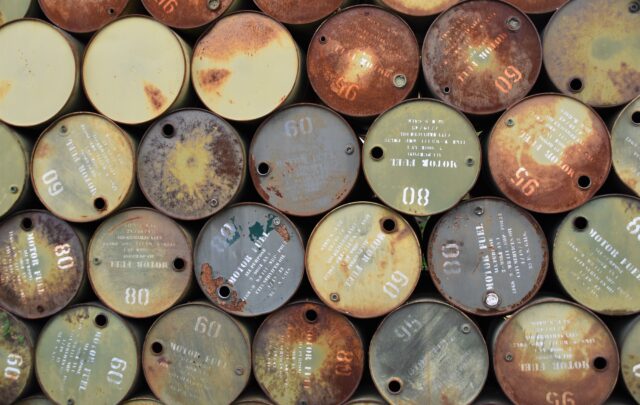
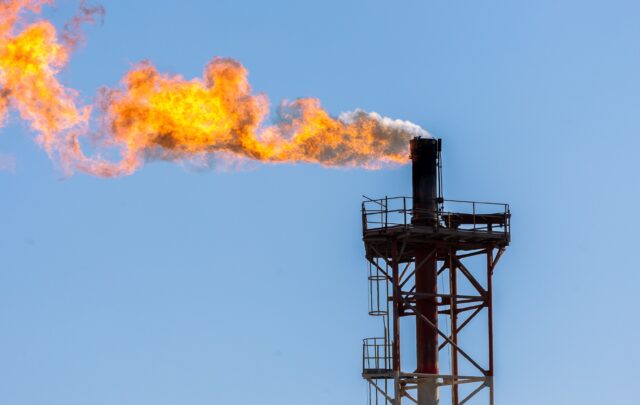
The world’s supply of petroleum is finite. Demand is increasing rapidly. And discoveries of new oil fields are declining. These three trends chart a collision course for the world’s most crucial commodity and its economy. But experts disagree about when the crunch will hit. Get this: Some say seriously the peak of global oil production is close at hand.
”We are approaching the stoplight for peak oil and the light has turned over to yellow,” say the experts at the Association for the Study of Peak Oil, or ASPO. Their estimate is 2008, only four years away. Others, including the U.S. government, say it’s later, with a mid-range guess at 2037.
”Now you’re scaring me,” said John Krawiec of Beacon on being told of the peak-oil debate. He has been a local bottled gas distributor for many years. ”I’m at that age where it probably doesn’t make too much difference, but you worry about your kids and your grandkids.”
As demand outpaces supply, prices will rise. The Hudson Valley may be hit especially hard, given its extensive dependence on oil for heating homes and for moving its large and growing contingent of commuters.
According to data from the Hudson Valley Oil Heat Council, based on census numbers, 54.5 percent of homes in the four-county area in 2002 used delivered liquid fuels, most of which is oil.
The peak-oil topic is controversial within the small community of oil forecasters, who disagree on when it will come, but what may be most remarkable is how little attention the general public pays to whether ”peak oil” is an issue at all.
It is. The dinosaurs aren’t making any more of it. Petroleum geologists say oil was made in periods 65 million to 500 million years ago as sediments covered and cooked organic matter deep within the earth, and the same goes for natural gas.
Limited quantity
”It’s absolutely finite,” said David Morehouse, Energy Information Administration analyst who specializes in long-range forecasting.
Oil is also absolutely essential for the economy and concerns everyone — and concerns them vitally.
It provides the best fuel for all vehicles and the only one for aviation. It heats many homes and buildings. It is the raw feedstock for an estimated 4,000 chemicals, many plastics, synthetic fabrics and fertilizers.
Before delving deeper, here are a few conclusions experts agree no one should jump to:
– The end is not near, and the sky isn’t falling. Rather, oil will hit a peak in production sometime and pervasive economic consequences will follow.
– Alternative energy systems are not ready. They can’t pick up all the slack if the peak comes too soon.
– The current spike in oil prices is not likely related to the peak of oil production. That’s more a matter of rising global demand, notably from China, and some blips in the supplies caused by factors like civil unrest, war and hurricanes.
What will in fact happen is the combined production of petroleum around the globe will, one day, stop rising. Opinions differ widely about when, and exactly what happens when it does.
Growth would likely be dampened as the supply of oil diminishes, and recession could set in, likely on a global scale. Prices could spike, but another possibility is recessions would cut demand and moderate the price increases. Alternative energy and conservation would gain increasing favor.
A flood of books and articles have come out lately on the topic. Still, energy is one of the quieter issues in the presidential campaign, and neither has brought up the peak-oil issue.
Both offer energy plans aimed at lessening the dependence on foreign oil.
Democratic Sen. John Kerry’s goal, in part, is to ”harness the full force of American optimism and ingenuity to invest in new technologies and alternative fuels, create tax incentives that help automakers produce more fuel-efficient cars, and reward the consumers who buy them.”
President Bush seeks to begin ”domestic oil production in just one percent of Arctic National Wildlife Refuge,” and offer ”$4 billion in tax incentives to spur the use of energy technologies” including conservation, cleaner coal, hydrogen, alternative sources and nuclear.
Both Bush and Vice President Dick Cheney have long backgrounds in the oil industry. The FBI is investigating Halliburton Co., the oil-services company Cheney formerly ran.
The probe is in connection with the no-bid government contracts for work in Iraq, leading to allegations the company may have received special treatment from the Bush administration.
Some accuse Bush of invading Iraq to secure a hold on its vast oil reserves, which he has denied.
It is clear their backgrounds put Bush and Cheney in a position to be well aware of the peak-oil problem. It has already happened in the United States, whose economy would have stalled decades ago without imports.
When the Oil Age dawned commercially in the early part of the 20th century, America pumped most of the petroleum being pumped around the globe — and used most of it, too.
America’s peak of production was in 1970, and it’s been downhill ever since. Consumption, on the other hand, has swelled. Today, using data from the U.S. Energy Information Administration, about 7.7 million barrels of crude are yielded domestically per day while about 20.4 million barrels are consumed.
Imports from the Middle East, Nigeria, Venezuela and other parts of the globe make up the rest.
America’s problem is it’s been pretty well picked over.
”We’ve been drilling for oil here in the U.S. more intensively and for a longer period than virtually any place in the world,” said James Williamson, president of WTRG Economics in London, Ark. ”We’ve been doing this since the mid-1800s.”
The easy oil has been found, and the rest is in the harder-to-get spots and therefore, the costliest, he said.
When America runs short, it can turn to the globe. But when the globe runs short, then what?
For a while, more will be found and better extraction methods will help stretch what’s there, but at higher costs. Conservation will stretch, too.
Previous predictions
”In the ’70s and early ’80s, these same types of articles [about peak oil] were out there and we were already going to be running out now,” said Abel Garraghan, who owns Heritagenergy, a fuel dealer in Kingston. ”I’m not qualified to make any opinion on it.”
Issa Issa, who runs a Mobil station in Poughkeepsie, hopes the earth will yield more than we know.
”Somebody’s not telling us something,” he said this summer, as gas prices jumped again. ”There’s got to be some supply somewhere that somebody’s not telling us about.”
Perhaps. But recent revisions of reserve estimates from some industry giants, like the repeated ones of the Royal Dutch/Shell Group of Cos., have raised doubts about whether oil companies are being honest, let alone accurate, in telling what they know about what’s left underground.
A top executive of Royal Dutch/Shell wrote in an e-mail he was ”sick and tired about lying” about inflated oil and gas reserves estimates, according to an April report on an investigation commissioned by the company. A fourth of the stated reserves couldn’t be proved according to accepted accounting standards.
El Paso Corp. of the United States also restated its reserves downward this year.
Depletion is a reality. But does that mean the world will run out of oil in 50 years or so? The Society of Petroleum Engineers asks that question and answers it this way:
”That theory has been around since the 1970s. In fact, the figures for years of remaining reserves have remained relatively constant over the past few decades as the industry has replaced consumption with newly discovered oil and gas deposits and has developed technologies to increase the amount of oil and gas that can be recovered from existing reservoirs.”
The U.S. Energy Information Administration estimates total world oil resources are more than 2.9 trillion barrels.
ExxonMobil, in a report in February, said, ”The conventional resource base is very large and is likely to continue to be the primary source of energy through at least the middle of the century.”
Alternatives not competitive
Alternatives can reduce dependence on oil, but they are usually not economically competitive. Rising oil prices will tend to even out the difference, bringing more alternatives on line.
Most alternatives aim at electricity, but what’s needed for transportation is oil.
Hydrogen is touted by many, including Bush. But the common methods for transport involve natural gas, which is still one of those fossil fuels in ultimate decline. Even water can yield hydrogen through electrolysis, if you’ve got a lot of electricity that’s not generated by fossil fuels. Science and industry aren’t ready to deliver a reality that matches the political chatter yet.
Another alternative is biodiesel.
”Biodiesel can be produced anywhere,” said Ann Davis, who heads Marist College’s Bureau of Economic Research, at a conference in Poughkeepsie this year. Some enthusiasts convert cars to run on recycled restaurant cooking oil, hardly a mass solution.
”It can also be produced from 26 common oil seed crops, such as soy, safflower, sunflower and canola,” Davis said. The conference was cosponsored by the Dutchess County Industrial Development Agency.
If the economy is to maintain equilibrium as the Oil Age hits the downside of its slope, the alternatives will need to be rising at the same rate.
Ashok Gupta, an economist who heads the air and energy program for the Natural Resources Defense Council in New York, said market prices of oil play a key role.
”If price is sustained for a period of time, it sends the market a signal,” Gupta said. ”If the spike goes back down in a year or two, the interest in alternatives and efficiency … won’t be sustained.”
”Our view has been that it’s not price alone that should be allowed to determine responses,” Gupta said. ”We need to have policies that also encourage more fuel-efficient vehicles being produced and purchased, and investment in alternative fuels.”
Just how the end game for the Oil Age will play out is hard to predict. It may not come easily.
Mere new technologies are not a simple solution, cautions author Paul Roberts in his book, “The End of Oil.” He writes, ”Historically, shifts from one energy technology to another have proved wrenching.”
Craig Wolf can be reached at [email protected]
On the Web
– The U.S. Department of Energy’s Energy Information Administration contains numerous analyses and charts: www.eia.doe.gov
– The Association for the Study of Peak Oil tracks the issue regularly at www.peakoil.net
– National Geographic’s June article, ”The End of Cheap Oil,” can be found at http://magma.nationalgeographic.com/ngm/0406/feature5/index.html
– The Society of Petroleum Engineers’ site offers background on oil exploration and production is at www.spe.org



Comments
Welcome to the new Resillience commenting system!
We have moved from the former Disqus commenting system to a new system as of September 10, 2026.
We made this change because of privacy concerns regarding Disqus. It's also part of a set of changes to bring more services to the Resilience community under a single login: commenting, (coming September 2026), and online courses (coming 2027). Unfortunately, your old Disqus comments may not reliably link to your account in this new system. Please contact us if you have any questions or concerns.