

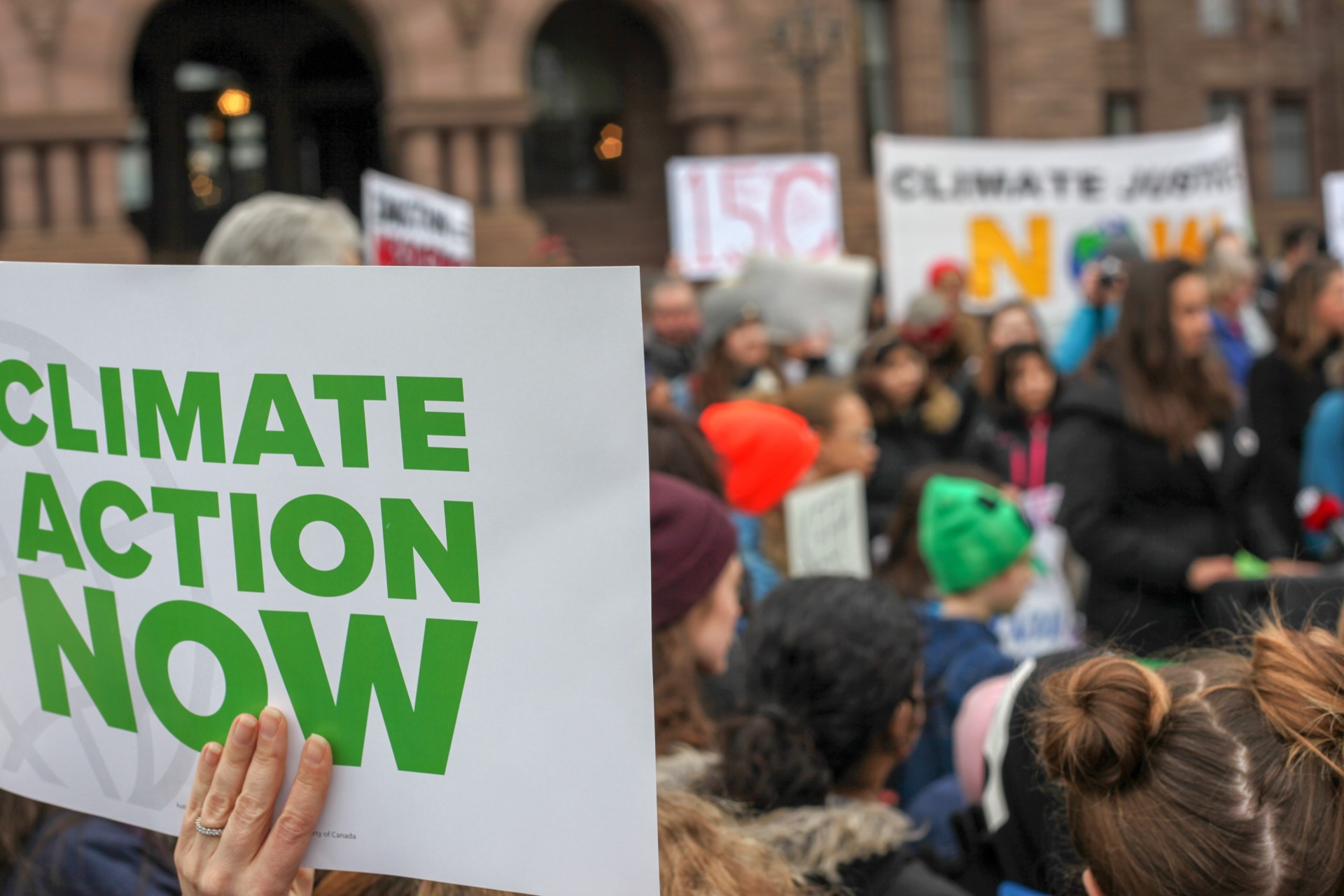
On 23 July 2025, the International Court of Justice said what scientists had been saying for forty years — but said it in the one language governments claim to respect. States, the court held, are legally obliged to protect the climate system. The 1.5-degree limit is not a political aspiration; it defines the standard of care states owe. And a state that fails can be held responsible, up to and including reparations.
For a news cycle, it felt like a turning point. The phrase “historic” was everywhere. Then the cycle turned, as cycles do.
The Hague ruling was the third act of a remarkable run. In April 2024, a group of Swiss women — most of them over seventy, organized as the KlimaSeniorinnen, the “climate seniors” — won against their own country at the European Court of Human Rights. The court found, for the first time, that inadequate climate policy violates human rights: Switzerland had failed to build and apply a regulatory framework equal to the threat. A month later, the International Tribunal for the Law of the Sea ruled unanimously that greenhouse gas emissions count as pollution of the marine environment under the Law of the Sea Convention — not a diplomatic bargaining chip, but a regulated harm under binding treaty law.
Three rulings in fifteen months, from three different courts, converging on one point: the condition of the biosphere is ceasing to be a matter of political discretion and becoming a matter of legal obligation.
So, one year on — what changed?
Honestly: the footnotes. The rulings are cited in legal briefs, discussed at symposia, taught in seminars. What has not changed is the thing the rulings were about. No emissions pathway has been corrected because The Hague spoke. And the Swiss case, the only one of the three that is formally binding on a named state, has become an accidental demonstration of the problem. Enforcement of the judgment falls to a committee of the very governments being judged, and Switzerland informed that committee that it already complies. Both chambers of the Swiss parliament passed declarations scolding the court for overreach. The convicted party graded its own homework and gave itself a pass.
It is tempting to read this as hypocrisy, and some of it is. But the deeper truth is structural, and it is worth stating plainly: the law we have can name obligations, but it has nobody whose job it is to make them real. There is no independent body that verifies what states actually emit. There is no threshold whose crossing automatically triggers proceedings. There is no fund from which restoration is paid, no rule that ties liability to those who caused and profited from the damage. Courts can declare. They cannot inspect, finance, or compel. The three rulings opened a door, and behind the door there is no room.
I wrote here before about the filing error at the center of our failure: every parliament on Earth treats the survival conditions of the biosphere — breathable air, fertile soil, a climate in which agriculture and cities and law itself are possible — as one policy preference among others, to be weighed against tax cuts and traded in coalition talks. Preferences are the proper business of politics. Preconditions are not. Filing preconditions under preferences is the design flaw of modern democracies.
What the past year has shown is that the courts have started to correct the filing error — and that correcting it in doctrine is not the same as correcting it in the world. The law has caught up with the science. Now both are waiting for institutions.
Consider what enforcement looks like in domains where we mean it. When a plane crashes, no parliament votes on whether to investigate; an agency with inspection powers shows up, by law, with a mandate written in advance. When a bank fails, resolution procedures activate on defined triggers, at speed, because we learned the hard way that waiting for political consensus during a collapse guarantees the collapse. We build automatic machinery precisely for the failures we cannot afford to negotiate about. For the biosphere — the one system whose failure cannot be bailed out — we have built none.
That machinery can be described. It needs constitutional rank, because anything below that rank stays negotiable: measurable planetary limits — emissions, biodiversity, land use, freshwater — grounded in the best available science and legally binding, not aspirational. It needs separated powers, because concentrated power is exactly what nobody should want: a scientific council that translates evidence into transparent standards; an independent inspectorate that verifies data and documents violations; a court that adjudicates and orders remedies; a financial institution that funds protection and restoration, with liability following causation, benefit, and capacity. All of it bound by disclosure rules, rotation, hard term limits, and judicial oversight. Not a world government. A reduction of destructive power, controlled by law.
And democracy is not the casualty of such a design; it is the beneficiary. Within the guardrails, everything that is legitimately political stays political — taxes, welfare, ways of living, the whole contested field of values. Guardrails do not abolish the road. They are why the road can be driven at all.
The standard objection is that this is utopian. The past fifteen months make that objection harder to sustain, because the supposedly impossible part — binding legal obligations toward the biosphere, owed by states, enforceable in principle — has already happened. It happened in Strasbourg, in Hamburg, in The Hague. What remains missing is not legal imagination. It is architecture: the rooms, budgets, inspectors, and triggers that turn a verdict into a consequence. That is not a smaller task than winning the rulings was. But it is a different one, and naming it correctly matters, because the climate movement has spent decades fighting the wrong bottleneck. Awareness is not the bottleneck. Since last July, law is not the bottleneck either. The bottleneck is institutions.
Anniversaries invite commemoration, and commemoration is a way of filing things away. This one deserves something else. The most honest way to mark 23 July is to treat the court’s words as unfinished — a sentence that ends in a comma. The law has said, as plainly as law can, that the protection of the biosphere is not an opinion. It is the precondition for everything we argue about, vote on, and hope for.
A year ago, the world’s highest court said it. Someone now has to build the rooms where it becomes real.
The constitutional architecture sketched here has since been set out in the Declaration for an Earth Constitution (25 September 2026).



Comments
The ICJ says Israel is committing genocide, and yet… The problem is power. The ecocidal, omnicidal war culture has seized all the levers of power, from money to guns to government to mainstream media. Those of us who would prefer to keep Earth habitable have a small slice of social media and word of mouth but we are not using even the tools we have because we don’t know what to do and we don’t know who to do it with. Mr. Jacob has accurately pointed to a problem. What is the solution? Voting, when nearly all the candidates support war and corporate profit? We (who want to keep Earth habitable) need to unify across silos, then reduce corporate power by selling all our stocks and bonds and speculative real estate, and by taking our money out of banks, by spending as little as possible, by quitting work if possible, by throwing wrenches into the machinery wherever possible, and by joining self-sufficient communities where we grow our own food and help each other avoid paying taxes. Money and violence are how the few control and exploit the many and nature. If we don’t attack them economically, our excellent analyses will remain where they are — beneath notice.