

At this point in his second term, it is clear that President Trump represents an unmitigated disaster for the steady state. His deregulatory onslaught is removing barriers to growth throughout the economy. The consequences for human health, the environment, and democratic participation are untold and mounting.
His foreign policy, energy policy, and food policy are similarly crafted for growth—of the most unsavory and polluting industries.
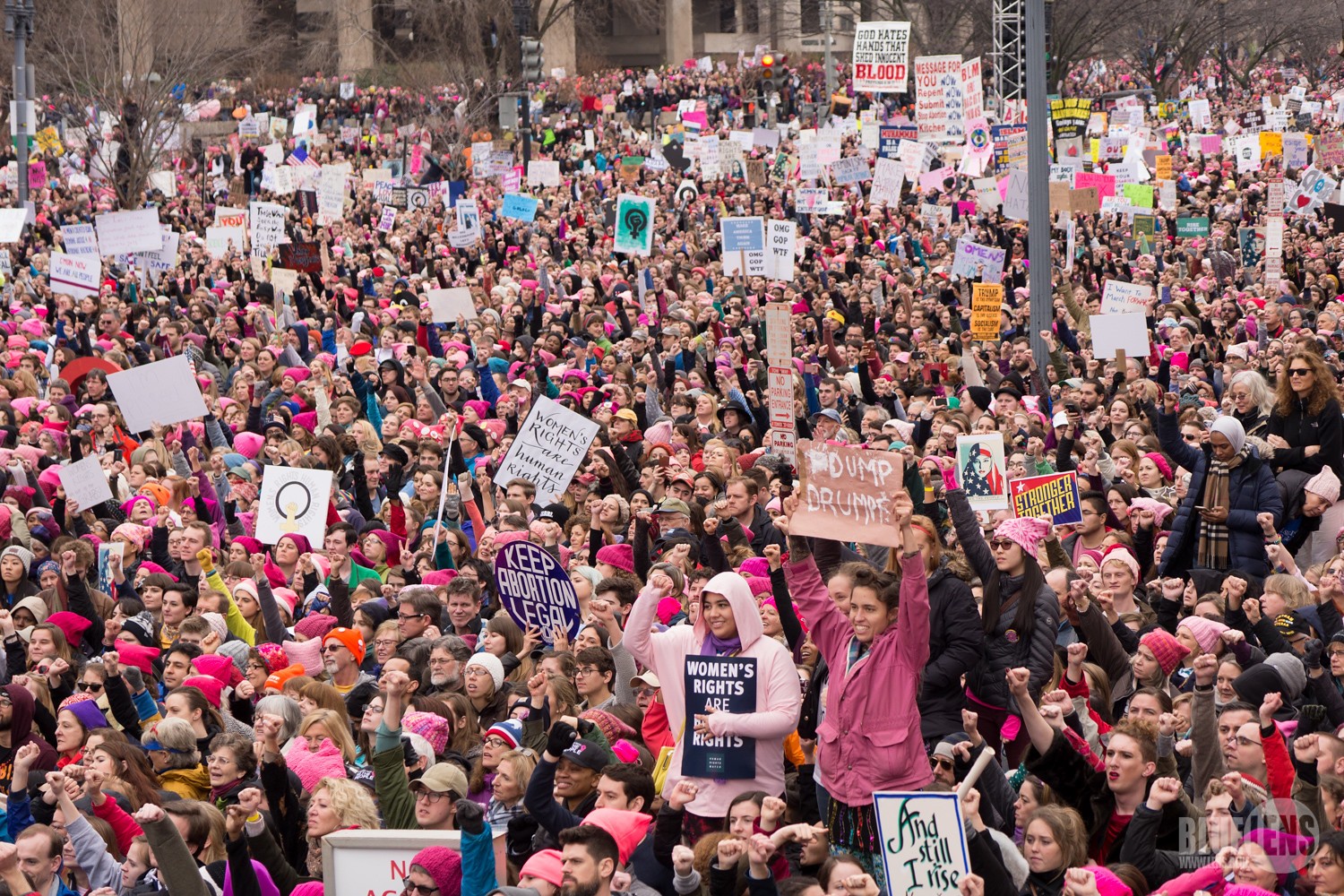
Trump’s unflagging commitment to growth also manifests in his approach toward population and reproductive health. He has aligned himself with those who wish to roll back decades of progress in gender equality, contraceptive access, and the lowered birth rates that result. This has meant, at home and abroad, aggressive pronatalist policy to stifle reproductive choice and promote childbearing.
Rolling Back Reproductive Rights at Home
Since 1970, Title X has been the only federal program dedicated solely to improving access to contraception. The federal grant program has provided nearly $300 million annually for free and low-cost family planning services. This care has prevented more than 800,000 unintended pregnancies every year.
These funds were never used to perform abortion. But Title X program services included counseling and referrals for the full range of reproductive options, until Trump’s 2019 gag order prohibited the mere mention of abortion. More than 181,000 unintended pregnancies likely resulted, and many providers left the program before Biden reversed the gag order.
In Trump’s second term, his administration has gone to even greater pronatalist extremes.
Trump’s Department of Health and Human Services (HHS) issued funding guidance that turns Title X’s mission on its head. It mentions contraception only once, to point out its side effects and declining use. Instead, it notes that priorities of “healthy pregnancies and family formation” will guide its grantmaking.

But the Trump administration is not content with merely removing contraceptive access. Trump has launched a website that promotes “crisis pregnancy centers,” fake abortion clinics staffed by anti-choice volunteers.
He has canceled millions of dollars in teen pregnancy prevention grants. New guidelines require applicants to promote abstinence, and focus more on planning for pregnancy than preventing it.
Yes, even for teens.
Calling himself the “father of fertility,” Trump has proposed a rule that expands access to IVF. The rule does not mention that these treatments are seldom successful and come at great emotional, physical, as well as financial cost to those who endure them.
Attacking Reproductive Rights Abroad

In keeping with the tradition of every Republican president since 1984, Trump has reinstated the Global Gag Rule. Previous versions applied only to programs funded through family planning and reproductive-health assistance from the U.S. Agency for International Development (USAID). They prohibited these programs from performing, or even offering information on, abortion.
Trump’s 2017 version of the rule was expanded to cover all global health aid distributed through any U.S. government agency or department. A 2026 update goes even further. As of January 2026, the rule applies to all non-military U.S. foreign-health, development, and humanitarian assistance. Impacted recipients now include not just international NGOs, but domestic NGOs, international organizations like the UN, and foreign governments.
These cuts come on top of the administration’s dismantling of the entire U.S. foreign aid apparatus. Elon Musk’s short-lived stint in the Trump administration had long-term consequences, with his “Department of Government Efficiency’s” elimination of USAID. This move slashed tens of billions of dollars of aid to address poverty and disease across the world.
This included millions of dollars of family planning and contraceptive aid. The loss of this aid likely resulted in over 17 million unintended pregnancies in 2025 alone.
What has become of that aid belies any notion that the cuts were in service of “government efficiency.” Nearly ten million dollars in contraceptives still languish in a storehouse in Belgium. These now-expired supplies could have provided pregnancy prevention to nearly a million people. NGOs have offered to purchase and distribute these supplies, but the administration instead is opting to store them at a cost of $460,000.
This sum could have provided contraception to nearly 44,000 women and couples and prevented 15,700 unintended pregnancies and 4,800 abortions.
USAID worked alongside the United Nations Population Fund (UNFPA) to provide family planning services in more than 150 countries and territories. But Trump has cut off UNFPA funding as well, citing a 40-year-old provision that prohibits U.S. funding for “coercive abortion or involuntary sterilization.” There is no credible evidence that UNFPA has been involved in either.
Baby Bust Alarmism in Service of GDP
This hostility to contraception is rooted in several trends on the political right. Conventional conservatives like J.D. Vance extol traditional gender roles and the high birth rates associated with them. Meanwhile tech eugenicists like Elon Musk encourage “elites” to procreate, in hopes of improving the “genetic quality” of future generations. For these administration officials, economic considerations are not the driving force of their pronatalism.

But for some who call the declining U.S. fertility rate a “crisis,” economic concerns are front and center. Media outlets lament a shrinking labor force and imperiled social security as governments weigh baby bonuses to forestall such outcomes.
Such policy puts anachronistic pressures on women to increase reproduction, and sidelines their agency in one of the most important decisions of their lives.
And it does so in unabashed service of GDP.
In a particularly glaring example, the attorneys general of Kansas, Missouri, and Ohio have sued the federal government to ban mifepristone for minors. They argue that remote dispensing of the abortion drug is “depressing expected birth rates for teenaged mothers.” The consequent “loss of potential population,” they say, causes “injuries” such as the states’ “diminishment of political representation” and “loss of federal funds.” Injuries, in short, that may deprive the state of hoped-for economic growth.
Wherever Women Have Access to Contraceptives
The sinister objectives behind efforts to enforce childbirth are seldom so thinly veiled. But pronatalist pressures, whether pressures from a partner for heirs, from a political leader for more taxpayers, or from business leaders for cheap labor, are everywhere. And they skew reproductive decision-making toward childbirth.

Yet their power is diminishing as women and girls gain access to education, employment, and modern contraception. More than half the countries around the world have birth rates below 2.1 children per couple. That figure includes rich countries and poor, deeply religious and largely secular. Below-replacement fertility is slated to eventually shrink populations toward sustainable levels more congruent with national security and international stability.
In fact, wherever women have access to contraceptives and empowerment to use them, they do exactly that. The trend is so well-established that researchers posit a “latent desire” among women of all cultures, throughout much of history, to have fewer children.
This is great news for a steady-state transition.
Demographic transition theory has long dimmed hopes for a steady state. This theory holds that birth rates decline only following substantial increases in GDP/capita. So the smaller global human population necessary for planetary systems to flourish, it was thought, could only come with per capita income levels that would threaten that flourishing.
Recent research contradicts this theory. Fertility decline in many developing countries, it turns out, has followed the availability of modern contraception and has little correlation with economic development.
Foreign Aid, Fertility, and Immigration
International aid focused on voluntary family planning programs could be among the most important tools for wealthy countries to advance a global steady state. Yet the United States has been reluctant to wield this tool. Although still the largest international family planning donor when Trump took office in 2025, the United States had slashed this funding long before Trump’s presidency.
And the international community has not stepped in to fill the void. Since the mid-1990s, UNFPA has neglected its family planning mandate.
Frank Götmark, Professor emeritus of Animal Ecology and Conservation Biology at the University of Gothenburg, spoke with the Herald about this trend. Götmark explained how starting in the 1960s, robust international family planning programs not only provided modern contraception in developing countries. They also taught women and girls about the health and economic benefits of limiting their fertility. These educational programs shifted women’s preferences from high fertility to low, empowering them to overcome pronatalist pressures from family members and the patriarchal cultures they lived in.
This norm shifting was key to the success of the programs that led to drastic global fertility reductions between 1960 and 1994.
Since the mid-1990s, however, the focus of UNFPA has moved on from such programs. They are still a major distributor of contraception across the world. However, UNFPA downplays this role in favor of the far more nebulous focus of “sexual and reproductive health and rights.”
The consequences are stark. To this day 215 million women have an unmet need for modern contraception, giving rise to 22 million unplanned pregnancies per year. “Millions of women…face pronatalist forms of coercion, such as being forced to give birth to unwanted children, in the absence of contraceptive services,” says Götmark. Meeting this need would slash the numbers of unintended pregnancies by almost 75 percent. The refusal to do so contributes to the staggering current human population of eight billion, and continued growth of 70 million people per year.

This growth is largely due to lack of access to contraception and stagnant progress in gender equality in sub-Saharan Africa and the Middle East. International family planning assistance would begin to correct these imbalances. It would also address climate change, biodiversity collapse, and other manifestations of ecological overshoot arising from overpopulation.
Countries with continued high fertility are also those that will suffer the most from climate change and deepening resource conflict. These conditions will drive many members of their growing populations to emigrate.
To the limited extent that Donald Trump appeals to steady staters, that appeal likely resides in his stance on immigration. CASSE’s position, outlined in the Sustainable Population and Immigration Act (SPIA), accepts some immigration restrictions as consistent with a steady state.
But key to SPIA is that borders are tightened only after the United States embraces the steady state as a policy goal. Even then, SPIA envisions some level of migration to counteract declining birth rates: “…immigration levels, that, considering fertility, mortality, and emigration rates, result in a stabilized U.S. population.”
This vision of “steady-state net migration” articulated by Brian Czech is about as far from current immigration policy as one could imagine. As Czech notes, “Morally decrepit population management is not only wrong in a normative sense; it won’t stand a test of time, either.”
While Trump implements a draconian, reckless anti-immigration policy, he also pulls out all the stops to grow GDP and GDP per capita. Trump’s tightening of borders is consistent with neither human rights nor a steady state.
U.S. policy abroad, from the abandonment of family planning to the funding of genocide and the initiation of war, has led to the immiseration of millions. For future administrations that seek to correct these abuses—and to move prudently toward a steady state economy—full restoration of family-planning aid would be a good place to start.





Comments
We changed commenting systems on September 10, 2026 as part of a site-wide functionality and security upgrade. Your past comments have not disappeared, and you can still log in with your old Disqus account credentials if you wish. Contact us with any questions.