

When I began leading the national study on climate finance governance in Mauritius, I thought I was investigating budgets and bureaucratic procedures. But as I spent months interviewing everyone from top policymakers to frontline civil society groups, the data told a different story. Regardless of their role, every person I spoke to shared the same fear: that without trust, our climate finance would vanish into corruption or inefficiency, leaving our communities vulnerable. This wasn’t just a policy gap; it was a moral imperative. These conversations forced me to confront a hard truth: resilience is impossible without integrity.
When we talk about climate resilience, our minds usually turn to seawalls, flood barriers, renewable energy, or drought-resistant agriculture. These investments are undoubtedly important. But there is another form of infrastructure that receives far less attention – one that ultimately determines whether climate finance achieves its intended purpose. That infrastructure is trust.
Communities cannot become resilient if they do not trust the institutions responsible for protecting them. Climate finance cannot deliver lasting adaptation if citizens cannot see how funds are allocated, if local voices are excluded from decision-making, or if governance systems lack transparency, accountability, and integrity. As climate finance expands worldwide, integrity is emerging as one of the most overlooked determinants of resilience.
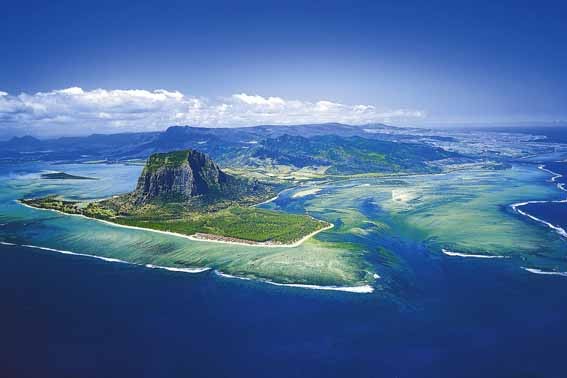
Mauritius offers an important lesson. As a Small Island Developing State (SIDS), Mauritius contributes only a tiny fraction of global greenhouse gas emissions, yet it faces increasingly severe floods, cyclones, coastal erosion, water scarcity, and threats to food security. Climate change is no longer a distant environmental concern – it is becoming a defining challenge for communities, livelihoods, and public finances. Mauritius’ Third Nationally Determined Contribution (NDC 3.0) estimates that implementing its mitigation and adaptation commitments will require approximately USD 11.3 billion in incremental investment between 2026 and 2050, underscoring the country’s significant climate finance needs.
The instinctive response is often to ask a familiar question: Where will the money come from? A more important question may be: Can communities trust how the money will be managed?
My national study on climate finance governance, as part of Transparency International’s Climate Governance and Integrity Programme, found that governance is becoming the defining challenge for effective climate action.
The findings are striking. Eighty-four percent of climate leaders and practitioners surveyed identified corruption as one of the biggest obstacles to the effective delivery of climate finance in Mauritius. Yet even more revealing was another finding: when participants were asked what climate finance meant to them, none identified transparency, accountability, anti-corruption, or oversight as core components of climate finance itself. For many, climate finance remained synonymous with mobilising money rather than governing it well.
Climate finance is often discussed in terms of billions of dollars pledged through international funds or development banks. But resilience is not built at international conferences. It is built where people experience flooding, water shortages, coastal erosion, and disrupted livelihoods. Communities judge climate finance not by the size of announcements but by whether projects arrive on time, solve local problems, and are managed fairly. Trust, therefore, becomes infrastructure.
Without trust, public participation weakens. Communities become reluctant to engage with government initiatives. Civil society loses confidence in oversight mechanisms. Investors become more cautious. Even well-designed adaptation programmes struggle to achieve legitimacy.
My study’s findings also revealed a worrying governance gap. More than seventy percent of respondents believed Mauritius lacks well-established mechanisms for civic engagement on how climate funds are raised and spent. Citizens remain largely disconnected from decisions that directly affect the resilience of their own communities.
Communities possess knowledge that central institutions often overlook. Residents understand which neighbourhoods flood first, where drainage repeatedly fails, how rainfall patterns have changed, and which households remain most vulnerable. When local knowledge is absent from planning and investment decisions, climate adaptation becomes less effective regardless of the amount of finance available.
Mauritius also illustrates another common challenge facing many developing countries: excessive centralisation. Much of the country’s climate-related infrastructure financing remains concentrated within national institutions. While central coordination is important, highly centralised systems can become slow, bureaucratic, and detached from local realities. The study examined the case of Drains Infrastructure Construction Ltd (DICL), established to accelerate drainage projects across the island. By late 2024, only four of fifty-eight projects had been completed, while the majority remained delayed, under construction, or awaiting financial clearance. Such delays leave communities exposed to recurring flood risks despite significant public investment.
Climate resilience cannot flourish when governance systems become bottlenecks. Instead, resilience requires institutions that empower local authorities, encourage collaboration across levels of government, and allow communities to participate meaningfully in climate decision-making. Around the world, countries are increasingly adopting multi-level governance approaches that connect national ambition with local implementation. These models recognise that climate resilience is strongest when communities are not merely beneficiaries of projects but active partners in designing them.
Transparency is equally essential. Survey respondents called for greater public access to information on climate projects and contracts, stronger enforcement bodies, better whistleblower protection, improved grievance mechanisms, and clearer safeguards against conflicts of interest. These are often viewed as governance reforms. In reality, they are resilience reforms.
When citizens can follow climate money, ask questions, report concerns without fear, and see that institutions respond fairly, confidence grows. Public trust encourages participation. Participation improves project quality. Better projects strengthen resilience. The relationship is circular.
This lesson extends well beyond Mauritius. Across the Global South, governments are mobilising unprecedented levels of climate finance while simultaneously confronting declining development assistance, growing debt pressures, institutional constraints, and increasing climate risks. Under these conditions, every dollar becomes more valuable – and every governance failure becomes more costly.
Climate resilience therefore cannot be measured only by kilometres of sea defences or megawatts of renewable energy installed. It must also be measured by whether institutions are transparent, accountable, inclusive, and trusted by the people they serve.
Integrity is not an administrative luxury to be addressed after adaptation projects are approved. It is a precondition for successful adaptation itself. As the world prepares to invest trillions in climate action over the coming decades, the conversation must evolve. Building resilience is not simply about financing infrastructure. It is about recognising that trust is infrastructure. Communities that trust their institutions are more willing to participate, collaborate, adapt, and recover. Communities that do not trust them remain vulnerable, regardless of how much climate finance is mobilised.
For Mauritius, including many other vulnerable countries, the future of climate resilience may depend less on finding new sources of finance than on strengthening the governance systems that ensure every climate dollar reaches the communities it was intended to protect.
In the end, resilient societies are not built solely with concrete, steel, and capital. They are built with trust.



Comments