

One of the core issues of our times is how humanity has become disconnected from the reality of our ecological nature. We live as though there are no planetary limits and do not respect the natural law of ecological consequences.
Our Indigenous brothers and sisters have much to teach in this regard. As do ecologically trained scientists. Each in their different ways will tell us that we need to honor our responsibilities to the natural world. Each will remind us that our lives utterly depend on the gifts this planet has bestowed upon us. All of this is related to a fundamental concept — that of bioregional learning.
Bioregional learning is a phrase that draws attention to all the ways we learn how to live in each place. How do we treat our water? Which plants are medicinal? Which plants can be eaten as food? How do the other living beings create a life for themselves here? What are the consequences if we disrupt their natural balance? All of this and more is shaped by the observation that each place on Earth is ecologically (and culturally) unique and has its own contextual ways for humans to come into harmony if they want to remain there for long periods of time.
In the research field of cultural evolution, there is a huge amount of evidence for ecologically informed ways of living. The Indigenous people of the Great Plains have constructed their entire worldview and way of life around the movements of buffalo. Inuit people build igloos from snow and warm their homes with whale blubber. People of the long houses honor the life cycles of bear, beaver, and salmon while also depending on them for their survival. Those who live on islands grow palm trees and fish nurseries. The list goes on and on.
What I want to share in this article is why bioregional learning centers are at the heart of the work to bring humans back into harmony with the rest of nature. This is because the work of a bioregional learning center is to gather and organize the diverse ways of learning how to live in a particular place — so that holistic understandings can be achieved. As this capacity emerges, the people living in each place gain the ability to diagnose the systemic risks and challenges that are revealed by these holistic understandings.
The process might go something like this:
- Construct the geologic, ecological, and cultural histories of your bioregion.
- Discover how life works here and how human inhabitants evolved livelihoods that were sustainable over long periods of time.
- Convene key stakeholders who bring different aspects of this knowledge into one community and explore the present context of your bioregion.
- Construct a shared agenda for the regeneration of the bioregion informed by the historic assessments that have been done earlier in the process.
- Invite other key stakeholders into the process and share the diverse ways of learning how to live in harmony with your bioregion as this regenerative agenda is manifested in practice.
If you do this, you are going to discover the need to transform local food systems. That you need to improve how watersheds are managed. Envision different land-use practices that restore ecological integrity. How important it is to explore appropriate uses of technology and models for social organization that are well suited to your place. In brief, you are discovering the transition pathway from dysfunctional extractive systems towards their regenerative alternatives.

Bioregional learning opens up the design pathways for systemic change to emerge. And it does so with life at the center of every major decision that needs to be made. As we learn which kinds of housing and shelter are appropriate to our local place, how to make textiles from local plants, and which plant species improve our soils while feeding healthy bodies, we are learning holistically how to live in our own bioregion.
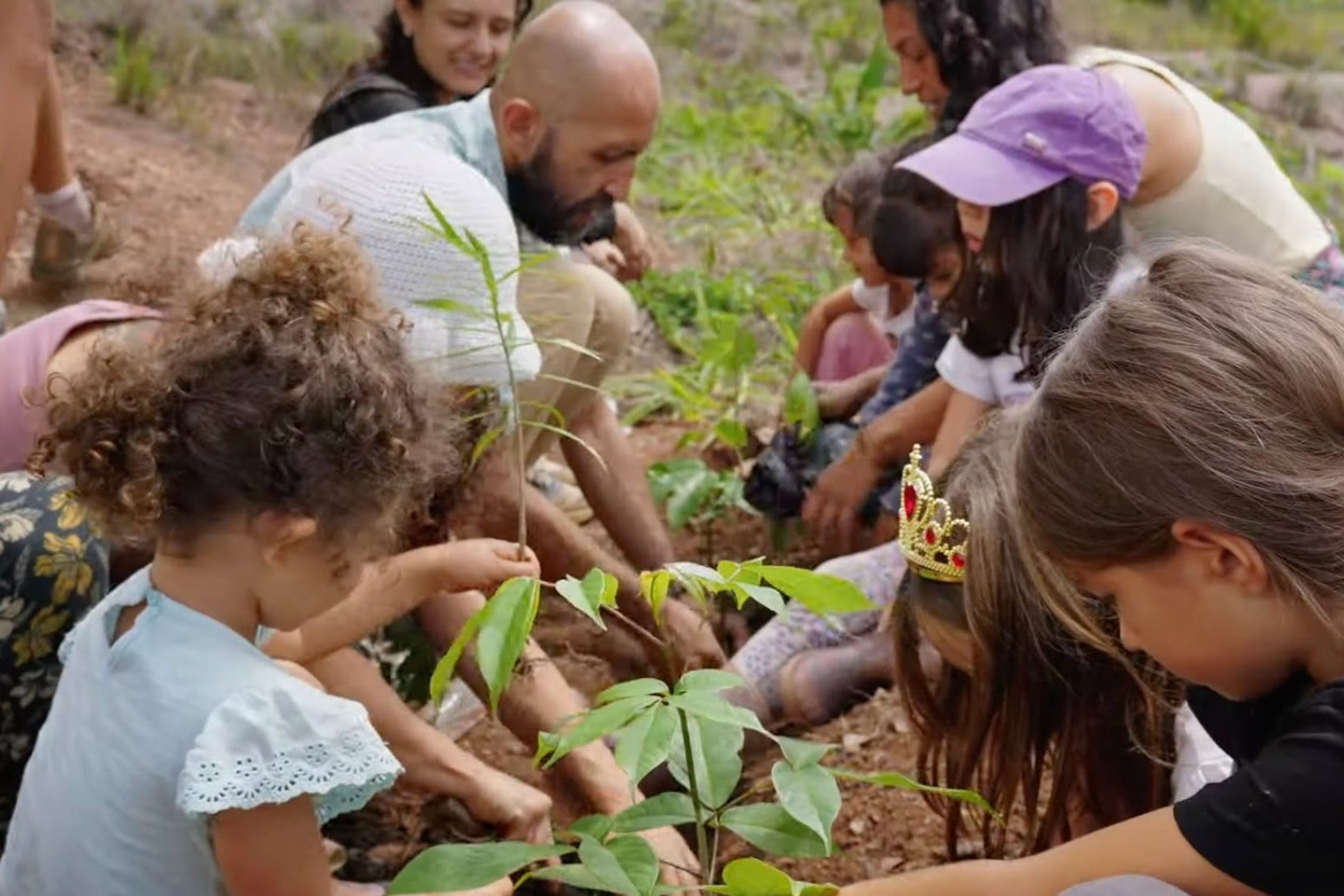
I know this from personal experience. We created a regenerative school for children in Colombia where they have community gardens and participate in ecological restoration of the native ecosystems. It is so beautiful to watch the kids learn craft skills from local elders while contributing to the health and resilience of their community. They are engaging in bioregional learning as it makes sense in their local place.

It is also something I get to witness as we travel on our bioregional pilgrimages to inspire local teams to create their own bioregional learning centers. Weaving a golden thread among different bioregions with regenerative education as the common thread. What we witness during these travels is how local teams form so they can address the systemic threats to their local places in a holistic, ecological manner.
For example, the work in Tunisia focuses on the network of oases in the Great Sahara Desert as they interact with coastal areas of the southern Mediterranean Sea. Here the totemic being is the olive tree that sits in the heart of community life and has been there for thousands of years. It is iconic for the bioregional context of this unique region.
Similarly, our friends at Living Thames actively learn about the flora and fauna of the Thames river system that flows across England and into the North Sea. They know about the chalk cliffs, how industry has shaped their landscapes, and what might be needed to restore health to nearby areas. Learning about their bioregion reveals different focal areas and regenerative strategies than what would be needed in Tunisia.
Or look at the bioregional organizing that has been underway for almost fifty years in the Ozarks in Missouri and Arkansas in the heart of North America. Here you will find vast expanses of oak forest, thousands of caves, and the largest natural springs on Earth. People in this area engage in fisheries management, conservation of vast forest areas, and various kinds of local food production in a landscape that is shaped by four different seasons throughout the year.
What we start to see is a general pattern — learning how to construct a healthy life where you are is unique and distinctive. Bioregional learning gets at the heart of regenerative living. It also helps us ground ourselves into the living systems of each place as we engage in analysis and strategies for how to address local challenges. There is so much to learn in each place. And so much to be shared among them. This is why we are creating the BLC Action Network for practitioners who set up their own bioregional learning ecosystems, so that they can learn from each other and share best practices along the way.
In my travels to different bioregions, I find that learning how to live in place is essential. It is core to where we need to focus our attention in these difficult times. And it is something that is already in process — meaning there are local people doing great regenerative work already — in every bioregional context on Earth. What we are doing now is helping weave them and support learning exchanges among them.
This is what our Dandelion Strategy for birthing 1000 bioregional learning centers is really about. Focus on bioregional learning. Help people set up their own local networks. Weave educational supports among them. Speed up the process and increase the resilience of our collective efforts. Is this something you would like to do? I hope you’ll join us!
Onward, fellow humans.


Comments
We changed commenting systems on September 10, 2026 as part of a site-wide functionality and security upgrade. Your past comments have not disappeared, and you can still log in with your old Disqus account credentials if you wish. Contact us with any questions.