

Listen or watch: Spotify | Apple Music | YouTube
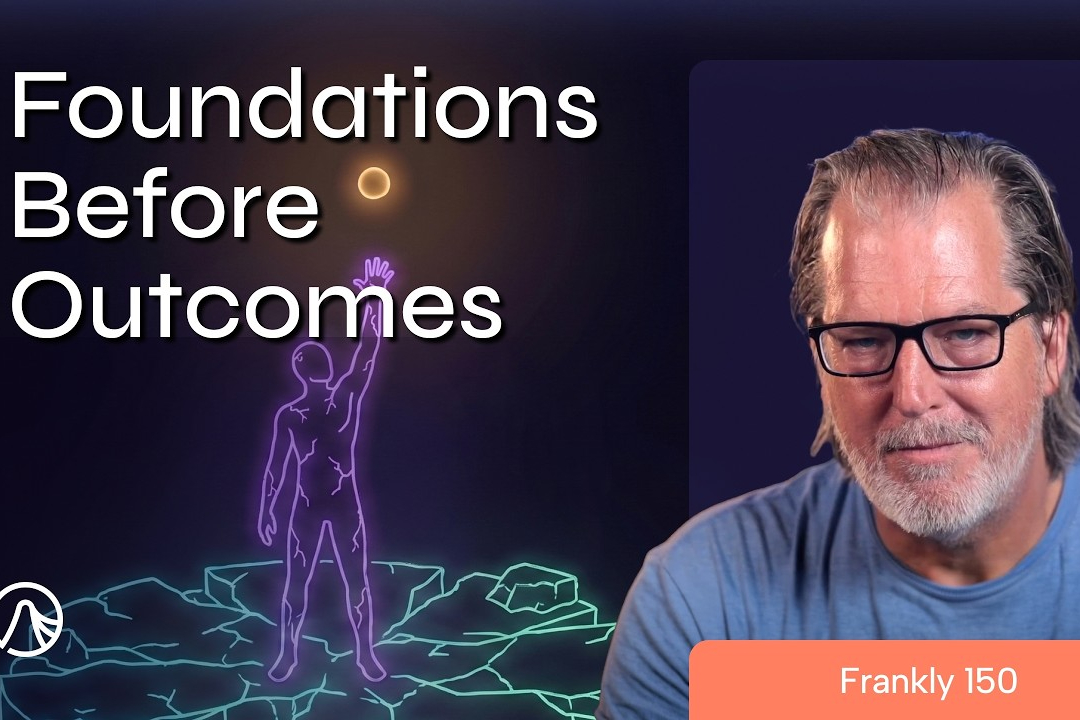
Originally Recorded on: Jul 5, 2026 | Today, in Part 5 of the “How to Think About the Future” series, Nate scales his exploration of civilizational futures down to the future of a single human life and analyzes how the same patterns that shape economies, power, geopolitics, and Earth systems turn inward. Building on the framework developed throughout the series, he describes how the factors from material throughput to personal agency are underpinned by our own physical/mental health and our web of relationships. Nate emphasizes that we cannot build any stable future on top of cracking foundations, pointing toward the importance of cultivating a strong base of personal health and community to operate from.
By outlining these scenarios – both on the personal and civilizational scales – Nate challenges the long-held assumptions that equate growth with success. He explores why the most regenerative paths available to us often look like decline from the outside and discusses the ways in which our civilizational foundations have been obscured by a societal trajectory of constant growth. Overall, this episode offers a mirror for reflecting on the landscapes we inhabit today and the quiet work required to navigate toward a better future for humanity and the biosphere.
Are your daily choices strengthening your foundations, or are they slowly eroding the capacity you’ll need for what’s ahead? Which personal future scenario do you feel you’re living in today, and what patterns are quietly shaping where you’re headed? And how would your life change if you measured success by regeneration instead of productivity or growth?
The TGS team puts together these brief references and show notes for the learning and convenience of our listeners. However, most of the points made in episodes hold more nuance than one link can address, and we encourage you to dig deeper into any of these topics and come to your own informed conclusions.
00:00 – How to Think About the Future series
00:05 – Metacrisis
00:34 – Two-by-two scenario grids, Ridges, valleys, and switchbacks of the future terrain
02:33 – Four composite worlds
03:08 – Regenerative vs. extractive material throughput
05:02 – Voluntary simplicity and downshifting
06:56 – Cultivating agency (Self-leadership),
07:43 – Four sources of power: military, political, financial, technological
08:17 – Attention economy
09:07 – Captured democracy, Elite capture
11:19 – Body and nervous system regulation, Sleep debt
11:49 – Cortisol, Allostatic load
13:05 – Relational web: close social ties and health, Attachment and the loneliness crisis
15:49 – Guide to Staying Human series
17:15 – The Strait of Hormuz crisis
18:45 – Cheap fossil energy as our perpetual mulligans
19:11 – Red Queen hypothesis
21:12 – Measuring the wrong things: the growth-and-productivity scoreboard
23:45 – Importance of time in green, wild places
24:50 – Digital minimalism
27:18 – Guide to Staying Human and Agency: small acts and positive feedback




Comments
We changed commenting systems on September 10, 2026 as part of a site-wide functionality and security upgrade. Your past comments have not disappeared, and you can still log in with your old Disqus account credentials if you wish. Contact us with any questions.