

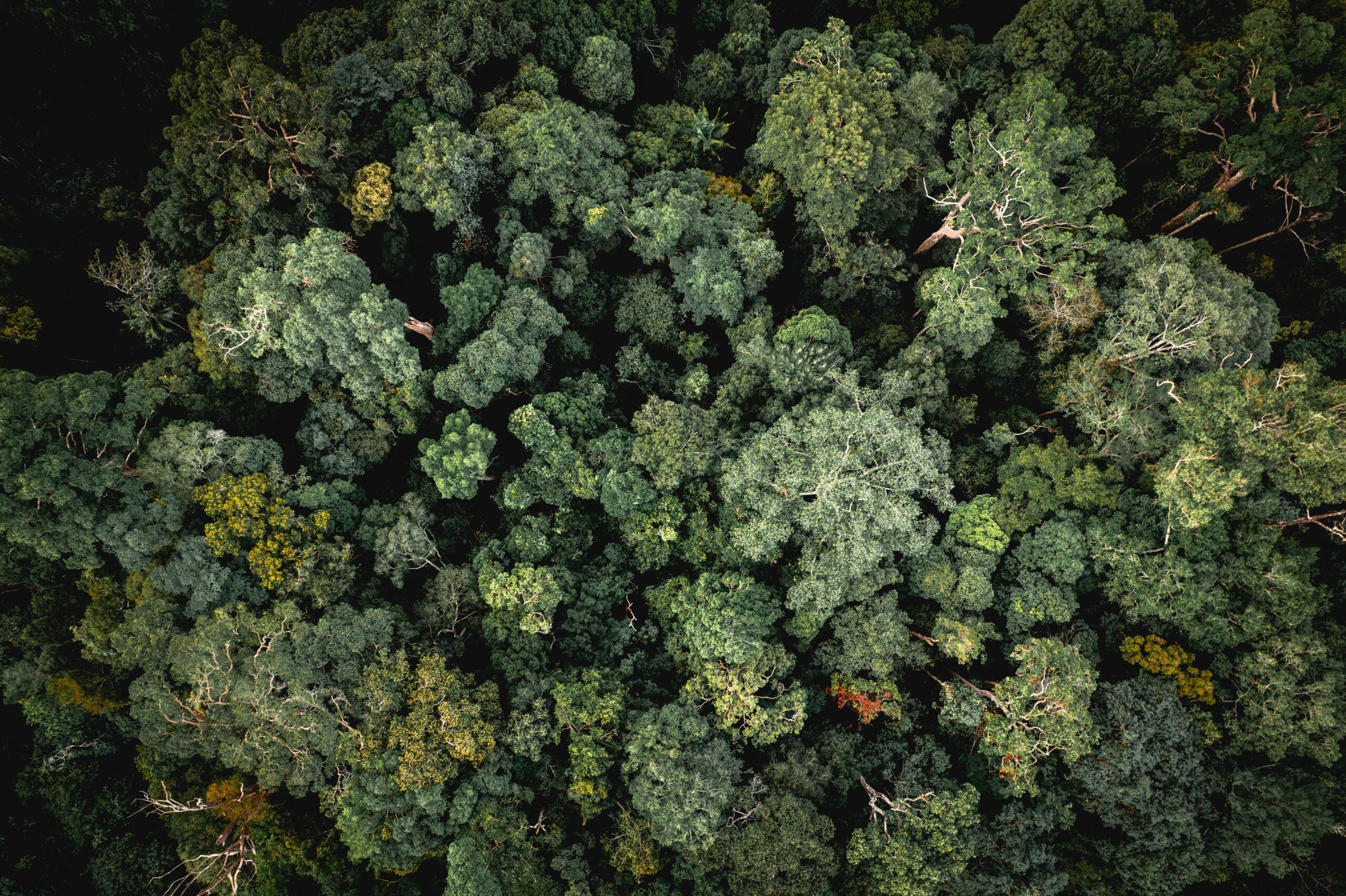
That nature needs defending nowadays goes without saying, but I am writing here specifically about the word itself: “nature,” which has been taking its own beating as of late. It’s called a “separating word” and is alleged to create an artificial divide between the human and non-human. And coming out of old Europe as it does, it’s also suspected of being outdated, a fanciful notion of days past, and Eurocentric.
All these possibilities exist to varying degrees, but I’ve always liked the word “nature.” I like saying it. I like the ure at the end, it’s deep, loamy flavor. And something in me implicitly trusts it. On the page, it lends a certain dignity to the words around it and seems to speak for its subject about as well as any word can. It’s not perfect of course. In the end, like all words, it can only be a symbol, never the thing itself.
And yes, it is an old word, but that’s its power. If you follow the Online Etymological Dictionary back to its Proto-Indo-European root, “gene,” you begin with give birth, beget. Its source meaning is procreative, emergent, echoed later by the Medieval Latin verb “nasci,” meaning to be born. This root branches into words like “natal,” “nativity,” and “natura:” course of things; natural character, constitution, quality; the universe. In Old French, “natura” became “nature”: being, principle of life; character, essence. And through the 1300’s it was defined variably as the forces or processes of the material world; that which produces living things and maintains order; creation.
Nothing in the word so far seems to split humans from nature. The definitions are broad and universal: constitution, principle of life, the universe, essence, and the course of things. Indeed, around that time, the meaning shifts to the human, with the concept of “human nature”: essential qualities, inherent constitution, innate disposition. Nature is in the human too, and not just added on, but essential, inherent and innate.
The separation would come later, in the 1500’s, with the beginning of the scientific revolution. The older, medieval sense of sacrality which had cloaked nature was stripped away, and nature was recast along strictly objective lines as a machine that could be taken apart, understood, and used for human purposes. In the new clockwork universe, all became cogs but us, and by the mid-1660’s, “nature” had shifted to: the material world beyond human civilization or society; an original, wild, undomesticated condition.

You can feel the drop in status. The language changes too, shifting from mildly sympathetic with a touch of awe to clipped and almost judgmental. Where “nature” once possessed mysterious qualities of essence and held the principle of life, it was now rendered purely material, existing primarily in relation to us: beyond human civilization or society.
That distancing has continued. Today’s Oxford English Dictionary defines “nature” as: the phenomenon of the physical world collectively; esp plants, animals and other features and products of the earth itself, as opposed to humans and human creations. Cambridge dictionary: all the animals, plants, rocks, etc. in the world and all the features, forces, and processes that happen or exist independently of people. Merriam-Webster Dictionary: the external world in its entirety. (Note the word external.) Dictionary.com: the material world, especially as surrounding humankind and existing independently of human activities.
I am particularly struck by the Oxford English Dictionary’s definition, where biological entities like plants and animals are described as phenomena of the physical world. It’s a subtle turn of language but has profound implications, for it places life into a physical framework, implying even at this late date, when science knows so much more, that living things are as machines, without sense, initiative or agency.
As we see, it’s not “nature” that separates human from non-human, it’s we who do the separating, and then saddle that separation on the word. But the nice thing about words is that their meanings are fluid. Just as science and modernity split humans and nature into separate categories, we can weave them back together. All we need are other words.
What about the environment?
For all the reasons I like “nature”—its sound and flavor in the mouth, its effect on the words around it, its deep history and ability to speak for its subject—I dislike “the environment.” It has a thin, tasteless quality when spoken, and rather than ennobling the words around it, it tends to flatten them out into a political context.
Introduced in the early 1900’s, “the environment” is a truly modern expression, intended to provide a more scientific-sounding replacement for the old term “nature,” with its sacral qualities and implications. It certainly has a more contemporary quality, but try as it may, “the environment” just can’t speak for its subject. Its meaning is too proscribed to a technocratic perspective. It does not, to me at least, contain the universe, or the notion to be born, let alone the innumerable particulars—the velvet of an elk’s antler, the sound of a woodpecker tapping at a decaying trunk, the scarlet orange berries a Mountain Ash puts out in autumn. Such delights, however, sit quite naturally under “nature.”
The Indigenous perspective
I’ve been using the royal “we,” as though these observations speak to all of us, and for most English speakers in this now-global culture, they generally do. An exception occurs with indigenous peoples, whose languages, though each unique, tend on the whole to be quite different from modern English. English is a noun-based language that defines the world as a collection of things. Indigenous languages, however, such as Lakȟótiyapi, spoken by the Lakota, are verb-based, and see the world as a flux of events, of change and movement, relationship and spirit. They and most indigenous peoples don’t need nouns in the same way we do.
Even more important, indigenous people haven’t separated themselves from the broader world as we have. They haven’t created hierarchies with humans at the top and the rest of creation below. Indeed, indigenous people tend to see themselves as “little brother” to the older, more established beings and lifeways around them. Further, since they haven’t separated themselves from their landscapes, there is no “beyond human civilization or society” to point to. Words like “nature” or “wilderness” simply don’t make sense to people fully integrated into the flux and flow of the whole.
Our mental maps of meaning are drawn with words
Perhaps the lesson for the rest of us is that in addition to redefining “nature” to include humans, we should expand its meaning to include flux and flow, energy and spirit. And if you look back at “nature’s” original meaning, you find some sense of that already there. Think of “nasci,” to be born; “natura:” course of things.
“Nature” can carry the meanings. It is a rather large vessel of a word, a whole of wholes, able to contain things as vast and minuscule as the universe and a poppy seed. In it go mountains and photosynthesis, rivers and birth, forests and fish, growth and decay, singing, seeing, sleeping and waking. In it also goes the tree of life, including that one branch labeled Hominid. And since all these things are constantly changing and transforming, they’re also stories, events. “Nature,” then, can be thought of as the story of all stories, the great event we live within.
One last thing to say about “nature.” Unlike “the environment” and “climate,” it has yet to be reduced to ideological terms, and still means largely the same thing to most people. And though, like beauty, it’s hard to define, it can be felt. The feeling is a resonance, a resonance with something we generally sense to be good. And not only good, but trustworthy. Nature is that which doesn’t lie. We could think of it as the substance of truth, which in the age of AI is no small thing. Maybe it’s everything. Maybe it’s where we begin.


Comments
We changed commenting systems on September 10, 2026 as part of a site-wide functionality and security upgrade. Your past comments have not disappeared, and you can still log in with your old Disqus account credentials if you wish. Contact us with any questions.