

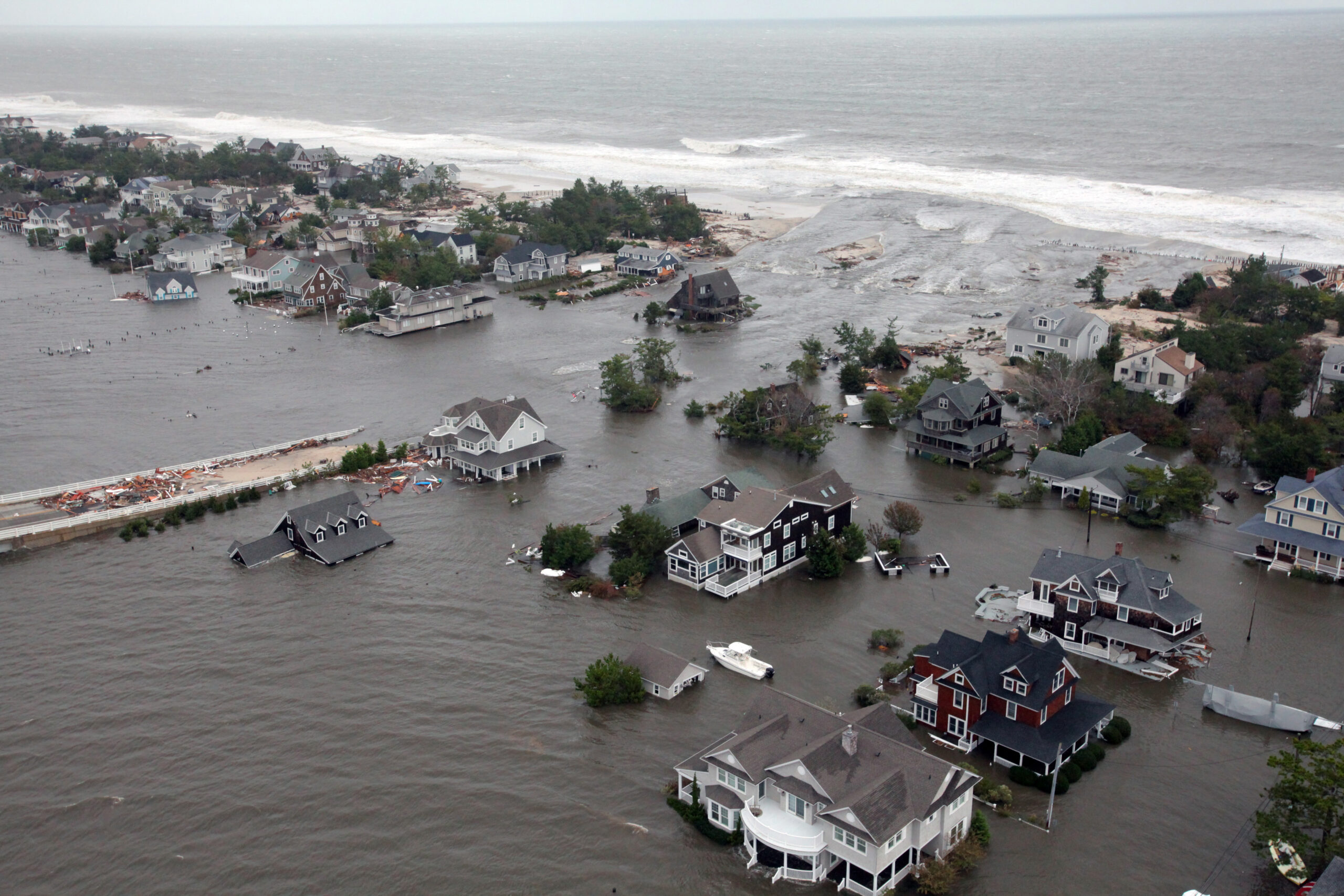
As we enter what is likely the worst El Niño event in history, amid geopolitical turmoil that would have put our systems under grave pressure even on its own, consideration of how we can adapt and survive is urgent. It is in that context that I assert this:
Adaptation needs to grow up. To mature it cannot remain a technocratic exercise in flood defences and heatwave plans. It has to become a project of national (and local and international) resilience.
One of the most significant developments in recent years has come about with, as yet, quite insufficient public discussion: the growing recognition that, as I’ve written about here in Resilience earlier this year, climate decline and ecological breakdown are not merely environmental problems but national security issues. This represents an important shift in perspective; a game-changer in how ‘environmental’ questions are seen.
Crucially, national security planning is not primarily about predicting the future. It is about asking what plausible worst cases might arise and ensuring that society is resilient enough to withstand them. Governments routinely think in these terms when preparing for military threats. The realisation that they must now think in similar terms about ecological risks marks a historic change.
What matters is not simply the prospect of more extreme weather or biodiversity loss in themselves, but the cascading effects that ecological disruption can have upon the systems upon which modern societies depend. Britain’s vulnerabilities are particularly acute. We rely heavily upon imported food and imported agricultural inputs, leaving us exposed to shocks far beyond our shores. The security of our food supply depends upon stable ecosystems, reliable international trade and fragile global supply chains. A serious disruption to any of these could have profound consequences. Well, buckle up; serious disruption to them is possible and likely within the next 18 months. It will be expressed as a further cost-of-living increase and, probably, as shortages of some goods on our shelves. If we are unlucky, foolish and unprepared, it will express as bare shelves and failing systems and panic.
Thinking in terms of resilience changes the policy agenda. It means asking not simply how to reduce emissions, important of course though that remains, but how to ensure that our food systems, infrastructure, communities and institutions can cope with increasing and potentially now imminent instability. Greater food self-reliance, more nature-friendly farming, reduced waste, healthier diets and stronger local economies begin to look less like optional environmental policies and more like sensible — essential — measures of national preparedness.
This points towards a broader truth. Climate adaptation cannot be understood simply as defending the status quo against external threats. The status quo itself has become increasingly fragile. The question is no longer whether our societies will undergo significant transformation but whether we will shape that transformation deliberately or merely react to crises as they unfold. The choice is not between change and no change. It is between planned adaptation and forced adaptation.
There is an encouraging aspect to this. Many of the measures that would make us more resilient would also make our lives better: this is what I term ‘the beautiful coincidence’. More local food production, healthier landscapes, stronger communities, less waste and a closer relationship with the natural systems that sustain us are not ‘sacrifices’ demanded by an ecological emergency. They are positive goods in themselves. There is a fortunate convergence between what is needed for security and what is needed for human flourishing.
History offers a useful analogy. Britain’s wartime “Dig for Victory” campaign was not simply about producing more food. It was a national project of resilience, equipping ordinary people with practical skills and a greater degree of self-reliance. We have allowed many of those capacities to wither. Recovering them would not represent a retreat from modernity but an intelligent adaptation to a more uncertain world.
Perhaps the most unsettling conclusion is institutional. The structures of government we have inherited were designed for a world in which risks could largely be treated separately: defence over here, agriculture over there, the environment somewhere else. Climate decline and ecological breakdown do not respect those boundaries. They create interconnected risks that demand joined-up responses. Adaptation, therefore, cannot be left to a single department or reduced to a collection of technical fixes. It must become a central organising principle of government.
Seen in this light, adaptation is not a gloomy exercise in managing decline. It is the task of building a society capable of weathering the shocks of the twenty-first century while improving the quality of life of those who inhabit it. The challenge before us is not simply to survive an age of ecological instability, but to emerge from it with communities that are more resilient, more self-reliant and ultimately more worth living in.
Resilience is not merely instrumental; it is a civic virtue.


Comments
We changed commenting systems on September 10, 2026 as part of a site-wide functionality and security upgrade. Your past comments have not disappeared, and you can still log in with your old Disqus account credentials if you wish. Contact us with any questions.