

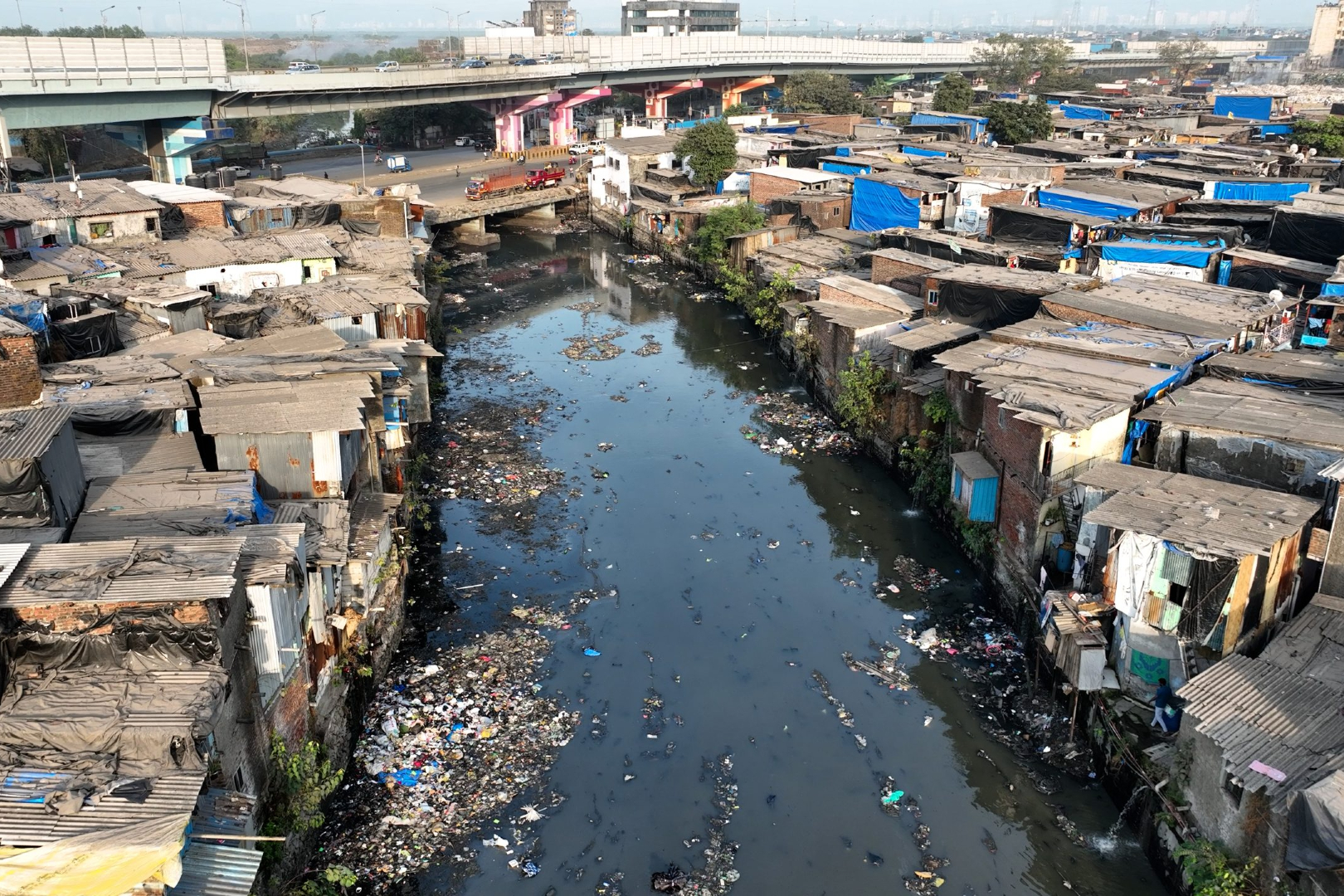
Flood risk is typically assessed through rainfall, sea level, and storm intensity. Increasingly, however, those measures are no longer enough. In many of the world’s fastest-growing cities, a new factor is reshaping outcomes: plastic waste—not only as a pollutant, but as a direct cause of infrastructure failure.
Most drainage systems, culverts, and flood channels are engineered to move water, not to process large volumes of solid waste. Yet in many urban watersheds, that is precisely what they are being forced to do. Because they are not designed or equipped to collect and manage plastic waste, systems are failing. The results are increasingly visible in city streets and waterways. In Metro Manila, Philippines, a series of heavy rainfall events in recent years has repeatedly overwhelmed drainage systems, leaving waterways and pumping stations buckling under the strain of plastic waste blockages.
When infrastructure meets reality
Urban drainage systems are engineered with long-established assumptions: flow rates, capacity limits, and maintenance cycles. In practice, plastic waste that accumulates in waterways collects at choke points and then moves, often unpredictably, during storm events. When rainfall increases, water no longer flows cleanly through the system and instead carries debris. The effect isn’t linear. A system can appear to be functioning until it isn’t: small blockages turn into critical ones, and runoff water that should drain is redirected, often into the most vulnerable parts of a city. As climate change intensifies severe weather events, waste management practices and upstream river systems need to be better adapted to support local resilience to growing flood risks.
A compounding risk few models capture
Most flood models still assume open channels and predictable flow. That assumption is becoming less reliable. A recurring pattern appears across parts of Southeast Asia and Latin America: during dry periods, waste accumulates, and when the rains return, it is swept into drainage networks, overwhelming systems built solely to handle water.
This isn’t a maintenance problem. It’s a structural one.
Plastic changes how infrastructure behaves under stress. It increases the likelihood of failure and makes outcomes harder to anticipate for insurers and city planners, creating a blind spot. Losses attributed to “extreme weather” are often shaped, sometimes materially, by upstream conditions that are visible and, in many cases, preventable.
Interception as risk mitigation
This is where plastic interception becomes risk management. Systems that capture waste before it moves downstream change the operating conditions of infrastructure. They reduce the volume of debris entering drainage networks and reduce the likelihood of blockages during storm events.
Organisations such as The Ocean Cleanup are now deploying river interception systems across a growing set of high-risk cities, including Manila, Panama City, Mumbai, Jakarta and Bangkok. The focus is on scaling interventions where flood risk and waste flows intersect. These systems generate continuous data on waste flows: how much plastic is moving through a river, where it accumulates, and how those patterns shift over time.
That data can help determine which infrastructure is most exposed, not just to water but to the interaction between water and waste. In systems like the Pasig River in Metro Manila, one of the most heavily burdened urban waterways in Southeast Asia, upstream interception has become a means of restoring the basic operating conditions of urban flood infrastructure.
Rethinking what counts as infrastructure
Traditionally, infrastructure investment has focused on hard assets: levees, drainage systems, and pumping stations. These remain essential, but they were designed around assumptions that no longer hold.
If plastic waste is now part of the system, managing it is no longer optional — it requires a broader view of resilience. This includes not just building stronger assets, but improving the conditions in which those assets operate.
In that sense, river systems themselves can be viewed as infrastructure. And interventions that keep them functioning — such as waste interception, flow management, and upstream controls — start to sit alongside more traditional investments.
What changes now
Climate risk doesn’t begin at the coastline, or even at the floodplain. It begins upstream, in the systems that shape how water moves through a landscape. Plastic is now part of that system, and in many places it is making infrastructure less reliable and extreme events more damaging.
The implication is clear: upstream plastic waste management is essential for effective climate risk reduction and resilient urban infrastructure.
We can pay now by investing in upstream systems that reduce risk before it materializes, or we can pay later through higher losses, more frequent failures, and infrastructure that no longer performs as intended. In that sense, the most effective climate adaptation investments may not be at the point of failure, but upstream of it.




Comments
We changed commenting systems on September 10, 2026 as part of a site-wide functionality and security upgrade. Your past comments have not disappeared, and you can still log in with your old Disqus account credentials if you wish. Contact us with any questions.