

Show Notes
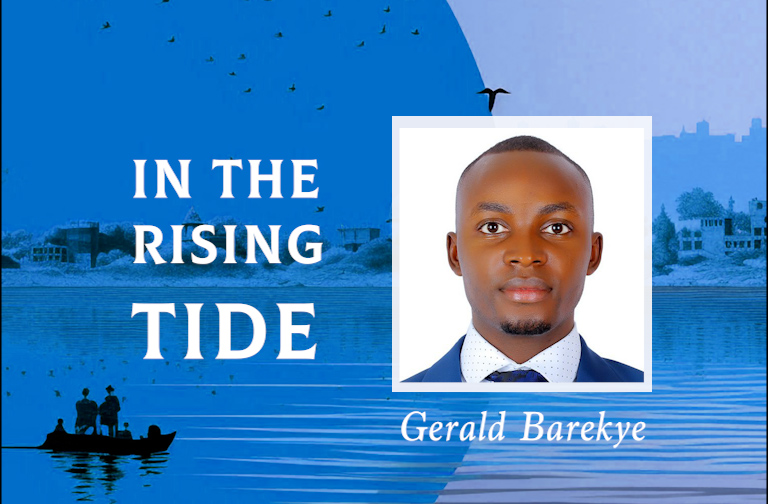
In this episode, we travel to Uganda to speak with human rights defender, environmental activist, and community organizer, Gerald Barekye. He is the Executive Director of the Center for Environmental Research and Agricultural Innovation (CERAI), and works with communities in the oil-affected region of Albertine Graben. His work supports those most impacted by environmental degradation and fighting for both ecological and human rights.
Gerald’s path is driven by a deep commitment to place and people. We hear about his work mobilizing young people to build climate justice movements in Uganda and what it means to stand up for communities facing environmental and economic pressures. Gerald shares his perspective on creating meaningful change from the ground up and offers a powerful example of how local action, courage, and collective organizing can shape a more just and resilient future.
You can hear more from Alex at Human Nature Odyssey.
Please subscribe wherever you enjoy your podcasts and leave us a review.
Sources and links
Credits
In The Rising Tide is hosted and produced by Alex Leff, in collaboration with Resilience. This series is made with support from a grant from Omega Resilience Awards, a project of the nonprofit Commonweal. Find out more at ORAwards.org.
Transcript
It’s time we come together, share stories, and meet the unprecedented times we live in. Welcome to In The Rising Tide. I’m Alex Leff. Thank you for being here.
In this episode, we travel to Uganda to speak with human rights defender, environmental activist, and community organizer Gerald Barekye. As Executive Director of the Center for Environmental Research and Agricultural Innovation or (CERAI), Gerald works with communities in the oil-affected region of Albertine Graben–supporting those most impacted by environmental degradation and fighting for both ecological and human rights.
Like Louise and Hajar in our previous episodes, Gerald’s path is driven by a deep commitment to place and to people. We explore his work mobilizing young people to build climate justice movements in Uganda, and what it means to stand up for communities facing environmental and economic pressures.
Gerald shares his perspective on creating meaningful change from the ground up—offering a powerful example of how local action, courage, and collective organizing can shape a more just and resilient future.
Alex Leff (00:00.088)
Joe Burecha is executive director of Surai and I'd love to hear about what kind of work your organization does and what gave you the idea initially to organize something like this.

Gerald Barekye (00:14.19)
Thank you so much, Alex. My name is Gerald Barice and I do work with an organization called SELAI. SELAI is Center for Environmental Research and Agriculture Innovations. It is a youth-led, focused and youth-led organization, which is a nonprofit registered here in Uganda. And we began it in 2019 when we are still at McKinley University and we formally registered it in 2021.

as non-profit company and SLI specifically does work in three areas. One is environment and extractives. This is where we are organizing young people and communities to come out and protect, conserve, and also participate in the restoration of our environment. And also we do and focus on extractives where we are mobilizing communities to actually understand

what oil and gas activities are meaning. As you are aware that Uganda is exploring its oil for the first time. So communities are excited and we are engaging them to understand what these oil activities are all about and how they can make an input and also see if they are benefiting from them. The second program is food and agriculture. This is where we are mobilizing

grassroots communities and young people special in education institutions to take part in agriculture and also influence the policies that are in agriculture sector. Uganda has one of the biggest population of young people with over 75 % being youth below the age of 35 years and also the country depends on agriculture which contributes about 24 % of the total GDP of the country.

So this is why we are giving more emphasis to young people to make sure that they bring in their input right out from grassroots communities, but also in the education institutions. The third program is Renewable Energy. This is where we are mobilizing young people and the communities to participate in activities that are driving a just energy transition here in Uganda. In Uganda, over 90 % of the population still depends on

Gerald Barekye (02:36.014)
that fuels firewood for cooking and lighting. Communities are still using paraffin, they are using other data sources of energy and this has also included on the diseases that have affected especially women in communities where we work from.

Gerald Barekye (03:22.446)
So that's the background of the organization. But to me, as a person, I did in agriculture and rural innovations from MacElo University. The background of forming this organization began when we participated in one of the trainings that was organized by one of the organizations called Africa Institute for Energy Governance, where they had a debate on climate justice for young people.

And from the debates where we got an idea that actually we can mobilize and organize our fellow young people to register an organization. And that's how Selai came into place.

Alex Leff (04:03.448)
Amazing. Awesome. I want to back up to your childhood and origins and we'll get back to Sarai.

Alex Leff (04:42.766)
I'd love to hear about the district that you grew up in and what your childhood was like because I'm interested in when the seeds were planted for the work that you're currently doing.

Gerald Barekye (04:54.19)
Okay, thank you so much. I was born in a district called Tungamu District. It is a district in the western part of Uganda. My parents were agriculturists, depending on farming to actually pay school fees, provide food at home. So we depended on agriculture for our livelihood. We grew up depending on firewood, cut trees and the...

I make firewood at home. So wouldn't imagine these things of climate change and others. And we depend on one of the biggest river in Western part of Uganda, which is the River Ruiz. River Ruiz is one of the river that serves over 4 million people in Western part of Uganda. But unfortunately I grew up seeing the companies are depositing wastes into that river. People dumping plastic bottles in the river. By the time we would go to fetch water, would find the bottles are full everywhere.

The river, as I talk now, has lost the over 6 % of its water. And this is because people are not taking initiative to protect this river. But as I was in school, like people, they kept talking about environment, how you can protect environment, how you can take clean water. And I kept bringing up the examples of the river with bendon and how it is. It's something that actually trickled my mind on how I can give my contribution.

as far as conserving that river is concerned because I kept sharing my experience on river weaves until when I got an opportunity to go on a radio talk show to talk about climate justice. I wrote an article about the protection of river weaves and what it means actually falling sick from the river because in my community, typhoid was too much during that time. Typhoid? Yeah, typhoid. Typhoid. It's a disease that is common here in Uganda and all.

And it comes out when you take dirty things, dirty water, dirty food and others. And remember, water contributes almost 100 % of the livelihoods in homes. You drink it, it's for preparing food, cows take it, you take its meat. And I didn't know much about activism or work, but I was just sharing the story of what's happening. And it's when I attracted attention of not only media, but also the local communities, because we were talking about the destruction that is happening.

Gerald Barekye (07:21.23)
So since then I began writing during my school, publishing and newspaper opinion articles in the national media, papers and also international platforms. So that's how I built from level to level at which actually where I am now.

Alex Leff (07:39.566)
wanna explore the river, River Weasel, and do you have some early childhood memories of encountering the river?

Gerald Barekye (07:45.582)
I want to imagine. Yeah, because we would go fetch water and spend there like four hours. On the backs of the river we had some small pitch where we used to play football from. To go in groups with the neighbors you find you are like five, then you find other five there. You begin praying, then after you go to the river and bathe. This is the water we are going to fetch but it's the water that is moving.

But remember, we bathed using soap. But that water would proceed to go in other communities. So you find that the water we have bathed from here, the darkness and others has moved. The other district, FENT, has moved like photo-creams and the other people are ones are fetching dirty water. And also we ourselves would be fetching dirty water that other people in the other district have used because the river that serves most of the districts in the western part of Yigat. So those are the memories that came.

are coming into my mind and also shaped me to begin now mobilizing my fellow people not to dump our waste sea when we go to fetch water.

Alex Leff (08:52.782)
Is this something that you felt a little alone with? How come no one else sees this? Am I the only kid that is seeing this contradiction?

Gerald Barekye (09:01.233)
I think when I was a student, I was very stubborn and I liked making noise. So I used to break stories. I liked breaking news, like being the first to tell a story. And I think it's something that I grew up knowing and also

One of my parents, my mother, my parents were teaching in a Catholic church and I used to go with her to church when she was preaching. So I'm also gaining confidence because I'm moving with her, she's the boss in church.

Alex Leff (09:37.484)
Hmm sounds like your mother was an inspiration in terms of seeing the power of sharing a story and I imagine you saw the response of the congregation as well the people that were coming to the church and how what she was sharing was impacting people too so when you were a kid you saw her and you were thinking like I would like to share stories with people and and illuminate

Gerald Barekye (10:02.83)
Actually, during preaching, would say, you children should behave well, be disciplined, introduce your parents, greet all the people. And I would feel that she's really talking about me and I was forced to change because... I would say, this person is talking about me, but she's not being it directly and she kept challenging me, shaping me in the right direction.

Alex Leff (10:29.966)
Right, she's talking to the whole congregation about how children should behave and you're realizing like, this is my mother, she's talking about me.

Gerald Barekye (10:36.578)
Yeah, yeah.

Alex Leff (10:38.798)
curious when you were breaking the story, which you like to do, what were the main problems that you wanted people to see about the river and then what were some of the changes that you were trying to advocate for?

Gerald Barekye (10:52.366)
In 2023, we organized some great action about protecting that river. We mobilized the media, we mobilized students. So we had an action that we did along the river where we are calling on the companies that are actually participating in the construction of the river. We wrote a petition. Our story was published on one of the TVs.

increased our mobilization skills actually in universities in the western part of Uganda. And we had the forum that actually we are using to keep doing the activities that are aiming at stopping the ongoing destruction. From the action that we did, we are able to organize a meeting with the authority leaders where we tabled our issues on what should be done.

But as you know, these advocacy work that we do also need support, need finance and others. So after doing that work, we formed the group, but I think we failed to sustain the activities we were supposed to keep doing, including planting the trees around the river, keeping pressurizing those companies to stop discharging waste into the river. And our advocacy work kept reducing, reducing. But I'm happy that other organizations joined and we are still doing it. But you see,

We are fighting a big giant. So it's something that also we are still doing, but I know some actions have been taken as far as stopping the agricultural activities along the river banks is concerned. Some other organizations have come up to distribute some trees to plant. But I think the most important part is to sensitize the communities about the values of the river and their role as far as protecting that river is concerned.

Alex Leff (12:41.966)
It seems like the river was a good educational ground for you to learn how to organize and educate. And I know another major project that you became concerned with was the East African crude oil pipeline. And so I want to talk about the oil extraction as well too. And what you've explained in your writing was that Uganda first discovered commercial oil deposits as recently as 2006.

So this change has happened in your lifetime. How did this change things? You know, on one hand, there's this economic benefit and people were excited that, this will help us. But also you were aware that actually this, this could harm the same people that it is trying to benefit as well too. So how did you see that change in your lifetime and, and what was people's responses when it was first announced?

Gerald Barekye (13:33.454)
The excitement was too much. Even when we were at school, students that were doing petroleum courses were actually bragging out that after school they are going to get jobs.

Gerald Barekye (13:48.76)
So what does this oil project mean? What does it bring to us? Uganda is carrying out now three oil projects. One is Kingfisher Oil Project, that is in Rik Arbat. Another one is Tirenga Oil Project, that is located in Lourissa District. And the third one is the East African Oils Pipeline, that is passing through 10 districts in Uganda and also 25 districts in Tanzania.

I think the E-Corp is the one that has now brought in havoc and that have contributed a lot to the suffering of actually the most affected communities. I think just because people were excited, they didn't give attention of what was coming. Communities were cheated when it comes to compensations, involved many things, displacing people, was totally different from their original traditional setting.

Most of them were in grass-touched houses. And you know, I don't know if you have ever got the experience of seeing those grass-touched houses. Their temperatures are always cool. They are simple to repair and everything. And now we have built a permanent house with metals where you will need electricity. In the case the door breaks down, it doesn't have mandrel, the person doesn't add anything in a month. So issues kept.

coming out. So in 2021, I joined one of the coalition meetings for the Stop E-Corp campaign. And I went to one of the camps, old Jakabunga camp, where the people that were affected by refinery were shifted and there were built houses there. I was told that about 40 % of the children are not in school because those people, can imagine when you are staying here and you are relocated to other places.

You have lost the social capital. You are beginning a new life, no plantation, no food and others.

Alex Leff (15:42.67)
Mmm.

Gerald Barekye (15:54.382)
It's an area where you can go and really see what oil and gas can do to these communities.

students left school to actually challenge what's being done. They are being arrested, they are being targeted by federal companies and also by the government.

Gerald Barekye (16:28.846)
The advice that we doing is simple. Instead of investing in oil and gas, let's divert these resources into clean renewable energy sources that are cheaper and sustainable. Because over 80 % of Uganda still depend on biomass, Uganda has excess resistivity but can't afford to pay for the monthly charges. But we are paying the power because an investor comes and says, I'm producing these megawatts, whether you consume it or not, you're going to pay for it.

So our argument is, instead of wasting these resources in these oil and gas projects, what if we divert these resources, for example, into solar, what if we establish the solar main grid in these communities? This is something that doesn't need monthly payments. What if we invest in wind energy instead of having a pipeline that is traversing 10 districts in Uganda? Why don't we produce the oil that we can consume locally? Because at the end of the day,

This oil is transported to Port of Tala in Tanzania and exported to international markets. That means that oil will reach there and we will again buy it from there, expensively. And we are saying instead of wasting resources in the project that is not benefiting Ugandans, let's invest in these green economic sectors. For example, agriculture that employs over 90 % of Ugandan population that contributes over 24 % of the total GDP.

Let's put money there. Let's put money into tourism. Campaign is targeting one, the financial institutions. Second, it is targeting these oil companies. And third, it is targeting the insurance companies. And as I talk, I think over that the insurance companies and financial institutions have pulled out from financing the East African oil pipeline. And it's a credit to us because it's laying the project first and foremost, and also

It has given us space to actually advocate for some issues the oil companies and also the government should work on. Because as I talk now today, the ECOP itself, the lines they put, they are flooding and water is going to people's gardens. To make the matters worse, is ongoing, I think, about oil wells in one of the biggest national parks in Uganda called Maksha Falls National Park. Oil activities that are happening in the national park.

Gerald Barekye (18:51.214)
The elephants have now moved away from national park and they are attacking people's gardens. And I think since 2 22, over 10 people have been killed by elephants, including one person that died last month. Wow. Because elephants is a very sensitive animal at Canavia. He has sound within 40 meters away. So due to the noise of the trucks, due to the noise of the machines. So these wild animals are moving away. They are moving off from the national park.

And we are saying, but why should the country that is built on tourism allow such activity to happen in the national park where Alex comes to visit the National Park, some Alex comes to visit the National Park, but you are destroying nature. So these are our points of argument. However, of course, activism comes a lot with issues. 11 students that are being held in prison, they were arrested, I think yesterday, but one.

When they were just delivering a petition, just a petition to the SCB bank headquarters here in Uganda, it was the one of the bank that is planning to finance the eco-product. So they had a petition that they had to go to deliver to the bank premises. So they will come with them. They sat inside the bank. Then one of the bank attendants came, talked to them, received the petition. They had a very productive talk.

By the time they finished, the security had surrounded them. So they picked them from the bank. They took them to the prison. And today, when they were supposed to appear in court, I think they brought them around 4 p.m. And I haven't found out if they were given a bill. One of our lawyers went there. He will give us updates. Since this year began, we have had about 10 arrests. We are over 30.

young people have been detained and reduced on bail, some of their cases dismissed. So here the shrinking civic spaces, including especially for climate justice activists, even if you move around and you raise your placard like this, like stop, you can't go, we need the climate justice, we'll be arrested. And at end of the day, they are charged with common nuisance. Like the judge is common nuisance and they try, they keep you for like one week, then next week they gave you bail.

Gerald Barekye (21:10.734)
Then after like four months, they dismiss the case without even the Normally you have to keep one the call to report it, but everything they are doing, they are trying to demoralize the poor of young people to make sure that we give up on what we are doing. But I think we have tried to sustain this with the global movements whereby in the case of arrests, the global community comes in, international community comes in to demand for the release of these students, but the situation is tough. But regardless, we keep moving.

It's a campaign that we are still running and our strategy is still don't invest in oil and gas, invest in clean renewable energy sources. And to make matters of recent, think Uganda launched the energy transition plan in the 2-23. But the most interesting part of it is that the plan is planning to use the revenues from oil and gas projects to fund the plan that is leading to the energy transition from fossil fuel to renewable energy sources.

which is impossible. They are playing, I think, some politics to lie you, that actually this planning is leading us to the transition that we are talking about. But we have to keep advocating and advocating because it's a process. have a process that can even take 10 years. But at every step we are achieving, we are achieving and we achieving. That's why we are keeping pushing.

Alex Leff (22:34.382)
That's very inspiring and it's scary, it's terrifying when there's those consequences of arrests. I mean, we have that problem in the United States, in many countries where you have people who are trying to raise the alarm about things that are hurting common people and those people are being targeted. And it's very scary. I'm curious, do you ever find yourself feeling small and powerless or moments where you feel like it's impossible and you want to give up?

what keeps you going just internally and makes you not afraid to keep going.

Gerald Barekye (23:08.654)
I think you know Nemo Bassi. He works with the Mother Earth Foundation. I think he's one of the people that inspired me. He calls himself a living ancestor because in Nigeria, when you live for over 40 years in the oil region, they call you an ancestor because originally, you are not supposed to live beyond those years. So that's why he calls himself a living ancestor. And he told us that this activism work is like calling is like

is a passion that someone has over something. Because I may leave it and I say maybe I go and do some other work, I may feel not satisfied in what I'm doing. I think one thing that makes me keep moving is having role models. The people that have been doing this work for long and the people that I still see in space. When I see those people still in space, I feel motivated, I feel empowered.

And also from the experience of the colleagues that have been arrested. They are released. We have a team of lawyers that is in place. They get arrested. We have lawyers. They got the court. They challenge the right decision. And these guys are released. So that one keeps me moving because I know even if they arrest me, I have people that are going to sue me. I have people that are going to talk about me. And the most interesting part of it is that for any action that we organize here.

we first inform the global partners and everyone to make sure that this is happening. So in case of anything, people be knowing that these people have been arrested, they have been doing this and this, and they have been in this place. So having such structure in place, having the standby lawyers, having the role models in the sector has actually kept me moving to do the work I'm doing.

Alex Leff (24:57.646)
Yeah, it means a lot to not be alone and know that there are others out there. So I'm curious with your work with Sarai. So you formed the organization out of the university after you were studying agriculture and you founded it with three friends. Is that right? So what was that first conversation like? I'm curious what that moment was where you were talking and you were thinking like, you know what?

Gerald Barekye (25:14.571)
Yes, yes.

Alex Leff (25:23.01)
we could form this organization. How did that conversation come about and what did you decide to do?

Gerald Barekye (25:27.831)
Yeah.

Gerald Barekye (25:48.398)
I called my friends, I of course, tabled the idea. One other friend was doing environmental studies. Another one was doing, I think, food and nutrition. So I said, you guys, we can do this. This is what we can do. can register the organization. It takes time to define what exactly you want to be doing. But think the most interesting conversation was about the name, how to have a good sounding name that actually tells even people what you are doing.

Because when I say Center for Environmental Research, know they are doing environmental work, research and others. I had done agriculture and I said, what the key thing that has to be in that name is agriculture. The colleagues I had, we were friends. We are still together. We are three directors and we are in every decision we make and everything we do, we are together. I think also having that trust within the founders, the trust within the directors made us actually build this organization right away from school.

Now, where it is, how far we have gone, have seen improvements because with this global campaign that we are joining, the partners we are making, it's making us have our ideas actually go out.

Alex Leff (27:00.226)
You talk about how 70 % of Ugandans are engaged in the agricultural sector. When Sarai goes to farmers, what practices are they trying to introduce? What changes are they trying to educate people about?

Gerald Barekye (27:15.264)
Yeah, most young people in Uganda shy away from doing agriculture. They see it as a dirty job. Remember, this is something that almost 70 % of the students at school depend on. Also here in Uganda, you find out most of the rich people are doing agriculture. They are having farms, they are grazing animals, they are growing maize, they are growing rice and other crops.

Alex Leff (27:21.422)
Hmm.

Gerald Barekye (27:44.078)
But last month I was in a community in one of the schools where we are establishing agroecology getting at school for these students learn those skills when they are still young. But I asked students, how many of you want to become professional farmers? None of them. I said, how many of you have parents that are in offices? None of them. I said, now, where do you get school fields? I

My mom sells tomatoes, my mom sells bananas, my mom sells cucumbers. But now, if you don't want to do agriculture and it is the one that is building your family, how are you going to survive? So I think one of the things that also we found so much interesting is having these new agricultural practices transferred in these local communities.

And one of the communities that we are focusing on is the communities that are affected by oil and gas. Those who have been displaced from their original land and they are now doing agricultural and infertile soils. Those who received money to buy land in other areas that they have failed to actually restore the original land they had because of the prices. So those are the farmers that we are targeting. So we got an opportunity I think from last year.

Alex Leff (28:42.606)
Hmm.

Gerald Barekye (29:05.376)
where we are supported by all our research to implement the agroecology project with the oil affected communities. through this project, we are trying to scare down these good, we can call them organic good practices, make sure that they can increase production even for their small plots of land they are using. A simple example, agroecology is all about using the available resources to produce food. We don't use

chemicals we don't use in organic pesticides will depend on locally made organic manures.

Alex Leff (29:42.381)
Hmm.

Gerald Barekye (30:33.31)
Uganda is one of the countries that depends on agrochemicals when it comes to food production. And our products have been banned from entering the, some of the international markets. And recently our maize was banned from being sold in Kenya, our neighbors, due to the afrotexans that are in the maize. So here we are training small scale farmers on how to make organic manuers.

Alex Leff (30:40.878)
Hmm.

Alex Leff (30:56.568)
Hmm.

Gerald Barekye (31:02.154)
using this locally available biomass. We are training farmers on how to make organic pesticides, mixing different herbs to make a pesticide. We are training them on how to produce something called soil biochar. Soil biochar is an organic manure that you get from burning different herbs, from burning different shrubs with different nutrients.

and we are applying it into your garden. is somehow very expensive here in Uganda because there are few people that know how it is produced. We also train them on smartable culture, how to grow crops in lines, how to organically irrigate their gardens and others. So it is something that we have done. And also because the community we are dealing with, the government have interest in it. And at some point they even stop us from organizing

Community meeting is there.

Alex Leff (32:00.93)
Really? Yes.

Gerald Barekye (32:02.188)
What has enabled us to keep penetrating the space is going there with most of the message in the solutions. Stop oil and gas investing in agriculture. So when I'm doing my trainings, even the information about oil and gas, I pass it out. Because they won't stand next to me to see everything I'm going to say. So this project has actually enabled us to reach as many communities as possible.

to pass out our information on human rights, people to get information and training some of the people in those communities. And also we have established a small demonstration farm where people are learning from and we have an agriculture extension worker who is in that area that keeps monitoring what's happening in that area. So we are also establishing what we call agroecology gardens at schools.

Alex Leff (32:51.342)
Agroecology gardens, yeah.

Gerald Barekye (32:53.802)
at school because we want to the culture of young agroecology leaders who will be understanding how to use this indigenous knowledge to produce healthy and nutritious food that can be actually accepted in international markets.

Alex Leff (33:09.462)
And something that struck me as well too, so where I grew up, there's a real distance from agriculture. A lot of people see food when they go to the markets, but they don't actually engage with how it is being grown on farms. And when I was a little kid, the first thing I wanted to be when I grew up, even though I grew up far away from a farm, was a farmer. And I remember telling my teacher when I was probably like six years old that I wanted to be a farmer when I grew up.

And she discouraged me. said, you don't want to be a farmer. It's, it's dirty. And, you know, now 1 % of Americans work on farms. And I think it's a real vulnerability. You know, we rely on these industrial systems. People don't know how to grow food. So right now when our economy is struggling and the food at the markets becomes more expensive, people don't have access to grow their own food. And it seems like a potential.

strength to have a society where more people are engaging with agriculture. And so I'm interested when you're talking about how even all these kids, know, their parents are growing their food, they're growing the maize, they're growing the tomatoes, they're feeding the kids and the kids aren't interested in engaging in farming themselves. I'm curious about why that change you think is happening, why kids are less interested in being farmers. What is the influence that's making that less appealing for them?

Gerald Barekye (34:40.529)
I think young people here like quite colourful and they feel that people that are sitting in offices are the ones that are earning a lot, which is very wrong. And also people here feel that when you are educated, when you have a degree, you are a big person in other words. You don't qualify to be in a garden with someone who did go to school.

Alex Leff (34:52.974)
Mm.

Gerald Barekye (35:06.574)
So they feel like someone doing agriculture is someone without future. And I think this is also a beauty in our education system where it is more theoretical.

Alex Leff (35:19.0)
Hmm.

Gerald Barekye (35:20.622)
You got that there, I think the unemployment rate is about 16%. So you find they are not employed. They are riding, we call them border boarders, the motorcycles. Find someone with a degree is riding a motorcycle instead of him going to the farm and did, but it's a narrative that we are trying to change to make sure that actually these young people love agriculture. Because being a farmer doesn't mean specifically be on a farm.

There are many, there is a long value chain on where you can come in. You can come at professional level, can come at processing level, you can come at marketing level. But those are the opportunities that young people haven't explored. And I think the country hasn't taken initiative because one thing to make these young people appreciate the power of agriculture is actually making agriculture studies comparison in education institutions.

make sure that these people by the time they finish school they have all the qualities it takes for them to understand what happens in the agriculture sector and you find people that have done business there are thousands but people that have done agriculture are very few like in our class we are only 45

Alex Leff (36:34.038)
curious with the work that Sarai does, you're working with farmers and you're introducing these new practices. Why might a farmer be hesitant to adopt these practices? Do you find people that are scared to implement some of the more traditional practices that you're talking about? What, what reasons do they give and what do you say to them?

Gerald Barekye (36:56.462)
working with these farmers, the level of adoption is low. Because it is chaining people from what they have been doing is a process. They can't quickly adopt. But the good chance we have got some ambassadors, some people that have already practiced what we trade to them. And when you reach out to their farms, you find their products are looking so nice, so nice.

Nowadays, we are collecting the success stories of the people that were part of this project. Last week, we had an exchange learning for farmers from different areas of Uganda. We took them to those specific farmers that are organically practicing what they learnt. And when they are convinced that actually these are the things we were doing previously, but they had adopted to use of chemicals and these ambassadors acting as a good example, they are

creating change in the communities. One person was telling us a story. There is what we call these earthworms. Earthworms, are very, very good living organisms that terapin in the soil mixing and others. But we were trying all the farms we are moving in to find if there are still earthworms in the soils. But we couldn't find any because of the chemicals that are being spread because they have died, they have moved away.

What I can say is that the level of adoption is low and it needs many efforts because the work we are doing, are few organizations that are doing it in Uganda. You find there are like four or eight organizations that are doing this, hard workers, work agroecology and other smart agricultural practices and you find you are out of weight. Like we are supposed to do this project in two districts, but the demand is too much. We are telling them that actually this project is nearing the end because

These people that we have for they will keep on replicating the knowledge to other farmers and they are like, no, you should come back. This level we have ambassadors that are leading the change in those communities. And we hope that the change will keep happening. There are these immediate results we can invest, but there are also these long results that we shall invest as we go on.

Alex Leff (39:13.92)
Hmm. And it's interesting, you know, that there's this trap that I think a lot of us fall into where we're told that there's a certain kind of development that needs to happen that's going to help people. And there's a certain level, like you were talking about how the thatched homes are replaced by the permanent housing, which is being told to people like this is an advancement. This would be a good thing, but there's all these downsides that come with that. The thatched homes had

better temperature regulation and they could stay cooler, for example, or that the permanent homes needed electricity. It seems like the chemicals that were being told are helpful in agriculture, a similar kind of thing that we like to get the new advanced technological solution when often it's trying to find a shortcut that's going to create more long-term harm than good. it's a mindset shift that we're getting too used to trying to find these shortcuts. And it's hard to convince people that

those shortcuts are not going to actually help us in the long term. I'm curious what you think it will take for the change you envision. Do you find yourself optimistic and hopeful about the transformations? I know that Ugandan has a very young population and I'd imagine that means that there's people who more open-minded in terms of what changes can happen. What do you think?

will lead to some of the changes that you're hoping for, that you're pushing for.

Gerald Barekye (40:41.824)
Yeah, one of the reasons why we believe that within the coming time we are going to have a lot of results is because most of the communities that we are dealing with, are oil affected communities and some of them were displaced from their original land and they began a new life. Now what they need is knowledge on how they can use their small parts of land to maximize production.

And again, we are trying to make sure that we keep these communities food-sustrural because he won't spend more money buying chemicals. He won't spend money buying these fertilizers because he's going to use the available shrubs, available manures, the available all that biomass. He knows how to mix it and make his manure and make his pesticide. And these pesticides are retail and they don't kill. They just chase.

They chase the pests to go away. And you need those pests so you don't want to kill them. So we believe that having this discussion begin from education institutions, our message is going viral. One of the schools I think where we last go, it had 1,020 students. So we are saying that these are almost 1,020 families that we have reached. Because we train them on how

Alex Leff (42:01.358)
Hmm.

Alex Leff (42:08.128)
Wow.

Gerald Barekye (42:11.17)
they can establish the agroecology nursery beds, how they can grow vegetables in line, and also established an agroecology garden at school, of which they have already planted. In two months, we shall be seeing the results. So we believe that if we have these people acquire these skills, those are 1,020 families. At least 50 families will actually adopt.

what we have taught these students. We believe through that system we shall have a lot of change moving forward. So we believe that transferring knowledge through young generation will actually make us reach a very wide audience. As we also do this work, we have a plan that we are following, which should be embraced by the government. So we are working closely with the local government because most of them don't even know that these things are so important.

We see that the agriculture has made us who we are and has made us survive for all these years. So those are some of the strategies that we are using to make toilets. These results keep being invested. If we get chance and maybe this project get renewed, then we shall explore it to other areas and have more results achieved.

Alex Leff (43:31.182)
Mmm, that's very exciting. the last question I had for you, you've written about the spirit of Ubuntu influencing you. And could you explain what Ubuntu is? How would you describe it? And how has it shaped your thinking on this?

Gerald Barekye (43:49.23)
is all about being empathetic, putting yourself in someone's shoes on what they are passing through. Because the power of resilience on how we are building these communities to be resilient is, first of all, when I'm going to communities I don't wear suits, I go in these my casual wear, I go looking like them. That's the spirit of when someone is seeing you as a colleague, not as someone who has come from offices and work.

But to me, the Ubuntu party is putting yourself in someone's looking like them, showing them that actually you are the same. The difference can be age, can be the background, but you are the same. And it has helped us to move very far. Here in Uganda, the situation like for the politicians, if like a minister, he has a convoy of like five vehicles, he has like

The one in front for the police, the next one is for the army. So he's guarded like a big person. So such person, can say that the spirit of Ubuntu knows what it is all about. At the end of the day, people will even fear to ask questions, people will fear to talk. So to me, I practice Ubuntu in my work. I make sure that before I go, understand the population I'm going to visit. I understand their background. I understand what they eat because for us.

anything they prepare is what to eat. That's the spirit of Ubuntu. Someone has prepared food but you don't like it. You won't say that you won't take it because you will look weird. What is this person thinking? So I try to make sure that I lower myself in everything I'm doing to fit the situation of the people I'm dealing with.

Alex Leff (45:35.534)
really appreciate getting to talk with you today and really admire the work you're doing. It's very important. Planting seeds for things that take time to really affect, but I can tell that the work you're doing is really going to matter to a lot of people for a long time.

Thanks for listening. Stayed tuned for episode 4 where we travel to Chile and talk with Mapuche leader, water defender, and spiritual activist Millaray Huichalaf Pradines.

This series was made with support from a grant from Omega Resilience Awards, a project of the nonprofit Commonweal. You can learn more at ORAwards.org. And this series was made in association with Resilience.org. We’ll have a link in our show notes.

Wishing you well and talk with you next time.


Comments
We changed commenting systems on September 10, 2026 as part of a site-wide functionality and security upgrade. Your past comments have not disappeared, and you can still log in with your old Disqus account credentials if you wish. Contact us with any questions.