My Intention
I loved the excitement and the cultural richness of my former very urban life. But to stay in the city and fight for everything I believed in, while trying to live sustainably, was exhausting… requiring more stamina, money, and faith than I had. I left to simplify, live closer to the earth, and depend more on myself. I learned self-sufficiency from my neighbors. They taught me how to support myself. But I am learning the most from the land herself, living now where the seasons and the cycles influence everything I do.
I am using the title, Finding Home, to zero in on what may become critically important during this time of enormous confusion, uncertainty, and increasingly limited resources. What would make us feel as healthy and safe as possible? What do we need for grounding and stability but also joy and well-being? My first three categories are water, food and community – basic needs for all animal life. These are very general categories. I will progress to more specifics as I rattle on.
Our most pressing issues right now and in the near future are to curb our almost willfull destruction of our air, soil, water and food supply. The world concern over oil and fertilizer shipments is just a symptom of our disease. The root problem is our unchecked consumption in a world of finite resources. In a world where we think our food must come from half a planet away, we have lost our sense of community, of deep local connections.
Finding Community
My ‘Aha’ moments
I. Group size is important.
In my early farming years, I received a grant to breed an endangered species of chicken. Along with funding and 25 three-day-old black australorp chicks there were instructions for their care. The grant was to expand the flock, increase the number of sitting (on eggs) hens and sell the chicks at six weeks old, encouraging other small farmers to participate in free-range programs and utilize these birds. (The breed has since moved from endangered to a “declining population”status.) However, I was to keep no more than seventy-five adults in total. That was curious… why seventy-five? Apparently that was the magic number beyond which the chickens would not recognize one another—though an ideal flock size was much smaller—twelve females, one male. A flock larger than 75 would mean increased anxiety for the community, increased fighting and pecking. It would affect their ability to lay eggs and brood their babies. I have since encountered size restrictions with other endangered animals; not just limiting the numbers in the herd but the minimum amount of land required for each animal and the importance of a natural pasture diet.
Before I was told about chicken anxiety, I had never considered group dynamics and sheer numbers or for that matter, that productivity, as well as anxiety levels, were correlated with community size. Then I encountered The Ringelmann Effect which is the tendency for individual members of a group to become increasingly less productive as the size of their group increases.
Max Ringelmann (1861-1931), a French agronomist, came up with a counter intuitive theory on working groups. At its heart, the Ringelman Effect postulates that the larger the group the less likely individual members will feel engaged and responsible. This made me worry about urban farming. I wanted to think that sustainable cities would be feasible; that cities could feed themselves, adequately recycle all their waste, collect enough fresh water while providing all their energy needs, safety and health care. But that is contingent on an enormous group effort, the cooperation of everyone; a sense of community responsibility. I have seen collective action function well in small groups and fall apart as the groups enlarge. I no longer imagine cities as being a viable way of life in the future.
II. Cooperation beats out competition.
Rereading Darwin and his acolyte, Petr Kropotkin (1842-1921), provided another way to look at group dynamics. As a young Russian military officer, Kropotkin was sent to Siberia and Mongolia. While he was there—and like Darwin in the Galapagos he was also an unofficial naturalist—he observed what he called mutual aid occuring in both plant and animal communities coping with extreme environments.
There is an immense amount of warfare and extermination going on amidst various species; there is, at the same time, as much, or perhaps even more, mutual support, mutual aid. And mutual defense. Sociability is as much a law of nature as mutual struggle.
Who are the fittest: those who are continually at war with each other, or those who support one another? We at once see that those animals which acquire habits of mutual aid are undoubtedly the fittest. They have more chances to survive, and they attain in their respective classes, the highest development of intelligences and bodily organization.
The above paragraphs are from Kropotkin’s magnum opus Mutual Aid: a Factor of Evolution (1902) which is considered a foundational text of anarchism. But Kropotkin was also writing about beneficial cooperation and reciprocity in all animal societies, including our own. He accepts that all organisms struggle for limited resources. But there is also a second struggle, a collective struggle between the organisms and the environment. Environmental challenges, especially climate, are best survived by the group effort rather than a single individual fighting alone.
Darwin himself clarifies (in Chapter 3 of On the Origin of Species) that the term
Struggle for Existence in a large and metaphorical sense, including dependence of one being on another, and including (which is more important) not only the life of the individual, but success in leaving progeny.
The soil is a living ecosystem with a lot going on, in particular innumerable reciprocal interactions between plants (including trees), protists, bacteria, nematodes and earthworms, insects, fungus… Life in the earth is a continual barter relationship for water, sugar, minerals and nutrients. It pushes the envelope a bit to say this is done with intention, though some scientists are saying exactly that. The word often used for the this kind of support in a dynamic environment is mutualism, which,in plants, fungi, and bacteria, involves beneficial relationships where these organisms exchange nutrients and signals, enhancing each other’s growth and survival. One of the most studied (and easily understood) exchanges is the symbiotic relationship between fungi and plants, a trade for the sugars made in the plant leaves for the minerals the fungus can transport to the plants. 80% of all plant species receive (primarily) phosphates, nitrates, zinc and copper when the mycelia (the filamentous growth from a fungus) come in contact with the root hairs of a plant. This is a partnership which has gone on for more than 400,000 years.
III. Diversity and inclusiveness are necessities
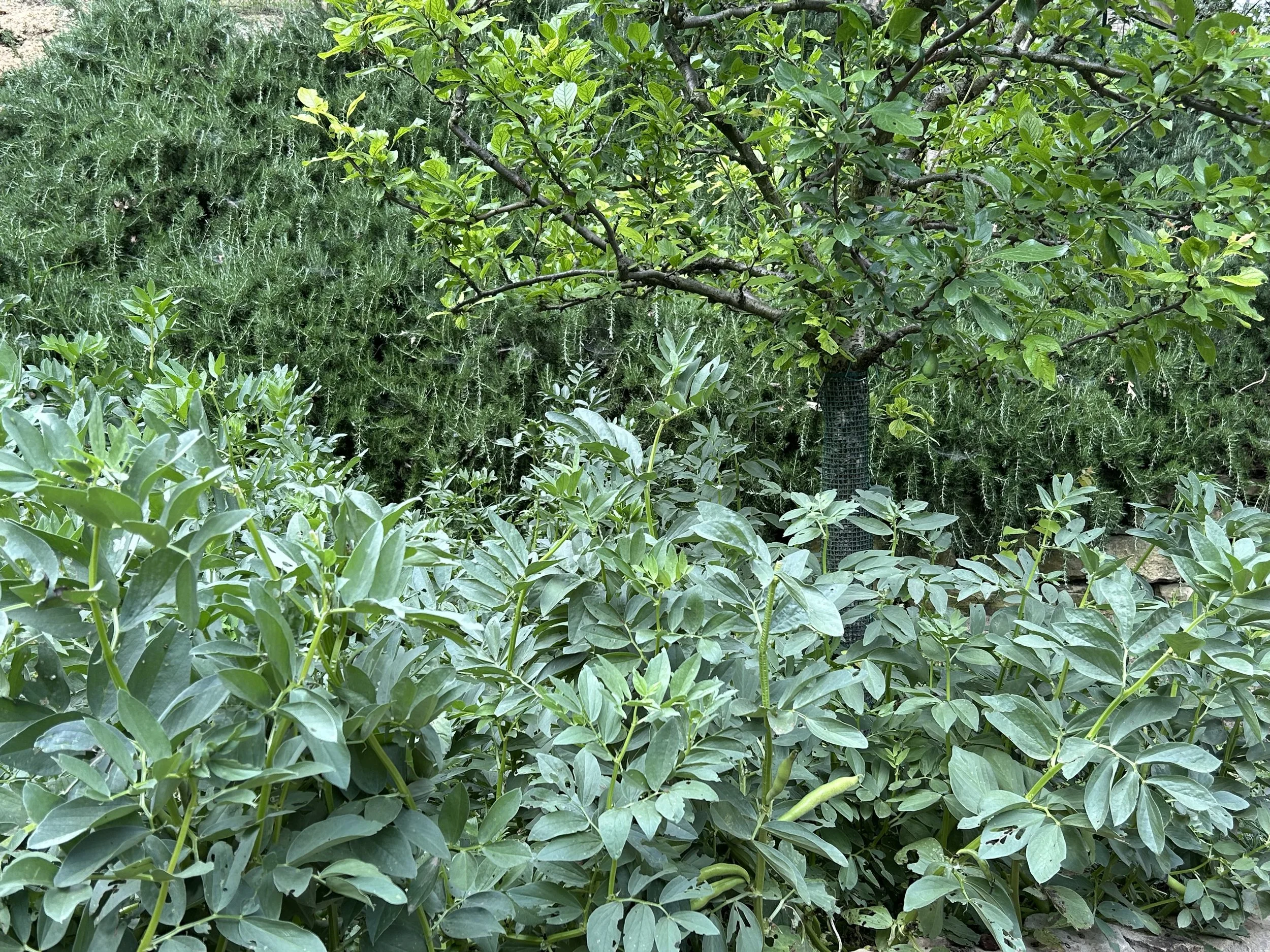
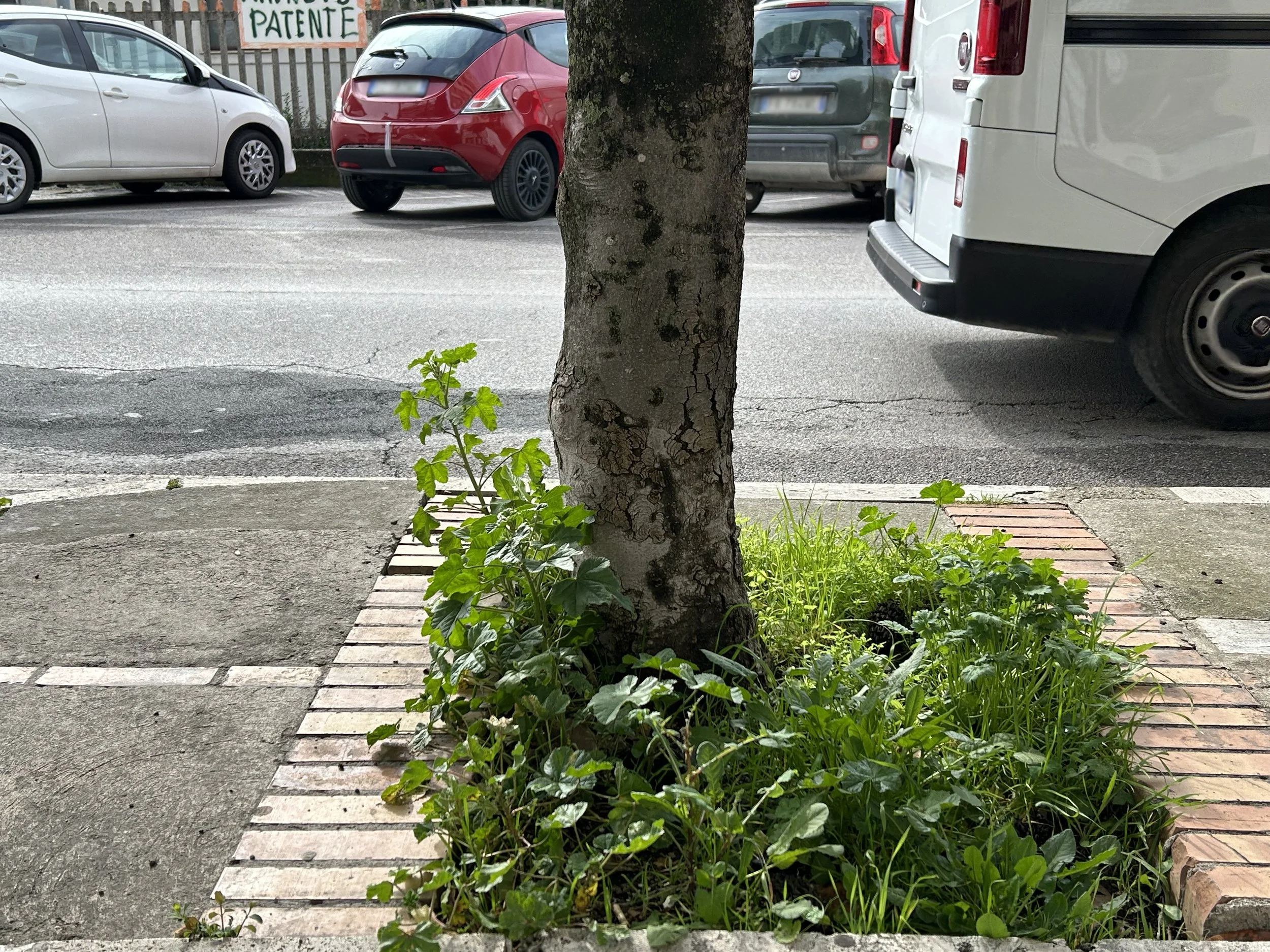
Last week, while walking downtown, I was struck by the magnificence of a tree, emerging from a minuscule hole in the concrete. But below the tree, another small miracle was occurring: a community of plants, numerous diverse types, some edible, were growing on the soil surrounding that tree. This was community. I imagine the soil in which they were growing was enriched by the tree roots sunk into whatever fertile substrate lay below the city concrete. This small wildly green and growing community was diversity personified, cooperation flourishing within a challenged environment.
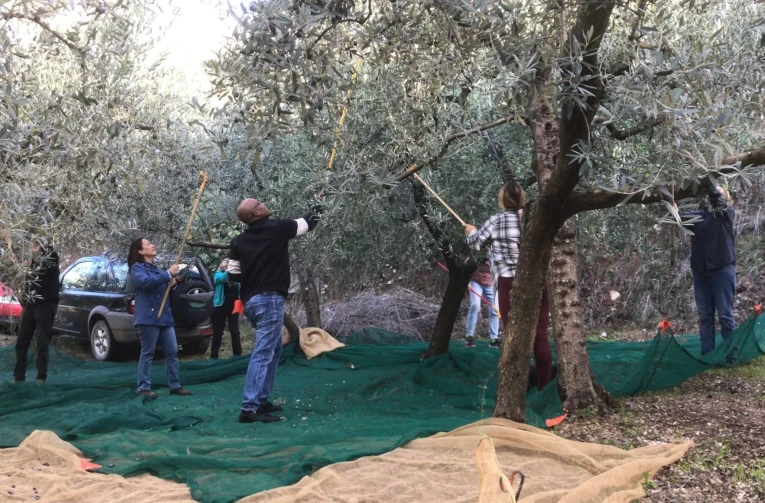
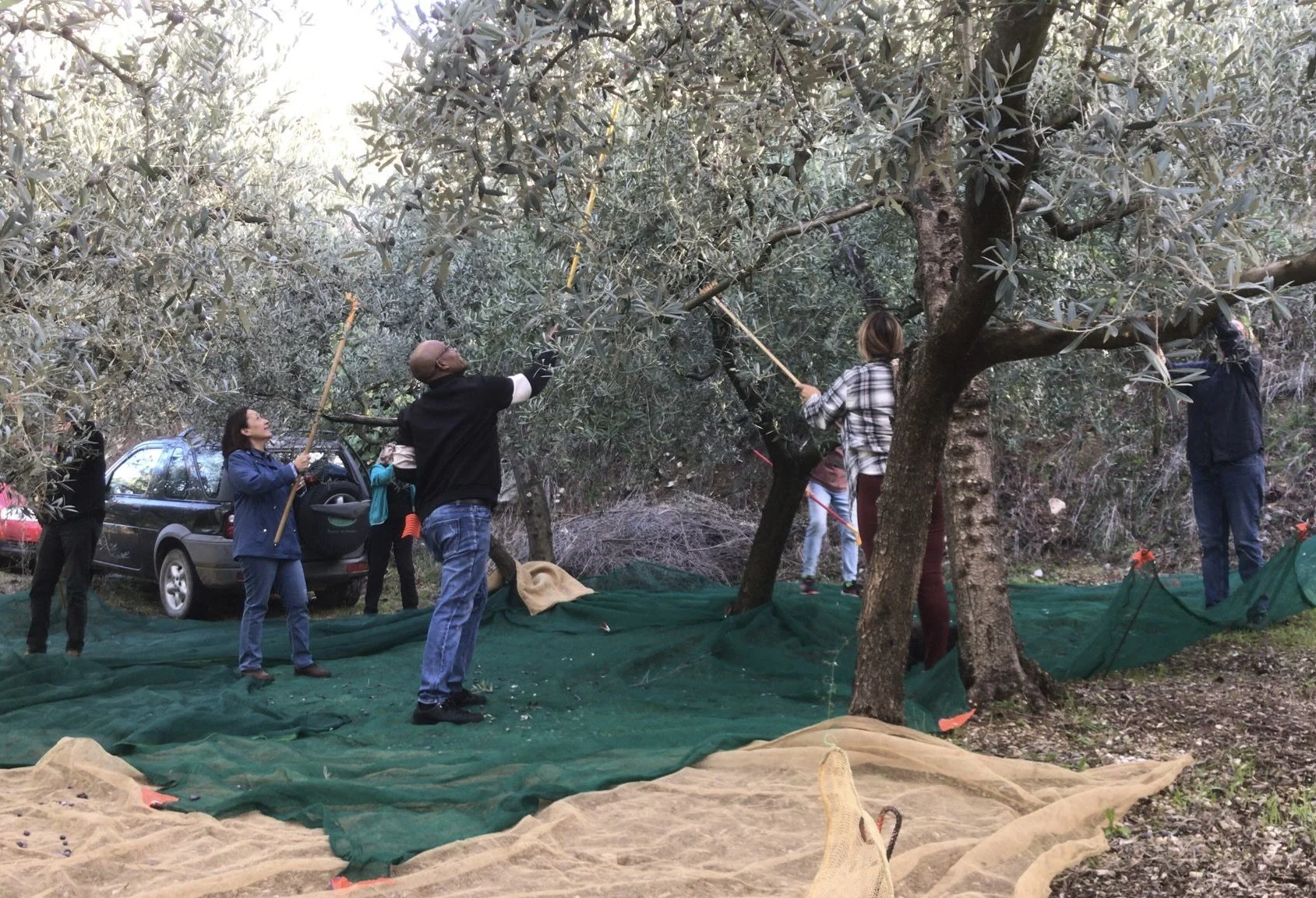
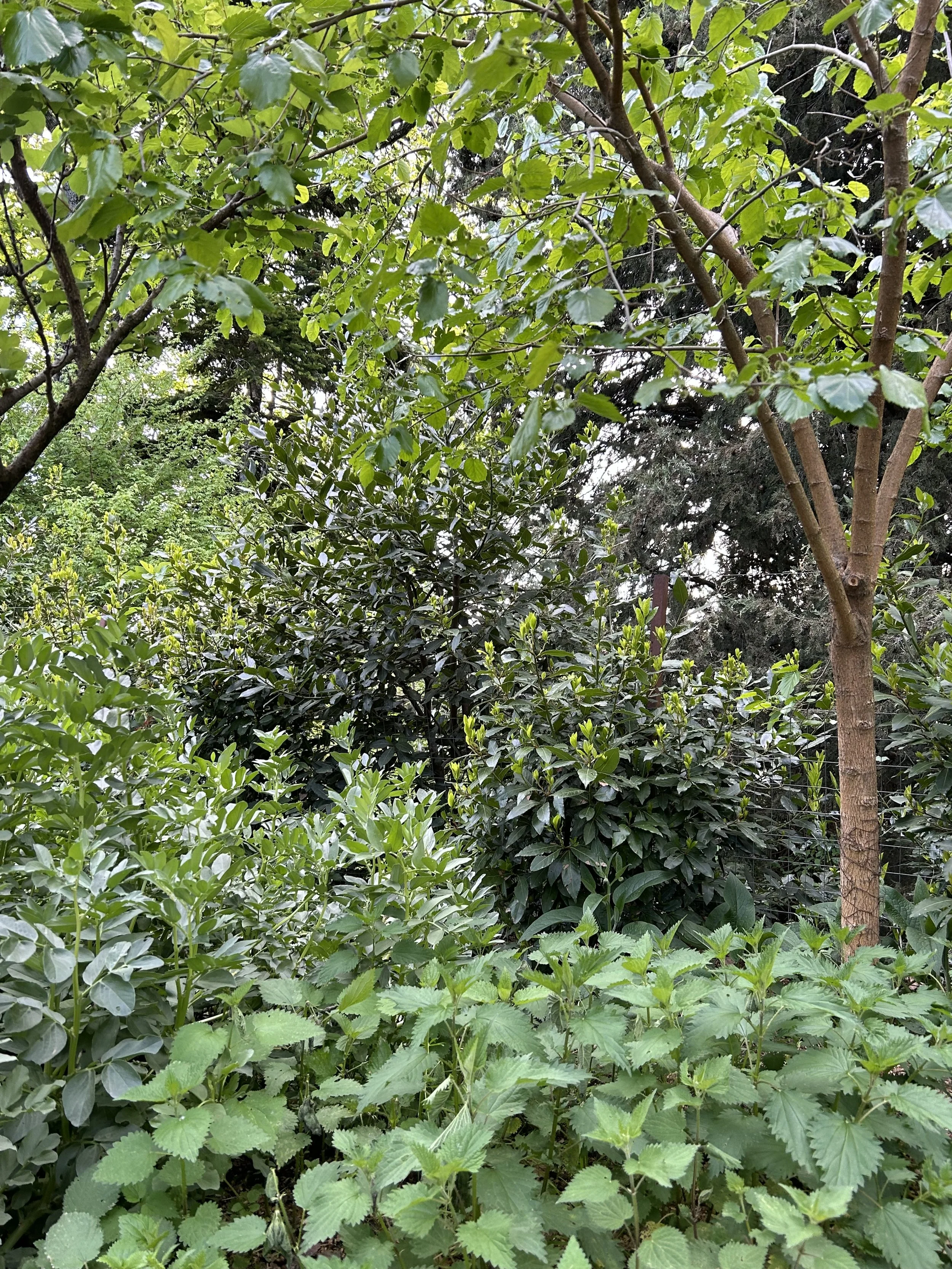
As I tend to look at the world from the plants’ point of view, it isn’t much of a jump for me to see these same exchanges in my own small, very old, rural community. In my valley, most of us live off the land to some degree. A large factor making our farm community function is that none of us are doing the same thing. Our backgrounds, our interests, even the food growing in our gardens and fields are different. We all came to country living with different skill sets, some of us, in fact, from different countries. What unites us is our mutual need to live among the cypress and oak trees, the wild boar and overgrown blackberry bushes. To some extent, we need it. But for all of us, we want to choose, not have our choices made for us. We often share what tools and abilities we have. It’s cheaper that way and just makes more sense. When I need hay baled in the field, my neighbor with the baling machine helps out. Our veterinarian is a friend. He will make a house call and stay for lunch. I am planting his garden. A friend in the village makes me magnificent pasta from his mother’s recipes. I trade him eggs and marmalade. Friends help with the harvests… for a portion of whatever they are picking. Nine friends, friends without olive trees, come for four days every year to help us harvest the olives (see below). They do it for fun… but also because we pay in oil. And, perhaps my favorite mutualism among some nearby friends—all of us herbalists as our second profession—is when we swap plants and knowledge over lemon balm tea. Between all of us, we share a complete medicine cabinet for just about anything other than major surgery.
This kind of cooperation has been going on forever. There is no blacksmith in our village any longer but in my immediate neighborhood, there is an iron worker, a wood worker, a professional builder, a baker, a doctor, a lawyer, a pharmacologist, and a stone mason. Farmers all. We are like the plants on that small patch of earth, different species offering different skills but with deep entwining roots.
When I read about the low income of the small farmer and homesteader, I don’t disagree as much as I feel a number of important facts are missing. Yes, we may make less money on paper but we all grow most of our food and, when we sell, we sell locally. We purchase little for our animals as they free-range in the pasture, feeding themselves. Some of us have fields of farro or wheat. There is a cattle ranch and a large hazelnut farm just above us. Many of us have chickens and ducks running through the gardens or donkeys in the field. We may grow grapes or olives or cherries. It depends. The common demoninator is that no one has everything and we trade our surplus. It is not just an act of generosity. It’s smart, it works. When my neighbor’s potatoes were decimated by the porcupines, I gave him several crates of my seed potatoes. But he brings over his surplus Roma tomatoes knowing I don’t grow them. Underground springs snake under the land, heading toward the river. We all have wells. Some save rainwater. There are not many people working in industrial agriculture who can say what we can say… if the supermarkets were to all close tomorrow, we would manage.
Securing water and food within the community, that is an all-powerful triad. When one sociopath is able to halt 20 percent of the oil deliveries world wide while the most populous country worries about not receiving enough foreign fertilizer, the need is clear. We must claim what is important, what is vital to us and take control.
A few facts to consider:
Four food companies control 80% of all American groceries. These four also control 62.3% of the global agrochemical market. Two companies own 40% of the global seed market.
Three firms manufacture 73% of cereals commonly found in supermarkets.
The meatpacking industry is dominated by just four companies, controlling 85% of the market.
The U.S. water infrastructure is aging leading to frequent breaks and leaks. This is due to decades of underinvestment, resulting in a significant funding gap for necessary repairs and upgrades.
Water treatment plants struggle to meet modern water quality standards. Outdated systems can’t integrate smart sensors or automated leak detection tools.
Bottled water often contains high levels of tiny plastic particles called nanoplastics, which can be harmful to health… Research indicates that a liter of bottled water can contain about 240,000 nanoplastic particles, significantly more than previously estimated.
If we take back control of our food and our water we stop environmental degradation. We cannot do it alone. But we can do it within a community.
NOW.
ITS TIME.
(Next time: finding fertile land, just a bit… enough.)
© www.subversivefarmer.net 31 March 2026