Most public discussion of societal collapse treats history as a warning system: if we read the past correctly, we might predict if collapse is coming, when it should arrive, and how severe it will be. This entire predictive impulse is understandable but not unproblematic. The historical and archaeological record is too contingent, context-bound, and selectively-preserved from which to generate reliable forecasts for our own times. We see a different and potentially more valuable role for historians and archaeologists today. Rather than helping us predict collapse, they can help us reflect on how some societies appear to have softened collapse, adapted to contraction, and transformed in ways that preserved elements of culture, meaning, and social coherence. Studying past civilisations to see how some of them managed their ‘descent’, or their ‘simplification’, could contribute to a conversation about new narratives for the current situation, so that we aren’t trapped in cultural imaginaries that defy biophysical realities. This type of historical curiosity would be interpretive and to some extent subjective, as we cannot escape contemporary values or present-day concerns. But that is not a flaw. On the contrary, acknowledging subjectivity can help this effort to be humble and honest: as a reflective exercise intended to inform present choices, not to claim timeless laws of history or near-certainties about what will happen by when.
Why this matters now
For some years now, we have argued that modern societies remain gripped by two inadequate narratives.
The first is perpetual progress: the assumption that modernisation, technological substitution, and economic growth can and must continue everywhere. In biophysical terms, this narrative is impossible, and increasingly recognised as such. Yet it persists because it structures institutions, identities, and political legitimacy.
The second narrative is a nostalgic, defensive, triage within global disruption: an effort to preserve a mythologised past by fortifying borders, cultures, and hierarchies as various systems come under stress and degrade. This is the emotional base of much contemporary reactionary politics, from the rise of religious traditionalism around the world to the view that immigration is the key cause of a society’s ills. This narrative includes a grain of truth in the need to reconsider the direction of societies and relocalise many aspects, as was explained in our Deep Adaptation book, by ourselves but also and especially by Skeena Rathor and Matthew Slater, who built on the seminal work of Helena Norberg-Hodge. However, what we have called the second narrative is flawed in imagining that some symbolic return to an earlier era will address what is a never-before-experienced biophysical context.
We regard such narratives as these two as offering a pressure-valve of pride and blame, without addressing root causes or pursuing actual remedies. Within the modern societies which we are aware of, what is missing in both popular culture and political discourse are narratives of intentional contraction, adaptive simplification, cultural continuity through transformation, and dignified loss. This is where historians and archaeologists can contribute — not so much warners of roads not to take, still less as prophets of doom — but as curators of possibility. They can contribute to dialogue from a stance of ‘positive pessimism’ that explores potential ‘thrutopias’: ways of getting through what is coming as well as humanly possible, given the impossibility now of perfect utopias. Thrutopia, a concept drawn initially from readings of Ursula le Guin’s great novel of political possibility ‘The dispossessed’, centres process rather than outcome, and possibility rather than alleged certainty. Thrutopianism is thoroughly reality-based, and combines optimism of the will with pessimism of the intellect. In being grounded in the non-negotiability of truthfulness about both our tragic predicament on the one hand and the vast and exciting chance we have of acting for good on the other, thrutopianism connects naturally with ‘apocalypse’ in its true sense: revelatory vision, once the veil of our hand-and-mind-forged manacles has been rended. We might then hazard a label such as ‘hopeful apocalypticism’ to the attitude which we along with the kind of historians and archaeologists for whom we write aim henceforth to take: active hope grounded in truthfulness and curiosity towards how really tough moments in our common human heritage were handled.
When we invite (attention to) such intellectual creativity, we are not ignoring the ongoing suffering, nor what could be reasonably attempted technologically to reduce the damage from environmental disruption. Nor do we forget that there is useful resistance to the ongoing damage being caused, nor deny there is blame for what is happening and accountability to be sought for that. Instead, our interest is how to ‘get real’ about what might help at the level of cultural narratives so as not to make matters worse as societies come under much greater strain.
Three examples of adaptive contraction and transformation
What societies in the past might stimulate such a dialogue? By being curious about this topic and noticing claims about the history of civilizations which resonated with that curiosity, we have identified three examples which could be candidates for further inquiry. As we are not historians or archaeologists, and certainly did not do a methodical study of past civilisations, we offer these examples cautiously. We don’t identify them as something to attempt to copy, but as means for us to ask different questions about what it means to endure.
First, we could consider the Eastern Roman (Byzantine) Empire after the 7th century. Following territorial losses, demographic collapse, and fiscal contraction, the Byzantine world did not simply fall. This section of the Roman Empire, across parts of Eastern Europe and Western Asia, appeared to intentionally reorganise itself. Urban life shrank, monetary circulation narrowed, and state capacity was reduced, yet many core institutions, such as law, liturgy, language, and administrative memory, persisted for centuries. The Empire appears to have willingly embraced forms of localisation: it responded to incursions by the rising Muslim armies not by attempting to double down on an unsustainable large central army, but to give soldiers land and to get cohorts of soldiers to defend their portion of the Empire against the invaders. For more than we have space for here, see Read’s Why climate breakdown matters, which draws upon Joseph Tainter’s classic – though controversial – interpretation of the long survival of the Byzantine Empire. The invitation we see in this case is to consider the possibility that eased material suffering does not require territorial expansion, material growth, or ideological projection, but the relinquishing of some power to communities. We are curious to the extent this was intentional and, if so, by whom and how they communicated with different aspects of society.
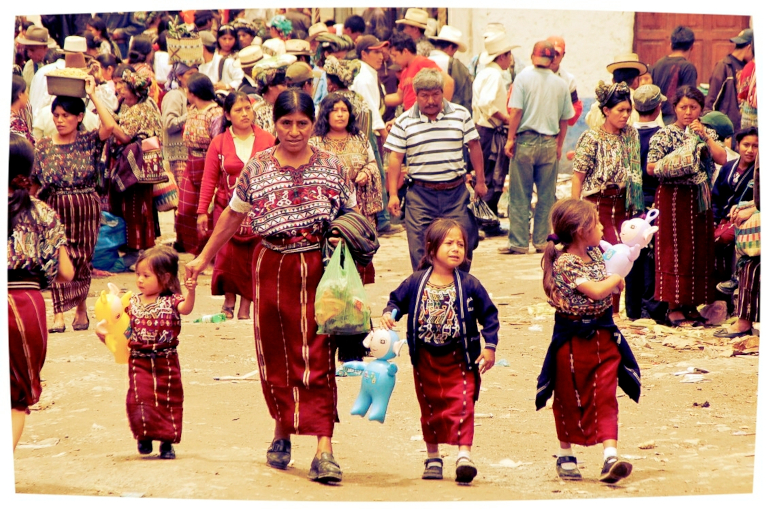
A second civilisation we could learn about to inspire our ideas of managed decline is the Mayan civilisation in modern day Central America. It is one that has fascinated archeologists, as well as the anthropologists who study present-day descendants. One of your authors looked into this scholarship for his book Breaking Together, and discovered that the history should not be framed as civilisational failure, but as processes of urban-rural migration and the re-localisation of trade and governance. At various times in the history of the Mayans, their power decentralised, populations dispersed, and ritual life changed rather than disappeared. Many people may have preferred that way of life, even if it was compelled initially by changes in climate or the spread of disease. We note that some scholars (reasonably) claim that the elites in Mayan societies made difficult situations worse, tipping the situation into outright collapse. Clearly the conversation is limited by what evidence archeologists can find. Nevertheless, we see an invitation in this history to shift our attention from the collapse of elite power to everyday persistence, and from worrying loss to lived adaptation.
A third example to reconsider is Post-Roman Britain and Western Europe after the collapse of Roman imperial systems. Of course much was lost at the time, including infrastructure, literacy, and long-distance trade. Yet both ancient and new forms of social organisation, spirituality, and local resilience, all emerged. Meanwhile much was preserved, such as the knowledge that endured and even flourished within Monastic networks. A range of hybrid cultures formed and there is evidence people had bright lives in the “dark ages” — a term merely arising from the subsequent interest in written records (We note the fascinating recent work ‘The Green Ages: Mediaeval innovations in sustainability’). Compared to the Byzantine case, there is less to suggest there was an intention from Rome to manage a transition to a post-imperial situation. So perhaps it was an organic process from people having the opportunity to reclaim their power. We know we are speculating with limited data, but do so to generate the type of reflection we think will be helpful today. Perhaps the invitation here is for us to let go of the idea that complexity must be defended at all costs, and explore how value and meaning can be found in more diverse, yet simpler and more localised ways of living.
Although we have only read some studies on each of these cases, already we notice several recurring themes for narrative-generation that might alleviate the metacrisis, societal decline and collapse. There was the importance of scale-reduction where endurance involved shrinking prevailing systems to ecologically and socially manageable sizes. Interestingly, this shrinking reminds us of the principle of ‘relinquishment’ in the contemporary Deep Adaptation framework. Another theme we notice is cultural portability, where the practices, rituals, and values that could migrate were able to survive, rather than the fixed infrastructures. Highly interesting is that there frequently appeared to be elite loss and popular survival. By that, we mean that the collapses typically meant the end of ruling classes, not the end of culture itself. We also notice that the adaptations sometimes unfolded over generations, so probably required some people to be thinking at that scale. That contrasts with the amount of people today who focus on the next election, annual report, or their retirement fund (or even an afterlife).
As we speculate on such cross-cutting themes, we don’t see them offering any great solace for what is a terrible and unprecedented situation facing humanity today, along with the catastrophic damage to habitats and biodiversity that is unfolding. However, they do expand the imaginative space in which we can think and act. There could be lessons here for people working in the field of futures studies, design thinking, scenario planning, and those wishing to enable hope and imagination in society, at various levels. Artists, writers and imagineers of all stripes plainly have a role to play here, too. We think for instance of ‘solarpunk’ (though we find much too much of it overly utopian in how it pictures technology and politics); or of StarHawk’s remarkable parable of non-violence under extreme strain, ‘The fifth sacred thing’; or of broadly thrutopian novels such as Steve Markley’s ‘The Deluge’ or Ian McEwan’s ‘What we can know’.
Our invitation to explore lessons from those past civilisations which softened their collapse is not ignoring or downplaying the importance of recognising the enduring forms of Indigenous Peoples’ societies. Those societies might not be considered “civilisations” by some observers, but they are culturally rich and have persisted despite efforts of colonialists and modern humans to extinguish or assimilate them. However, the urban societies which the vast majority of humans live within, or are partly dependent on, today, aren’t able to directly copy the lower density and lower specialisation of such societies. We can take inspiration from them in more general terms, and also from the way they coped with external genocidal pressures, as we will explain further in a moment.
Existing scholarship pointing towards narratives to soften collapse
In our edited collection Deep Adaptation: navigating the realities of climate chaos, we included perspectives from a range of intellectual disciplines. However, as we did not know any historians or archeologists who were trying to learn about the narratives accompanying softened collapses of past civilisations, we did not include those disciplines in the book. We think this is an important absence, and so would welcome seeing more work done on this topic in future. Currently we know of some scholarship which moves close to such an agenda.
Chris Wickham has usefully reframed post-Roman Europe not as ruin but as reorganisation, producing winners and losers. James C. Scott has drawn attention to non-state spaces and forms of life that evaded societal collapses as they avoided over-integration. In their classic 2009 book Questioning Collapse, Patricia McAnany and Norman Yoffee present evidence for how famous collapses were actually periods of reorganisation and decentralisation. The work most relevant to our topic here is contained in the 2023 edited compilation “How Worlds Collapse.” Their central explanation is that leaders often faced a ‘cognitive crunch,’ when they recognised crises like resource depletion, but could not respond to the complexity of that, leading to maladaptive decisions. This created tension between elite protection (clinging to power by intensifying extraction) and adaptive leadership (orchestrating a deliberate simplification for wider survival). Regarding collapse as a process, not an event, the authors in this book identify an optimal outcome is a managed reorganisation with smaller units of complexity — a “soft landing.” It stands as the first major scholarly synthesis to explicitly explore the daunting principles and historical precedents for a managed descent in response to our current situation of global ecological overshoot. Luke Kemp, in Goliath’s Curse, explores similar themes, particularly how coercive institutions generate both power and fragility, suggesting that collapse can sometimes release adaptive capacity rather than extinguish it. Building on and rhyming with Graeber, Wengrove and other scholars, Kemp’s work challenges the assumption that larger, more coercive systems are inherently more successful. So if we consider collapse to involve the unravelling of coercive over-reach, then historians could help us imagine futures that are less powerful but more viable.
In the original Deep Adaptation paper on climate chaos, one of your authors referred to an analysis of how leaders of the North American Crow Nation coped with the destruction of their culture. Jonathan Lear explained that some of the Native American chiefs developed a form of “imaginative excellence” by trying to imagine what ethical values would be needed in their new lifestyle within a bounded land reservation. He found that besides the standard alternatives of freedom or death (in service of one’s culture) there is another way, less grand yet demanding just as much courage: the way of “creative adaptation.” He wrote that “what makes this hope radical, is that it is directed toward a future goodness that transcends the current ability to understand what it is.” Identifying that process is not to acquiesce to the destruction of Indigenous cultures, but to include within our appreciation of them how they coped with the devastations of colonialism. Some critics then bizarrely cited this part of the Deep Adaptation paper as if it was welcoming the genocide of Indigenous peoples. Their distortion is a reminder of how upset some people can become about analyses which require us to shift our imaginations beyond modernism and the assumption of progress — but it’s clearly the ideological task of our time.
When seeking evidence for narratives or intellectual perspectives that might have aided a softening of collapse in the past, historians and archeologists could benefit from deep dialogue with philosophers and systems-thinkers from a variety of intellectual traditions — Western, Eastern and Indigenous. Now, to be fair, there are less philosophically-minded thinkers and writers than there should be working openly on this. But there are some who are very much in the ballpark: in the West, we think of Iain McGilchrist, or Roy Scranton; of Paul Kingsnorth’s novels of ideas and non-fiction, and of Michael Albert’s important book ‘Navigating the polycrisis’. Looking a little further back, we think of the immense relevance of Arendt’s ‘The human condition’, and of the great works of Wittgenstein and Heidegger. Daoism is a source of relevant riches from the East. One thinker who has done much to make the incredible resources of Indigenous thinking available to the collapse-aware is Tyson Yunkaporta, from whom we have learnt much; Robin Wall Kimmerer’s writings are also of signal importance, in this connection.
What is potentially to be gained from engagement with figures such as these? Far too much, obviously, to even begin to gesture at in a sentence or two: but the glimmerings of a sense of what can be found when one notices the way that many of these thinkers are simply willing to look into the abyss and yet not to drown in despair. Instead, to offer potential pathmarks, including reminders of what we have lost that are not merely nostalgic, but are instead practically beneficial.
And of course there is much more that could be done to learn relevant historical lessons hereabouts: including seeking to learn from what happened under grave pressure during – and after – World War II; and what happened in Cuba when it experienced ‘peak oil’ dramatically, as it lost its oil supply suddenly in 1991 (and Cuba is going through a worse process now, as we write, with outcomes uncertain). The film ‘The power of community’, about the Cuban experience post-1991, is worth watching seriously.
But our topic in this essay has been something different, and comparatively neglected: lessons from deeper-past and more severe still but yet effectually softened– collapses and contractions. As climate and ecological breakdown beckons, tragically, to the human race, it is high time that such lessons were contemplated. We must now begin to treat transformative, strategic and deep adaptation as a genuinely urgent matter that increasingly entails a whole-society approach to its contemplation and enactment. The advantage of using collapse — and descent — softening strategies from civilisations of the last 2000 years as objects of comparison in this endeavour is that they will tend to combine greater psychological accessibility/relevance (compared to Indigenous cultures) on the one hand with sufficient distance to be fairly calmly ‘contemplatible’ on the other.
An invitation, not a prescription
With this essay we are inviting deeper reflection on how some unusual past civilisations/peoples managed one way or another to work out their down-going. It is inspiring how very many Mayan people outran their elites; how the Byzantine empire apparently managed to voluntarily simplify; how post-Roman Britain incrementally set up the quiet glories of the ‘Dark Age’. In further work, one might connect that more directly with some similar emerging trends today: one might for instance see the ‘undensification’ occurring in encouraging examples such as the regreening of Detroit as nodding to aspects of what happened in all three of the main examples that we gave: of civilisations / communities under terrible stress becoming more able to support themselves locally.
Clearly, mainstream civilisational rhetoric is misaligned with biophysical realities, so without stimulating mass imagination beyond the paradigm of progress, the only alternative becomes defensive nostalgia — forms of which we see spreading everywhere without meaningfully confronting reality. We believe that more historians and archaeologists can step into a public, reflective role, helping societies explore narratives beyond either progress and growth fetishism on the one hand, or nostalgic and fortress mentalities on the other. We believe that some of the discussions in the book How Worlds Collapse are a step towards that role. As more scholars take on that role, they do not need to speculate on what might happen, but to help us all ask better questions about what might still matter, what could be carried forward, and how loss might be metabolised without violence or denial. In that sense, ours is absolutely not a call for historical or futural certainty, but for narrative courage and creativity.
To aid this discussion, we are organising a free international online discussion on what inspiration we might take from past civilisational collapses and their handling at the time, under the working title ‘Inspirational collapses: learning from the way some civilisations chose to break down well.’ We will invite historians, archeologists, philosophers and artists to attend and share their ideas on the matter with other interested persons, including activists. Occurring on 7th July 2026, as part of the Metacrisis Meetings Initiative, it will mark the 5th anniversary of the book we edited together. That book demonstrated what can be gained when academics from different disciplines lean into the topic of collapse; and it is in that spirit we are curious about the role of history and archeology.
Please look out for those initiatives (eg via our newsletters/substacks, for which do sign up). But more important: please consider whether you, reader, may have a direct role to play, hereabouts. Is there something in the area where you live which is relevant to the enterprise we have sketched here? Does your location harbour the seeds of a helpful history, for navigating the descent that is to come for us all? Or perhaps it is in your own family-tree, or in your diaspora if that is your background. Or perhaps you simply have a good example to add to the three that we paraded earlier. Whichever it is: consider surfacing it yourself. Or sending it to us.
It may matter more than you think…
*Our grateful thanks to those who commented helpfully on earlier versions of this article, including Iain McGilchrist, William Ophuls, Aaron Vandiver, Michael Albert, and Robert Janes.