A review of Timothy Mitchell’s The Alibi of Capital
Imagine yourself as a housing developer – an entrepreneur, a big-time player, a real deal-maker. Your people devise a plan to borrow money, buy land, design and win approval for a new subdivision, and sell 1,000 new housing units. Then, perhaps years before the houses are completed and decades before the initial mortgages are repaid, you sell your shares in the venture for a tidy profit. A neat trick, this, cashing in today on bills that others will pay long into the future.
You have become wealthier, but have you been a “wealth creator”? For that matter, are you contributing to “economic growth”? Where does the money come from for this venture: is it capital accumulated from the past, or is this money newly created the moment credit is extended by banks and off-setting debts are recorded on balance sheets?
 These are among the many questions addressed by Timothy Mitchell in his new book The Alibi of Capital, out on March 10 from Verso.
Mitchell works his way through a profound rewriting of economic history and economic theory. He wants us to think carefully about who pays for what is labelled “economic growth.” Is the earning of interest some natural property of money? Why was the phrase “the economy” almost never used until the mid-20th century, while today the economy is routinely invoked as the determinant of what is politically, socially, or environmentally acceptable? Why do banks continue to invest in new fossil fuel infrastructures, in full public knowledge that these infrastructures are robbing future generations of a stable climate?
Let’s begin with a simpler question: is “financialization” an adequate term for the process by which a housing developer turns still-unbuilt houses into immediate profit? Mitchell doesn’t think so. While the creation and swapping of financial instruments is one essential part of the process, two others are equally essential. First, the process depends on the manufacture of long-lasting infrastructure. Second and equally important, there must be a legal and political framework that ensures holders of the financial instruments can enforce their claims to ongoing revenues five, ten, or even fifty years in the future.
What is often termed financialization, Mitchell, argues is really a technopolitical “apparatus of capture.”1 Mitchell writes:
“The apparatus is neither fully public nor private but combines aspects of both; is made up of both materials and ideas; deploys both law and violence; and depends upon both careful calculation and the imaginative construction of prospective worlds.” (The Alibi of Capital, page 30)

Rail lines converging on Hauptbahnhof (central station) in Zurich, Switzerland, July 2025.
Shipowners and rail barons
The use of an “apparatus of capture” to secure present profits from future events did not begin recently. Mitchell traces the process back hundreds of years to early joint-stock companies engaged in long-distance commerce.
Shipowners typically required credit to finance long voyages in which revenue from the sale of products would only come many months later. The letters of credit, which were also “letters of debt plus interest,” were sometimes traded, with the seller accepting a discount so that they could be paid immediately, while the buyer would receive the principal plus interest perhaps a year or more later.
The infrastructure was not very durable – ships often sank – and the time frames were short, just a few months to perhaps a couple of years. This commerce didn’t provide much scope for capturing revenue from the future. That changed in the nineteenth century with the development of railroads, which Mitchell describes as a turning point.
Railroads were large-scale durable infrastructures – and required major investment up-front. Once built they offered the promise of revenues coming in for decades. They were often built as colonial enterprises, requiring imposition of governance and military/police power to protect that revenue. The prospect of strikes also grew in importance, as workers increasingly organized against dangerous conditions, long hours, and inadequate wages; the realization of future profits required the suppression of organized labour power.
If the technical and the political factors were aligned, however, the issuance of the credit/debt associated with new railroads gave financial markets a way to buy and sell the future, earning profits immediately on services which workers would provide and customers would pay for decades later.
Railroads were followed by many other large-scale and durable infrastructures: bridges, wharves, assembly lines, oil wells, refineries, paved roads. Though some were financed by the private sector and some by governments, there were exponential increases in credit and debt. These debts, of course, were recorded as assets by financial institutions – assets which could be sold for immediate profit, as long as the buyers could be reasonably confident of the long-term collection of promised revenues.
The process moved beyond large scale commerce to involve most citizens in capitalist societies. The invention of the long-term mortgage in the first half of the twentieth century made average homeowners into ongoing revenue sources for banks. That was soon followed by the introduction of credit cards, auto financing, and university education loans, and in some countries, huge medical debts, “converting the course of human lives into repayment schedules.” (p. 8)
This process of creating new money by issuing credit, then marketing the corresponding debts as assets, is highly profitable for some while many others pay the costs for decades. Mitchell cites an estimate that between 1950 and 2000, from 75% to 90% of the price rise of housing was attributable to capitalisation by the mortgage industry.
Theodicy and oikodicy
Those who mis-spent their youth studying philosophy might recall the centuries-old conundrum of theodicy: if the world is governed by an all-knowing, benevolent god, then why does evil persist, frequently placing good people in terrible circumstances?2
Mitchell borrows the coinage oikodicy from Joseph Vogl. Based on the Greek word oikos (root of oikonomia), oikodicy helps draw attention to “the unacknowledged role of economics in the justification of suffering.” (The Alibi of Capital, p. 138)
If capitalism is the best of all possible economic systems, and the market represents the collective wisdom of all buyers and sellers, why is there drastic and crushing inequality, both between countries and within countries? Does “the economy” simply dictate, with the force of natural law, that a few will be rich while many will struggle to find food or shelter?
Mitchell sees the apparatus of capture of the future, so central to corporate capitalism, as a key mechanism in maintaining and worsening inequality. He argues that the profession of economics, as it is typically practiced in universities, the corporate world, and government, “both facilitates and obfuscates the capture of the future.” (p. 13)
Most significantly: what is economic growth? Growth of GDP is commonly presented as an obviously good thing and an obvious necessity; a temporary lull in this growth is a grave matter requiring government intervention. Mitchell argues, however, that a great deal of what is counted as “growth” is achieved at the expense of the future. In the language of economics, anticipated revenues are “discounted”; the full value will be repaid by a future generation; and the difference between the discounted value and the full value is chalked up as “growth”. But why should the impoverishment of future generations be considered as today’s “growth”?
This comes into sharp relief when considering fossil fuels and climate change. Fossil fuels are clearly precious substances, able to provide easily storable, transportable energy which can be used on demand.
It has been understood and accepted for more than a hundred years that fossil fuels are finite. The rapid extraction and consumption of fossil fuels, then, clearly leaves future generations with far less of a precious material. Yet this ongoing depletion has been celebrated for a hundred years as an engine of “growth.”
For forty years or more we have also understood that intensive exploitation of fossil fuels is depleting the future of something even more precious: a stable climate. This depredation too continues to be excused and celebrated as the “growth” which “the economy” depends on.
The rules-based order
The final chapter of The Alibi of Capital focuses on the climate crisis, but Mitchell takes a long and winding route to get there.
He includes a fascinating discussion of village society in the Nile River basin, the sophisticated ecological understanding embodied in centuries- or millennia-old hydrological management, and the way large-scale dams reduced the overall productivity of the Nile basin while making possible the colonial extraction of profits from large-scale sugar and cotton plantations. Several important figures in the history of economic theory appear here, including Joseph Schumpeter who posited a key role for “the entrepreneur” in his theory of creative destruction.
In his previous book Carbon Democracy Mitchell argued that “the economy” came into common parlance in the mid-twentieth century, coincident with a huge influx of low-cost energy from fossil fuels. In The Alibi of Capital he explores this at greater length. He delves into usage of the word economy over the past three hundred years, through various permutations of the discipline of political economy. Economy was seen as a process akin to “economizing” until shortly after WWII, when it took on a new guise as a noun, the new entity known as “the economy”. Then, suddenly, the economy became the powerful and vengeful god which might wreak havoc on society, if we didn’t allow specially-trained experts to make sure the needs of the economy are given constant priority.
Tracing these changes takes us through the development of new forms of credit and its calculation, new developments in physical infrastructure, and new rules by which the eventual repayment of debts can be assured. The new rules work on many levels from personal struggles with credit card debt or student loans, to national regulation of securities-trading, to contracts in which international financial institutions demand veto power over national budgets to make sure these banks have priority over domestic claimants.
I would have liked to see Mitchell’s concluding chapter provide further ideas on how to respond to the climate crisis. As it is, though, The Alibi of Capital elucidates how the economy, in claiming to produce growth, is extracting profits from the future while saddling coming generations with both financial debt and ecological deprivation. In closing, then, we can think of Mitchell’s ideas in relation to a recent work by Andreas Malm and Wim Carton, Overshoot (reviewed here).
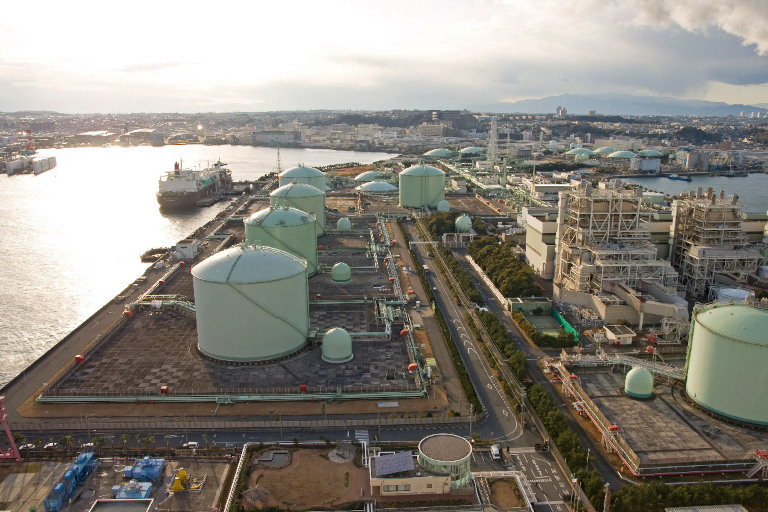
Malm and Carton note that major banks have dramatically increased their investments in fossil fuel infrastructure since the 2015 Paris Agreement. Fossil-dependent infrastructure, however, goes far beyond the mines, the wells, the pipelines or the refineries, and includes airlines and airports, most current auto manufacturing, the plastics industry, the cement industry, and other sectors – who in turn receive financing through investment banks.
Equity and bond markets, then, together hold vast encumbrances on the future – they are profiting today from debts that they expect other people to be repaying, ten, twenty or thirty years from now. The rules of the game protect this extraction from the future, regardless of our full awareness that the burning of fossil fuels is more destabilizing, with each passing day, to the climate we all depend on.
All these fossil-dependent investments, then, are assets that must be stranded – written down, written off – unless we consent to valuing the profits of investors above the rights of future generations to health and prosperity.
Wim and Carton proposed a focus for climate justice work:
“Neither the Green New Deal nor degrowth or any other programme in circulation has a plan for how to strand the assets that must be stranded. … [This] is the point where strategic thinking and practise should be urgently concentrated in the years ahead.” (Overshoot, p. 244)
Mitchell’s new book reinforces this essential point. We must see through the alibi of capital, we must reclaim society from the grip of the economy, and we must change the rules of the game to save our collective future.
Footnotes
1 He credits the phrase “apparatus of capture” to Gilles Deleuze and Félix Guattari in their book A Thousand Plateaus: Capitalism and Schizophrenia, 1987.
2 The Wikipedia entry quotes philosopher Alvin Plantinga: “theodicy is ‘an answer to the question of why God permits evil’”. As an undergraduate philosophy major more than 50 years ago I took a course taught by Plantinga.