

In the Mitmach-Region Vorarlberg Rhine Valley, Pioneers of Change partnered with Presencing Institute to explore how Theory U can support initiatives to strengthen regional identity, deepen existing projects, and open space for new ones to emerge.
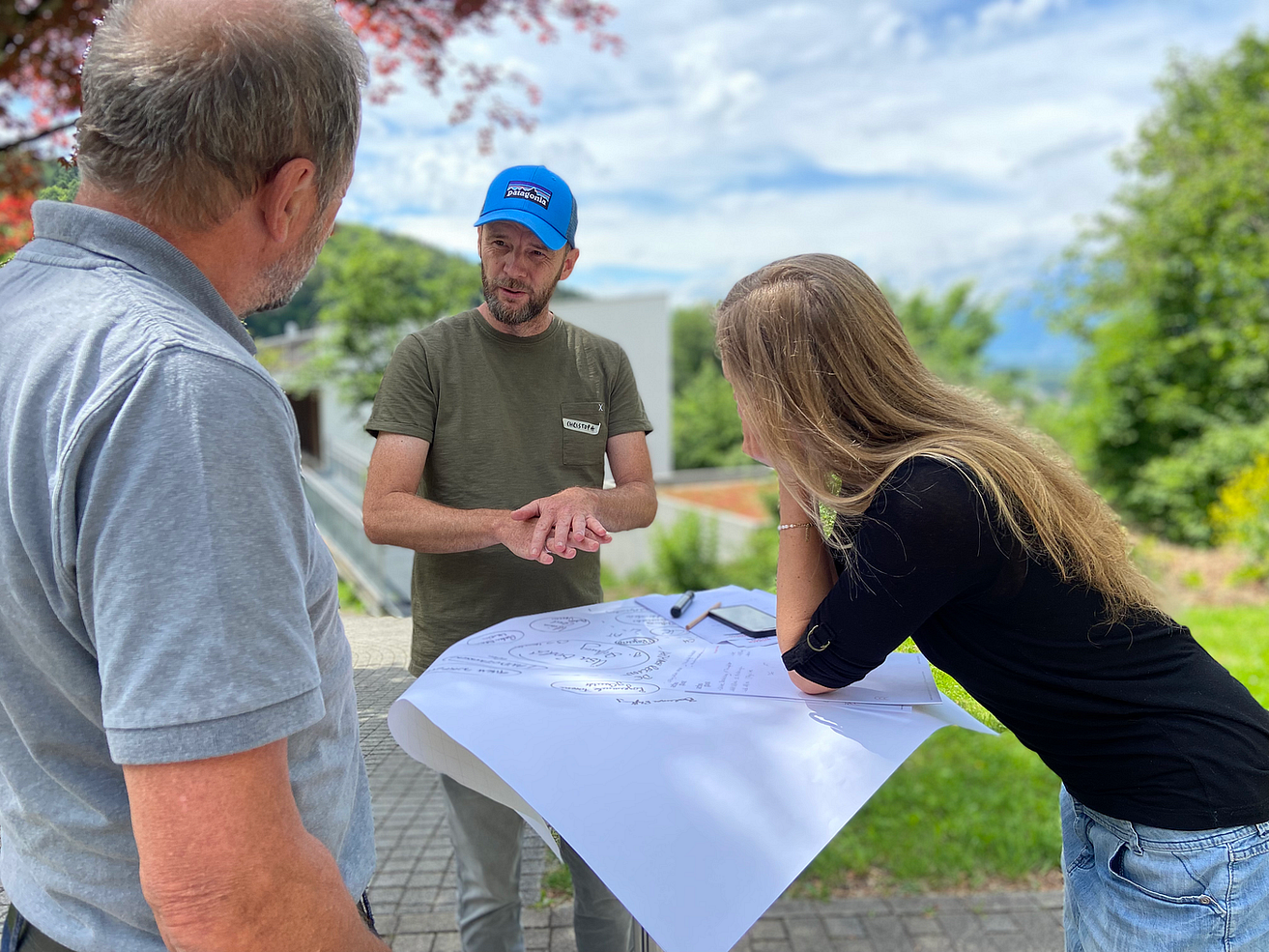
From dialogue to action: prototyping regional initiatives together.
For centuries, social life in Europe was radically organized at the local level. Language, food, work, belonging, and identity were closely tied to specific places: landscapes, villages, and markets. Relationships were manageable and resilient. Place was not a backdrop — it was the system.
With industrialization, this connection began to loosen. Production became detached from place, work from community, food from landscape. With globalization, place increasingly appeared interchangeable: value chains stretched across continents, efficiency replaced relationships. For a long time, the region was seen as a model past its prime — too small for global markets, too particular for modern societies.
Today, this diagnosis proves incomplete. Since the 1990s, a return of the concept of region can be observed in Europe — not as a nostalgic retreat, but as a response to global complexity. One way this has become visible is through renewed regional identities and languages, as in the Basque Country, where Basque is now spoken more frequently by younger than older generations.
Against this backdrop, it becomes clear why system change rarely begins where systems appear largest. Major transformation narratives — around climate, food, or the economy — are usually discussed in abstract terms. Yet they become decisive elsewhere: in places where people meet. It is precisely in such places that the Mitmach-Region approach begins.
The Mitmach-Region is a process architecture for regional development initiated by Pioneers of Change, a nonprofit network supporting social and ecological transformation across Germany, Switzerland and Austria. Actors from civil society, business, agriculture, and the public sector enter into a shared learning and co-creation process. The aim is to make existing initiatives visible, connect them, and address regional future questions together — beyond conventional project or sector logics. Today, the approach is being explored in 44 Mitmach-Regions across the German-speaking world.
The Reversed Clock: Why The Process Began Differently
Many regional initiatives follow a familiar logic: first a topic is defined, then a project is set up, and finally actors are invited to implement it. Relationships emerge — if at all — along the way.
In the Mitmach-Region Vorarlberg, located in Austria’s westernmost federal state along the Alpine Rhine and bordering Germany and Switzerland, this sequence was consciously reversed. The process did not begin with solutions, but with encounters.
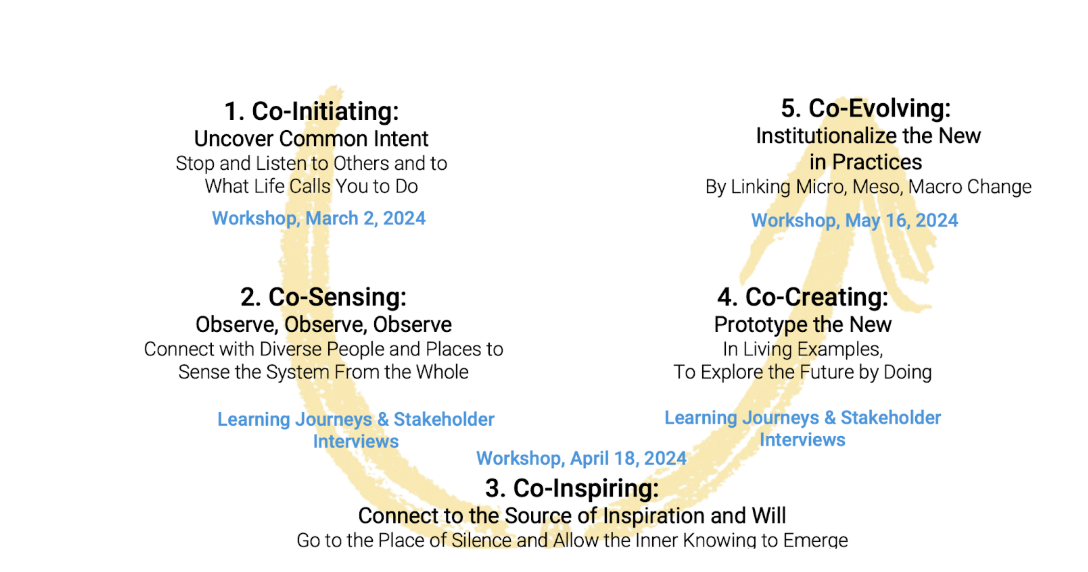
The Theory U process logic accompanying the Mitmach-Region process
Cordula Kreidl, initiator of the Mitmach-Region Vorarlberg Rhine Valley, describes that from the outset her aim was not to bring “yet another project” into the region. Instead, the starting point was the question of the inner and collective place from which action emerges — how shared intention can form before decisions and implementation take place.
Social soil was not understood as a side effect, but as a prerequisite. Kreidl situates this approach in her work with social fields and transformation processes — as an attempt to transfer the “craft of holding space” to a societal level:
“If I want to move into concrete implementation, I need a place with concrete people. For me, the region is the right scale.”
Instead of a classic project logic, an open process emerged with workshops, learning journeys, and dialogue formats. The focus was less on working through individual topics than on the quality of encounter. People listened to one another, held differing perspectives, and initially refrained from premature solutions.
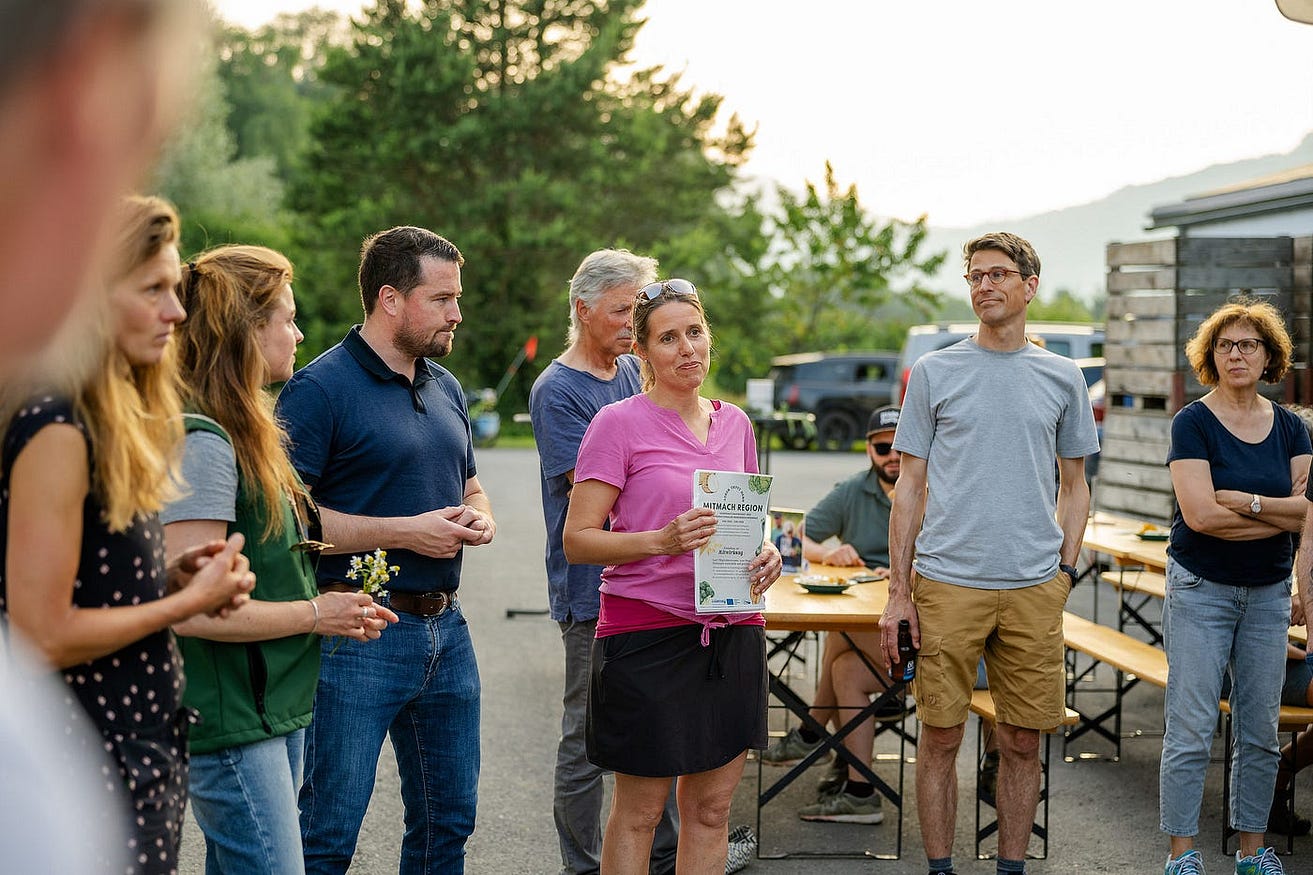
Dialogue at the heart of the process.
From Social Soil to Regional Identity
What changed at the level of relationship and perception became visible in various concrete initiatives and prototypes: in new forms of collaboration between agriculture and processing, in regional value-creation initiatives, in learning and encounter formats, and in cultural projects such as Musik am Hof, where farms became spaces for cultural exchange.

Conversations around the table.
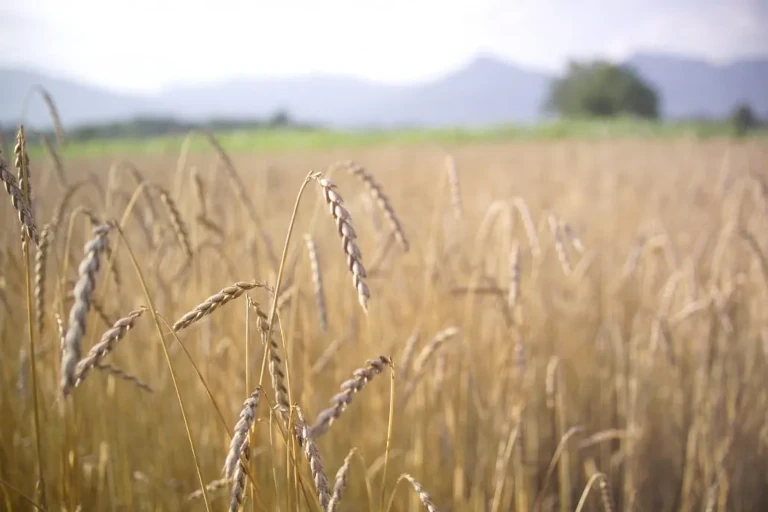
This shift also became visible around food. In Vorarlberg, agriculture, processing, and consumption have long been closely tied to regional identity. For example, attention returned to Urdinkel — a regionally adapted form of spelt traditionally cultivated in Vorarlberg, for which the climatic conditions are particularly well suited. Cultivation already existed, but through the process it gained new resonance, connection, and visibility.
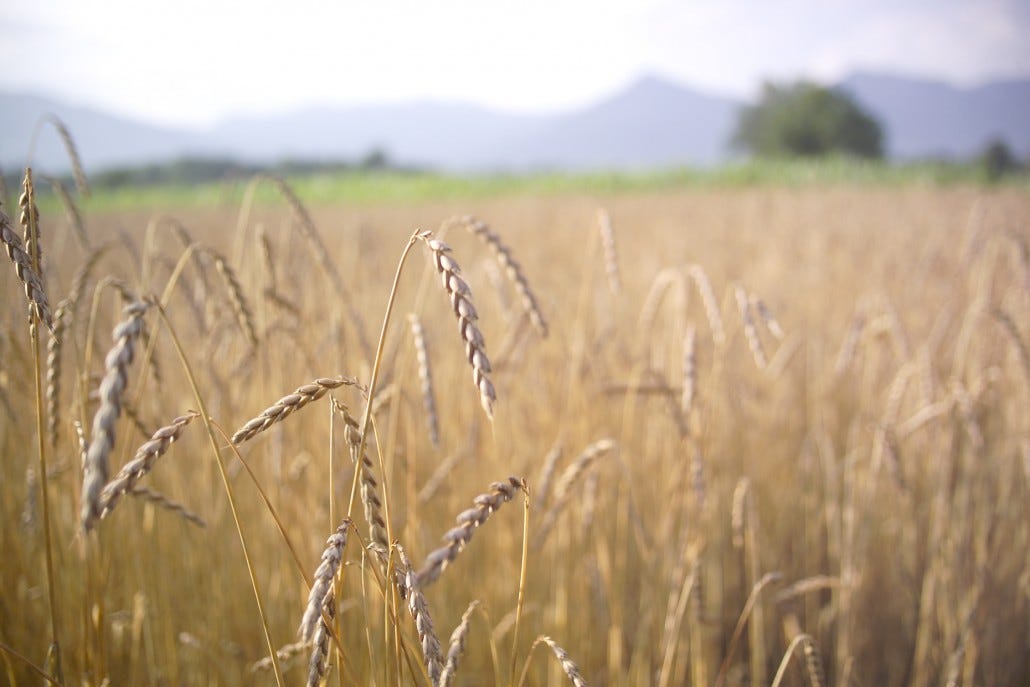
Vorarlberger Urdinkel — a native spelt returning as part of Vorarlberg’s regional revival
Christina Meusburger, who leads communications for Marke Vorarlberg, describes this as a conscious reappropriation of regional knowledge:
“There are around sixty farmers here who are once again growing Urdinkel — adapted to regional conditions and to what really grows here.”
The contribution of the Presencing-oriented process did not lie in initiating the topic, but in the quality of the space: within an environment oriented toward listening, long-term thinking, and systemic relationships, existing initiatives could relate to one another and gain confidence.
This became visible where agricultural practice translated into everyday life — for example, through collaboration with a regional bakery that decided to process Urdinkel from the region and tell the story of the participating farmers on its packaging.
“This isn’t just bought by special niches — it’s a completely normal, broad customer base.”
Urdinkel thus does not stand for a single project, but exemplifies a broader process: how existing regional practices could be reconnected through relationship, trust, and shared perception.
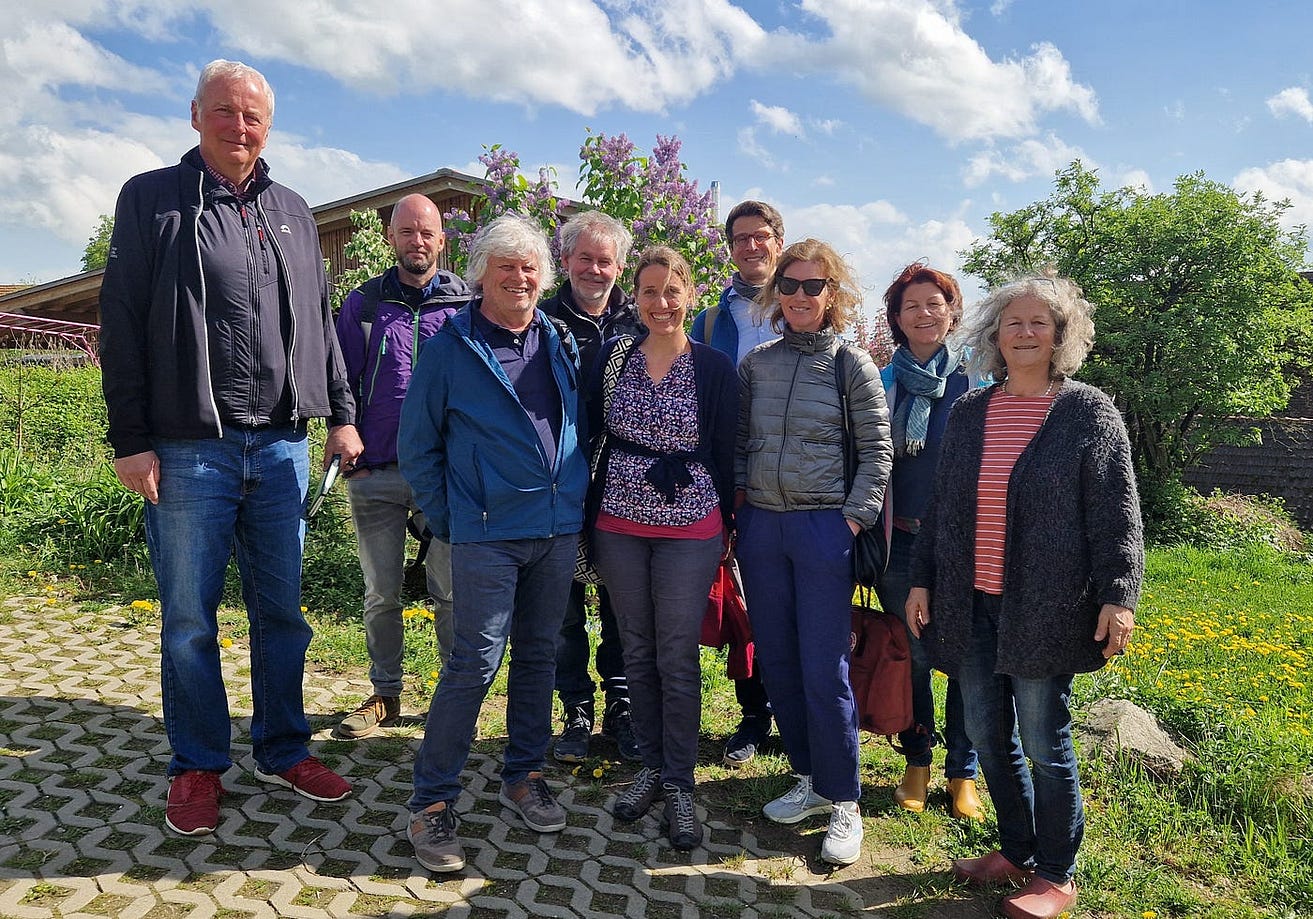
Core team of the Voralberg Mitmach-Region process.
Local Systems: Entry Points for Global Change
Global crises are usually described in abstract categories. Yet they are decided where people encounter one another, take responsibility, and act together: in regions and concrete social systems.
The region is thus less the solution to global problems than the place where they become translatable — into concrete relationships, decisions, and shared practice. This is precisely the space in which the work of Götz Feeser unfolds. As co-director of the German partner entity of the Presencing Institute, he shaped the Mitmach-Region Vorarlberg process and continues this work today through regional transformation initiatives across southern Germany. From this experience, he describes the region as a particularly suitable scale for transformation:
“The region is a highly compelling and well-suited format for transformation, as people strongly identify with it and have an emotional connection to both their fellow human beings and the natural foundations of life in their region.”
What emerged in the Mitmach-Region Vorarlberg is part of a broader learning field that the Presencing Institute continues to shape through its regional work. In the tri-national Lake Constance region, shared between Germany, Austria, and Switzerland this has taken form in the Solidarity Region Bodensee which seeks to strengthen cooperation, food sovereignty, health, and cross-border collaboration. This initiative grew out of the impulse of the Mitmach-Region Vorarlberg-Alpenrhein and is carried forward by the Presencing Institute in cooperation with Interreg Alpenrhein-Bodensee-Hochrhein (co-financed by the European Union), the Internationale Bodensee-Konferenz (IBK), and regional partners. It invites actors from across society to take shared responsibility for the wellbeing and long-term resilience of the region.
In this sense, the region reappears not as a retreat from the global, but as a way of engaging with it.
—
The Presencing Series 2026 will explore more on the topic of land, planet and human regeneration in its first session, on March 5th, dedicated to Soil Health, Human Health, & Planetary Well-Being. Registration is open and free to all. Visit PresencingSeries.org to learn more and register.



Comments
We changed commenting systems on September 10, 2026 as part of a site-wide functionality and security upgrade. Your past comments have not disappeared, and you can still log in with your old Disqus account credentials if you wish. Contact us with any questions.