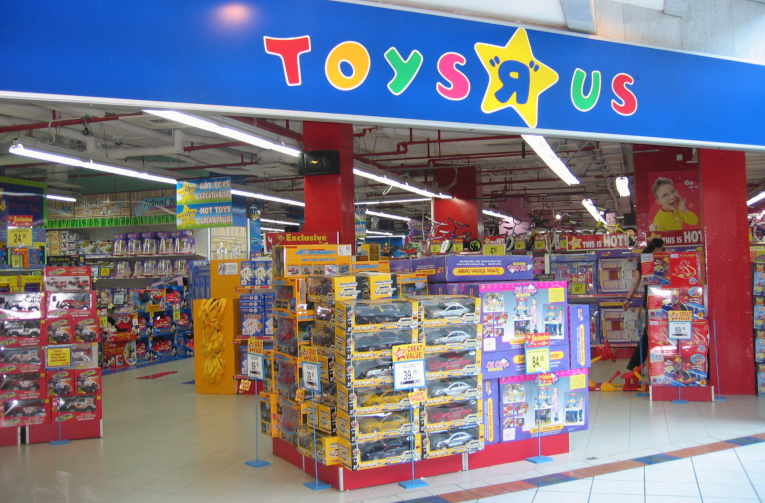
I found myself in a temple of excess last weekend. It wasn’t a place of worship, but it felt like one: a massive toy store inside a shopping mall. I was there for a mundane reason - a relative’s son was turning six, and a gift was required. But as I stepped through the sliding glass doors, I didn’t feel the joy of celebration. I felt a profound sense of claustrophobia.
The shelves were stacked to the meter-high ceilings. There were puzzles and board games, but they were drowned out by a sea of plastic. The aisles were strictly segregated - shimmering pink and glitter on one side, aggressive reds and deep blues on the other. Everything beeped, flashed, or emitted a synthetic scent. There were cars a child could actually drive, costumes for a Carnival that had long since passed, and “outdoor” gear of such questionable quality it looked ready to break at the first encounter with some actual fresh air.
Standing there, I was struck by a single, haunting question: What do you give a child who already has everything?
The Colonization of the Calendar
The store was a graveyard of recent festivities and a staging ground for the next. In one corner, the bedraggled remains of Valentine’s Day gifts - plush hearts and plastic roses - were being cleared away. In another, Mother’s Day displays were already rising like a strategic invasion.
It made me realize that we have allowed the retail industry to colonize our calendar. When I was a child, there were two “high peaks” of consumption: your birthday and Christmas. Occasionally, a very special occasion might merit a small token. Many of my books and toys were twenty years old when they reached me, handed down from my parents. I still own children’s books from the 1960s; their spines may be worn, but their stories are intact (and guaranteed AI free).
Today, every month requires a gift event. We have moved from a culture of celebration to a culture of the transactional kick.
It begins with Valentine’s Day. Once the domain of florists and jewelers, it has been expanded to include children and friends, fueled by an endless stream of personalized mugs, synthetic “love” trinkets, and pre-ordered affection. Then comes Easter. What was once a hunt for dyed eggs and a bit of chocolate has mutated into “Christmas 2.0,” with LEGO sets and electronics hidden in the nests.
Mother’s Day follows, often serving as a liquidation event for whatever heart-shaped inventory didn’t sell in February. Then Father’s Day, where the alcohol industry joins the fray. We have the “summer slump,” which the industry fills with a relentless tide of wedding gifts, baptisms, communions, and the increasingly elaborate “back-to-school” hampers.
Then we hit the autumn slope: Halloween - once a night for “trick or treating” - is now a multi-billion-dollar industry of disposable polyester costumes and plastic decorations. St. Nicholas Day, once a modest morning of nuts and tangerines, is now a warm-up for the main event: the frantic race of Christmas.
And let’s not forget the new arrivals in the ritual landscape: the “Baby Showers” and the “Gender Reveals.” We are now manufacturing consumption for people who haven’t even been born yet.
Right now we are witnessing the final frontier of retail: the elimination of “empty” time. The industry can no longer afford the traditional gaps between the major peaks of December and April; it is now actively scouting the calendar for any remaining pockets of peace. Whether it’s the artificial elevation of “Midsummer” into a second gift-giving season or the rebranding of “Mental Health Awareness” into a reason to purchase high-end wellness gadgets, the strategy remains the same. By tying every human emotion - from seasonal joy to self-care - to a mandatory transaction, we are losing the ability to experience our lives without a price tag. It is a cultural occupation that trades our authentic time for manufactured “kicks,” leaving both our sanity and the planet’s resources depleted.
The Hedonistic Treadmill of Childhood
From a corporate strategy perspective, this is a masterclass in incentive design. By increasing the frequency of gift-giving, companies create a hedonistic treadmill. When a child receives a mid-tier toy set for Easter, the Christmas gift must be twice as large to elicit the same dopamine response. We are training a generation to equate affection with the acquisition of new stuff.
But what happens to the child whose parents cannot afford this madness? In a world where the playground is a showroom of the latest trends, the absence of “stuff” becomes a social scar. We have turned parenting into a competitive sport measured in plastic volume.
The environmental cost of this “kick” is staggering. Most of what I saw in that store was nothing more than pre-packaged trash. Unlike my books from the 1960s, these sound-effect-heavy, battery-dependent plastic toys are not built to survive a generation. They are built for the bin. The energy required to extract the oil, refine it into plastic, manufacture these items in overseas factories, and ship them across oceans is spent for a few weeks - or even hours - of attention.
When the child outgrows the toy, or when the cheap plastic hinge inevitably snaps, it doesn’t get passed down. It ends up in a landfill, where it will outlive the child, the parent, and perhaps the civilization that manufactured it.
A Solarpunk Alternative: The Return to Autonomy
In my work exploring Solarpunk philosophy and through the lens of my novel Amatea, I’ve tried to imagine a different source code for our society. In Amatea, the citizens rely on a “Library of Things.” They realize that the value of a drill, a vacuum cleaner, or a toy isn’t in the owning, but in the using.
What if we reclaimed our holidays? What if we declared independence from those cathedrals of plastic?
True resilience - the kind that makes us un-blackmailable by global markets and restores our sanity - starts with saying “enough.”
– The Gift of Time: What if the birthday gift was a weekend of camping or a day spent learning to ride or fix a bike?
– The Quality of Hand-Me-Downs: What if we invested in one high-quality, repairable tool or book instead of ten plastic “surprises”?
– Shared Ownership: What if our neighborhoods had toy libraries, reducing the need for every household to store a mountain of outgrown plastic?
We are currently drowning in the things we think we want. We are exhausted by the pressure to provide, and our children are overstimulated and under-satisfied.
The industry is happy. The “next kick” is always just one holiday away. But the planet is exhausted, and our social cohesion is fraying. It is time to stop waiting for the next retail season and start building a culture where a gift is a rare, meaningful connection - not just another entry in a ledger of excess.
We don’t need more “stuff.” We need our autonomy back. And that starts with walking out of the toy store empty-handed and realizing that the most resilient thing we can give the next generation isn’t a piece of plastic - it’s a planet that isn’t a graveyard for their old toys.