The Darien Gap – the approximately 60 to 100 mile wilderness region between the southern and northern sections of the Pan American Highway – exemplifies the type of area in which modern conservation and restoration efforts may have a disproportionally high return on investment in terms of protection of overall biological diversity. The Darien is a hub of extraordinary terrestrial and aquatic diversity, a sanctuary of indigenous communities already devoted to protecting local wilderness, and habitat for endangered Apex predators, including the Harpy Eagle. It also, unfortunately, serves as an example of contemporary environmental and societal threats magnified by large-scale geopolitical changes.
Mass human migration skyrocketed in recent years, contributing to unchecked habitat destruction and illicit activities throughout the Darien. For decades, large portions of the gap have been controlled by various groups linked to criminal enterprises including drug/human trafficking, poaching, and illegal timber harvesting. These groups were easily able to adapt to organized trafficking of large human populations. Estimates of the amounts of people fleeing social collapse from countries such as Haiti and Venezuela vary, though the obvious increases between tens of thousands and at least half a million per year came in 2023. A vast network of non-state groups participated in hosting and transporting displaced persons from landing sites along the Atlantic side of the Darien Gap, through much of its difficult, harsh terrain, to small outposts along the Pan-American highway. The human and ecological impacts were devastating: rape, theft, and assault of migrants, as well as poaching, pollution, and habitat destruction became rampant.
While many of these issues have been now been exposed by international journalists and pressured to change by law enforcement, there remains substantial uncertainty for the near future efficacy of both conservation and security efforts in the region. With the ongoing destabilization of neighboring South American countries such as Venezuela and Colombia, and projections of as many as 17 million climate migrants through Latin America by 2050, the future of conservation in the Darien and its extensions of biological corridor will require novel innovation as well as boosts to well established, successful efforts.
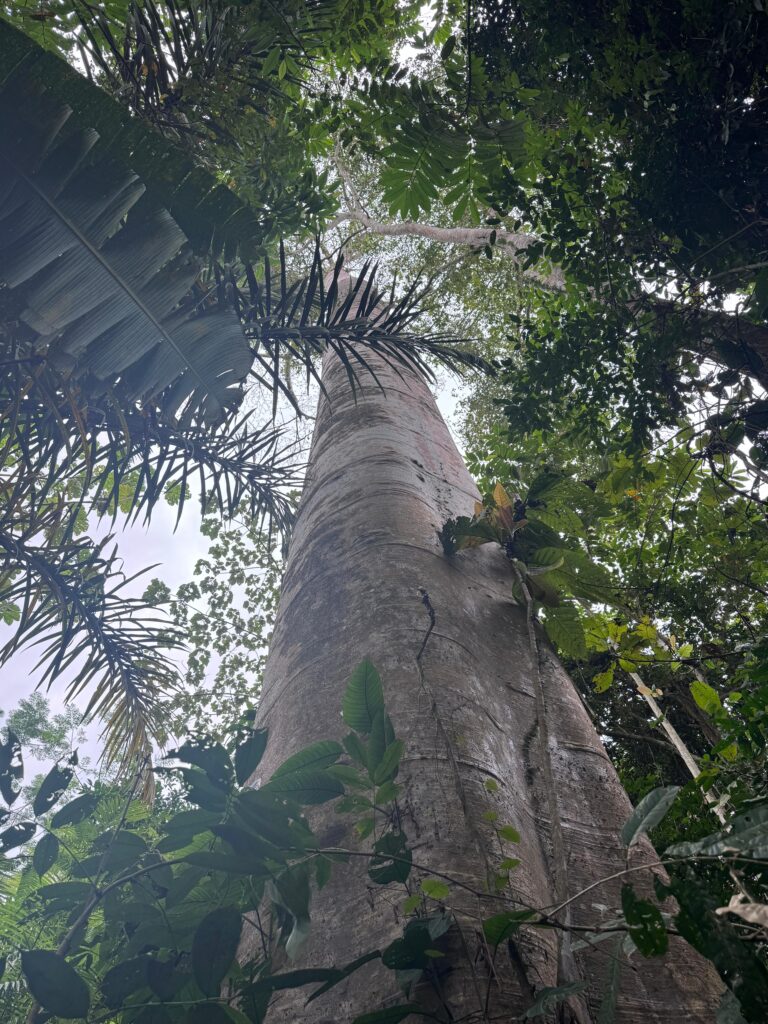
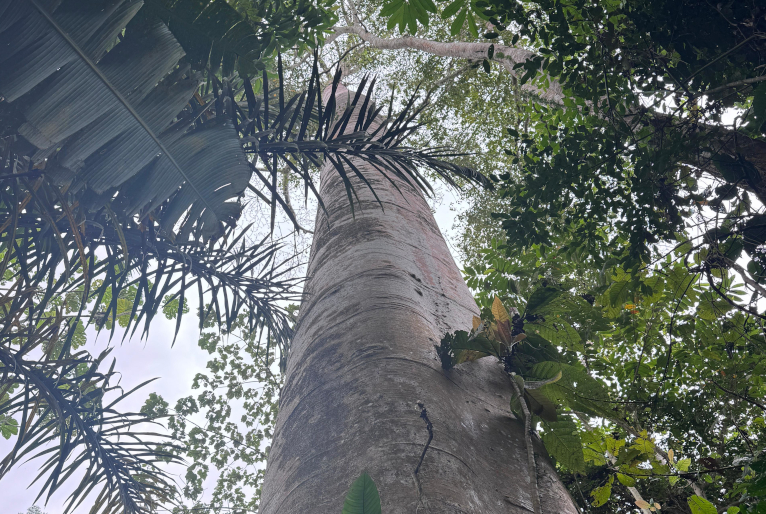
Cavanillesia platanifolia – the “Cuipo” tree – provides an adp site for Harpy nests, often reaching more than 50 to 65 meters tall.
I recently visited the Darien with a group of naturalists to gauge some of these conservation efforts, including a short expedition to view one of the nesting sites of the Harpy Eagle. The Harpy ranks among the world’s largest of the raptors, able to hunt prey as large as adult sloths and monkeys. Despite its emblematic status throughout Central America, the eagle’s overall populations have significantly declined in the past fifty years. It is now listed at VU (Vulnerable) to extinction by the IUCN (World Conservation Union). Populations in the Panamanian side of the Darien, however, have responded positively to recent conservation efforts, including the Peregrine Fund’s “three-pronged” approach involving “restoration of 240 hectares of disturbed land, expansion of ongoing conservation education and outreach efforts from four to ten communities to decrease Harpy Eagle killings to zero, and strengthening of three national protected areas important for the survival of Harpy Eagles by empowering communities in governance, leadership, and ecological monitoring techniques.” My first impression with locals and business owners in border towns of the Darien Gap was surprisingly positive: the roads and infrastructure were in better shape than I had expected, the towns felt calm and secure, businesses gladly welcomed eco-tourists and travelers.
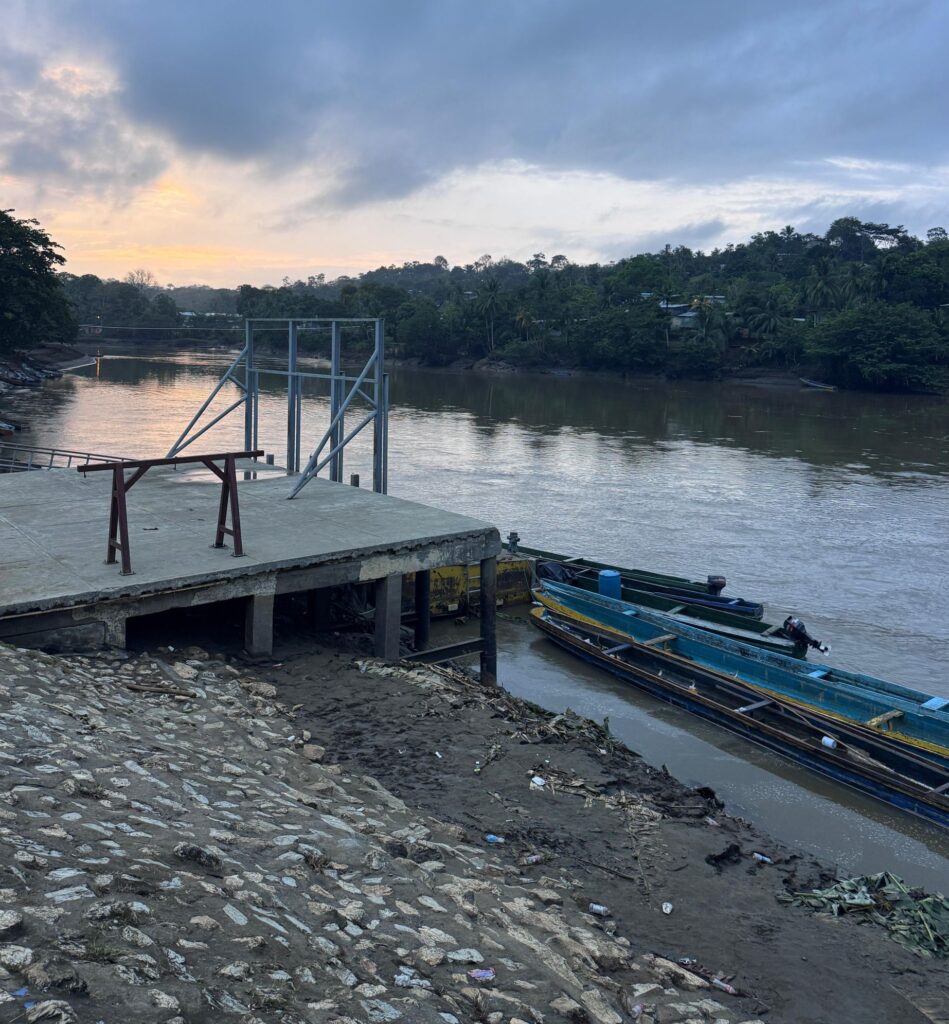
Sunrise at a boat launch site along the Rio Chucunaque
Among our group of naturalists was friend and Panamanian Biologist Ignacio Zea. Zea currently works as guide for the Smithsonian Barro Colorado Station in Panama, in addition to monitoring mammal populations in regions extending from the Darien into the Central American wildlife corridor. During the five hour drive from Panama City to the edge of the Darien Gap, we discussed some of the recent changes in conservation issues in the country; some of the topics of this discussion were reformed into the following interview:
Ryan: Hi Ignacio! Can you give us a brief introduction to your background in environmental conservation in Panama?
Ignacio: I grew up in Panama with a deep appreciation for the natural world, especially tropical forests. My family instilled in me a strong respect for wildlife and rural communities. That early exposure to Panama’s biodiversity its forests, rivers, and coasts shaped my decision to pursue biology and field-based conservation work.
Over time, I became particularly interested in large vertebrates such as big mammals and their habitat use and activity patterns in mixed landscapes (fragments of forest). I currently work as a naturalist guide at the Smithsonian Tropical Research Institute’s Barro Colorado Nature Monument, where I help interpret decades of tropical research for visitors and researchers from around the world. In parallel, I’ve been involved in mammal monitoring efforts that extend from eastern Panama into the broader Mesoamerican Biological Corridor, including regions connected to the Darién. My focus has been on understanding how landscape change, fragmentation, and human pressure affect species distributions especially apex predators and other sensitive mammals.
For me, conservation in Panama is not just about species protection; it’s about maintaining ecological connectivity and supporting the communities that coexist with these ecosystems.
Ryan: Over the course of the past seven years, I’ve known you to be active in a wide variety of scientific surveys, open-source naturalist training/guiding, community outreach in response to feline-animal attacks, and academic study. What are some of your favorite of these endeavors, and how have they progressed over time?
Ignacio: One of the most meaningful aspects of my work has been participating in mammal monitoring projects, particularly those involving camera traps and field surveys across forested landscapes. These efforts contribute to long-term datasets that help us understand population trends, species richness, and the presence of elusive animals like jaguars, pumas, and ocelots.
I’ve also been involved in outreach efforts responding to human feline conflict, especially in rural areas where livestock depredation creates tension between communities and large cats. These situations are complex. On one hand, families depend economically on their animals; on the other, large felines are essential for maintaining trophic balance. Working directly with communities sharing information, promoting preventive measures, and encouraging coexistence strategies has shown me that conservation cannot succeed without trust and communication.
Guiding and open-access naturalist training have also been incredibly rewarding. Helping people – both Panamanians and international visitors – develop a deeper understanding of tropical ecosystems builds long-term conservation awareness. Over time, I’ve seen a shift toward greater public engagement with citizen science and biodiversity documentation, which is a positive sign.
All of these experiences reinforce one idea: conservation is most effective when it integrates science, local knowledge, and education.
Ryan: During our ride down to the Darien Gap, we discussed a bit about the Smithsonian’s report of record warm ocean temperature event in 2025, which prevented ocean nutrient upwelling. What are some of the other large scale, ecosystem changes that have occurred in Panama in the past decade?
Ignacio: In the past decade, Panama has experienced several significant ecosystem level changes. Prolonged droughts, intensified by El Niño events and broader climate trends, we’ve had lowered water levels in critical watersheds including those feeding the Panama Canal. This has had economic consequences, but it also reflects broader hydrological stress affecting freshwater ecosystems and forest resilience.
Another major issue has been land-use conflict linked to mining and infrastructure expansion. Large-scale development projects have triggered protests and national debates over environmental governance, water security, and long-term sustainability. These discussions highlight the tension between economic growth and conservation priorities in a biodiversity rich country.
Additionally, we are observing shifts in species distributions and phenology. Changes in rainfall patterns and temperature influence flowering cycles, fruiting events, and wildlife movement. In tropical systems where ecological interactions are tightly synchronized these shifts can cascade across trophic levels.
Panama sits at a biogeographic crossroads, so environmental changes here resonate beyond national borders. The country plays a disproportionate role in maintaining connectivity between North and South American fauna.
Ryan: The Darien has been in the focus of international news in the past few years due to its importance in mass human migration. What are some of the frequently overlooked social and environmental effects of these recent burst of development and activity in critical biodiversity hotspots and the extending biological corridor?
Ignacio: Much of the international coverage focuses—rightfully—on the humanitarian crisis. However, less attention is given to the long-term ecological consequences of rapid, unregulated movement through primary forest.
Increased foot traffic through fragile areas contributes to trail expansion, soil compaction, river contamination, wildlife disturbance, and opportunistic hunting. Temporary camps can lead to localized deforestation and pollution. These effects may seem small individually, but across hundreds of thousands of crossings, they accumulate.
Another overlooked aspect is how instability can weaken environmental governance. When non-state actors control territory, conservation enforcement becomes difficult. Protected areas may exist on paper but lack effective oversight. At the same time, Indigenous communities in the Darién have historically acted as stewards of the land. Any long-term conservation strategy must involve empowering these communities, respecting land rights, and ensuring that humanitarian responses do not inadvertently undermine ecological integrity.
Ryan: Thanks for your time and insight, Ignacio!
If you would like to help fund our independent conservation efforts by donating to Ignacio’s ongoing camera trap studies, please see: Recaudación de fondos de Ignacio Zea: Saving endangered animals in the Mamoni Valley.
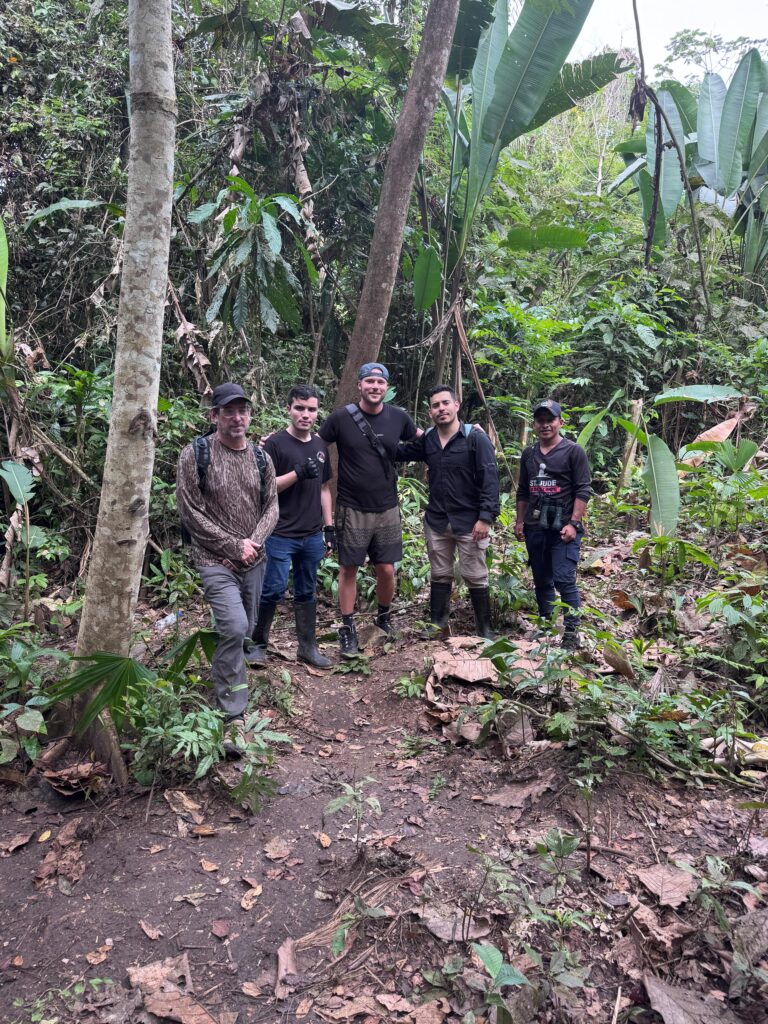
From left to right: Ryan King, Emilio Pazmiño, Jackson Howard, Ignacio Zea, and Anthony Contrera