As scientists say that Europe needs to act urgently and strategically on its over-heating climate, RUPERT READ & CAROLINE LUCAS of the Climate Majority Project’s SAFER campaign weigh how we need to respond…
Warnings about systemic risks to economies, ecosystems, critical services and security continue to mount following the (eventual) release of the UK security services’ assessment on Global biodiversity loss, ecosystem collapse, and national security.
That still-partly-redacted report was from HM Government’s own security services, spelling out the cascading risks from ecosystem degradation. The headline of the published version (we have good reason to believe that the full unpublished version is even more worrying): every ecosystem which is critical to the U.K. is on a pathway to collapse, and the implications for our food and water supplies, geopolitical instability, conflict, migration, and inter-state competition for resources are therefore obviously very serious indeed.
Now scientists who advise the EU have powerfully added their voices to the mass of evidence, calling for strengthened adaptation alongside urgent and sustained mitigation in order to prepare for unavoidable temperature increases and to safeguard Europe’s strategic priorities.
The European Scientific Advisory Board on Climate Change does not mince its words.
“Without adequate adaptation, most climate risks in the EU are projected to reach critical levels by mid-century, bringing frequent, severe, persistent and far-reaching impacts. These will harm people’s health and wellbeing, disrupt critical infrastructure and systems, weaken economic productivity and fiscal sustainability, and accelerate the loss of ecosystems and biodiversity.
“Taken together, with frequent and systemic impacts compounding one another, these risk eroding and destabilising the EU’s economic and social foundations, compromising its ability to deliver on strategic priorities such as security, energy autonomy, economic competitiveness, social cohesion and democratic stability.”
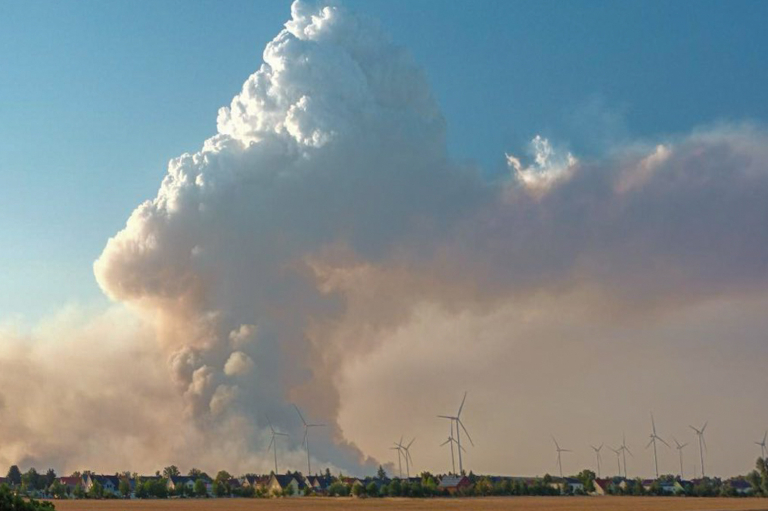
Europe is heating at twice the global average, and weather- (ie largely climate- ) related extreme events have already caused severe losses. Extreme heat has resulted in tens of thousands of premature deaths in recent years, including an estimated 24,000 in summer 2025.
Economic damages to infrastructure and physical assets now average around EUR 45 billion per year. Even under the most optimistic scenarios, hazards will intensify, the Advisory Board’s report warns.
Current adaptation efforts are described as “insufficient, largely incremental, often coming too late, and … not yet commensurate with the scale, pace and complexity of increasing climate risks.”
It goes on to say that in some cases, poorly planned adaptation efforts have been maladaptive, actually increasing climate risks and potentially creating lock-ins that limit future options to adapt.
The central message – that Europe needs to act urgently and strategically to adapt to a warming climate – echoes the messages of our SAFER (Strategic Adaptation for Emergency Resilience) report. We are really pleased that this authoritative EU scientific report on adaptation has been explicit in adopting the ‘strategic adaptation’ frame. Like we have done in SAFER, they refer to the need for transformational adaptation, involving large-scale, long-term and systemic changes where limits to adaptation are being approached.
The key point being that it is increasingly-widely recognised that incremental, reactive adaptation measures are insufficient. Deep as we now are, tragically, in the age of consequences, only a more deeply deliberately transformative effort at responding smartly to the damage that is here and preparing for the unpredictably worse damage that is to come has any chance of being sufficient.
As we point out in the SAFER report, though, we need to acknowledge too that there really are limits even to strategic adaptation; and the EU scientists’ report does acknowledge this.
Their recommendations for the EU policy process are not as ambitious as might have been hoped, but they are more pragmatic and joined up than the UK government’s hopelessly inadequate response to the adaptation question, described not that long ago by the official UK Climate Change Committee as a “Cinderella” of climate compared to Government’s focus on and (welcome) investment in decarbonisation.
The National Adaptation Plan (NAP3) – the most recent UK government plan for adapting to dangerous anthropogenic climate change – not only failed to provide an overall vision for what a well-adapted UK would look like, it did not spell the level of urgency required either.
The European report makes specific actionable recommendations, calling for a vision for a climate-resilient EU by 2050, supported by measurable strategies and targets, and the mandating of climate risk-assessments across member states. They also want a common reference for adaptation planning that, significantly, should be stress-tested at higher levels given the faster rate of over-heating in Europe.
Encouragingly, they also call for ‘Fair and just climate resilience by design’ across EU policies, and the mobilisation of public and private climate adaptation investment.
Well, it would be more encouraging for us Brits of course if the UK was still in the EU.
What we need to push for now is much greater awareness, ambition, and action on strategic adaptation by our own government, in order to foster the local resilience, public support and system change needed for a liveable future here. Please join us in the #Safer campaign, as we press together for exactly that!