 From 2018 to 2020, the top four seed and agro-chemical firms controlled 60-70% of the global pesticides market, and 50-60% of the $45 billion global seed market. How did this happen?
I wrote a long review (in Swedish!) of the book Titans of Industrial Agriculture — How a Few Giant Corporations Came to Dominate the Farm Sector and Why It Matters (MIT Press, 2025) for the journal of the Royal Swedish Agricultural Academy, which can be downloaded for free on this link. Here is a brief summary.
Just a few hundred years ago agricultural inputs, apart from scythes and a few other tools were not even marketed goods. Staple food seeds were mostly saved and exchanged between farmers and more rare seeds (eg vegetables) were sometimes supplied by governments, monasteries or other social institutions. Fertility and pest control were mainly managed through good agriculture practices or with local resources. In Titans of Industrial Agriculture, Dr. Jennifer Clapp in the School of Environment, Resources and Sustainability, at Waterloo University, explains how the farm input market in four different categories, machinery, fertilizer, seeds, and pesticides became dominated by a very small number of companies.
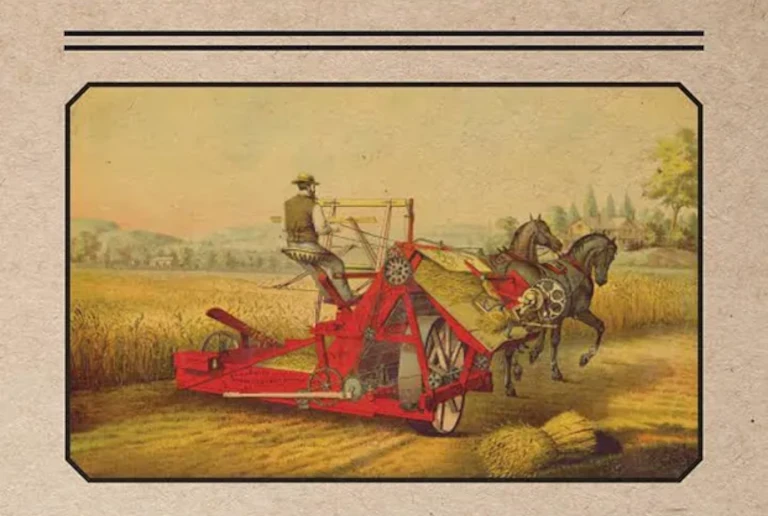
In agricultural seeds and pesticides, they are Bayer, Corteva (a merger between Dow and DuPont), Syngenta, and BASF. In farm machinery, John Deere, CNH Industrial, AGCO, and Kubota (some of them have many brands in their portfolio). Fertilisers are dominated by Nutrien, Mosaic, Yara, and CF Industries. The roots of most of these companies stretches back to the time when their respective sector was fully commercialized, beginning with farm machinery such as reapers and ploughs almost 200 years ago to fertilizers some hundred years ago.
In addition to product innovation and normal marketing, the companies have applied a number of strategies in their quest for market dominance, such as mergers and acquisitions (of whole firms or just patents), credits to farmers, influencing government standards and regulations, collusion and sometimes outright corruption.
Economists typically consider a 40% market share among the top four firms to be the threshold beyond which market distortions are likely to occur. In the agriculture input sector the dominant firms have an even larger market share in most countries. From 2018 to 2020, the top four seed and agro-chemical firms controlled 60-70% of the global pesticides market, and 50-60% of the global seed market. Their market share is even higher in more specialized markets such as soy or corn.
Jennifer Clapp points to a number of disadvantages of this enormous concentration. One is that oligopoly tends to result in higher prices for farmers, which in turn translates into higher food prices or lower profitability in farming, or any combination of the two. The choice of the farmers is naturally limited when there are fewer companies with fewer products. In some cases the dominating companies also have common owners, which raises further concerns.
She also points to some more indirect results. Mechanization, for example, is driving scale in the farm sector and forces farmers to “get big or get out” (credited to U.S. Secretary of Agriculture Earl Butz in the 1970s). As such it hurts disadvantaged farmers more. In the US 14 percent of all farmers were black in 1920 and today it is just one percent with half of a percent of the revenue!
There are also synergies between the various inputs. Mechanization leads to specialization which in turn increases the need for fertilizers and pest control. Specialization and mechanization also favour certain traits in seeds. The dependency of inputs makes farmers more dependent on credits and will increase the financial pressure on them. As observed by agriculture economist Willard Cochrane, once the majority of the farmers have adopted a pioneering technology, prices will fall and the benefit of the increased use of inputs is not accrued by the farmer but shared by the buyers and the input manufacturers. Jennifer Clapp also notes the enormous “de-skilling” that is the result of tractors you can’t repair, seeds that you can’t propagate and production systems that rely on pesticides and fertilizers. She also warns that digital farming might be the next nexus around which further consolidation in the farm input industries might happen.
In the final chapter she proposes a a number of anti-oligopoly regulations of verious kinds, but she also points out that there is a need to favor other kinds of farming systems than the industrial.
It is an interesting book with a lot of data, you can find some of the data also in this article by Jennifer Clapp herself.
In my view, however, the importance assigned to manipulative behaviours of the big players to get their market dominance is a bit overstated. I am sure they can play dirty and that they have done it. But a look around in almost any sector of the economy we can see the same pattern that a few market actors control the lion’s share of the market. In the farm sector, it is not only in the input side, but equally in the output side, where there are few buyers of farm produce. In Sweden, one dairy, Arla, has some 70 percent of the raw milk market. The major retailer ICA has more than a 50 percent market share. In Canada, France, and comparable countries the top 4 or 5 retailers have a market share above 75 percent, in the US around 50 percent. ADM, Bunge, Cargill, and Louis Dreyfus are said to control three quarters of the global grain market.
In my view, this kind of market concentration is simply an inherent mechanism in the capitalist market economy, which has been ’enhanced’ by globalisation and by digitalisation, which in turn makes markets more transparent and competitive. Intuitively, most people, farmers included, tend to believe that fierce competition will lead to more actors on both the input and the output side, but the development in the food and agriculture, as well as most other markets, clearly points to the opposite. That is even more the case in sectors with high entry thresholds due to high costs for research and development or high costs for regulatory compliance (such as for pesticides). This creates barriers and makes startups prone to acquisitions.
Even if the winner doesn’t take it all, the winners take the most.