In this eighth article on the collapse theme I turn to how to build trust, how to regulate access to resources, how to manage society at large and how to organise distribution and exchange. In my view they all belong together and influence each other. I try to balance how I believe it ought to be and a more realistic perspective.
Compared to the current global capitalism a lot of things will be different as I outlined in previous articles; total energy use will be lower; human labour will be more important; there will be less division of labour and less specialisation; and the economies will be much more localised.
The land belongs to me and I belong to the land
As more people will work the land, its distribution becomes a major societal concern and access to land will be re-negotiated. I see no reason to believe that people in general will accept a skewed and exclusive ownership of land in the future. The distribution of land will thus be much more egalitarian than today. Hopefully, a land reform can be peaceful.
I envision a gradient of land regimes from private possession of sorts to communal lands or multiple use lands where the same land can be subject to multiple uses by different people. All this already exists in many places.*
I believe that a continued and secure personal/household tenure of land is a good basis for farming (and sometimes forestry, depending on the intensity of the management) as it allows and motivates investment in the land and favours good stewardship. The Western capitalist model of almost absolute ownership, is far too exclusive, however. Ironically, those that favour exclusive and absolute private ownership of land often do that with the argument that it protect lands from the abuse of government or huge corporations. But in the end, government is the guarantor of private ownership as it rests on law and the threat of violence from governments. One major problem with the Western private land ownership is that it has made land into a commodity which can be sold. Privatisation of land is what has given huge corporations the opportunity to amass land and speculators to hoard land. In addition, absolutist private ownership instils a view that the community and nature have no rights. Some recommend the term possession instead of ownership.
One can also denounce ownership altogether and claim that what is important is the rights to tenancy. Strong tenure rights for whatever constellation that manage land is important (see more below). But it is equally important that local communities have the possibility of withdrawing those rights in cases of abuse, which has been quite common historically. Also important is that that tenure can’t be transferred for money or without the consent of the local communities.
Instead of getting stuck in the dichotomy between ownership and tenancy, I prefer to use belong. It appears to my (non-native English) ears to express some kind of relationship and reciprocity. The land belongs to me and I belong to the land.
Some land or resources that for various reasons will be shared can be managed as commons. It could be grazing land, fisheries, irrigation systems etc. In my place, the road is a commons, where each road user contributes according to the use of the road. Moose hunting is also managed as a commons even if the land is owned privately. Most lakes are commons in Sweden and a lot of housing is commons. The management of commons has been subject to a lot of controversy and misunderstanding, but I believe that there is no doubt that commons can be a good way to manage resources both from an ecological and social perspective. But there are also opportunities for failure. There are some criteria that apply for successful commons. Often, the management of commons is quite time consuming, but one should see the time spent as a way to build social relationships and ensure the support and engagement of all commoners (the users/participants). To combine important events in the management of commons with celebrations, festivals or rituals is a good method to build care and community around commons. This has also been quite prominent historically.
Will there be markets and money, and if so which kind(s)?
In my vision markets will play a much smaller role than in the current capitalist market, and thus money will also play a smaller role. To begin with a lot of work will not be salaried as such and the level of self provisioning of families and communities will be much higher. I also envision that a lot of local exchange will/can be based on reciprocity, barter or gifts rather than through markets.
In addition, if private capital accumulation will cease, there is no role for money as a store of wealth. In fact, money should not be a store of wealth at all. The storage of wealth in the shape of money means that you have a claim on other peoples’ labour or resources. Such a system is only possible and feasible in a highly monetised economy, and will inevitably facilitate increasing inequality.
Lately, I have read two different proposals for the future of money. In the book Liquidate-How Money is Dissolving the World the anthropologist Alf Hornborg makes the point (something that he elaborated already in his earlier writing) that technologies and artefacts, such as money, certainly are not neutral. On the contrary they both reflect and create differences in power.
“This insight should prompt us to reconceptualise politics as largely a matter of how our artefacts are designed. It should also lead us to see that the destructive obsession of the world economy with growth is ultimately not generated by how mainstream economists think, but by the artefact – all‑purpose money – that shapes how they think.”
In the end of the book he proposes the introduction of special-purpose money as a complement to general purpose money, where all sorts of things and processes are seen as commensurable:
“From the perspective of northern Europe, for instance, a special‑purpose currency that genuinely promotes economic localisation should not be convertible into coffee from Colombia or human labour in sweatshops in Malaysia. In restricting the bulk of consumption to what can be locally sourced, the widespread use of such a currency would inhibit both global transports and unequal exchange, while enhancing local food security, diversity, and resilience.”
He then proceeds to propose a combination of basic income and such a ”complementary currency” where each compensates for the shortcomings of the other: a society using a complementary currency can specify how it is to be used and a society with a universal basic income will provide general access to resources.
In two articles in New Left Review, the historian Aaron Benanav, also proposes special-purpose money, but with another point than Hornborg. In Bananav’s poposal there should be one currency for salaries and consumer goods. For B2B transactions and investments another system should be used. None of the currencies can accumulate and are not convertible:
”Two distinct currencies structure transactions: credits are used by individuals for personal consumption; points are used by firms and associations for interorganizational transactions and investment. These currencies are not convertible—there is no direct exchange rate between them. This separation ensures that Individuals cannot use their credits to acquire productive assets, fund investments or influence collective decisions. Likewise, firms cannot use points as a source of profit: points cannot be saved, reinvested or converted into credit incomes. This breaks the structural link between efficiency as such and private accumulation.”
These proposal represent two different ways of breaking up general purpose money into separate systems which are not convertible. Both will in some ways preserve markets, but not the global capitalist market economy. I believe there are some benefits in both approaches. There seems to be some weaknesses in both approaches as well. Benanav’s proposal doesn’t seem to recognise the perils of commodification and globalisation, while Hornborg’s proposal doesn’t seem to hinder accumulation of capital. While sympathetic from a social welfare perspective, a universal basic income seems to be the ultimate expression of modernity and urbanism, where the link between work, nature and resources is totally lost. Both proposals are built on top-down regulations, assuming both a strong state and intricate designs, which makes me (always the anarchist!) hesitant.
I recognise the usefulness of something akin to money, but keep my mind open to several options. To reduce market integration and penetration and to reduce the claims of an ambitious state seem to be good safeguards regardless of which monetary systems that will prevail.
The local community
Local community is not a very exact term, it could mean a village, a formal municipality or special institutions for commoning. One can draw up all sorts of idealised visions of how local communities can be organized. Hopefully, local communities can structure themselves in a way that limits the concentration of economic, political and cultural/symbolic (e.g. religious) power. In my view an active democratic organisation seeking consensus is the gold standard. Representation and majority decision making are not fundamentals of democracy, but can play a role under certain circumstances. But in the end, I believe there will be many different ways of organising the communities.
I have outlined some ways to reduce the accumulation of land (above) and capital (in a previous article). For the rest, I assume that people can manage their affairs and dealings in some sort of democratic way and develop safeguards against bullies, charismatic priests or seductive influencers amassing powers. I envision that a number of commons will be managed by the commoners and users of the commons in place, while there will be some kind of self ruling municipal/communal structure to manage joint affairs as well as the interaction with other municipalities.
How to coordinate over larger scales and distances
While I believe that a post-collapse society will be more localised, and organized in smaller units, there will still be a need for exchange/trade between such polities. In addition, there will also be a need to coordinate major projects, such as roads and canals, mining, certain kinds of specialised industrial production, irrigation projects, advanced medical care, higher education, research etc. Together with the potential threat of war, I believe these aspects of society are where the risk of the establishment of new hierarchies and inequalities are the highest. In an ideal world, these ventures could be organized by voluntary cooperation between self-ruling cantons, theoretically in varying constellations. Perhaps communes will join forces in a canton and a handful of cantons form a federation (did I just say Switzerland?). The scale of the polity will to a large extent depend on what challenges it is supposed to deal with and what level of specialisation that is both needed and in accordance with the technological and economic development (I discussed that at length in the article Will there be solar panels after the dust has settled?)
Perhaps it will play out the other way round, where regional/central/state governments will survive and become some kind of service providers for local communities. Or, will they, with a more authoritarian twist, under the threat of violence, impose taxes to accomplish the same, but also skim off considerable profits to maintain a more lavish life? And appoint local sheriffs or vassals who might develop into feudal lords….
In us we trust
It is essential for society that there is trust within it, between the members of society. There are numerous ways that trust can be built and maintained. Trust is also intrinsically linked to the organisation of work and life in general.
There are many ways one can organise life and work. In the previous farm where I lived, Torfolk, we were initially a fairly collectivist collective, at least when it comes to material and economic matters (less so in a social and personal perspective). Gradually, it developed into a two-family constellation, but still with a common economy, joint lunch and dinner and very informal structure. Decisions were taken at the dinner table or on the fly. We operated on a basis of ‘From each according to his ability, to each according to his needs’. I believe it worked quite well, with few conflicts and a high level of trust among us. When the business grew, we had to employ people. That changed the decision making process and made the whole thing a lot more formal, as the employees wanted to know who they should ask. We also had to install methods to monitor work and productivity as we could not afford to lose money on the work of the salaried staff. In this situation other methods had to take over some of the things earlier regulated by informal trust.**
The most persistent organisational unit and trust-building institution is the family which has survived all through human history. Families have mostly operated without written rules – but in some cases quite a lot of norms defining status and work of the various family members. I can agree with Chris Smaje’s perspective expressed in Finding lights in a dark age that families will play an important role also in the future (apologies to William Morris who had a more “progressive” view). This doesn’t mean that a family is an ideal institution, it certainly isn’t, and with dysfunctional members, the family easily also becomes dysfunctional. Of course, no family is an island; family has always been embedded in other trust building institutions such as tradition, norms, religion and laws.
Also in a post-collapse world there is a need for a palette of norms of various sorts. Meanwhile, cultural evolution is based on variation. Even if most norm breaking is negative for social cohesion some norm breaking leads to positive changes, better societies or new cultural expressions. Even some law-breaking can be justified; most freedom fights and popular resistance has involved some law-breaking. Conformism is ultimately dangerous for society. At the same time, a general adherence to norms is essential for trust. So it is a question of balance.
It is a bigger challenge to trust the others, the other tribe, the other people, the other nation, those on the other side of the river, those with another religion. I believe that has also followed humans throughout history. It is probably almost inevitable that the formation of a group, a society is based on the commonalities and that those outside of the groups is portrayed as different. Nevertheless, even if war and conflicts have been prevalent, they have not been the norm. Trade, intermarriage and other methods have been used to keep the contacts with the other in good shape. The major perceivable advantage of modernity and globalisation would have been the eradication of hostility between nations, religions, cultures or ethnic groups but alas, that doesn’t seem to be the case.
In real life, the story continues and even after a collapse, humanity will stumble along.
In my life, this was the eighth article on the collapse theme. The last one will be brief and sum up the (in my view) most pertinent thoughts and invite your opinion. But please feel free to comment also on this one.
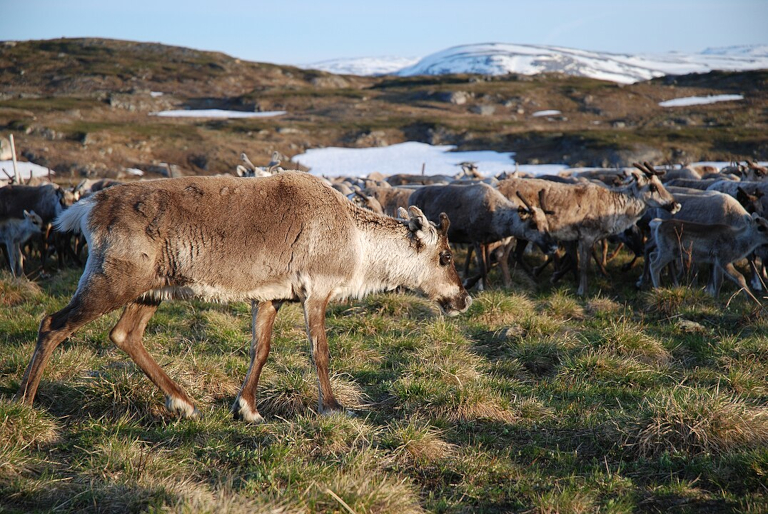
* For example, in the North of Sweden Sami people have reindeer grazing rights on all non-farm land, regardless of ownership. Sweden also has a freedom to roam (allemansrätt) that give everybody, even foreigners, the right to access, to camp, pick berries and mushrooms on all non-crop lands. And we have quite large tracts owned as allmänningar (commons) as well as land owned by state and municipalities. Meanwhile, private ownership is very strong in Sweden, also for forest land. There are some 350 000 private landowners, (not including the large number of home owners who also mostly have a plot of 700-2500 square meter around their house) and some huge corporations owning land. We also have the sea, some large lakes and rivers which basically have no ownership, even if there are ways to assign rights to the use of the water for fishing, irrigation or power generation. Such rights are, mostly, not tradeable.
** I describe this in more detail in the article Swimming in a river of change