The previous post about food and farming was so long – and still I forgot fibre! Wool, cotton, flax, hemp and many more. Together with leather and skins they are certainly essential products, which mostly will be produced locally, in a post-fossil fuel society. Initially, I thought that the post would also encompass humans’ relationship with the rest of nature. But it was really long enough. So here we go.
On language. Let me be clear that I see humans as a part of nature. Still, when I write I sometimes write about our relationship with nature or use the word as if humans were not part of it. Apologies.
The trinity of destruction
To begin with, in a post-collapse world, humans will have less power to destroy as there will be less energy available. Of course, there are the rare exceptions where more energy would allow you to save nature. The prime example is probably the use of wood for heating or cooking. But still, biomass extraction today is higher than ever before, despite – or thanks to? – enormous build out of fossil fuels, nuclear energy and renewable energy. Capitalism is another strong driver for exploitation. I am convinced that capitalism will collapse as a global system together with fossil fuels and growth. This also means that powerful incentives to destroy nature are also “lost”.
While that reduces the power of two major drivers of destruction, it doesn’t automatically deal with the third: a culture of seeing nature mainly as a resource, a mine, a dump, and existing only to satisfy our needs. We can call that modernity, including the notion of “ownership” or entitlement that colours so much of human-nature interactions. It doesn’t mean that there were no environmental damages caused by pre-modern humans. Come on, after all we are just humans and we screw up. Other species do as well. But the trinity modernity, fossil fuels and capitalism, certainly made it much worse. The failed communist states demonstrate that even without capitalism, the modernist mindset and fossil fuels were enough to establish a similar industrial metabolism. China also shows, however, that the unleashing of market forces/aka capitalism is far more efficient in speeding up the destruction than a planned economy.
What comes thereafter?
How can we then progress the human interaction with the rest of the living world? In the Complexity interlude, I ventured the idea that while a collapse will entail less technical, economic and social complexity it might also mean that we will get a more complex relationship to nature, recognising and enacting the many dimensions of human-nature interactions. Instead of the perspective of “what’s in it for me” we can see us as part of nature and nature as part of us.
It is easy to say things such as “we must take care of nature” or “humans must respect all other organisms” or even “we are no better/have no more right to exist than frogs/deer/bugs”. But what does it mean? Let me first dissect some prevailing perspectives.
The term Anthropocene which has had such an appeal the last decade is double edged. On the one hand, it does point to the very big (mostly negative) impact humans have on the planet, on biodiversity, on the huge cycles of carbon, nitrogen and water and the like. It cautions us to take it easier, reduce our foot print and adjust ourselves better to nature. On the other hand, Anthropocene can also fuel the notion of how the exceptional creature Homo sapiens has powers bigger than nature; that we can shape nature in the same way as the potter shapes clay. Perhaps we have messed up, but being smarter and embracing the Anthropocene, we can fix things and make Earth – or Mars! – a better place to live. So the story goes. I will not expand on all the arguments for why this is delusional. Essentially, it is just a continuation of the sustainable development narrative that since the 1980s has fooled people that there are ways to eat the cake and grow it at the same time.
Despite all the bravado of the Anthropocene, we are to a large extent still at the mercy of the living and dead. Even the distinction between the living and the dead is a construct of our mind. All life is based on the dead matter and essential elements. Plants and animals are dependent on the process by which lichens and roots extract minerals from rock, which then becomes life. And life is sometimes converted back to minerals.
Life has created its own conditions and changed the dead planet into a wonder of life. The story of extreme growth and the subsequent collapse of fern forests during the Carboniferous period is a tale of that other life forms also can change the planet in ways even more than humans have ever done. The modern industrial technosphere which underpins the modern world is based on the dead organic matter from this period (i.e. fossil fuels). In light of this, we are scavengers, feeding on life turned into lifeless matter.
Are we also parasites sucking life out of all other life on the planet? Listening to some misanthropic conservationists one can certainly get that impression. But as William Cronon says in his essay The Trouble with Wilderness: “ if nature dies because we enter it, then the only way to save nature is to kill ourselves.” The view that the planet would be a better place without humans is in some way understandable but in most ways it is illogical, inhumane and in particular not really actionable. If we kill ourselves we will also kill nature as we know it, not only because we will not be there to experience it. Most of the nature we can see and experience is not really “wild”. Even 12 000 years ago humans had transformed much of the planet – admittedly not in the same way as we have done the least five hundred years, but still radically. Recent research shows that even Neanderthals changed the environment around their settlements profoundly. Withdrawal from nature – which of course is delusional in the first place as we are still totally dependent on nature – would also amplify the separation which is at the core of the current environmental disaster. Just because you are not fishing, logging or farming yourself, it doesn’t mean that fish, land or forests are saved. The main result of withdrawal is an even deeper ecological illiteracy.
As everyone that ever has farmed can testify, it doesn’t always work out the way you would like it to. Again and again, nature limits our reach as farmers, nature strikes back, nature doesn’t always do what we want it to do. But has nature really agency? Well, kind of. I am not really a believer in a Gaia or Mother Earth with a purpose and a meaning or to ascribe intentions in a bigger sense to the deer eating our vegetables or the moth eating our cabbage. Nevertheless, Life seems to have many emergent properties and processes which seem to create new life all the time and also to have regulating mechanisms that – mostly – keep conditions for life agreeable.
We were not (always) so bad
We tend to look at the failure of many civilisations caused by deforestation, erosion or other bad farming practices, as a sign that humanity is doomed to destroy. But most civilisations for which we have records were authoritarian and centralised where peasants had to overexploit their lands to pay taxes, tithes or rents as well as supplying the cities with labour, charcoal or timber. Instead of only looking to those failures we should be inspired by human settlements and cultures which have existed sustainably for centuries, even millennia. Many indigenous people practised sustainable farming or livestock husbandry in immense variations adapted to local conditions. But also traditional farming systems have in many places of the world been surprisingly stable and able to adjust to changes in climate, embrace new crops and methods, for example the Asian production systems described by King in Farmers of forty centuries, or the forest gardens of many tropical countries. Semi-natural grasslands have been sustainably managed for thousands of years in Scandinavia and elsewhere and are in addition incredibly bio-diverse landscapes. Chris Smaje says in Finding Lights in a Dark Age that “the land wisdom of peasants parallels the land wisdom of Indigenous people”, and many before him (e.g. Wendell Berry, Wes Jackson, Robin Wall Kimmerer) have pointed to the value of being native, or indigenous to the place.*
The abstract scientific knowledge of nature and ecology obviously have merits, but real understanding of nature will also always need direct relationships between humans and nature. The sustainable and gainful interaction between humans and the rest of the living world will not be created on a drawing board but rather be developed by people being grounded, being terrestrial, being nature. To get your hands dirty is even good for your health according to science.
By engaging in the local natural context with small scale farming, cooking, wood-cutting, hunting, fishing or collecting medicinal herbs we can experience first hand both the beauty of nature as well as the humbling fact that we are not in control. When Robin Wall Kimmerer is asked what one thing she would recommend to restore relationship between land and people, her answer is almost always, “plant a garden”.
“Something essential happens in a vegetable garden. It’s a place where if you can’t say ‘I love you’ out loud, you can say it in seeds. And the land will reciprocate, in beans” (from Braiding Sweetgrass).
The return of the taboo?
In general, we need to develop a higher sensibility for other life forms and for landscapes.
Some put their faith in legal Rights of Nature. Rights of Nature acknowledges that nature in all its forms has its own right to exist, persist, maintain and regenerate its vital cycles. Such legal rights have been assigned to rivers, mountains and lakes on many continents. There are considerable merits in the acknowledgement that humans are not alone on the planet and that we have obligations toward other life forms. Laws are norms and norms are expressions of culture and they are also feeding into culture. I believe it is this function that is most interesting with the Rights of Nature project, rather than the actual legal function of it (for which I have a number of concerns). Note, however, that also rights of Nature has an anthropocentric perspective as ‘rights’ are a very human construct – there are certainly no rights in nature – and it is only humans that can or will interpret what rights of nature means. No matter how hard we try to be different, I think we will always be anthropocentric, meaning that we can only comprehend the world from a human perspective within a human conceptual framework.**
We need to change our view on nature from a perspective of property, exploitation and transaction to one of relation and connection. We need to give and not only take. We should show gratitude for the bounty of life, even by simple gestures such as thanking for the food on the table. Gratitude is an antidote to the constant search for more, while dissatisfaction is the basis for consumerism.
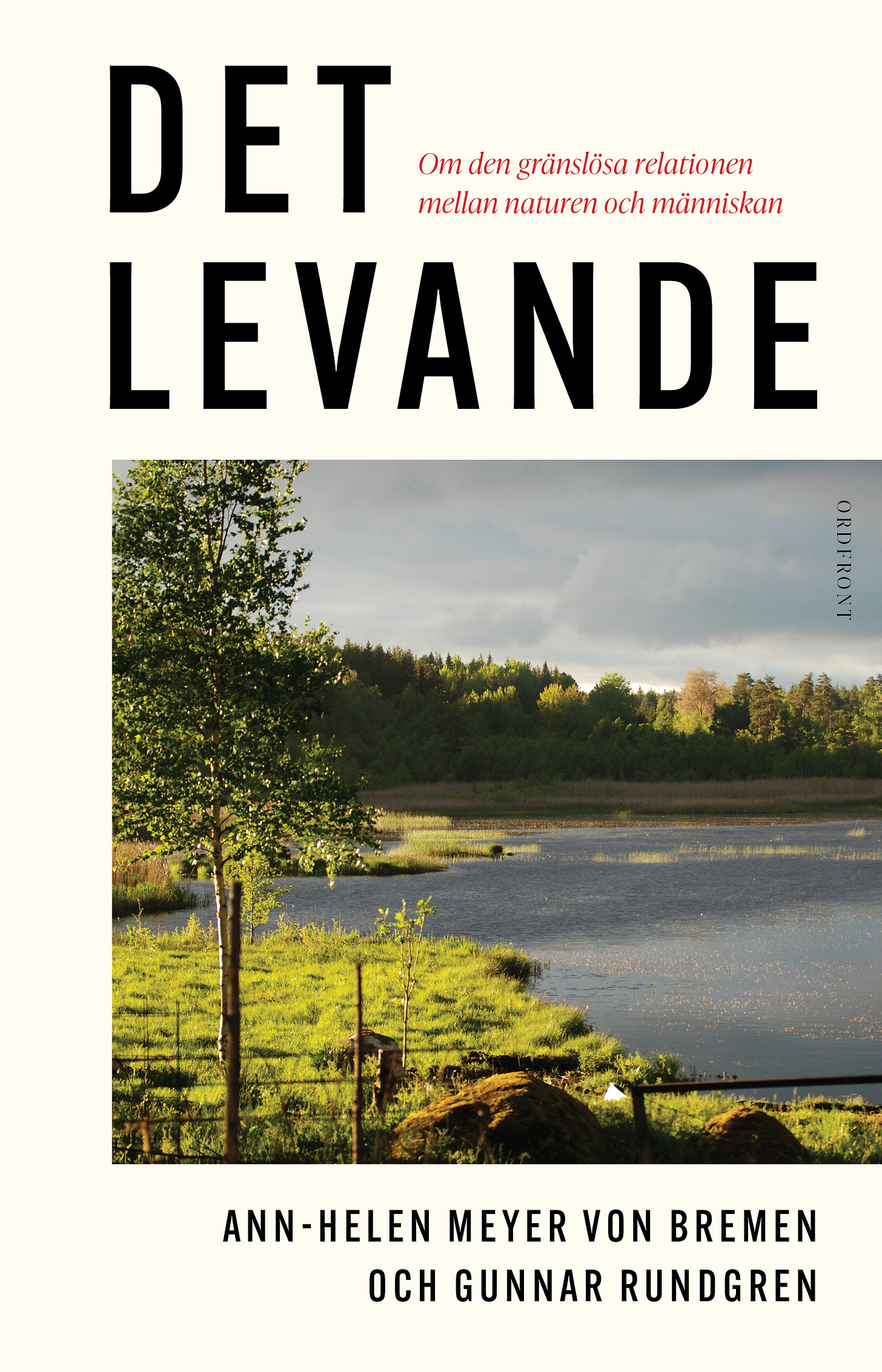
In Det levande, the most recent book from my wife’s and mine pen, we discuss that reintroducing sacredness in nature may be a path forward. Historically, people have assigned sacredness to rocks, trees, rivers, eagles, woods, mountains and crocodiles just to mention a few. In many cultures some behaviours have been taboo. When humanity threw out all these superstitions with modernity, we might have lost the ability to see anything as sacred. In that sense, even as I just wrote above that I am not so convinced about the existence of Gaia, it might be a good idea to believe in her, or some other divine guardian of life.
We are stardust
Billion year old carbon
We are golden
Caught in the devil’s bargain
And we’ve got to get ourselves
back to the garden (Woodstock, Joni Mitchell 1969)
This was the eight article on the theme of collapse. The previous ones (in order):
C as in Capitalism and C as in Capitalism
How and when will our civilisation die
Will there be solar panels after the dust has settled?
The plan is that the next one is about society and economy, but perhaps I need to split it up, we will see.
* I am not too happy with the distinction between indigenous people and traditional local cultures and populations. Neither of them are static and easy to define. If a peasant culture or a fishing community has existed in one place for centuries it has, hopefully, become indigenous to that place. The main fault lines are between colonialism and capitalism on the one hand and locally embedded cultures on the other hand and not between ethnicities. For sure there can be conflicts also between traditional local populations and indigenous people, especially when they manage overlapping niches, but there are conflicts among indigenous people as well.
** There are other versions of anthropocentrism, which are based on the notion that humans in some sense are superior and that the only meaning of life on the planet is to serve us. That should rather be seen as a human supremacy ideology. There are other versions as well. A quick search on the internet shows there is a large philosophical literature on the topic. That is why I qualified what I meant with anthropocentrism.