In Part I, we began a meditative ascent through the Swiss-Italian Alps — a timewalk across four horizons of human history. Each horizon revealed a widening lens on our present planetary moment: from systemic ruptures in recent decades, to societal upheavals across the last century, to paradigm shifts in the 1600s, and finally toward the deeper civilizational and inner-spiritual ruptures of today. Guided by Nietzsche’s three metamorphoses of spirit — camel, lion, child — and the arc of Theory U, we traced how collapse and emergence, denial and awakening, are not separate, but interwoven in the same unfolding landscape of becoming.
Seen from these higher vantage points, our time comes into focus as one of profound transition — marked by the breakdown of outdated systems and paradigms, yet also by the quiet surfacing of a new planetary awareness. It is a moment that asks not only for sharper analysis but for a turning of awareness: from downloading to seeing, from seeing to sensing, from sensing to presencing.
This Part II continues the ascent. As we approach the Fourth Horizon, the view opens further: from the visible crises of systems and paradigms to the deeper sources of being and becoming that shape our awareness & action.
And so we arrive at the guiding question: What inner, civilizational shift will enable us to break free from deepening destructive patterns of the past and begin to co-sense and co-shape the future that is calling us now, into being?
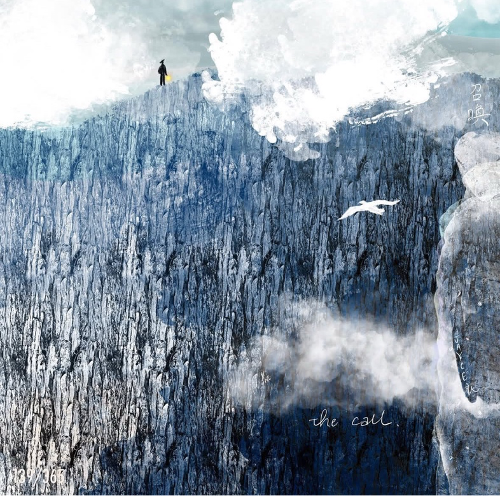
Image by Jayce Pei Yu Lee (2025)
As we near the summit on our mountain hike (around 2,500 meters of elevation), the view widens to encompass the Axial Age landscape (800–200 BCE). Residing in that field, humans across China, India, the Middle East, Europe, and the Americas began to ask deeper questions: Who am I? What is our relationship to the earth? What calls us beyond the boundaries of inherited mythos?
These shifts echo the emergence of the child, as defined by Nietzsche: play, novelty, and value-creation. Axial traditions introduced the notion that moral agency and inner alignment begin with a radical embodiment of inward reflection — ritual, empathy, compassion, relational orientation.
In Nietzsche’s view, the child moves us beyond the lion — beyond negation — to creation. At this Fourth Horizon, the child is not just the naïve beginner but possesses the capacity to co-sense, regenerate, and co-create. This aligns with Theory U’s shift from paradigm rupture to deep regeneration. And that, as the image above indicates, elevates us to yet another level of the human experience, where we encounter a part of the universe that is looking at us because it depends on us to emerge.
Axial Age
During the few centuries referred to as the Axial Age (Jaspers), we observe a profound cultural and civilizational shift occurring in various regions of the world. In China, amidst political fragmentation and social upheaval, Confucius articulates a path rooted in the ethical cultivation of the self through relationships, reverence, and reflection.
Alongside him, Laozi points toward a deeper, less graspable source or truth, the Dao, invisible to the eye and only relatable through letting go and letting come.
Moving southwest into India, we encounter a similar shift. The Upanishad texts of that time reveal a turn inward, emphasizing the sacred in the contemplative experience of Atman (the higher Self) and Brahman (the infinite). From this foundation, the teachings of the Buddha and Mahavira emerge, inviting humans to transcend the cycle of suffering by transforming their minds by following a path of compassion, non-attachment, and inner cultivation.
In the Middle East, Zoroaster articulates a cosmic dualism between truth and deception, light and shadow, emphasizing moral agency as central to human existence. Later in the same period and region, prophets such as Isaiah and Jeremiah begin to reimagine the covenant between humanity and the divine as a dynamic relationship rooted in justice, mercy, and humility.
Further west, in the city-states of Greece, a new form of questioning was born. Socrates, Plato, and Aristotle do not merely accept the world as given — they interrogate it. Through dialogue, reason, and the pursuit of the good, they begin to map the architecture of thought and ethics. The human being becomes an active participant in thinking, knowing, and moral action.
While the classical framing of the Axial Age often focuses on these Eurasian developments, it would be naïve to believe that the emergence of a new consciousness was limited to them. For example, in Africa, the legacy of ancient Egypt had already fostered a sophisticated ethical and spiritual framework centered on truth, justice, and cosmic order. Across the African continent, though not mapped onto the Axial Age timeline, we find in the spirit of Ubuntu, “I am because you and we are,” a resonant echo of the same axial shift.
Across the oceans, in the Andean highlands of South America and the volcanic mountain ranges of Mesoamerica, civilizations like the Inca and the Maya developed deeply rooted spiritual and ecological cosmologies anchored in reverence for Pachamama (Mother Earth), and a profound sense of “interbeing” with the living cosmos.
What unites these diverse civilizational shifts is not a single doctrine or belief system, but a shared movement toward inner reflection, moral horizons, and ethical agency. In each case, humans began to ask new questions, not only How should I act? but also Who am I?
And yet, as the philosopher Charles Taylor reminds us, the axial turn is incomplete. While it introduced unprecedented depth of thought and freedom of conscience, it also fractured the unity of experience — splitting body from mind, the self from the world, reason from feeling.
All these developments opened a reflective space and sparked the launch of major wisdom traditions, including Confucianism, Daoism, Buddhism, Hinduism, Jainism, Zoroastrianism, and Judaism, as well as indigenous wisdom traditions like that of the Mayas, and finally also the beginnings of Western philosophy and thought.
But that same axial turn, as pointed out by Charles Taylor, also left us without a map for reintegration.

Image by Jayce Pei Yu Lee (2025)
Now you sit and you feel the presence of the mountains all around you. That presence has more depth than we humans can possibly grasp. Sensing the resonances (Rosa) of that presence can elevate you to another quality of awareness. Tuning into the resonances of that larger field of presence, what thoughts and feelings begin to emerge now?
The first thing that you sense is that we all have a profound connection to the universe. It’s just that inside the noisiness of our villages down in the valleys, we usually don’t pay attention to it. Feeling the presence of the mountain, sensing that resonance, that is the connection. You feel that your body and being is not separate from the Earth’s body and being.
The second thing you notice is that the other plateaus you stood on while attending to the earlier Horizons are now all folded into the larger picture.
Vertical Literacy and the Evolving Self
The evolution of the Horizons reminds me of Robert Kegan’s theory of the evolving self. At each stage of human development, he suggests, a part of the self that was previously embedded in the subject becomes an object, meaning it is held and seen, making us realize that “I am not my thoughts” or “I am not my feelings”; rather, “I have thoughts” or “I have feelings.” The same pattern applies to the evolution of the Horizons: each later one makes visible a dimension of context that previously was invisible.
If the self evolves through seeing itself (as Kegan puts it), how do systems evolve? According to Theory U and awareness-based thinking, it’s the same: by bending the collective beam of attention back onto ourselves. Deep change requires making systems see, sense, and transform themselves — who they are, who they want to be, and how we sense and embody the emerging future now.
So, again, what is it that keeps us stuck in the patterns of the past? We tend to lack the vertical literacy, the capacity to move from the valley to the mountain top and back, as needed by the situations we face. That is the essential core capacity required of all future leadership and self-leadership.
We know that this kind of literacy is difficult to acquire and implement as an individual, particularly when dealing with high-stakes situations. But it’s learnable and possible. But how do we do that on the level of the collective? As an organization? As a society or system? Or as a planetary community, when the future of humanity is hanging in the balance?
Rising from the Rubble
There is one more thing that begins to crystallize: many of humanity’s most significant breakthroughs have emerged from disruption, chaos, and collapse.
When tribal and traditional structures began to disintegrate during the first millennium BCE, their disappearance marked not just an end but a beginning — the Axial Age gave rise to profound ethical, philosophical, and spiritual inquiries across multiple civilizations.
The fall of the Roman Empire left a continent in disarray, yet from its ruins emerged monastic Christianity, planting seeds of learning, community, and spiritual life that would shape Europe’s cultural landscape for centuries.
The Black Death swept across Europe, extinguishing nearly one-third of its population. And yet, from that devastation came the Renaissance — a flourishing of art, science, and humanism that redefined what it meant to be human.
As the ancien régime crumbled under the weight of injustice and inequality, France exploded in revolution. From the wreckage of feudal privilege rose a new political imagination grounded in liberté, égalité, and fraternité that inspired people across the continent and beyond.
And in 1941, as the world plunged into one of its darkest hours under Hitler’s regime, that very darkness gave way to a collapse — and then to the formation of a new postwar order. The United Nations and other multilateral institutions emerged, ushering in decades of decolonization, cooperation, and development for many (though still unevenly distributed).
Each of these moments invites us to look again at breakdown — not as an end, but as an opening or turning, as a gateway to the future that wants to emerge. Out of collapse and chaos, something new is being born.
Or, as the German poet Hölderlin put it, “But where the danger is, the saving power also grows…”
Aligning Attention, Intention, and Agency
The point of this line of thought is simple. What you do, what I do, what we all do at this critical juncture in human history, the moment of civilizational collapse and emergence, totally matters.
There is nothing more important than where we put our attention, our intention, and our agency — and how we align them while acting from awareness together.

Image by Jayce Pei Yu Lee (2025)
There is a reason why Nietzsche starts his book with Zarathustra descending from the mountain. It’s the opposite gesture of the old spirituality: ascending to the heavens. The new spirituality is based on a gesture of returning to earth, bending your body back toward the soil of our planet.
That’s what in Buddhism is called the Bodhisattva vow: to serve the liberation of all beings before completing your personal liberation journey.
More than two millennia ago, during the first Axial Age, societies were organized around a vertical structure in which key leaders served as bridges between the earthly and the divine.
These leaders — pharaohs, kings, high priests — were not just political figures; they were believed to inhabit both worlds: the physical and the spiritual. Picture a pyramid: extend its lines upward beyond the capstone, and you form an inverted pyramid above, meeting at a single point. That point — the capstone — symbolizes the leader’s role as the sole connection between heaven and earth.
Axial Age 2.0
If the Axial Age is an unfinished project, as Charles Taylor suggests, then what might our role be in its continued unfolding? What would define a second Axial Age? Perhaps these are some of the characteristics, many of which we can see already in the making:
1. From diverse wisdom traditions to a planetary movement of embodied coherence. The ethical and relational competencies we have developed over millennia now need to be integrated and evolved to address the collective challenges of the polycrisis facing our planet.
2. From local and regional to planetary awareness: A new Earth consciousness is arising, diffuse, diverse, yet unmistakably present in movements for climate justice, indigenous wisdom, and regenerative initiatives. It invites us to sense ourselves not above the earth, but as part of her living body and being.
3. From science 1.0 to science 2.0: If our age is going to usher in another cycle of a cosmopolitical development (Axial Age 2.0), this cycle needs to be based on the intersection of science, societal transformation, and shifts in consciousness — in other words, the intersection of science 2.0, profound systems transformation, and vertical literacy by making systems sense and see themselves.
4. From mediated/indirect to direct access of the vertical axis: Unlike the first Axial Age, where intermediaries guarded access to the sacred, today each person can, through inner work and the cultivation of attention, establish that vertical connection. This marks a radical decentralization and democratization of deep creativity, self-leadership, and spiritual agency — a shift from external authority to an awakened, self-initiated path. In Nietzschean terms: an awakening of the spirit’s capacity to progress from the camel to the lion, and from the lion to the child.
The Shift of the Heart
What all this amounts to is straightforward. At our current historical moment, it’s no longer a single Zarathustra, a single Moses, or a single spiritual leader who is standing on the mountain peak. No, the 21st-century collective condition is different.
Today we all stand at that threshold as the civilizational rupture begins, confronting existential questions and choices both individually and collectively: each organization, company, institution, and ecosystem. We all are looking into that abyss.
Facing that threshold, and looking into that abyss, what do we see?
We see ourselves.
We see ourselves enacting results that nobody wants. We see an epic knowing-doing gap. We know what the problems are. We know what the solutions are. But somehow, we are not implementing them.
When a system suffers such a massive knowing-doing gap, a decoupling of the head from the hand, what can bring about the shift?
The only one way to recouple the head and the hand is through the heart. Through a profound shift of the heart.
Descent and Return: The Leader’s New Inner Work

On our descent, as we look at the landscape we are now approaching, I feel lighter, and perhaps also more hopeful and confident. Of course, in my head, I know that none of the problems have been solved just because I reached the summit, the territory of the Fourth Horizon. Yet things seem different. They feel existentially different.
Ontological Shift: From Being to Becoming
The shift is not a shift in knowledge, not the epistemological shift that we explored (Horizon 3). This one is different. It’s more a shift of Being, what philosophers call an ontological shift, which is at the heart of presencing-based leadership.
There are at least two tangible ways in which that shift begins to manifest. One is that the relationship between self and world transforms. It shifts from separation (subject-object dualism) to a profound state of connection in which the boundary between them has collapsed (nondual).
Let me illustrate that point with the example of leadership. Advanced skills and practices in leadership are all about how you, as a leader, relate to the system you are working with (or in charge of). It’s about your inner stance and capacity to hold a complex situation that keeps unfolding. From the viewpoint of Horizon 1, you look straight at the valley in front of you, you are here, and your system is out there. The leader’s self and the system he leads are separate from each other.
But, having ascended to the Horizon 4 state of things, that relationship has inverted and the boundary has collapsed. Remember the sky-gazing moment. The leader’s self and the system are not separate; they are one and the same. Your body in a moment of contemplative sky gazing is one with the earth body you are lying on. The boundary between them has disappeared.
The main shift is in the relationship between the self (of the leader or observer) and the system (the world space you are working with). While in a Horizon 1 experience the self and the system are separate (the leader looks at the system from outside), in a Horizon 4 experience the system (world) is emerging through the Self — that is, the (leader’s) Self functions as a blank canvas or holding space — like a Field — through which an emerging reality can manifest. The picture below visualizes that inner stance with a gesture from the lower person (the leader) to the upper person (the emerging future).

Fig. 1: Four relational qualities: From projecting onto and looking at to sensing & acting from what is moving through
Summing up, the relationship axis between the leader and her system on the journey from Horizon 1 to Horizon 4 inverts and transforms in ways that make the boundary between them collapse.
That subtle shift makes all the difference. It’s the essence of presencing-based leadership: shifting the inner place from which leaders source and operate. Is it my egocentric self that keeps me outside the system that I am trying to connect with (transactionally)? Or is it my ecocentric (or cosmocentric) Self that puts me in touch with emerging future possibilities and intentions that, if attended to, can begin to manifest (transformationally)?
The difference between these two modes is a difference in the inner stance, a difference in the depths of the holding space (or holding capacity) that you bring to the situation you face.
That is one way an ontological shift manifests in hands-on leadership work. The other way is through a clear shift in personal energy and action confidence. What may have felt previously out of reach, beyond the boundaries of my agency, now suddenly feels possible and inside the realm of my (or our) agency. My horizon of agency, what I sense and feel is possible to realize, has significantly expanded. That shift means everything in innovation, entrepreneurship, creativity, and social change. Without that initial confidence, nothing new happens.
In philosophical terms, we can describe this subtle connection as an ontological shift from Being to Becoming, from a universe that simply is to one that keeps unfolding. The relationship to that unfolding universe is deeply personal and yet systemic because it depends on us to manifest.
Evolution of Systems Thinking: From Social Systems to Social Soil
There is yet another reason I feel somewhat hopeful. It relates to addressing the knowing-doing gap, which has slowed us down for decades.
The knowing-doing gap has two principal causes. One of course is the existence of dark money and dark tech. Dark money is the financial resources that are used to manipulate the outcomes of collective (political) decision-making by influencing the way platforms, frames, candidates, and strategic choices emerge (hidden from public view). Dark tech is the same: technological resources (platforms, algorithms) that are used to manipulate the outcomes of collective (political) decision-making by influencing the way platforms, frames, candidates, and strategic choices emerge (hidden from public view).
The other cause is the lack of new co-creative leadership technologies, along with enabling support structures, that will allow us to better translate individual and collective aspirations into embodied practices. The absence of these methods, tools, and spaces (practice fields) have been holding us back for a long time.
And yet, there is not a single movement that has changed history for the better that did not have an intentional support structure. In an age of loneliness and an illusion of insignificance, that kind of support structure is one of the most important leverage points for shifting the field.
Over the past few decades, some significant progress in prototyping these support structures has been made. For example, with colleagues like Peter Senge of MIT and Arawana Hayashi of the Presencing Institute, and others, we have developed a set of proven methods and tools for evolving the discipline of systems thinking toward awareness-based systems change. This approach reframes social systems as social fields. A social field is a social system with interiority (or, if you want: with a soul). That interiority can be investigated (with science 2.0) and cultivated (with state-of-the-art systems tools).
I owe the primary inspiration for the social field concept to the farm where I grew up. Sixty-seven years ago, when my parents were young, they transformed their farming methods from conventional to regenerative (biodynamic). What I learned from my father is this: the quality of what grows above the ground depends on the quality of the soil.
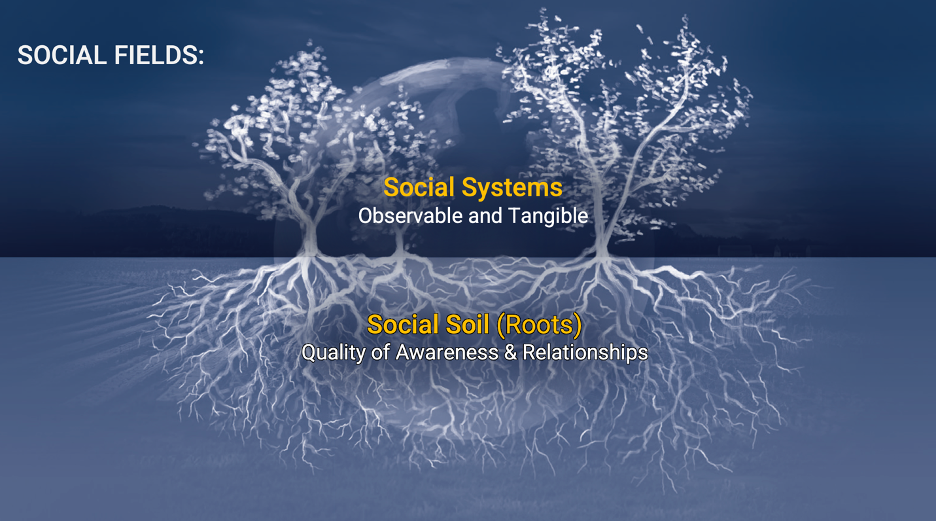
Figure 2: Social Fields = Social Systems + Social Soil (from: Presencing, 2025)
Today, thousands of miles away from the farm and seemingly engaged in something very different, I realize that I am still doing the same thing. It’s just that, in my case, I am working to cultivate the social field.
The social field, just like the agricultural one, has two main components. Above the ground, we have what we call Social Systems — that is, the tangible and visible side of the field. And below the ground, we have the Social Soil — that is, the intangible and mostly invisible component of the field: the quality of our relationships and the quality of our awareness or consciousness.
Just as the farmer needs practical tools to cultivate the land, social farmers, by which I mean all of us, need tools and practices to cultivate the social soil. And the reason I am more confident and hopeful now, despite the gradually unfolding collapse of our civilizational forms, is that we now have many of these tools, practices, and spaces, and we have, through the Presencing Institute and the MITx u-lab, powerful mechanisms to democratize the free access to all of them.
The cultivation of the social soil is critical because it allows us to move across Horizons up and down the mountain as required by the situation at hand, not only individually but also collectively (for more on Social Soil leadership practices, see resources at the end).
Two Responses to the Great Flood: Noah’s Ark and Yu’s Regenerative Earthwork
As we descend from the summit, something remains with us — an inner imprint from the edge of the abyss. Our gaze into the abyss, the place of civilizational unraveling, is not just a look outward but also inward, at the landscape of our collective condition. If we hold our gaze steady, we can begin to see the patterns that we collectively reproduce. And if we hold our gaze even longer, we can begin to see an opening through which new possibilities can emerge — possibilities that will not manifest without us, without our commitment of the Heart.
At this juncture our journey is no longer merely about the camel, the lion, or the child. We are called to integrate all three: the humility to carry, the courage to resist, and the letting-go and letting-come that are required to begin anew. What is needed is a full realignment of our open mind, open heart, and open will.
In this light, two archetypal responses to the Great Flood can illuminate the two archetypal responses to our moment: one Western, one Chinese; one oriented toward protection of the few, the other toward transformation of the entire ecosystem.
Noah’s Ark, the Western response, is a vessel of preservation. It seeks to save a microcosm of life from the flood, sealing it off, afloat and apart, until the storm subsides. It is a gesture of survival, of securing continuity through retreat. But it does not touch the cause of the flood, nor engage the deeper regeneration of the world.
By contrast, Yu the Great — the mythic Chinese figure — responds not by fleeing but by engaging. He listens to the land, studies the flow of the waters, and over years reshapes the earth itself, carving channels and openings so the water can move, so life can return. His is a path of ecosystem regeneration and transformation, born of deep presence and sustained attention. He becomes one with the problem, not to be overcome by it, but to midwife its healing.
Both responses hold wisdom. The flood that we are facing is not just literal, but also symbolic: a flood of disconnection, loneliness, polarization, war, climate chaos, and mass extinction.
When you stand at the summit and look, with the eyes of your higher self, into the abyss, and when you hold your gaze steady, what do you see? When you hold your gaze even longer, what do you sense is calling you that might be worthy of your highest commitment?
…
The resonance and response that each of us experiences in that situation cannot be prescribed; it must emerge from your own deepest source of knowing and being. It brings to your attention an existential choice that is more than just a choice of strategy (Horizon 1), or a choice of systemic (Horizon 2) or epistemic change (Horizon 3). It’s a choice that affects all levels of being and becoming (Horizon 4) that we as human beings experience on earth.
How Are We Responding to the Call of Our Time?
Even though the choice is personal, it’s not private. It’s a public choice. We see this in the choices made by the Silicon Valley tech bro billionaires who have built prepper ego-bunkers to protect themselves from the floods that their business models help to accelerate.
That is clearly one possible choice. Trying to colonize Mars is another.
But none of that has anything to do with Yu’s response. Yu’s response is not to flee the planet after helping to wreck it, but to descend from the mountain, to return to the home ecosystems, to the land. In today’s world it means sinking your hand into the soil, with a commitment to serve its regeneration and flourishing.
If Nobel chemist Ilya Prigogine is right that “when a complex system is far from equilibrium, small islands of coherence in a sea of chaos have the capacity to shift the entire system to a higher order,” then what is ours to do? How can we build and connect a mass movement of islands of coherence across the planet that, with shared awareness and intention, are able to ‘shift the entire system’ to a higher order?

Image by Jayce Pei Yu Lee (2025)
As you look at the emerging landscape of living examples of such ‘hubs of coherence’, what is your choice going to be? What is mine? What choices will we make as communities?
How are we responding to the call of our time?
Will we isolate and preserve by building ego bunkers around us? Or will we co-sense and co-generate ever-expanding spheres of coherence that, if connected across ecosystems and the planet, could lift up all beings on earth?
What are you going to do?
What are we going to do?
What future do we want to create?
What presence do you — and we — aspire to live into, embody, and manifest?
I thank Jayce Pei Yu Lee for inspiring images for this post. And I thank Eva Pomeroy, Katrin Kaufer, and Hannah Scharmer for commenting on the draft.
Practical resources for realizing your/our aspirations:
MITx u-lab
Presencing book
Universities As Innovation Ecologies
Presencing Institute