


Recorded on: Sep 25, 2025
Description
The severity of the climate crisis continues to deepen, despite the increased use of renewable energy sources and international policies attempting otherwise. Even as emissions reduction efforts continue, our world faces more extreme weather, sea level rise, and human health impacts, all of which are projected to accelerate in the coming decades. This raises an important but controversial question: at what point might more drastic interventions, like geoengineering, become necessary in order to cool the planet?
In this episode, Nate interviews Professor Ted Parson about solar geoengineering (specifically stratospheric aerosol injection) as a potential response to severe climate risks. They explore why humanity may need to consider deliberately cooling Earth by spraying reflective particles in the upper atmosphere, how the technology would work, as well as the risks and enormous governance challenges involved. Ted emphasizes the importance of having these difficult conversations now, so that we’re prepared for the wide range of climate possibilities in the future.
How does stratospheric aerosol injection actually work? What is the likelihood that a major nation (or rogue billionaire) might employ this approach in the next thirty years? What ethical, moral, and biophysical concerns should we consider as we weigh the costs and benefits of further altering Earth’s planetary balance?
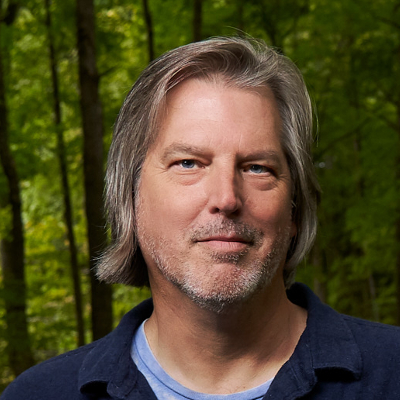
About Ted Parson
Edward A. (Ted) Parson is Dan and Rae Emmett Professor of Environmental Law and Faculty Director of the Emmett Institute on Climate Change and the Environment at the University of California, Los Angeles. Parson studies international environmental law and policy, the societal impacts and governance of disruptive technologies including geoengineering and artificial intelligence, and the political economy of regulation.
His most recent books are The Science and Politics of Global Climate Change (with Andrew Dessler), and A Subtle Balance: Evidence, Expertise, and Democracy in Public Policy and Governance, 1970-2010. His 2003 book, Protecting the Ozone Layer: Science and Strategy, won the Sprout Award of the International Studies Association and is widely recognized as the authoritative account of the development of international cooperation to protect the ozone layer.
In addition to his academic positions, Parson has worked and consulted for the White House Office of Science and Technology Policy, the Office of Technology Assessment of the U.S. Congress, the Privy Council Office of the Government of Canada, and the International Institute for Applied Systems Analysis (IIASA).
Show Notes & Links to Learn More
The TGS team puts together these brief references and show notes for the learning and convenience of our listeners. However, most of the points made in episodes hold more nuance than one link can address, and we encourage you to dig deeper into any of these topics and come to your own informed conclusions.
00:00 – Ted Parson info + works
00:59 – Emmett Institute on Climate Change and the Environment
04:08 – Millions of people die each year from inaction on global heating
04:23 – June 2024 marked one year of global temperatures at 1.5ºC above pre-industrial temperatures
04:45 – Wood Mackenzie’s 2 – 3.1ºC outlooks for the energy transition
06:18 – Extreme flooding in Pakistan, Heatwaves in India
06:58 – Precipitation extremes at 1.5ºC warming
07:20 – Richter scale
08:00 – Heat wave effects on human health and productivity
08:36 – Negative emissions
09:35 – Geoengineering
09:45 – The Blue Marble photograph
10:19 – White roofs to help with solar reflectivity, Forests, snow cover, and albedo
11:30 – Urban heat island effect
12:09 – Dark urban surfaces absorb more heat
12:18 – Thermal absorption of brick
12:54 – Extreme heat is a threat in rural areas
13:09 – Changes in U.S. seasonal temperatures
14:30 – Marine cloud brightening
15:13 – Space sunshade
15:33 – The Police – King of Pain
16:49 – Stratospheric Aerosol Injection
17:25 – Where air pollution comes from
17:43 – Acid rain, Tropospheric ozone pollution, Health problems due to fine particulates
17:58 – Atmospheric sulfur cooling the planet
18:47 – Volcanic effects on climate change, The sulfur cycle
19:29 – Mount Pinatubo eruption and its effect on global climate
19:48 – Post-eruption cooling effect
20:05 – Aerosols in nature
21:15 – Lifetime of pollutants in the troposphere
21:27 – Stratospheric residence time
22:34 – 2025 Congressional subcommittee on transparency regarding government weather and climate engineering
22:44 – NOAA weather modification project reports
24:14 – Edward Parson and David W. Keith – Solar Geoengineering: History, Methods, Governance, Prospects
25:08 – 1997* study on stratospheric aerosol injection
27:48 – Geoengineering can restore surface temperature for >90% of the Earth’s area
28:00 – Anthony Harding, et al, – Impact of solar geoengineering on temperature-attributable mortality
28:24 – Solar geoengineering could impact ozone chemistry, create acid rain
29:55 – Ted Parson, et al. – Evaluating the efficacy and equity of environmental stopgap measures
30:11 – Injecting 12 million tons of sulfur dioxide per year would cool the planet by around 0.6°C
31:52 – Optimal injection locations, rates, and heights
34:40 – Costs of stratospheric aerosol injection
35:28 – Limitations on existing jet engine types needed for this operation
36:03 – David Victor “Greenfinger” scenario
42:52 – Reverse colonization claims about stratospheric sulfur injection
44:54 – Who Owns the World’s Fossil Fuels?
45:19 – Moral hazard
46:07 – Termination shock
49:38 – Edward Parson and Holly Buck – Large-Scale Carbon Dioxide Removal: The Problem of Phasedown
53:12 – EU call for temporary ban on solar geoengineering technologies, climate vulnerable nations reject U.S.-led push for solar geoengineering
53:34 – Global initiative for non-use agreement regarding solar geoengineering
57:55 – Kim Stanley Robinson – The Ministry for the Future, TGS Episode
1:00:35 – Edward Parson and Jesse Reynolds – Solar geoengineering: Scenarios of future governance challenges
1:02:33 – Planetary boundaries
1:02:37 – Failure to adopt emissions reductions from Paris Climate Agreement, failure to deliver on climate adaptation funds
1:03:56 – Edward Parson – Protecting the Ozone Layer: Science and Strategy
1:04:01 – Edward Parson – The Montreal Protocol: The First Adaptive Global Environmental Regime?
1:08:20 – Research involving alternatives to sulfate aerosols, risks posed by stratospheric aerosol injection
1:10:08 – Global sulfur dioxide emissions 1750-2022
1:10:17 – IMO limit on sulphur content in ship fuel
1:10:24 – Leon Simons on TGS, Paper on Impact of Declining Aerosol Emissions on Climate
1:10:44 – Zeke Hausfather and David Keith – Turns Out Air Pollution Was Good for Something
1:11:48 – Extreme fires in Spain and California this year, Mediterranean and Western Europe heat extremes
1:17:30 – Degrees Global Forum meeting in South Africa



Comments
We changed commenting systems on September 10, 2026 as part of a site-wide functionality and security upgrade. Your past comments have not disappeared, and you can still log in with your old Disqus account credentials if you wish. Contact us with any questions.
Aaaaa… you can calculate the energy needed to do that with actionable precision. Yes, as long as we can burn the necessary fossil fuels, but in the Real World, those will all be diverted to making the Affluent moreso. There's no profit (in the usual sense of the word) in fixing this…
I wish Lester Brown were available to stat us on the global food situation. I suspect things have gotten much worse than this… and that our current food status in the US has also become a fantasy of wealth, so to speak, and everyone, including the (scientists and staff) need food and the associated fantasy of wealth, to remain functionally motivated. Lester Brown pointed out that foodless days were becoming a global norm for many back in 2012… what about now and the future? Can we maintain our high-tech fantasy in the face of hunger being a Western norm? When does it become "common knowledge" that this cannot work?
_________________ https://youtu.be/KPfUqEj5mok ________________________
Maybe invest in Prozac For The Elites?