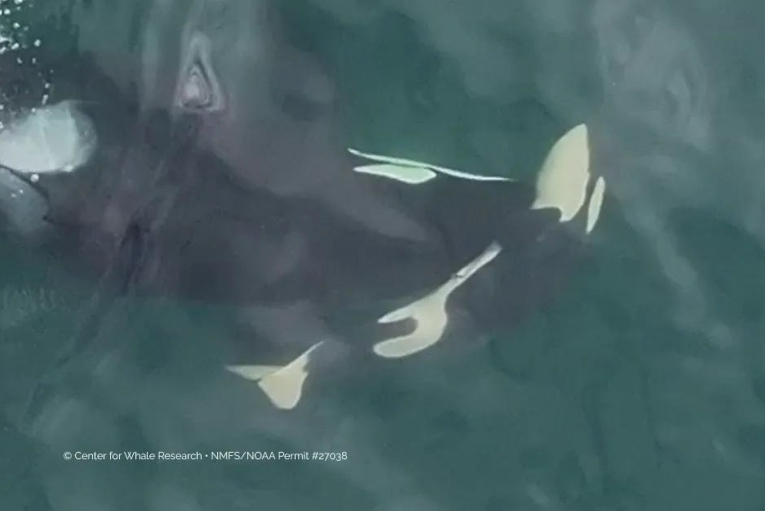
First it was Tahlequah, in the summer of 2018, plowing the Salish Sea with her dead calf on her nostrum, unable to let it go. For seventeen days she maintained her tragic pageant, gripping people throughout world. No one had ever seen such a demonstration of maternal grief—whale-scale, ocean-borne, epic.
The governor convened a task force. Pledges were made to follow the science. What was needed though, was clear enough. The Southern Resident Orca were (are) starving, lacking the fat reserves to successfully bring newborns into the world. The salmon they need, the big, fatty Chinook, or King, are obstructed by dams, particularly a set of four dams astride the Snake River, behind which spread hundreds of miles of prime Chinook spawning grounds. There lies the banquet table, and what’s needed is not that complicated—to deliver its potential abundance to the orca.
What the Orca Task Force recommended though was a package of half measures that satisfied no one except the dam operators. Still, we watched anxiously, hoping the habitat improvements, hatchery programs and restrictions on whale watching boats would somehow avert the orca’s slide. Hopes rose when, in December 2024, Tahlequah gave birth to a female, only to crash days later when Tahlequah was spotted pushing the deceased calf through the water.
Now another whale, Alki, has been spotted pushing a dead female calf through the water, umbilical chord still attached. Tahlequah’s “Tour of Grief “ has spread to the pod, become a species’ procession of death.
What will we do? Will we stop long enough to recognize the dimensions of the moment? Are we even able to amidst the modern manufactory of distractions?
One thing we can be sure of is we will turn toward science for explanations and answers. This is on one hand appropriate, yet on another somehow chilling. Yes, marine scientists are best equipped to tell us what is happening, but don’t we already know? Do we really need more information? Is our data being tested or are our souls? And if the latter, which seems obvious to me, why are we consulting only scientists? Why not religious figures? Why not the indigenous? Why not our own consciences? At what point does further analysis become an exercise in avoidance?
As haunting as this saga is, there is hope within it. The Lummi, who consider themselves related to these whales and have lived amongst them for millennia, say these mother whales are not only grieving, they are communicating, calling out for us to see their plight. Is that not something new under the sun? If there were ever a locus around which we might achieve a change in heart, would this not be one?
The thing about life is it strives no matter what. It hopes. As long as there are living orca, there is hope. As long as there are salmon and rivers to receive them and forests to hold those rivers and oceans to hold us all, there is hope. I don’t mean hope as an idea in the head, a kind of sedative that gives peace amidst chaos, but something that charges the body, a stimulant that propels action. You can sometimes taste it in the air when you breathe. You can sometimes feel it tapping at your wrists.