

The Environmental Challenge and Its Consequences
“An AK-47 grows better than millet in the Sahel.” This chilling metaphor from a Nigerian farmer sums up the vicious cycle linking environmental degradation and instability. With 65% of Africa’s drylands already degraded (UNCCD, 2022) and Lake Chad shrinking to just 10% of its original size, competition for water and fertile land fuels tensions.

In Nigeria, Boko Haram recruits among fishermen who have lost their livelihoods due to Lake Chad’s shrinking waters, offering them wages and access to water. In Somalia, Al-Shabaab controls 60% of the wells in the south, turning water into a political weapon. These groups thrive in power vacuums left by absent or corrupt states.

Migration: Myths and Realities
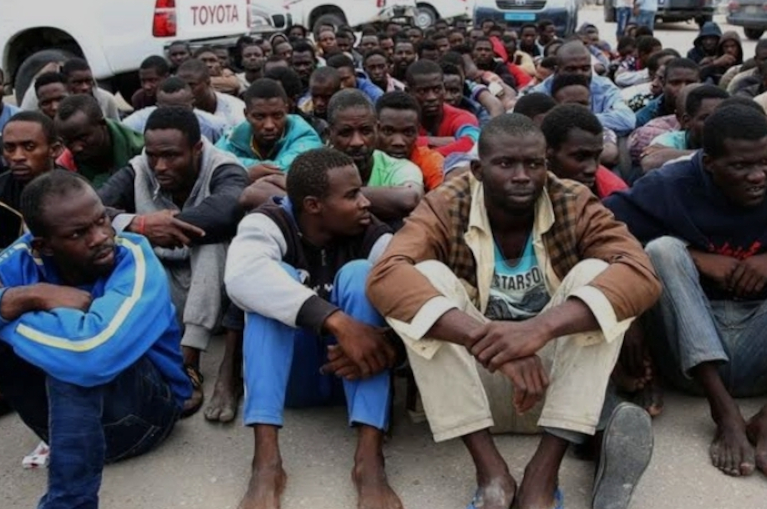
Contrary to alarmist narratives, 80% of African climate migrants stay on the continent (IOM, 2023). In Agadez, Niger’s migration hub, 24-year-old Moussa explains: “I’d rather farm my land, but the sand swallowed everything. Here, I guide others to Libya. It’s that or joining the militias.”

Yet Europe spends €10,000 per migrant intercepted in the Mediterranean, while restoring one hectare of land in the Sahel costs just €500. An inefficient and inhumane approach, according to Ugandan activist Vanessa Nakate: “We criminalize climate victims instead of addressing the root causes.”


African Solutions: Between Tradition and Innovation
1. Zaï: Reviving the Desert
In Burkina Faso, farmer Yacouba Sawadogo, known as “the man who stopped the desert,” revived zaï, a technique of digging pits to capture rainwater and restore soil fertility. The result? 40,000 hectares re-greened and crop yields tripled. His message: “The solution is in our ancestral knowledge.”
2. Kenyan Sand Dams: A Water Revolution
In Turkana County, underground sand dams store rainwater. “Before, my children drank muddy water. Today, they go to school,” says Ekai, a farmer. Built by local communities, these dams provide 500,000 people with drinking water.
3. The Great Green Wall: Ambitions and Setbacks
Launched in 2007, this pan-African project aims to restore 100 million hectares by 2030. Though it has created 500,000 jobs (mostly seasonal), only 4% of the targeted land has been restored so far due to funding and coordination issues. However, in Senegal, 12 million trees have been planted, breathing new life into abandoned villages.

The North’s Responsibility
Climate Debt and Land Grabbing
Africa suffers 17% of climate impacts while contributing only 4% of global emissions (IPCC, 2022). Worse, multinational land grabs (e.g., palm oil companies in the DRC) accelerate deforestation. “They steal our land and then accuse us of being illegal migrants,” denounces Ikal Angelei, a Kenyan activist and Goldman Environmental Prize winner.
Debt-for-Nature Swaps: Hope or Risk?
In Madagascar, a deal erased 20% of its debt in exchange for forest protection. But such schemes require strict oversight: in Uganda, reforestation funds were embezzled by officials in 2021.
A Future to Choose
Dark Scenario: Inaction
● 100,000 hectares lost annually in the Sahel.
● 50% increase in water-related conflicts by 2030 (World Bank).
● Forced migration and rising extremism.
Green Scenario: A Possible Path
● 20 million hectares restored = 10 million green jobs.
● 30% decrease in climate migration (FAO).
● Food self-sufficiency for 300 million people (AU).
Conclusion: Investing in Peace
Security is not built with barbed wire, but with wells, seeds, and justice. As Wanjira Mathai, president of the Green Belt Movement, reminds us: “Every tree planted is an act of defiance against despair.”
What You Can Do
● Support local NGOs (e.g., Green Girls in Cameroon, which trains women in solar energy).
● Demand laws against land grabbing (petitions, voting).
● Boycott companies involved in deforestation (palm oil, mining).
Africa’s future is not a fate—it’s in our hands, and under our feet.



Comments
We changed commenting systems on September 10, 2026 as part of a site-wide functionality and security upgrade. Your past comments have not disappeared, and you can still log in with your old Disqus account credentials if you wish. Contact us with any questions.