


I’ve been a permaculture enthusiast for over 25 years. It has influenced my thinking about ecology, subsistence, and the role of human beings in our biosphere. I have experimented with countless techniques, read dozens of books, and learned a wealth of things from other practitioners. I regard it as an overwhelmingly positive experience.
That said, there have always been aspects of permaculture that haven’t sat right with me. This is made somewhat complicated by the fact that there are different strains of permaculture which lean in different directions; some I have more affinity with than others (I’m oriented towards science rather than mysticism.) But there are some broadly accepted elements across the different strains that fail on permaculture’s own terms and others that reflect the shortcoming’s of permaculture’s values in general.
For permaculture to meet its potential, I believe these things must change. This list isn’t meant to be comprehensive. It’s just five things that I tend to notice often.
Blasé about invasives
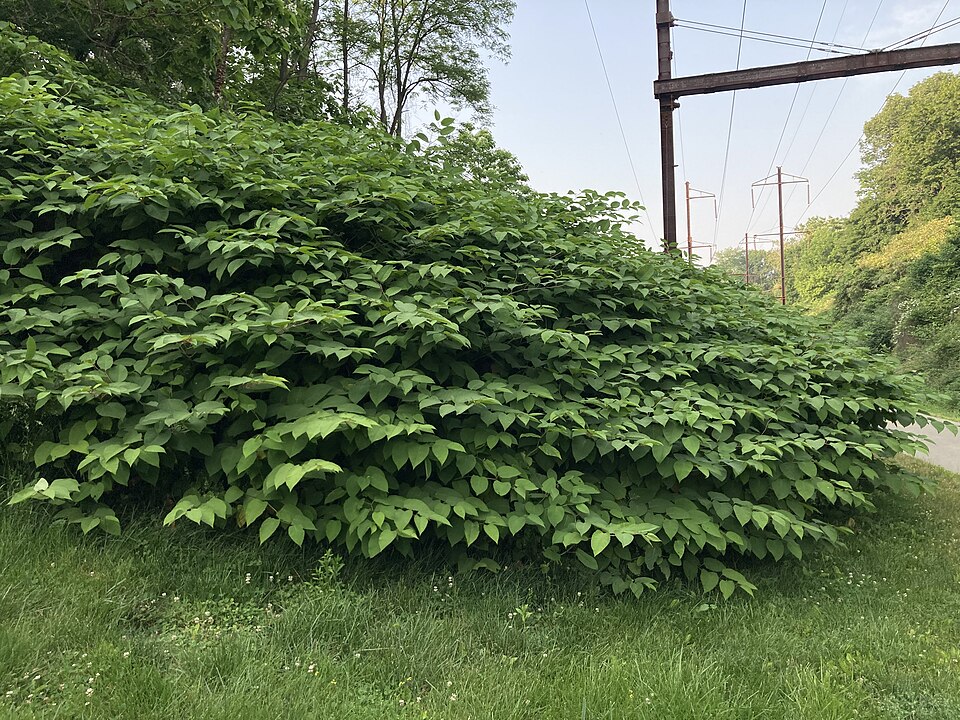
Japanese knotweed along the Cynwyd Heritage Trail. By Awinch1001 – Own work, CC BY-SA 4.0, https://commons.wikimedia.org/w/index.php?curid=132462216
Permaculturists tend to dismiss the harms caused by invasive species in ways that narrowly benefit their personal interests, and they often use dubious, anecdotal evidence to make it seem otherwise. An example is the claim that Japanese knotweed—an invasive shrub that forms dense monocultures on stream banks—isn’t so bad because it supports pollinators that visit its flowers.
Such claims are absurd. The single biggest reason for pollinator decline is loss of habitat, which invasive species accelerate massively. Invasive species are one of the greatest threats to biodiversity: approximately 42 percent of threatened or endangered species are at risk due to invasive species. In the case of knotweed—which some permaculturists celebrate for its marginal edibility and unproven health benefits—it decimates the highly diverse habitat found in riparian zones, replacing it with vast monocultures virtually devoid of life.
The situation gets even more dire when permaculturists actively spread invasive species, such as planting autumn olive. Another plant of marginal edible value, autumn olive spreads easily and displaces native shrubs, which are already declining rapidly due to overdevelopment, industrial agriculture, and deer overpopulation. As a matter of ethics, it is inexcusable to prioritize the ease of growing autumn olive in your food forest over the health of the ecosystem that sustains us all.
Spreading or maintaining invasive species is not an act of “Earth care,” permaculture’s first ethic. It is, instead, an act of Earth vandalism, and it has no place in permaculture.
Sticking to formulas
As permaculture begins to enjoy mainstream popularity, there’s an unfortunate tendency to reduce it to a formula rather than a design philosophy. That formula is usually: swales, fruit trees, nitrogen fixing shrubs, animals. Regardless of whether those things make sense on a specific site.
The reality is that reducing a design philosophy to a set of specific practices leads to bad applications. Not all sites need swales, or animals, or fruit trees. And worse yet, we tend to hear the same plants and animals prescribed in every situation: apples, autumn olives, ducks. Rinse, wash, repeat.
This tendency towards formulas and “permaculture plants” is a recipe for failure, both for production and ecology. We must turn, instead, to context.
Aside from asking if a site really needs swales, if permaculture is to be context appropriate, it must ask, “What role do we need filled, and which NATIVE plant can fill it?” Native plants are by definition suited to their context and supportive of their broader ecosystem. They are host plants to native insects—not just food for European pollinators—and they have evolved in tandem with an entire ecosystem. To authentically practice “Earth care,” permaculture must look to native plants first, not out of context “permaculture plants.”
Our goal is not to fill the planet with sea berries and swales; it’s to build a regenerative biosphere that can support life indefinitely.
“Leading by example”
Perhaps you’ve noticed that the climate is collapsing around us in real time. And perhaps you’ve concluded that “leading by example” has not prevented that from happening. If so: welcome.
This has long been permaculture’s theory of change: by building little utopian oases, permaculturists can inspire others to do the same, leading to a domino effect that will ultimately change the world. That obviously has not worked, and it was fatally flawed from the start. Such a thing has never occurred, and it never will occur because that is not how change happens.
Change at the structural level is a function of politics, and politics is the struggle for power. Exercising power is how structural change occurs. This can be accomplished any number of ways—pressure campaigns, passing new laws, armed revolt, the list goes on—but they all succeed the same way: by raising the cost of the status quo until it can no longer be maintained. The most successful movements for change raise the cost AND have a viable alternative at the ready, one that can become the new status quo, which then needs to be defended with power. That is called a revolution.
Trying to enact the new status quo as an individual in your backyard may make a difference to you personally, but it makes no difference structurally. In the best case scenario, such example setting can serve a propagandistic role if it is deployed by a political movement in the service of building power. But that requires organizing with others and a deliberate engagement with politics, not personal example setting.
If permaculture is to become the new status quo, then it will need to get real about politics and the process for making change.
Fewer hustles, more organizing
One of permaculture’s earliest missteps was its belief that we should all become small-time capitalists in the service of the movement. This has led to a proliferation of permaculture-related small businesses—YouTube channels, personal brands, conferences, etc.
I have no objection to this as a matter of survival; everyone has to make money somehow under the relentless demands of capitalism. But relying on businesses to do the work of evangelizing has essentially turned permaculture into a consumer trend, rather than a movement.
A movement is not a stack of books, an endless series of Kickstarters, and a bunch of social media stars. A movement is a collective attempt to change society. Operating as businesses and personal brands makes the “collective” part impossible since those are necessarily individualistic ventures, and it also greatly limits what kinds of change can be made. We cannot move beyond capitalism—which is greatly accelerating the destruction of life on Earth—by being capitalists. We cannot spread permaculture by undermining the condition for our own survival.
If permaculture is to become a movement rather than a consumer tchotchke, it will need to stop functioning as a constellation of small businesses and start building collective power on the basis of solidarity. This is called organizing, and it means working together to fight for our shared interests, as permaculturists and as humans living on an imperiled planet.
Too much plastic
Compared to the above points, this is a relatively small one, but it speaks to the same preference for convenience over values. Far too often, I see permaculture projects employing loads of plastic: weed barriers, solarizing tarps, seed starting trays, nursery planters, pond liners, buckets, the list goes on and on.
We now know that all of these shed microplastics at alarming rates. Those microplastics have been linked to a host of negative health outcomes, and environmental research indicates that such effects are not limited to humans.
Microplastics are now ubiquitous: they’re in the rain, snow, salt, honey, your brain, your heart. And they last a really long time. But the quantity matters: the fewer, the better.
This means that while we may not live to see the end of microplastic pollution, we can at least not contribute to it any more than is strictly necessary. And we can accept the challenge of finding way to include the replacement of plastics in our productive systems. It may mean growing more biomass or basketry material or luffas to replace the plastic tarps, buckets, and seed starting cells. But it’ll be worth the effort, for us and for the land.


Comments
We changed commenting systems on September 10, 2026 as part of a site-wide functionality and security upgrade. Your past comments have not disappeared, and you can still log in with your old Disqus account credentials if you wish. Contact us with any questions.
I suppose he's right about all of these, but:–most of what we grow in our gardens is not native, and I'm fine with that. Deliberately spreading invasives is another matter–I am quite hostile to autumn olive, which I think does have berries with lots of health benefits, but why grow it when you grow its relative, goumis, which have bigger, sweeter berries and are not invasive? And saying leading by example won't work and we must organize politically–seems like that doesn't work either. We've reached a point in the US at least, where those with a lot of money can simply buy whatever policy they want, and it's pretty much never what's good for the land, the common good, other species…
That first point hits so hard and needs to be stated INCREDIBLY LOUD, especially for those in the public eye. I've seen very prominent permaculture YouTube channels pushing for well known invasives, usually purporting some nonsense involving better NPK. It's absolutely maddening.
I question the idea that anyone can create an ecosystem. They tried that in those big domes and it was a failure, dispite all the science. We just don't have, and I don't think we ever will have, that knowledge of all the interactions and processes that make up an ecosystem. Best we can do is "fit in" to the ones already around us. The idea we can take various parts of various biomes and combine them into a living system reminds me of Frankenstein trying to create a human being out of body parts. For example, the Acclimatization Society that existed here in Southern California at the beginning of the last century believed they could create a paradise here by bringing in plants from around the world from similar climates. This lead to a lot of problems plants we are dealing with today
That program was "trendy" then and funded by wealthy capitalists. It was colonial thinking. I'm trying to incorporate local native plants that can provide food and useful materials into my food forest. That also extends the surrounding native habitat into my yard. Catching, slowing down and saving water is important even for native plants in this era of increasing eratic weather. It depends on the local conditions like you said. Maybe permaculture can mean rethinking our diets and habits, altering our behavior rather than recreating the world in our image.
Well, first off, the worst invasive series is the one that spread from Africa to the entire planet thousands of years ago into climates and ecosystems it was not adapted for. The results have been worse than any Autumn olive or knotweed.
Seriously though, time to give up on transitioning the cultural behaviors through organizing and collective effort. The superorganism is beyond our control now, and will live its life cycle till it starves to death.
Permaculture as a concept is a good choice, and sure, try to spread the word, but accept that only those that are ready will hear, and that will have to be enough.
Best use for permaculture is to create small pockets of human alignment with the local natural system to be templates or seeds for the lifestyle our descendants will need to adopt. Some proponents will get it right, and some will not, and Gaia will sort the winners from losers.