

Green Authoritarian Liberals blame voters for not “doing the right thing”, but ignore and refuse to address widening distrust in political institutions and a general suspicion that such policies will only lead to more concentration of wealth and power, ultimately undermining the climate goals themselves
Shortly after the recent elections for the EU parliament, the Guardian ran a story worrying that the weak showing of the European Greens might seriously weaken the continent’s climate ambitions. Carbon Brief, an independent climate think tank, provided a further, detailed analysis, sporting a graph that showed the EU massively improving its climate responsibility due to its flagship “Green Deal”, which is now supposed to be threatened by a rising populist right. It claims that by the time of the previous EU parliamentary elections, the group of countries was on course to contributing to almost a catastrophic 4 degrees of warming, whereas now, thanks to the “Green Deal” it is at least on track for a reasonable, albeit not-good-enough 2+ degrees. In other words, the “Green Deal” is crucial for the EU to help save the world, only that we, the Europeans, need to push more.
As a climate scientist of more than 30 years and a keen observer of the ups and downs, trials and tribulations of the climate debate I feel deeply uncomfortable with the framing expressed in these two articles. That feeling is almost physical, like being hit in the stomach, and a large part of that comes from the realisation that it is not hard to explain why, in my opinion, this type of analysis and approach is of humanity’s climate destabilisation problem, rather than part of its solution.
The wrong focus
There are several ways to explain what I mean, but maybe the first and easiest is to say that after all those decades of climate efforts, the very idea of addressing climate heating by limiting emissions of greenhouse gases has never worked. Projections of what would happen in the presence or absence of certain policies are only that – projections. In reality, an absolutely unprecedented shutdown of the global economy during the pandemic has led to an only modest fall in emissions, while concentrations of the main greenhouse gas, carbon dioxide, have even continued to rise. And proliferating pleas of seizing the opportunity to “build back better” after the pandemic have consistently been forgotten or ignored, with global emissions of greenhouse gases again chasing new records. Expertly projections are no surrogate for action. And at the very minimum, climate action should by now have stopped a further rise in emissions.
They haven’t, despite net zero pledges, the pandemic as a unique opportunity, the historic Paris Agreement, and the inexorable rise of renewables, with solar now cheaper than coal power in much of the world. Even if within the next decade this will finally show up in peak global emissions, the peaking will have come too late. To stabilise the climate, first the rise of emissions needs to stop, which it hasn’t. Then carbon dioxide levels will need to stop rising, which would require something around 50% reduction in emissions immediately, and then slowly bringing them down to zero. By comparison, emissions fell by 5.4% in 2020 during global lockdown. At the moment, given how the world economy works, anything even remotely like that is far out of the question. But let’s assume we do achieve the impossible, then concentrations will stabilise, but the climate will continue to warm, quite possibly tripling the current 1.2 degrees of warming over the long term.
The morality trap
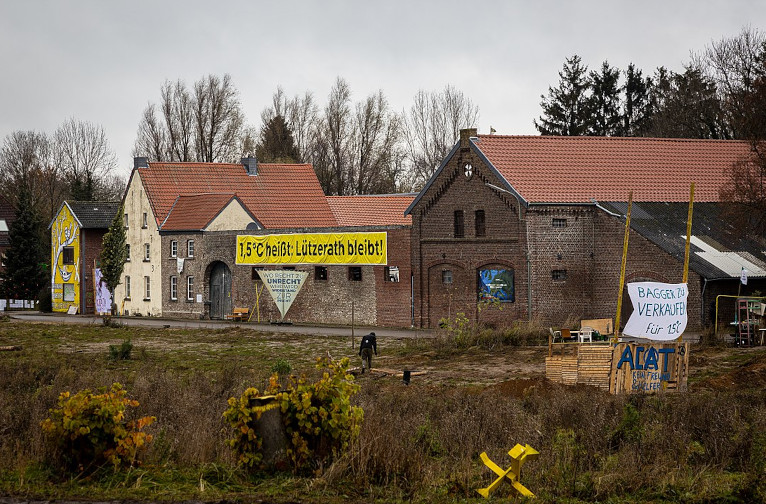
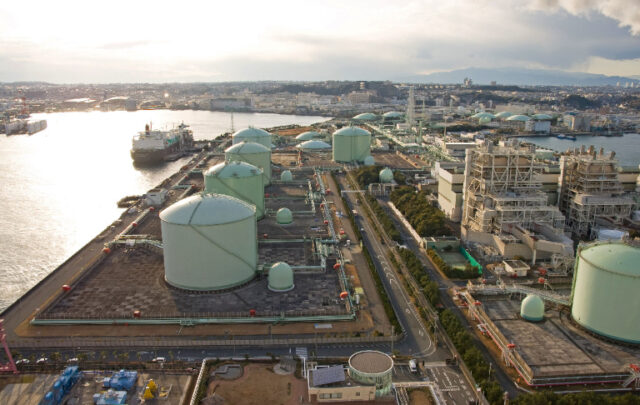
But there is something else, something more fundamentally amiss with the notion that we can use conventional climate policy to get us out of the danger zone. When there is a problem, you can most of the time identify one or several chains of events and contributing factors that ultimately cause it. In the case of climate, emissions are clearly causing heating, but before emissions there are greed and convenience, injustice, an expansive money system that invariably concentrates wealth in fewer and fewer hands, social pressure to conform with a consumptive-lifestyle ideal, elites whose careers are intimately intertwined with holding up the status quo, corruption in the form of corporate and elite capture of the political process … The list goes on and on. The odd experience with the Green Party in Germany – arguably the most powerful and most important Green Party in both the EU and world wide – is that on the one hand, its climate policy goal has clearly been a reduction in emissions. On the other hand, Green Party politicians have shown a worrying streak of authoritarianism when pursuing their goals: Pushing through LNG terminals in sensitive coastal ecosystems that in the end weren’t needed, insisting on an electoral reform that disenfranchises smaller regional parties, or (on the lower state level) the party was introducing plans, now abandoned, to curb the scope and remit of popular votes on grassroots issues, not to mention its us of police force to brutally remove protestors blocking the expansion of lignite mining in North Rhein- Westphalia. The German Green Party is convinced that the road to climate safety is through emissions reductions, but it has shown a worrying lack of self criticism and a style of politics based on moral conviction rather than on democratic principles of openness and debate. It has now paid the price in the EU elections.
Seeing the urgency of the climate issue and pushing for emission reduction policies – however effectively given the constraints of party politics – with moral fervour, but at the same time showing no moral fervour when it comes to the underlying causes of injustice, rising inequality and declining democracy due to more and more political and institutional power concentrated in a few hands, simply does not land well with voters. Many of them will have a keen sense of what is just and fair. To now fear for the “Green Deal”, as the author of the Guardian article, shows the exact same lack of self criticism: it blames voters for not “doing the right thing”, but ignores and refuses to address widening distrust in political institutions and a general suspicion that such policies will only lead to more concentration of wealth and power, ultimately undermining the climate goals themselves.
The cultural normalisation of greed
Let’s zoom out from EU and other climate policies, and imagine a kindergarten with 20 toddlers and 20 toys. One of them takes 19 toys and leaves the other kids to share the one remaining. The toddlers would immediately understand the injustice and complain. Let’s then imagine the teachers intervene and redistribute the toys, after which the greedy toddler’s parents call in the police and insist the toys are all his. The teachers would then be obliged to teach the children that this is all normal and that they, too, should strive to have as many toys as the super toddler. This is approximately the situation much of our current world culture is in. Instead of outrage, the natural reaction, we have propaganda, state violence, and ultimately acquiescence. And that acquiescence then creates social pressure to perform and emulate the bully toddler’s lifestyle. Overconsumption at the top breeds overconsumption all the way down the social hierarchy.
In such a world, it is clear that an explosion in renewables will not do away with fossil energy any time soon – the CEOs of major oil or car companies know that. Billionaires flying around in private jets send a powerful signal that fossil-fuel use is acceptable. There is simply no sign that fossil-fuel demand will go away any time soon, as long as they offer superior convenience.
At the same time, it takes about five minutes to come up with some climate policy proposals that could invert the perverse logic of the current policies aimed at emission reductions. How about a strict, universal carbon allowance for every person that cannot be bought or sold? It would be high enough to cover something like ‘subsistence’ emissions, but not more. Surely, for tech billionaires who believe the climate ‘problem’ requires first and foremost more tech, this surely won’t be a problem: with their financial portfolios, they’d design electric planes powered by solar energy, and keep flying. That would maybe send a different signal to the lower social layers – not quite one of humility, but at least one of taking responsibility of one’s actions. But in reality, not even an equal per capita emission allowance per country has ever been seriously on the table.
More democracy – the path most feared
Voters often see the presumptuousness, when green or other politicians fervently promote policies from a standpoint of moral self-righteousness, however sensible they might be. It is therefore remarkable that a different proposal is seen as the radical one: Extinction Rebellion and other ‘radical’ climate groups’ demand for citizen assemblies to design climate policies to be voted on by ordinary popular vote. Such proposals, which to any non-politician seems generous and sensible, because it accepts the possibility that citizens might not want any far reaching climate measures, have proven far too radical for our current political reality. But when unpopular Green authoritarianism clashes with the expectation of voters for humility and transparency, it’s the voters that need to be blamed for the possible failure of climate measures.
Because ordinary citizens tend to have enough distance to day-to-day politics not to be captured by status-quo preserving narratives and ideas of what can and what cannot be, they will also be much better able to see the moral dimensions of the problem as outlined in kindergarten analogy above. But due to more and more concentration of power and wealth in the hands of the rich and the professional elites, they already have been effectively marginalised. The end result is that democracy and climate stability will die together.
Turned around, this argument means that the best climate policy is to finally reinstitute the idea that it is the people who are the last sovereign. Not just climate assemblies, but giving ordinary voters the last say in any aspect of law making – something that you can currently only find in Switzerland, but possibly in a different form, using the tools of deliberative democracy, and applied universally across the world. This, if taken seriously, will necessarily provide a counter-weight to the never-ending disempowerment and plundering of the resources of the poor, and of the over-consumption and moral decline at the top and among the professional elites. There is no stopping climate breakdown without stopping moral decay and the death of democracy.



Comments
We changed commenting systems on September 10, 2026 as part of a site-wide functionality and security upgrade. Your past comments have not disappeared, and you can still log in with your old Disqus account credentials if you wish. Contact us with any questions.
If people are so upset about wealth and power concentrations, rising inequality and declining democracy and are so worried about climate change, why are the European parties that favor the corporations and are prone to an authoritarian involution becoming increasingly popular? And, if in the US people are so upset with billionaires, and unaffordable medical care, why did they recently elect, as their commander-in-chief, someone who defends corporations and billionaires, opposes affordable healthcare, resists reforms to address income inequality, and denies climate change? And why then are those who advocate for change that addresses the shortcomings of a plutocratic system often branded as 'communist' or 'woke', and ultimately lose elections? Something doesn't add up….
There are significant movements from the left:
– Insoumise party in France
– Corbyn winning leadership of UK Labour Party
– Die Linke and Sahra Wagenknecht’s party in Germany
Plus many dissatisfied voters turning to right-wing parties, such a Trump followers.
The centrist parties though declining in popularity are still powerful with their domination of the media and government agencies.
This doesn't answer my questions, rather it confirms that people do NOT vote because moved by wealth/power inequality. Die Linke in Germany is on its historical low, and Sahra Wagenknecht certainly doesn't represent a movement from the left, she is much more aligned with the neo-fascist AfD.
Sahra Wagenknecht's party is a left-wing breakaway from Die Linke. It is growing in popularity. It has some positions similar to the right-wing AfD, but is very opposed to others. It is not in alliance with them.
Why doesn't.a population vote against inequality? Because political change doesn't happen overnight. The center left parties like UK Labour and the Democrats used to be far more progressive than they are now. Over the decades they have becone neoliberal, more like center right or even right-wing. They have money, organization and the power of inertia working for them.
The middle class and working people had good conditions in the 50s and 60s. Slowly their general position has declined. Years ago a military thinktank in the UK predicted a return to Marxism as conditions worsened. I was dubious but I now think it is probable at some point.
The traditionzl agents of change, the socialist and communist parties, have almost disappeared for a variety of reasons, too ccomplicated to describe here.
So we have growing discontent but with almost no way to express it. I'm afraid the discontent takes counter-productive forms like Brexit, scapegoating, Luigi Mangione, wars and right-wing parties.
Ultimately progressive organizations will arise but it will be messy for a while. I expect Black Swan political events becoming more frequent.
Too bad the United States isn't a democracy but a plutocracy with a thin vaneer of democracy for cover.
Well, then electing to power billionaires empowering corporations certainly will deliver the equality and the democracy that Labour and Democrats betrayed. Right? 😉
While, Wagenknecht has always been a “Putin Versteher(inn)”, a “Trump Versteher(inn)” with zero sense for democratic principles. She is the alter ego of the AfD and shares almost nothing with a left-wing policy.
Don’t understand your first paragraph. You are being sarcastic, but what are you responding to?
Sahra Wagenknecht probably represents an emerging left. Left on economics, neutal on the culture wars and anti-war.
The formerly left parties are neoliberal in economics, “woke” in the culture wars and pro-war.
Excellent article. Democracy is the key to the future. I invite you to review my book: "Glocal Ordering. A Necessary Landscape" (Dunken, 2023). I am working on a second book on democracy and sustainability. I would like to contact the author. My email is [email protected] see https://tomasdarre.medium.com/ Greetings from Bahía Blanca – Argentina
I think this is very true. But I think it a tad odd that Green Party is criticized for being "authoritarian" which would seem to mean they're instituting top-down, command and control measures to rapidly reduce emissions–but they're not they're just status-quo centrists apparently. Here in the US the electoral game is so rigged we can never get any Green Party people in power– but the German example shows that even if we could, it's all still under control. I read that there was an assembly in France on climate, which started with an educational component before the debate began–and they came up with some radical proposals. But were any of them implemented? I doubt it. Political power is for the rich and the corporations–for the rest of us, voting is the equivalent of one of those toy steering wheels that parents buckle onto a toddler's carseat in the back of the car, so the kid can pretend to be driving.
I don't know anything about the German Green Party but will be voting Green Party here in the UK in our coming general election in a couple of weeks as seemingly the best hope. They must be better than the Reform Party (roughly equivalent to the right wing of the Republican Party), the Tories (roughly equivalent to the other Republicans) or the Labour Party (roughly equivalent to the Democrats). Perhaps it is useless to vote for any of them though.