


A few days ago, I was listening to an NPR segment on AI. The fellow being interviewed was in the AI industry. At one point the show host asked him what he thought about the electricity requirements of AI. He noted it was a big issue and that the industry didn’t have a clear path for meeting the enormous energy needs or dealing with the related climate change emissions. He said it was probably going to require nuclear fusion. Just a reminder here – nuclear fusion doesn’t exist.
The term “out over your skis” means careening forward, a little out of control, very likely headed for a faceplant. This is the position humanity is in when it comes to energy demand. All indicators are that global demand for electricity is going to continue to grow dramatically driven by population growth, industrialization in less-mechanized nations, and the massive demands of AI.
The Pacific Northwest of the United States, where I live, is a major hub of data centers for mega-tech giants and electricity demand in the region is expected to grow 30% over the next decade. Utilities are scrambling to figure out how to expand the transmission capacity required for the increased load. All of us utility customers will wind up footing this bill.
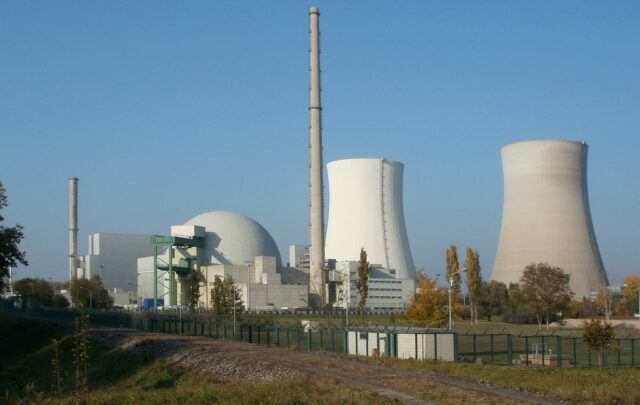
A glimmer of good news is that renewables are rapidly increasing and will account for a growing percentage of overall electricity generation. The International Energy Agency (IEA)* predicts that, “record-setting electricity generation from low-emissions sources – comprising renewables, such as solar, wind and hydro, as well as nuclear power – should reduce the role of fossil fuels in providing power for homes and businesses”. At first glance this seems a good thing, but alas, look a little closer. The IEA has included nuclear and hydro in this mix. Nuclear plants may not pump out much CO2 but they generate completely nonrecyclable, deadly radioactive waste that has to be stored for hundreds of thousands of years. In addition, the construction of nuclear plants requires enormous amounts of steel and cement, which are created through energy intensive processes that are among the largest global emitters of carbon. Hydroelectric dams do generate low-emission electricity but decimate river system and riparian areas. Also, note the IEA statement says that lower-emission sources, “should” reduce the role of fossil fuels. Yep, we’re careening, and at some point, this utterly unsustainable growth trajectory is going to faceplant.
Enter the era of post-growth and societal redesign. I suspect for many the idea of a major societal disruption is frightening, but I don’t feel that way. I believe when the crash lands large numbers of us are going to rise to a higher level, demonstrate our nobler aspects, and get busy creating something much better. There are a number of ways of visualizing this disruptive shift. Joanna Macy has called it the “Great Turning”. My friend and colleague Nate Hagens calls it the “Great Simplification”. Some have called it the ”Great Unravelling”. I prefer to think of it as the Great Redesign.
I do suspect this period will be very challenging and a lot of it will be a bumpy ride, but I also believe aspects will be exciting and creativity will be flowing. And, as is often the case in collective challenges, there will be beauty we hadn’t expected. I’m buoyed by the sense that a post-rampant consumerism, post-limitless-growth economic system could be immeasurably more enjoyable than the rat-race we’re currently running.
So often, when I challenge extractive Capitalism, I’m accused of being a socialist, or even a communist. I’m none of the above. I don’t believe we’ve yet created an economic system suited for our current predicament which includes, among other things, the sheer magnitude of the human population, development of technologies that strip the forests, oceans and wildlife far faster than they can regrow and rebound, and a changed and changing climate.
Though I don’t yet have the full picture of a new system, I have spent a lot of time contemplating and studying the subject and have identified some key pieces. First, one of the primary components of a system that would be compatible with a healthy, livable planet would be the evolution from an extraction-based economy to a restoration-based one. This would involve transitioning extractive industries like natural resources mining into next-generation industries such as mining minerals and metals from landfills and waste barrens.
The new system would recognize laws of physics and ecology and would shift from the current limitless-growth approach to more of a steady-state methodology. The emphasis would be on utilizing Earth’s resources at a pace that enables ecological regeneration. An aspect of this would be an emphasis on giving everyone opportunities to have enough rather than beating the manic drum of more, more, more for some.
I envision the new system employing biomimicry, copying nature’s innate wisdom. For example, in nature there is no waste. The poop from one thing becomes the food for another. Nature does not create city-sized piles of garbage and toxins that cannot be processed. I see no reason humans could not redesign our approach to materials to be zero-waste through thoughtful product design, serious investment in the recycling industry, and bans on certain materials and chemicals.
Supply chains would be far more localized. There would be fundamental shifts in what governments and tax-payers do and don’t subsidize. Financial and tax policies and systems would be restructured so that the main emphasis is not on enabling the wealthy to make money off their money, but empowering everybody else to achieve a meaningful standard of living, and basic financial security. Resources and overall opportunity would be redistributed so that people had clear pathways for rising out of poverty, particularly generational poverty.
The new system will be more about personal, community, and opportunity growth rather than growth in consumption and accumulation of stuff. Under such a model far fewer people will have to work awful jobs just to pay basic bills and feed themselves.
In the redesigned society our eco-anxiety and grief will be replaced by the joy of witnessing Earth heal and hopeful anticipation for what comes next.
I know this probably seems far-fetched, but stories, vision, and imagination have creative, generative power, and, pessimism is not an effective survival strategy.
While working on this piece, I’ve also been prepping for a Spiritual Economics class I’ll be offering in the coming weeks. One of the main texts is Eric Butterworth’s book titled, Spiritual Economics. Butterworth writes, “More and more economists are coming to agree that the word economy does not refer to a monolithic entity but rather to a financial climate chiefly influenced by the collective consciousness of the populace.” I write and speak about these topics, tilt the windmill of economic system change, because I believe consciousness matters and the more of us thinking about a new and better way, the more likely we are to land in powder rather than rocks and to get our skis righted and gliding smoothly afterwards.
* — The oft-cited International Energy Agency is a Paris-based autonomous intergovernmental organization, that provides policy recommendations, analysis and data on the global energy sector. It is comprised of 31 member countries and 13 association countries.



Comments
We changed commenting systems on September 10, 2026 as part of a site-wide functionality and security upgrade. Your past comments have not disappeared, and you can still log in with your old Disqus account credentials if you wish. Contact us with any questions.
Also makes the classic mistake of not equating 'poverty' with 'lack of access to energy'.
"Enter the era of post-growth and societal redesign… I’m buoyed by the sense that a post-rampant consumerism, post-limitless-growth economic system could be immeasurably more enjoyable than the rat-race we’re currently running."
Sorry to rain on your parade, but I'm more of a pessimist, because I'm old enough to remember hearing the exact same thing 50 years ago in the 1970s (I was just a schoolchild then, but I was already an avid environmentalist and solar energy enthusiast). Back then, environmentalists were talking about The Limits to Growth (a 1972 book on economic and population growth) and saying we needed a "Small is beautiful" philosophy to shrink the economy while increasing per-capita happiness by cleaning up the environment and using less resources, not more. Sadly, mankind didn't listen to the warnings in The Limits to Growth but instead engaged in an all-out effort to "grow" the economy exponentially, not just in the U.S. but also worldwide, by vastly expanding the use of fossil fuels (exponential growth in the use of fossil fuels).
I do see some bright spots, though. In the past 50 years, there has been some progress in reducing the "energy intensity" of the U.S. economy, meaning the amount of energy used per dollar of GDP, but unfortunately that was mostly thanks to the U.S. becoming a service economy and outsourcing our manufacturing to China, thus outsourcing much of our pollution to China. There has also been a vast amount of progress in renewable energy technology, but alas, instead of using renewable energy to replace fossil fuels, we've been using renewable energy to supplement the use of fossil fuels. Fossil fuel use is still increasing, but at a slower rate thanks to renewable energy.
To use an analogy many of us are familiar with, America acts like a person whose doctor tells him to eat healthier, but instead of cutting out junk food, the patient decides to just supplement his junk food intake by taking vitamins and adding salads, fresh fruit, and vegetables to his diet. He may think he's "eating healthier" by adding some healthy foods to his diet, but if he's still consuming the same amount of junk food as before, then he's actually consuming more calories than ever before, so he won't lose weight; he'll gain weight.
Eating junk food with a side helping of salad makes us think we're making progress on eating healthy, just like supplementing our massive fossil fuel use with some solar energy and wind power helps us feel better by giving us the illusion of making progress on reducing our carbon footprint.
I'm callin' more rain on the parade. Early on the author points out that someone else's vision depending on fusion power is handicapped by the fact that fusion power doesn't exist. (Well, it does in the sun).
But then she correctly notes that our many bad policies emanate from prioritizing making the rich richer rather than finding ways to ensure that everyone has enough (including other species). She proceeds to make some policy suggestions–reasonable enough ones. But then she switches from the speculative "would" to a confident "will", having skipped over the critical transition–HOW do we disempower the rich sociopaths now running the world, so we can institute her set, or someone else's, of better policies? Makes me think of the Underwear Gnomes, my husband told me about, from a South Park episode I haven't seen–where some kids' underwear disappears, and they discover they're being taken by the Underwear Gnomes, who display their new scheme; Step One–collect underwear. Step Two–? Step Three–PROFIT! The joke is that that question mark covers an awful lot of crucial territory. I'd like to see posts here thinking about what step TWO might look like.
Except that renewable energy sources are not "taking the place of" fossil energy sources; rather, they are allowing total energy use to continue growing, even while fossil energy is static.This cannot continue. We cannot continue using more than one Earth's-worth of resources. We must reduce our energy use, or nature will soon enough do it for us.Keep in mind that so-called "renewables" don't really exist yet. There is not a single solar-powered solar panel factory. These is no wind-powered wind-turbine plant. No hydropower dam was ever built exclusively with hydropower. And certainly, no nuclear power plant has ever been produced with more than a miniscule fraction of nuclear power.All these "renewable" energy sources are soaked in oil. And the mining and transportation that they depend upon are almost exclusively powered by diesel fuel.I don't see this situation changing any time soon. I have seen the future, and it is powered by current photosynthesis. I'm just not sure I see any humans in that future!
Thanks Cylvia. Maybe you have understated the human perception of what’s unfolding. What you have suggested as a transition to a viable future for humanity compares to buckling a seatbelt during an accident. See https://www.evernote.com/shard/s9/sh/44856155-5ea6-3f81-95dc-220663018ac9/MXmoStzRXKfb5aRlnkZj0ex1QtZEM_9MqbiJoRxk5eLuNAK1xzK6ILRmuQ