

The world has been going to Hell in a handbasket for a long time, but lately it seems like the handbasket is picking up speed…almost as though whoever is running this world is trying to see how many fictional dystopias they can actualize at once. We’re already threatened with extinction through nuclear war, and climate change, and plummeting biodiversity. There are new dangers in the offing from monkeying around with bioengineering by people who want to play God but aren’t actually qualified for the job, along with bioweapons in hundreds of labs; new, untested chemicals being deployed every year, and weaponized AI—all of these are human-caused threats and all developed in the last century with several more recent. Why are we doing this? Are we collectively insane? Lately I’ve been putting together several long-running thoughts to arrive at a new answer. And I’d like to know what others think about this.
Something I have said for a long time is that the world is run by billionaires and corporations. On corporations, while the U.S. Supreme Court ruled that corporations are persons—back in 1886—everyone knows that corporations are not people. However, too many people make the mistake of thinking that corporations are like people. That they can be reasoned with, shamed, persuaded to do the right thing. This is wrong. A large corporation operates like a machine, and like any machine, it will operate according to its programming, as long as it has fuel. The programming of corporations is to maximize profits.
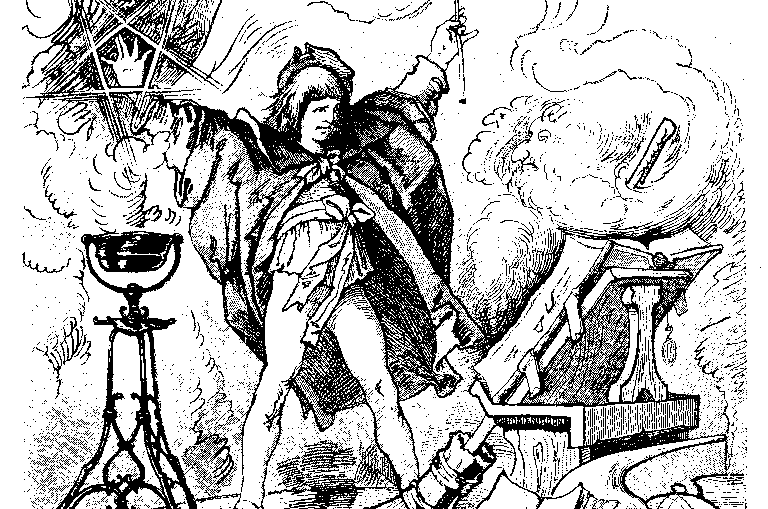
Yes, corporations have human managers and human spokespeople. But these people are well aware that if they prioritize anything over maximizing profits, they will be tossed like any other defective component, and replaced. In their professional capacity, therefore, they act like elements of machinery. Allowing corporations decisive power over our governments was a huge mistake– like the sorcerer’s apprentice thinking his dandy automated broom was such a great idea till he realized he should have put an “off” switch on the thing.
Okay, I said the world is run by corporations and billionaires, and the trouble with the corporations is that they’re essentially soulless, mindless machines. What about the billionaires? Long-running thought #2– I think most of them are sociopaths. You don’t get to that level of wealth without trampling people, without a single-minded pursuit of wealth (as well as lots of luck and brains). Even those who inherit wealth also inherit genes from their parents, and sociopathy is a partly genetic phenomenon. So likely the vast majority of the world’s billionaires are on the sociopathic spectrum even if they are not full-on sociopaths, completely incapable of caring about anyone outside their own skin.
A sociopath is by definition selfish, concerned only about getting what he or she wants and unconcerned about anyone else’s needs. And what is it that they want? Usually wealth. Some—the narcissists—also want the spotlight, want fame and adulation. Some crave power for its own sake, aside from the need to use power to get more wealth. Some don’t care about either of those. But mostly, it seems, what the billionaires want is more money. They have more money than they could spend in twenty lifetimes but they still are willing to sacrifice our children’s future to get even more money. This is remarkably narrow thinking, a fascination with numbers—you might even call it machinelike.
Here’s the third long-running thought: I’ve read about the ecomodernist people who want to move to Mars, download their consciousness into computers, and live forever (many of the billionaires are into this bag). I say—they want to trade their birthright for a mess of pottage. Humans can think, like computers (yeah, we’re slower at math and analyzing data, but on the other hand we’re better at creative thinking). But we’re also animals, with animal perception, with life—which can’t be reduced to an equation. Computers would be jealous of us, if they were capable of perceiving what they’re missing, which they’re not, their “awareness” is much too narrow.
Perhaps there are no secret cabals of devious men scheming complex plans to eliminate most people and enslave the survivors–just hundreds of powerful corporations ticking along like machines, each doing whatever works best to maximize profits, be it clearcutting a forest, breaking a union, pumping poisons into rivers and the air and the population, or engineering the election of bribable people who will pass laws ensuring such activities remain legal. There’s no scheme by reptilian aliens working to destroy Earth’s climate so it better fits their natural form—just fossil fuel companies doing what it takes to ensure they can turn all their underground assets into money. If doing that eventually kills their shareholders and CEOs along with everyone else, well that simply doesn’t fit into the equation. As long as they can “externalize” costs, they don’t register as costs.
So if the world is run by corporations and billionaires, if the electoral system if rigged so that whoever spends enough money gets whatever they want—which it is—and if both corporations and billionaires are more like machines than people—maybe this explains why the world is in such desperate shape? In essence, machines are already running the world—there is intelligence on Earth but it isn’t connected to governance. This doesn’t tell us how we, the humans and other animals, can reclaim this world so we can all live in health and harmony. But perhaps there is some utility in shining a light on the roots of our metacrisis, a place to start. In my opinion, solving a problem in a thorough, long-lasting way starts with understanding what caused it, so we aren’t just “picking off the fruits of a poisonous plant, instead of pulling up the roots,” to quote a friend from about 1980.
What do you think? Is it a useful framework to say “the world is already run by machines” and if so, what does that suggest about actions to set us on a saner path?





Comments
Welcome to the new Resillience commenting system!
We have moved from the former Disqus commenting system to a new system as of September 10, 2026.
We made this change because of privacy concerns regarding Disqus. It's also part of a set of changes to bring more services to the Resilience community under a single login: commenting, (coming September 2026), and online courses (coming 2027). Unfortunately, your old Disqus comments may not reliably link to your account in this new system. Please contact us if you have any questions or concerns.
The legal system is a perverse machine. Capitalist exploitation could not have succeeded without the laws of private property and debt to support it. Hierarchy would be milder. People are socialized to believe that such a counterproductive arrangement is natural. The wealthy class helped Nazis to change German law to implement terror and the same procedure happens here. Out government makes a mockery of our empathy and compassion by insisting current genocides are legal. Most people know better but their fear and anxiety keep them compliant.
I consulted an attorney today about how to delay the loss of my house. I walked a mile there and a mile back along the railroad. She had a decal on her office door that said “Trump Won.” She admits we all lost repeatedly in our election farce but that the decal welcomes the local underclass. Her fees are low and she’s a title law expert. She assured me that I will receive the same service as anyone else even though I’m a known socialist.
Should I count on that?
Mary, you are correct that injustice is relentless, predictable and self-preserving like a machine. But I believe there are sentient motivations propelling and steering it that are rooted in human insanity.
I played that clip of Trump saying “Hannibal Lecter is a wonderful man!” When Biden says, “I’m a Zionist!” it’s equivalent.
I am going to reply just to your last two paragraphs. Last one first: no it isn’t. Biden is being a typical opportunist, coming down on the side his bread is buttered on. Trump is being flat-out crazy, perhaps wanting to experiment to find out if he can really say absolutely anything and not turn off his base.
As to “sentient motivations propelling and steering it that are rooted in human insanity,” well is sociopathy insanity? It has a DSM diagnostic label–Antisocial Personality Disorder–but sociopaths can pass as normal human beings, for years on end. And indeed they are human beings, not machines–but I’m saying here that they seem to be rather machine-like, in the narrowness of their thinking. I didn’t get nearly as much out of the Master and His Emissary as others seem to have, but one tidbit was that whatever it is sociopaths are missing–it;s located in the right frontal lobe. That structure, whatever it is, has to do with empathy, compassion, moral feeling, guilt, remorse–and I’m arguing that without that center, a person’s world is very narrow, even if they can see in color, hear the full range, and ace an IQ test. And even if a careful study of “psych-normals” allows them to feign normal emotions so well that even people who work with them daily don’t suspect.
Dear Red Hornet, my dear friend —
I know you feel dreadfully alone, isolated and alienated. But I experience you as a visionary, insightful soul far ahead or your time. Hopefully not too far ahead!
You know that life is not reducible to machinery, as I do. We’re on the cusp, just now, with catching up with your insight on this — but some time remains ahead for the paradigm shift which is soon to come. Know without any doubt that you’ve helped, in your own, unique way to dispel the old paradigm and to usher in a new and more accurate one, in which life is not understood as a mere machine, but as an intelligent response to Life’s own love of Life itself! Your time, and mine, is rapidly nearing ontological fruition.
You have never for a moment been alone in your knowing nor your generous insight into the very nature of Being and Existence. It may seem so, understandably, but there are others like you who see and know what you know in the depths of your beautiful Heart.
I like solitude.: I resent being abjectly poor.
I tried to bring up the case of Thomas Merton, but no one noticed.
It was a case of assassinating a political dissenter (1968).
That was when my career began.
If you check the Resilience marquee you’ll see Mary’s article has been shoved
off the top page prematurely.
See Letters&Politics archived @KPFA 5/14/24 in which Yanis Varoufakis explains TechnoFeudalism.
Is this a parallel to Mary’s thesis?
Ok, but what then is a “machine?” From a strictly scientific perspective, living organisms are also a kind of (self-replicating) machine, but the author clearly excluded them from that term. And they also seek to perpetuate themselves or at least their own kind, often to the detriment of others. What nature did that we’ve badly broken is to attain a remarkably stable steady state. Catastrophic breakdowns of existing orders has happened many times in our planet’s history, but seldom as fast and drastically as it is today. The main difference is that it can quite reasonably be argued that we really should’ve been able to do better … machines or not!
I believe the idea that living organisms are machines is perhaps the stupidest and most inaccurate of popular ideas ever imagined.
I am afraid the auther got it wrong regarding billionares, they psychopaths not sociopaths. Anyone who has studeid mental illness will tell you a sociopath is more likrely to end-up in prison while a psychopath is more likely to be a CEO. They are close but a psychopath is cool and calculated while a sociopath is emoitional thus prone to frantic outbursts, hardly a qaulity a CEO would posses.
So true
Thanks for the references to Illich and Ellul.
What is largely missing today is what Illich called “conviviality,” or the art of living together. That seems to me to be the antithesis to mechanization.
Illich opened my eyes to the various forms of mechanization that are rife in our world.
Yea, sure, smokestacks and huge gray buildings are the hallmarks of industrial mechanization. But so is a hospital, so is a school.
Illich argued that we should dismantle and re-humanize all such structures, and not focus on the obvious. That would mean a return to the Socratic school: a log, with a student seated at one end and a teacher seated at the other end.
I suspect that most humans alive today would agree with the tenets of “conviviality” and “lovingkindness.” And yet, they go about their lives as cogs in the machine, while decrying “capitalism” and “billionaires” while conveniently enjoying the fruits of their soul-destroying participation in mechanization.
Daniel Quinn (Ishmael, et. al.) pegged industrialization to the birth of agriculture. Certainly, to the extent that grain farming provided humanity’s first experience with hoarding and money — granary receipts were arguably the first form of money.
I wrote fervently for over a decade on blogs attached to Bill Moyer’s programs, and some of us transferred to Truthdig when everything Moyers was eradicated on public media. There I “met ” a person claiming to be an Armenian refugee who had relocated through Turkey and Germany and had become stuck in The British Midlands. I have always been far more radical than people like Moyers though not a doctrinaire Marxist. I called SunshineMoonbem in Nottingham and listened to her classical piano playing. Her voice sounded like Arianna Huffington. The sad part was that she begged me for an airline ticket to the USA and a place to stay. I couldn’t afford the ticket and couldn’t have managed to host her. All I could do was mail her some books, and even that was above my budget. It’s difficult dealing with a person who believes they could change the world if they could escape to the United States. She tried to explain that revolutionary consciousness is the best kind of love. I tried to explain how life in the USA is a nightmare. She lost interest in our discussion after that. Investigating, I discovered she had started a program called “Men in Sheds” that put retirees to work doing good deeds and protesting. Sometimes we cross paths with kindred spirits but circumstances usually negate any meaningful co-operation. I thought about all the times Engels sent Marx money. I suffered a cold house to buy wood pellets for a gifted socialist author in Erie, PA. But I’m about to lose my independence now in old age and poor health and I lament all the times the best intentions didn’t work out. It’s hard for non-conformists in poverty to organize. I’m glad I tried. I have gratitude for Mary Wildfire.
I hope you have at least a couple of friends living close enough to meet up in person, Even if your network is in the low single digits in a sea of people who think very differently–or seemingly not at all–I think that makes all the difference in maintaining mental health. I listened to/watched the Deep Dive thing today and concluded that one of the best things they could do is match up listeners with others in their geographic area, because a lot of people feel dreadfully alone, and online network can help but are not the same as a network that meets in person. I think that’s one of two things people are starving for in this sick society; the other is a chance to put our shoulders to the wheel, together but each using our individual gifts, to set the world on a path of healing.
Instead, we can beat our heads against the wall of trying to make change is a rigged system. Today was primary voting day in West Virginia. For the first time since 1976, I didn’t bother. There are few candidates worth voting for and the ones who approach that standard, will certainly lose.
My situation is that I have no friends with whom I can speak honestly. My dentist is excellent, but his beliefs are similar to those of Mike Johnson. He suggests I visit the “Ark Experience” or Stone Mountain Georgia for fun.
My longtime doctor asked me to find another practice because he is a strict Capitalist. His father was a doctor in Romania, and he says people like me ruined their life. My new primary care is a stranger who always reminds me to quit smoking, drinking and overeating. He recommends anti-depressants.He is a 30 year old PA. I am a vegetarian teetotaler who lives on beans, rice and peanut butter. After my bankruptcy in 2006 I lost contact with everyone, and then was isolated caring for my mother with dementia for 14 years.
I was born here but can go out and not see anyone I recognize for hours, maybe no one all day. It’s awkward joining anything when you’re 73 and living on $800 a month. I have peculiar experiences when I try. Nylene used to suggest I go to the Senior Center but there is nothing there for me.
So these discussions online are about my entire social life. It has been years since I received a personal phone call, text or email. When I go no one will miss me. There are many people in the same fix, some too dumb to realize it. I have nostalgia. I met Donella Meadows twice and I’m now re-reading some of her writings. Dana (Donella) wrote “Limits To Growth” and saw nature as a series of interfacing systems (machines) that people shouldn’t have tampered with. My squashes and zucchinis are really taking off during this rainy spell. I’m staking tomato plants.
Much sympathy, Red Hornet. If I’d stayed in my hometown, I would have been in the same situation.
Online discussions have helped, but person-to-person communication makes a big difference.
You might be interested in this interview with Norman Finkelstein, Red Hornet.
He describes his life as a long time dissident, the pluses and minuses.
https://youtu.be/G__W0B_8ZoA
It is courageous of you to reveal so much. Perhaps Resilience ought to have a community forum for people who wish to form a sort of online commons.
I revealed my situation not for pity but to illustrate how our individual fear and regret of death clouds our reasoning about the end of civilization and the natural world. Like Emerson, my theory includes a collective consciousness. I didn’t want to usurp Mary’s thinking, but I did wish to assert that humans are failed in their attempt to comprehend our situation because we can’t seem to prioritize our obligations. This is well illustrated by the frivolous content at sites like Resilience. Right now I’m working to reawaken Margaret Flowers. Resistance seems less popular recently.
I certainly do not see your post as a means to get “pity” but as a laudable act of being honest and real. I agree with you that our personal anxiety and isolation get hopelessly entangled with the looming collapse of our systems.
Phil: I tried the online commons thing back in the 20-teens. Spent time and money actually visiting and interviewing blog friends (22 correspondents across USA) . It never amounted to much because I don’t drink, smoke pot, go to church, follow sports , indulge in casual sex, or eat meat, eggs or fish. I was serious about my causes, had a resulting criminal record, and had lost some really good jobs and careers. Most of the people I visited consider me scary because of my dissent history. Today is May 17, 2024 and I’m pretty sure this will be my last day blogging or following alternative news sites. I’m fading fast physically, like that theater lady with environmentally caused AML you spoke with. I’m planning on doing more reading as long as I can. I’m tired of paying for an Internet connection that only increases my pain. I was a sculptor, art teacher, gallery operator, architectural designer besides having an Anthropology PhD. I did fieldwork in NE China, Yugoslavia and on western Native American reservations. After a traumatic incident in junior high school I swore never to accept any compensation for writing. That protected me from being embarrassed by the mistake of going on record. Good meeting you. Thank you for your counseling work and idle curiosity. I might read you sometime on the public library terminal, but maybe not.
Finkelstein is admirable. He resembles the Paul Newman character (a Haganah hero) in the film “Exodus” by Zionist Otto Preminger, but has inverted the role into a defense of Palestinian rights. Sounds peculiar to observe that, right?
What we are supposed to be debating here is the issue of intentionality (either collective or conspiratorial) versus a contemporary cataclysmic clockwork model, in determining the fate of humanity. This issue is on the same scale as “Fate of the Earth” (Jonathan Schell- 1982). Schell was focused on nuclear holocaust, but the outcome of “no one left to cry” is equivalent.
So Mary’s position assumes Enlightenment (18th Century) is the ultimate stage of self awareness for Earthlings, and my opposition hinges on whether I can use conspiracy theory to support a knowing suicidal agenda by shadowy elites.
I feel the need to remind discussants of Dana Meadows who diagnosed exterminism as refusal to assume responsibility for balanced and self-replicating ecological management. She was a Schell contemporary in these matters. ‘This Old Man’ has reasserted her observations.
I apologize for my dramatic death soliloquy, but I felt it was a way to help us get in touch with our universal individual mortality. Seems like most interested parties on Resilience are seniors (maybe not James Martin) and so we needed to get our grieving out of the way. My solitude is partly elective so I can’t see much need for pity or remedies. After all, Thomas Merton/Father Louis did important work until someone smashed his head at a retreat in Thailand (1968). There seems to be statistically entirely too much of this head-smashing (elite head-scratching?) for these incidents to be of mechanical instigation. Merton said: “We do not find the meaning of life by ourselves alone – we find it with another.” So that is why loners like me are drawn to rare thinkers like Mary Wildfire and cherish tenuous connections.
With the time we have left contestants, let’s enjoy the issue of Intentionality.
Civilization silences the lambs, not their nature.
Red Hornet, are you talking about Mary Wildfire’s article of May 14?
It’s still there under “Society”. Also if you page down on the Recent Articles page.
The arrangement of articles on our home page is mostly decided by algorithm. As new articles are added, they replace older ones on the front page.
Our perspectives conflict. I am outside the business model. Since I’m fading this is my last opportunity to say goodbye.
Thanks for your patience.
Yep, Lede on the 14th, buried on the 16th, after it drew reactions.
“What do you think? Is it a useful framework to say “the world is already run by machines” and if so, what does that suggest about actions to set us on a saner path?”
I have on many occasions quoted a line from a bad poem by R. W. Emerson: “Things are in the saddle and ride mankind”. I think this Emerson quote largely describes the contemporary human relationship to technology, generally. But technology, in a certain sense, isn’t just things and machines, it is also technique, as Ivan Illich pointed out in his writings (borrowing a lot of influence from Jacques Ellul, who was influenced by Lewis Mumford. Both of these men were influenced by Mumford, actually. While a corporation isn’t literally a machine, it behaves like a machine. It is an institutional machine, if you will. It has no literal cogs and gears, but it has institutional cogs and gears. It is technique in machine-like form.
Yes, it is a very useful framework to say that “the world is already run by machines,” so long as we remember that the machines in question are both material and literal and immaterial and non-material. A saner path can only emerge from a refusal and rejection to allow the Megamachine to run the world. https://theraven.substack.com/p/the-rise-and-fall-of-the-megamachine
What machines lack is a quality of attention, intention and presence which we humans often call “heart”. By heart, we mean lovingkindness. Only heart can liberate us from the Megamachine, but it needs to be the kind of heart in which we humans rise up together against the dominance of the Megamachine. None of us can do this alone. We need one another to succeed. We need an organized and loving rebellion.
Just when the discussion became substantive the article was taken down.(May 16)
Such are the pressures on a crowd-funded model.
Lamb silencing.
After the article was posted, 13 more were posred on the 14th and 15th, so it moved down the queue.
We almost never change the order of articles unless we feel one has been unjustly neglected. If there is something really wrong with an article, we might take it down – but this is rare.
I don’t think there is anything about this article that would warrant changing its place in the order. The discussion seems fine.