

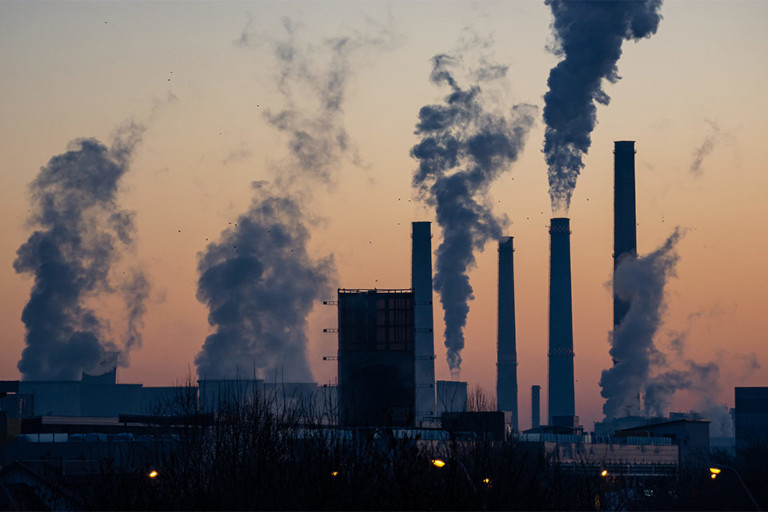
Climate change, resource depletion, extreme weapons, AI, and more: Richard Heinberg looks at the individual threats composing the unprecedented convergence of risk leading us to a global polycrisis. Though he finds no easy answers, he concludes that humanity’s collective survival will require setting aside our hubris and coming to terms with environmental and social limits.
The Chinese philosopher Sun Tzu wrote that, in warfare, it is essential to know both your enemy and yourself. Today, humanity has “enemies,” including climate change and nuclear weapons, that are capable of destroying civilization and whole planetary ecosystems. So far, we are not defeating these enemies—which we ourselves created.
Indeed, even more existential risks are coming into view, including the disappearance of wild nature and the proliferation of toxic chemicals that undermine the reproductive health of humans and other creatures. So many new and serious threats are appearing, and so quickly, that a word has come into currency to describe this unprecedented convergence of risk—polycrisis.
Our collective inability to reverse the rising tide of risk implies a failure of understanding: we don’t know our enemies; moreover, we evidently don’t know ourselves, because if we did, we wouldn’t continue generating such problems.
People have always faced challenges. But what is happening now implies a different scale of consequence. Unless we change the direction and momentum of events, global systems on which humanity depends for its existence will unravel, and civilization with it.
It is essential that we step back from whatever we are doing and mentally come to terms with the polycrisis. Three questions demand answers: What is the full spectrum of risks that we face? Why are we failing to manage or reduce these risks? And finally, since these risks are human-generated, why are we creating so many threats to our own future?
The Risk Spectrum of the Polycrisis
Here are the existential enemies we face:
Climate change. Greenhouse gases, produced by human activities, principally burning fossil fuels, drive temperatures higher and destabilize weather patterns. A rapidly warming climate will wreak havoc on global food production, make many places uninhabitably hot, and raise sea levels, potentially drowning coastal cities now home to hundreds of millions. Despite decades of international conferences and pledges to reduce greenhouse gas emissions, the amounts of CO2 gushing into the atmosphere globally are still rising, not falling. The main solution being proposed is a worldwide energy transition from fossil fuels to renewable sources like wind and solar; however, the current pace of replacement is too slow to avert catastrophic climate impacts, and scaling up renewables sufficiently to supply all energy at current usage levels would require a massive increase in the mining of a wide range of minerals.
Disappearance of wild nature. While it is technically challenging to gain an accurate understanding of the population status of each of millions of distinct species, it is clear that the total biomass of wild animals is decreasing and that extinction rates are increasing. Insect biomass is estimated to be declining at 1 to 2 percent per year, and the biomass of wild terrestrial vertebrates is now only a tiny percentage of that of humans and domesticates. One cause of these trends is disruption of habitat: as urban areas grow, as forests are cut, and as industrial agriculture expands, wildlife is forced to the margins. Without wild nature, humanity cannot persist.
Toxic chemicals. Another cause of the disappearance of wild nature is the wide dispersal of toxic chemicals produced by industrial processes. Recent research shows that whole classes of chemicals are disrupting reproduction in humans and other animal species. One recent metastudy concluded that, among men from all continents, the mean sperm count declined by over half between 1973 and 2018, and that chemical exposure was the most likely cause. The study also found that the decline rate, currently about 2 percent per year, is increasing. That trend, if extrapolated, would result in near-universal male sterility by about 2060. Women’s reproductive health is also being impacted.
The decline of the world’s oceans. Oceans are the foundation of the global ecosystem. However, rising atmospheric levels of CO2 are resulting in ocean acidification, rising ocean temperatures, and declining levels of oxygen in ocean water. Coral reefs around the planet are in trouble. The North Atlantic current, which gives Europe a moderate climate, is shutting down due to climate change. “Dead zones” due to fertilizer runoff are expanding. And overfishing is resulting in the decline of many important fish species. Altogether, the oceans and the life they contain are being disrupted to a degree not seen since prior geological epochs.
Resource depletion. Renewable resources such as freshwater, soil, fish, and forests are in many cases being harvested or degraded much faster than they can regenerate. Nonrenewable resources, such as fossil fuels and minerals (including minerals needed for a renewable-energy transition) are depleting and being used in ways that will make recycling difficult or impossible. There may be centuries’ worth of some ores if mining continues at current rates, but with regard to many (including sand used in making concrete and semiconductors), supplies are already becoming problematic. Meanwhile, ongoing depletion of fossil fuels could result in crippling energy shortages unless alternative energy sources are developed at unprecedented rates.
All of the above could be categorized as “environmental” risks. But we are also seeing the rise of social problems associated with existential risks. Here are just three:
Extreme weapons. Nuclear weapons have been used in warfare only twice because it’s widely understood that a general nuclear war would wipe out most of humanity. But if the world descends into conflict over dwindling resources, the threat of “mutual assured destruction” may no longer deter their use. Also, we’ve more recently added new kinds of weapons of mass mortality: bioweapons, chemical weapons, robotic weapons, and electromagnetic pulse weapons targeting essential infrastructure.
Artificial Intelligence (AI). Most analysts agree that there are serious risks that AI will lead to widespread unemployment as intelligent machines replace workers. Also, AI will likely trigger an explosion of misinformation, as “deepfake” video, text, and images make it ever more difficult to identify genuine news. But with the advent of artificial general intelligence, achievable in a matter of years, AI could begin to change the operations of society in ways that humans could not control. Indeed, many of the developers of AI say that the technology poses an existential risk to humanity and the biosphere.
Inequality. While inequality is not by itself an existential threat to civilization or nature, it has been shown, in recent historical research, to generate sociopolitical instability. Economic inequality has been increasing globally during recent decades, and especially in fast-growing economies. So, just when we need societal cohesion in order to tackle the environmental challenges of the polycrisis, we are instead facing deepening political polarization and falling public confidence in institutions.
Why Are We Failing to Reduce or Manage Proliferating Risks?
As crises pile atop one another, it gets harder for society to deal with each one adequately. Addressing climate change alone will demand the replacement of global infrastructure, costing over a hundred trillion dollars. But is hard for policymakers to focus enough attention on climate mitigation and adaptation when they must also respond to wars in Europe and the Middle East, the Covid pandemic, political polarization, and the recurrent threat of economic turmoil. Resources—including not just money but managerial time and talent—are stretched thin.
Also, while the threat of climate change is profound, focusing more effort on it takes funding and time away from addressing other environmental problems such as the depletion of freshwater and topsoil and the spread of toxic chemicals. Yet these trends are likewise capable of bringing civilization to its knees.
Further, crises often have side effects that make them harder to solve. Climate change is producing increasing flows of environmental refugees, and absorbing these flows creates political problems for host nations, thereby making it more difficult for those nations to build consensus to focus effort on slowing climate change.
Moreover, different crises interact in ways that make it increasingly difficult to address each one in isolation. For example, fighting climate change requires that nations build enormous amounts of new renewable-energy infrastructure. This necessitates increased output of minerals including copper, lithium, nickel, cobalt, and rare earth elements. Mines must be expanded, or new ones created, often in places where resulting pollution will impact low-income communities (thus exacerbating economic inequality) or where wildlife habitat will be degraded.
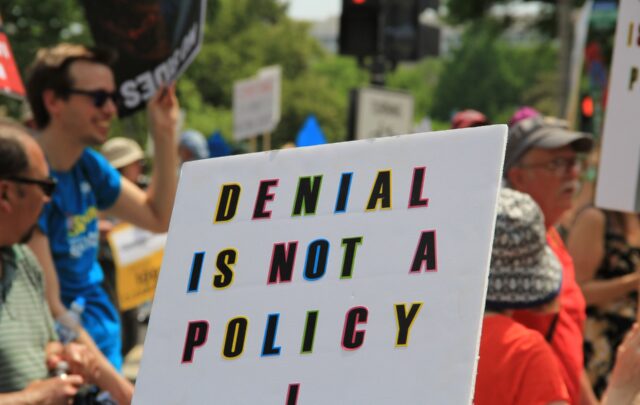
Also, consensus for strenuous action to address any environmental problem such as climate change will be difficult to achieve in the context of political polarization (which is fed by increasing economic inequality), and with the proliferation of AI and social media algorithms. Climate action is already stymied by widespread denial fed by fake news—which is about to become far more sophisticated.
Finally, the problem of scale makes solutions difficult. It’s one thing to solve a problem in the laboratory but quite another to scale up the solution. For example, researchers have identified several pathways to emissions-free aviation, but to revamp a global industry valued at nearly a trillion dollars that includes roughly thirty thousand commercial aircraft will require time and massive investment (also, replacement fuels may have a much higher ongoing cost). At low levels, resource depletion and toxic pollution are manageable problems; after all, societies have been mining metals and creating local pollution for millennia. It’s the enormous and ever-increasing scale of our current resource extraction and waste dumping that is imperiling whole ecosystems. Similarly, economic inequality has existed for thousands of years, but societies were small enough that the ill effects of inequality were localized. Today, political polarization stoked by worsening inequality could make it impossible to tackle global, existential-level problems such as climate change. The rapid growth of population and per-capita incomes during the last two centuries, and especially since 1950, have vastly increased the speed and scope of human activities, but this success comes at a soaring price.
Modern Society as a Risk/Crisis Generating Machine
The global polycrisis is not just an unhappy convergence of many separate negative trends. Climate change, resource depletion, toxic pollution, and other facets of the polycrisis are directly or indirectly rooted in a single phenomenon—society’s dependency on fossil fuels. Energy is humanity’s key resource. Humanity’s adoption of coal, oil, and natural gas enabled a rapid, unprecedented global growth of consumption and population during the past several decades (hence the problem of scale discussed above). Burning fossil fuels releases CO2 and causes climate change. Fueled mining, fishing, and forestry equipment have enormously expanded the extraction of raw materials—including uranium for nuclear weapons. And fossil fuels also provide the feedstocks for most toxic chemicals.
If fossil fuels provide so much energy, and hence so many benefits (despite also imposing costs), why did humanity begin using them only in the last two centuries? The fossil-fueled Industrial Revolution required some prior inventions (including metallurgy, pumps, pipes, and gears), so it physically couldn’t have happened, for example, in hunter-gatherer societies. But in addition to technical knowhow, certain social arrangements were needed. This conclusion springs from the way in which fossil-fueled industrial revolutions have occurred. They’ve happened just twice in human history—once in China a thousand years ago, and then again in Britain in the eighteenth century. In China, industrialization was deliberately cut short by the traditional aristocracy, which viewed it as a threat to its own continued dominance. The same did not happen in Britain in the eighteenth century, because the British aristocracy had already been humbled by a merchant class enriched through colonialism. In both instances, coal was the initial industrial fuel. And both times, its mining and use were encouraged by private ownership of natural resources and legal protection for investors in commercial enterprises. These historical similarities suggest that capitalism in at least a rudimentary form was a necessary prerequisite for the widespread adoption of fossil fuels.
With both capitalism and fossil fuels in place, society became a risk/crisis generating machine. Private land ownership legitimized resource extraction, which fossil fuels made possible on a larger scale via powered mining, fishing, and forestry equipment. Protections for investors enabled manufacturing and waste dumping at industrial scales. With the means (fossil fuels) and the rationale (capitalism), economic expansion accelerated, with the side effect of contaminating swathes of nature with toxic waste. Even noncapitalist countries were forced to compete at maximizing growth in resource extraction and manufacturing (and, consequently, waste dumping), lest they fall behind.
Once the inevitable side effects of increased economic activity became apparent, nations made efforts to reduce environmental impacts through efficiency and substitution. Sometimes these efforts succeeded (humanity has greatly reduced its destruction of the atmospheric ozone layer by phasing out chlorofluorocarbons and replacing them with other chemicals), but in most cases problems continue to fester and worsen, as is happening with climate change.
The crisis/risk generating machine also tends to exacerbate social problems: as owners of capitalist industries profit from their enterprises, economic inequality within societies tends to increase unless profits are redistributed through government taxation and spending programs. However, over time, capitalists find ways to capture governments through lobbying by hired lawyers and public relations firms, and by donating to the election campaigns of business-friendly politicians. Fossil-fueled economic growth simply pumps wealth toward capitalists faster, requiring even more effort by government to prevent inequality from reaching levels that eventually undermine governance itself.
Once the risk/crisis generating machine was up and running, it became ever harder to stop, because the same activities that were generating risks and crises also produced short-term benefits to society, and especially to powerful people and institutions, including jobs, profits, and products. Unplugging the machine—for example, by shrinking the economy in order to reduce CO2 emissions—would itself constitute a crisis for society.
The Way Forward
The polycrisis demands that we fundamentally change our thinking. Policymakers today tend to view climate change as a pollution problem isolated from other spiraling trends. So, they look to solutions that worsen other problems: renewable-energy technologies that deplete resources and destroy habitat, or carbon-capture technologies that require vast amounts of energy, or AI technologies that increase inequality.
The polycrisis demands that we fundamentally change our thinking.
Knowing our enemy—the polycrisis—requires that we better understand natural and human systems and the connections between problems, and that we examine the assumptions that underlie problems. Some of those assumptions are widely taken for granted, such as justifications for private ownership of natural resources. Meanwhile, the challenge of scale requires us to question our near-universal obsession with economic growth.
There are no easy solutions, because the polycrisis is no easy problem. The hour is late, and there may be no path forward that does not require a significant sacrifice of wealth, dominance, or comfort. But if we are to find our way out of the conundrum we humans have created for ourselves, we must start with self-knowledge. We are smart, linguistic, ultrasocial, tool-making primates who have recently stumbled upon an energy bonanza. We’ve accomplished wonders. But we have also become our own worst enemy. Collective survival will require setting aside our hubris and coming to terms with environmental and social limits.
Editorial note: Visit WLT’s YouTube channel to listen to a conversation between Heinberg and Rob Vollmar, WLT’s book review editor.



Comments
We changed commenting systems on September 10, 2026 as part of a site-wide functionality and security upgrade. Your past comments have not disappeared, and you can still log in with your old Disqus account credentials if you wish. Contact us with any questions.
Would you care to summarize why you believe Musk's new space vehicles won't pollute?
Hah! “…paths to Emissions-Free Aviation” – ya. That’s rich. And the latest-generation spacelaunch vehicles (musk’s) don’t pollute.
And Capitalism works if we get rid of the poor. Ya. That’s a good one, too.
Such ideas simply show the magnitude of the corruption of both the would-be and existing intelligentsia.
____________________
Most, or all, commentators who seem to understand the severity of our polycrisis appear to want to find ways that modernity can continue. In another piece, Richard wrote, "society could approach a sustainable steady state." And, yet, Richard distilled the meaning of sustainability into five axioms, many years ago. The axioms boil down to:
The first point rules out use of non-renewable resources (except those that can be repurposed without needing further non-renewable inputs) and so modernity must end as it is unsustainable. There is no possible way, that I've seen, for a modern society to be sustainable, even it can be made steady state economically (since no recycling can be made 100% efficient, and no energy source is clean apart from wild plants harvested by hand). Eventually, it will start to crumble without fresh inputs of non-renewable resources. Of course, even renewable resource use must be limited, implying far less people.
So, how does some semblance of modernity continue indefinitely? I'd love it to be possible but haven't yet seen a detailed argument that it can.
Of course, humans are simply a species that happens to be much, much, better at accessing resources than other species. We will continue to do so until we can't. Is there a conversation where reality is at the forefront? That's what we need but what I have no expectations of getting.
Certainly well said and to the point.Still farming with horses and enjoying what crops are able to grow in this changing climate.
You left off the scariest part!
Modern industrial agriculture.
It takes ten calories of fossil sunlight to produce each calorie of industrial food we eat. Highly-processed food that you find in fast-food outlets and the centre aisles of grocery stores take as much as 99 calories of fossil sunlight for each calorie of food produced.
The so-called “green revolution” in agriculture should more properly be called a “brown” revolution, as it is completely dependent on fossil sunlight. About half of humans now alive have literally been conjured out of thin air, thanks to natural gas and two German scientists, Haber and Bosch, who came up with the process for “fixing” inert atmospheric nitrogen for use as a fertilizer.
“But, but, but, solar panels and wind turbines!”
Sorry, but agricultural energy use is not amenable to electricity, which is what renewable energy sources produce.
Haber-Bosch uses natgas both as a feedstock, and as a convenient and easy to use energy source for creating the high temperatures and pressures needed. It will require expensive and difficult-to-maintain multi-stage pumps and heaters to do the same with electricity, and the hydrogen that is needed to make ammonia from atmospheric nitrogen will have to come from electrolysis of water, which is at least an order of magnitude more energy intensive than natgas.
Then, there’s diesel. Farm machinery needs it. During peak planting and harvest, tractors run on sixteen-hour shifts! That would require at least eight battery swaps. So expect electric farm machinery to cost at least ten times as much as diesel machinery… and we haven’t even talked about the diesel-fuelled long-haul transportation network required by our current food system!
It’s true that we keep setting volume-based records for liquid fossil sunlight production. But that is illusory, and we probably hit “peak fossil energy” in 2019 or so. The only thing propping up liquid energy production is US fracked oil. And it is very light, which means it contains less energy — specifically, you can’t get diesel from it. And diesel is what makes the world go ’round — or at least, modern industrial agriculture.
So, a barrel of oil today contains perhaps as little as 90% of the energy in a barrel of oil just ten years ago, before widespread fracking goosed the numbers.
“But, but, Tesla has a semi-truck doing food delivery RIGHT NOW!”
Yes. Potato chips for short distances of under 200 miles or so. They aren’t demoing this with even 80,000 pound loads! A 53′ trailer full of potato chips doesn’t even hit 20,000 pounds. That bar was set pretty low! Now, compare that with a 105,000 pound load of frozen food — with a diesel-powered freezer, moving from Atlanta or Chicago to San Francisco. Ain’t gonna happen any time soon.
Europe may fare better, as they have a working electric rail system for long-haul transportation. I can’t see North America going there in time.
Can you survive if your grocery bill goes up by a factor of ten to one-hundred, while your income remains the same? $60 hamburgers? $50 for a gallon of milk? $40 for a loaf of bread? Didn’t think so.
As fossil sunlight goes into permanent, irrevocable decline, human population must decline in lock-step with it. This is the “sleeper” element of our poly-crises. You don’t hear much about this, because it is just to scary to contemplate.
All of us are going to have to take control of our own food supply. Learn to grow food. If you, like 99.86% of us, depend on the one in 700 of us who farm, you better find a way to get to some productive land without using fossil fuel. Then grow food.
That won’t work for everyone. But it may work for the survivors.