

This article was produced by Human Bridges.
A discussion of the origins of urbanization may provide some insight into the character of modern social problems by highlighting the long historical dynamic at work. It may not be out of place here to point out that anti‑states are well known in the modern world, above all in what the U.S. Federal Reserve Board classifies as eleven offshore banking centers. Five such enclaves are in the Caribbean: Panama, the Netherlands Antilles (Curacao), Bermuda, the Bahamas, and the British West Indies (Cayman Islands). Three enclaves—Hong Kong, Macao, and Singapore—were founded to conduct the China trade. The remaining three are Liberia, Lebanon, and Bahrain at the mouth of the Persian Gulf—the island which Bronze Age Sumerians called Dilmun when they used it to trade with the Indus valley and the Iranian shore.
Nothing would seem more modern than these offshore banking and tax-avoidance centers. They are the brainchildren of lawyers and accountants in the 1960s seeking to weave loopholes into the social fabric—to provide curtains of secrecy (“privacy”) to avoid or evade taxes, and to serve as havens for ill‑gotten earnings as well as to facilitate legitimate commerce.
Whereas modern nation‑states enact laws and impose taxes, these enclaves help individuals evade such regulations. And whereas nation‑states have armies, these centers are the furthest thing from being military powers. They are antibodies to nationhood, yet more may be learned about Ice Age, Neolithic, and even Bronze Age gathering and meeting sites by looking at these modern enclaves than by examining classical city‑states such as Athens and Rome.
Timeless Features of Entrepots
1. They Lack Political Autonomy
Instead of being politically independent, the modern offshore banking centers and free trade zones are small former colonies, e.g., the Caribbean islands as well as the Chinese entrepots. The Grand Cayman Island was a Jamaican dependency until 1959, when it chose to revert to its former status as a British crown colony so as to benefit from what remained of imperial commercial preferences. Liberia and Panama are U.S. dependencies lacking even their own currency system (both use the U.S. dollar). Hong Kong did not gain title to its own land until Britain’s leases expired in 1997. Panama did not gain control of its canal until 1999.
In sum, whereas political theorists define the first characteristic of modern states (and implicitly their capital cities) as being their ability to enact and enforce laws, offshore banking centers are of no political significance. In the sense of being sanctuaries from national taxes and law authorities, such enclaves are in some ways akin to the biblical cities of refuge. If they are not sanctuaries for lawbreakers in person, they at least provide havens for their bank accounts and corporate shells.
2. They Occupy Convenient Points of Commercial Interface Between Regions
Typically, entrepots are on islands or key transport navels such as the Panamanian isthmus. They are separated as free ports politically, if not physically, from their surrounding political entities. They often are centers of travel and tourism (“business meetings”) and for gambling. In antiquity they typically were centers for sacred festivals or games such as were held at Delphi, Nemia, the Corinthian Isthmus, or Olympia (whence our modern Olympic games originated in a sacred context).
3. They Enjoy Sacred (or Legal) Protection Against Attack
Although Delphi and Olympus were landlocked (as was Çatal Hüyük), they were centrally located for their local regions. They served as religious and cultural centers, whose festivals and games could be conveniently attended by the Hellenic population at large. Even visitors who were citizens of mutually belligerent city‑states enjoyed sanctuary. Of course, today’s enclaves no longer claim sacred status, except for the Vatican and its Institute for Religious Works promoting money-laundering functions1. Their commercial focus has become divorced from the religious setting associated with international commerce down through medieval Europe with its great fairs. And indeed, their attraction is especially to wealthy individuals avoiding the tax laws and criminal codes of their own homeland.
4. They Are Militarily Safe
Although today’s enclaves rarely have armies of their own, they are militarily safe. Thanks to their unique apolitical status, and indeed to their ultimate dependence on larger powers, their neighbors have little motive to attack them and every reason to use them as business channels and even for government transactions such as arms dealing, money laundering, and related activities not deemed proper behavior at home. The resulting commerce thrives free of regulations and taxes, conducted in militarily safe environments without the cost of having to support standing armies, and hence less need to levy taxes for this purpose, or to monetize national war debts.
5. They Are Politically Neutral Sites
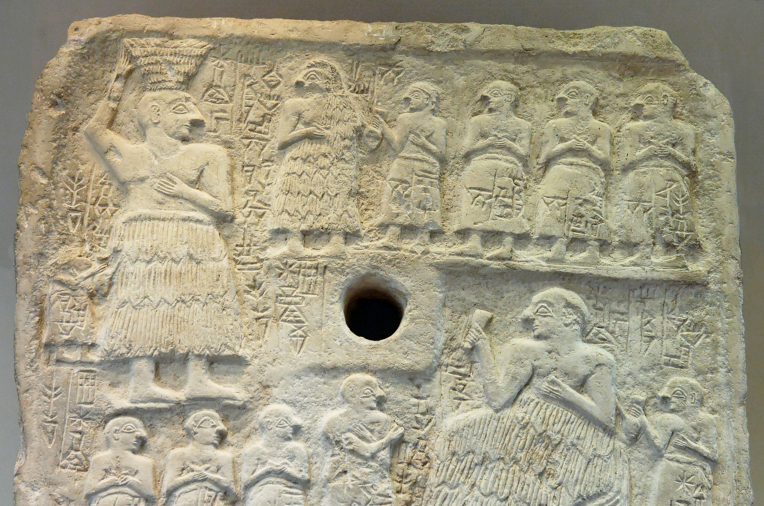
To create such enclaves has been an objective of mercantile capital through the ages. It patronizes the world’s politically weakest areas as long as they do not do what real governments do: regulate their economies. The search for “neutral territory” expressed itself already in the chalcolithic epoch, many millennia before private enterprise developed as we know it. The result of this impetus is that neolithic towns such as Çatal Hüyük, Mesopotamian temple cities such as Nippur, island entrepots such as Dilmun, the Egyptian Delta area, Ischia/Pithekoussai, and the biblical cities of refuge share the following important common denominator with today’s offshore banking centers: Instead of being centers of local governing, legal, and military power, they were politically neutral sites established outside the jurisdictions of local governments.
6. They Create Forums for Rituals of Social Cohesion
Whether the status of these urban sites was that of sanctified commercial entrepots or amphictyonic centers, they provided a forum for rituals of social cohesion to bolster their commerce. These rituals included the exchange of goods and women (intermarriage)—commerce and intercourse in their archaic sexual meaning as well as in the more modern sense of commodity exchange.
I have cited above the archaic practice of conducting trade via island entrepots. The sacred island of Dilmun/Bahrain in the Persian Gulf represents history’s longest lasting example of such an enclave. It served as an entrepôt linking Sumer and Babylonia (whose records refer prominently to the “merchants of Dilmun”) to the Indus civilization and the intervening Iranian shore. Its status as a sacred as well as commercial center may have been promoted by the fact that its waters were a source of pearls, prized as sacred symbols of the moon (being round, pale, and associated with deep water). It also seems to have served as a high‑status burial ground for prosperous individuals, or at least for parts of their bodies. Lamberg‑Karlovsky2 reports that there are more fingers and other limbs than full skeletons, as the Sumerians partook piecemeal in the island’s sanctity (although some commentators believe that this may be simply the result of grave robberies through the centuries3). In any event, these social and commercial virtues helped make Dilmun one of the most expensive pieces of Bronze Age real estate, not unlike modern Bahrain.
7. They Facilitate Commercial Development
The sacred status of such entrepots facilitated commercial development in ways that did not abuse Bronze Age sensibilities, much like the sacred status of temples did when they became the major economic and textile production centers. While creating the economic conditions and organization of large‑scale enterprise within traditional social values and order, Bronze Age institutions provided leeway so as not to stifle commercial development with overcentralized control. This may be part of the reason why trade was conducted outside the city gates. The philosophy was to create “mixed economies” in which institutional and private sectors each had their proper role.
1. David A. Yallop, In God’s Name: An Investigation into the Murder of Pope John Paul I, 1984, pp. 92-94.
2. C.C. Lamberg-Karlovsky “Dilmun: Gateway to Immortality,” Journal of Near Eastern Studies, Jan 1982, 41(1), pp. 45-50.
3. P.R.S. Moorey, “Where did they bury the Kings of the IIIrd Dynasty of Ur?” Iraq, 46, 1984, pp. 1‑18.



Comments
Welcome to the new Resillience commenting system!
We have moved from the former Disqus commenting system to a new system as of September 10, 2026.
We made this change because of privacy concerns regarding Disqus. It's also part of a set of changes to bring more services to the Resilience community under a single login: commenting, (coming September 2026), and online courses (coming 2027). Unfortunately, your old Disqus comments may not reliably link to your account in this new system. Please contact us if you have any questions or concerns.
I am enthusiastic about Resilience including an article by Michael Hudson. Much of Hudson’s work is an explanation as to why the economy of the United States is in decline and facing downfall. This particular piece pertains to Marx’s theory of uneven development, in short; that investment flows disproportionately to areas and activities the already disproportionately wealthy minority expects (actually even demands) will be profitable. Capitalism (actually fascism, mercantilism and monopoly cartels and syndicates too) everywhere is more capable of producing poverty and misery than wealth and happiness. The hierarchy and legal system in which we are trapped makes resistance difficult because critics are easily ostracized and criminalized. A self-induced collapse will likely be necessary before any changes for the better come.
Entrepots have been perfected over time with the intensification of wealth and power concentration. We have seen leaks such as the Panama Papers/Paradise Papers/Pandora Papers revealing how politics is corrupted, and the recent stubborn denial of Zionist genocide in the media shows how we are being lied to and intimidated.
On a local note I attended a “Poverty Simulation” at a recreation center in a majority Black neighborhood this week. It was sponsored by Crisis (Assistance) Ministry, a national ecumenical relief agency claiming to serve the desperately poor. It lasted from noon until 2pm. Attendees seemed to have been mostly recruited from government administration, affiliates of United Way and affluent churches. Even with salting attendance was sparse and some bowed out early. The first third was a commercial for Crisis Ministry, with the assertion they can lessen poverty and lift people up using stingy donations and condescending education. In the hurried second part we were coached through computer programmed examples of the impossible financial challenges disadvantaged families face, supposedly based on case files. This was designed to enhance our knowledge and encourage us to advocate for relief. But the big finale amounted to a passing of the plate. Online, data shared by Crisis Ministry shows the structural impossibility of cooking any stone soup without soaking the rich, but they don’t seem able to admit that fleecing the barely solvent under penurious debt of fleeting disposable income and shrinking net worth can only spread poverty. The executive from CAM that moderated our presentation makes about $100K a year plus some expenses.
Recipients make 0 to $25K and are usually parents. Their literature says that a family of 4 in our locality needs about $200K a year to be comfortable. So I think the presenter is a professional beggar. How can it be otherwise structurally?
Things are worsening. Just today on a fundraising presentation on Pacifica KPFA the popular shows “Democracy Now” and “Economic Update” got almost no pledges in two hours. Host Mitch Jeserich (a gifted and charismatic differently-abled broadcaster) observed things have never been this tight before. As far as public response at other progressive outlets I see comments drying up, although I cannot track contributions. Repression of free speech and redress of grievances is increasing as anger and distrust, but especially fear , anxiety and insecurity peak. Car sales and farm equipment sales are crashing. So I hope Resilience will publish more frank and honest material even if it is scary. These conditions make it harder for me to work in my vegetable garden because I’m so sad. A “what’s the use” attitude sometimes deters my hopeful labor. Hudson’s history lesson was an antidepressant for me.