

Something must be up. Otherwise, why would scientists keep sending us those scary warnings? There has been a steady stream of them in the past few years, including “World Scientists’ Warning of a Climate Emergency” (signed by 15,000 of them), “Scientists’ Warning Against the Society of Waste,” “Scientists’ Warning of an Imperiled Ocean,” “Scientists’ Warning on Technology,” “Scientists’ Warning on Affluence,” “Climate Change and the Threat to Civilization,” and even “The Challenges of Avoiding a Ghastly Future.”
Clearly, there’s big trouble ahead and we won’t be able to say that no one saw it coming. In fact, a warning of ecological calamity that made headlines more than 50 years ago is looking all too frighteningly prescient right now.
In 1972, a group of MIT scientists published a book, The Limits to Growth, based on computer simulations of the world economy from 1900 to 2100. It plotted out trajectories for the Earth’s and humanity’s vital signs, based on several scenarios. Even so long ago, those researchers were already searching for policy paths that might circumvent the planet’s ecological limits and so avoid economic or even civilizational collapse. In every scenario, though, their simulated future world economies eventually ran into limits — resource depletion, pollution, crop failures — that triggered declines in industrial output, food production, and population.
In what they called “business-as-usual” scenarios, the level of human activity grew for decades, only to peak and eventually plummet toward collapse (even in ones that included rapid efficiency improvements). In contrast, when they used a no-growth scenario, the global economy and population declined but didn’t collapse. Instead, industrial and food production both leveled off on lower but steady-state paths.
Growth and Its Limits
Why should we even be interested in half-century-old simulations carried out on clunky, ancient mainframe computers? The answer: because we’re now living out those very simulations. The Limits to Growth analysis forecast that, with business-as-usual, production would grow for five decades before hitting its peak sometime in the last half of the 2020s (here we come!). Then decline would set in. And sure enough, we now have scientists across a range of disciplines issuing warnings that we’re perilously close to exactly that turnaround point.
This year, a simulation using an updated version of The Limits to Growth model showed industrial production peaking just about now, while food production, too, could hit a peak soon. Like the 1972 original, this updated analysis foresees distinct declines on the other side of those peaks. As the authors caution, although the precise trajectory of decline remains unpredictable, they are confident that “the excessive consumption of resources… is depleting reserves to the point where the system is no longer sustainable.” Their concluding remarks are even more chilling:
“As a society, we have to admit that, despite 50 years of knowledge about the dynamics of the collapse of our life support systems, we have failed to initiate a systematic change to prevent this collapse. It is becoming increasingly clear that, despite technological advances, the change needed to put us on a different trajectory will also require a change in belief systems, mindsets, and the way we organize our society.”
What is America doing today to break out of such a doomed trajectory and into a more sustainable one? The answer, sadly, is nothing, or rather, worse than nothing. On climate, for example, the most important immediate need is to end the burning of fossil fuels as soon as possible, something not even being considered by Washington policymakers in the country that hit record oil production and record natural gas exports in 2023. Even a quarter-century from now, wind and solar energy sources together are forecast to account for only about one-third of U.S. electricity generation, with 56% of it still being supplied by gas, coal, and nuclear power.
Now, it appears that rising electrical demand will delay the transition away from gas and coal even further. According to a recent report by the Washington Post’s Evan Halper, power utilities in Georgia, Kansas, Nebraska, South Carolina, Texas, Virginia, Wisconsin, and a host of other states are feeling the proverbial heat from exploding electricity consumption. Analysts in Georgia have, for instance, increased by 17-fold their estimate of the generation capacity that the state will require 10 years from now.
Such an imbalance between energy demand and supply is anything but unprecedented and the source of the problem is obvious. As successful as American industry has been in developing new technologies for generating energy, it has been even more successful at developing new products that consume energy. Much of the current rise in demand, for instance, can be attributed to companies working on artificial intelligence (AI) and other power-hungry computational activities. The usual suspects — Amazon, Apple, Google, Meta, and Microsoft — have been on data-center building sprees, as have many other outfits, especially cryptocurrency-mining operations.
Northern Virginia is currently home to 300 football-field-sized data centers, with more on the way, and there’s already a shortage of locally generated electricity. To keep those servers humming, electric utilities will be crisscrossing the state with hundreds of miles of new transmission lines plugged into four coal-fired power stations in West Virginia and Maryland. Plans were once in the works to shutter those plants. Now, they’ll be kept operating indefinitely. The result: millions more tons of carbon dioxide, sulfur, and nitrous oxides released into the atmosphere annually.
And the digital world’s energy appetite will only grow. The research firm SemiAnalysis estimates that if Google were to deploy generative AI in response to every Internet search request, a half-million advanced data servers consuming 30 billion kilowatt hours annually — the equivalent of Ireland’s national electricity consumption — would be required. (For comparison, Google’s total electricity consumption now is “only” about 18 billion kilowatt hours.)
How are Google and Microsoft planning to weather an energy crisis significantly of their own making? They certainly won’t back off their plans to provide ever more new services that hardly anyone asked for (one of which, AI, according to its own top developers, could even bring about the collapse of civilization before climate change gets the chance). Rather, reports Halper, those tech giants are “hoping that energy-intensive industrial operations can ultimately be powered by small nuclear plants on-site.” Oh, great.
It’s the Wealth, Stupid
The problem doesn’t lie solely with data servers. During 2021–2022, companies announced plans to construct 155 new factories in the United States, many of them to produce electric vehicles, data-processing equipment, and other products guaranteed to suck from the electrical grid for years to come. The broader trend toward the “electrification of everything” will keep lots more fossil-fueled power plants running long past their expiration dates. In December 2023, the firm GridStrategies reported that planners have almost doubled their forecast for the expansion of the national grid — probably an underestimate, they noted, given the rise in demand for charging electric vehicles, producing fuel for hydrogen-powered vehicles, and running heat pumps and induction stoves in millions more American homes. Meanwhile, increasingly hot summers could trigger a 30%-60% increase in power use for air-conditioning.
In short, this sort of indefinite expansion of the U.S. and global economy into the distant future is doomed to fail, but not before it’s crippled our ecological and social systems. In its 2024 Global Resources Outlook, the United Nations Environment Program (UNEP) reported that humanity’s annual consumption of physical resources had grown more than threefold in the half-century since The Limits to Growth was published. Indeed, resource extraction is now rising faster than the Human Development Index, a standard measure of well-being. In other words, overextraction and overproduction while producing staggering wealth aren’t benefiting the rest of us.
UNEP stressed that the need to deeply curtail extraction and consumption applies mainly to wealthy nations and the affluent classes globally. It noted that high-income countries, the United States among them, consume six times the mass of material resources per person as low-income ones. The disparity in per-person climate impacts is even greater, a tenfold difference between rich and poor. In other words, wealth and climate impact are inextricably linked. The share of recent global growth in gross domestic product captured by the most affluent 1% of households was nearly twice as large as the share that trickled down to the other 99%. I’m sure you won’t be surprised to learn that the 1% also produced wildly disproportionate quantities of greenhouse gas emissions.
In addition, societies with a wide rich-poor divide have higher rates of homicide, imprisonment, infant mortality, obesity, drug abuse, and teenage pregnancy, according to British epidemiology professors Richard Wilkinson and Kate Pickett. In a March commentary for Nature, they wrote, “Greater equality will reduce unhealthy and excess consumption, and will increase the solidarity and cohesion that are needed to make societies more adaptable in the face of climate and other emergencies.” In addition, their research shows that more egalitarian societies have significantly less severe impacts on nature. The higher the degree of inequality, the poorer the performance when it comes to air pollution, waste recycling, and carbon emissions.
The message is clear: curtailing ecological breakdown while improving humanity’s quality of life requires banishing the material extravagance of the world’s richest people, especially the growing crew of global billionaires. That would, however, have to be part of a much broader effort to rid affluent societies of the systemic overextraction and overproduction that threaten to be our global undoing.
Phase Out and Degrow
Old-fashioned computer simulations and present-day realities are, it seems, speaking to us in unison, warning that civilization itself is in danger of collapse. Growth — whether expressed as more dollars accumulated, more tons of material stuff produced, more carbon burned, or more wastes emitted — is coming to an end. The only question is: Will it happen as a collapse of society, or could the reversal of material growth be undertaken rationally in ways that would avoid a descent into a Mad Max-style conflict of all against all?
Increasing numbers of advocates for the latter path are working under the banner of “degrowth.” In his 2018 book Degrowth, Giorgos Kallis described it as “a trajectory where the ‘throughput’ (energy, materials and waste flows) of an economy decreases while welfare, or well-being, improves” in a fashion both “non-exploitative and radically egalitarian.”
In the past few years, the degrowth movement has — how else to put it? — grown, and quickly, too. Once a subject for a handful of mainly European academics, it’s become a broader movement challenging the injustices of capitalism and “green growth.” It’s the subject of hundreds of articles in academic journals, including the new Degrowth Journal, and a stack of books (including the captivating Who’s Afraid of Degrowth?). A 2023 survey of 789 climate researchers found almost three-quarters of them favoring degrowth or no-growth over green growth.
In a 2022 Nature article, eight degrowth scholars listed policies they believe should guide affluent societies in the future. Those include reducing less-necessary material production and energy consumption, converting to workers’ ownership, shortening working hours, improving and universalizing public services, redistributing economic power, and prioritizing grassroots social and political movements.
Could such policies ever become a reality in the United States, and if so, how? Clearly, the private businesses that dominate our economy would never tolerate policies aimed at shrinking material production or their profit margins (nor would the federal government we know today). Nevertheless, if more enlightened lawmakers and policymakers ever took control (hard as that may be to imagine), they might indeed head off the societal and environmental collapses now distinctly underway. The most effective pressure points for doing so would, I suspect, be the oil and gas wells and coal mines that now power such destruction.
As a start — unbelievable as it might seem in our present world — Washington would have to nationalize the fossil-fuel industry and put a nationwide, no-matter-what cap on the number of barrels of oil, cubic feet of gas, and tons of coal allowed out of the ground and into the economy, with that cap ratcheting briskly downward year by year. The buildup of wind, solar, and other non-fossil energy would, of course, be unable to keep pace with such a speedy suppression of fuel supplies. So, America would have to go on an energy diet, while the production of unnecessary, wasteful goods and services would have to be quickly reduced.
And yet the government would need to ensure that the economy continued to satisfy everyone’s most basic needs. That would require a comprehensive industrial policy directing energy and material resources ever more toward the production of essential goods and services. Such policies would rule out AI, bitcoin, and other energy gluttons that exist only to generate wealth for the few while undermining humanity’s prospects for a decent future. Meanwhile, price controls would be needed to ensure that all households had enough electricity and fuel.
My colleague Larry Edwards and I have been arguing for years that such a framework, what we’ve called “Cap and Adapt” is a necessity not for some distant future, but now. Similar federal policies for adapting to material resource limitations worked well in World War II-era America. Unfortunately, we live — to say the least — in a very different political world today. (Just ask one of this country’s 756 billionaires!) If there was ever a chance that a national industrial policy, price controls, and rationing could, as in the 1940s, be passed into law, that chance has sadly vanished — at least for the near future.
Fortunately, though, the international situation looks brighter. A burgeoning, vigorous movement is pushing for the two initial actions that would be essential to avoid the worst of climate chaos and societal collapse: the nationalization of, and a rapid phaseout of, fossil fuels in the affluent world. Those could turn out to be humanity’s first steps toward degrowth and a truly livable future. But the world would need to act fast.
And no excuses, okay? We’ve been given fair warning.
Copyright 2024 Stan Cox





Comments
We changed commenting systems on September 10, 2026 as part of a site-wide functionality and security upgrade. Your past comments have not disappeared, and you can still log in with your old Disqus account credentials if you wish. Contact us with any questions.
I’m not hopeful that “nationalization” can implement de-growth — not as long as we think of “voting” as some form of democracy.
Consider the growing rise of the populist right.
If growth industries are nationalized in order to implement de-growth, the life-style of a majority of voters will unavoidably decline, and they will vote-in any charismatic far-right nut job who promises them a return to business-as-usual. At that point, the voter-approved right will rapidly undo any de-growth that had happened — faster than could have happened if we merely let capitalism run its course!
“Voting” is three children and their parents, deciding on having ice cream for supper. It is inherently short-term oriented. It is, by definition, anti-minority — that is why the legal system frequently overrides political decisions, and why parents wisely insist on healthy food for their children.
So where are humanity’s parents when we need them? Who will lead us to healthy food?
I would say we need to pay attention to the traditional leadership of aboriginal people.
They managed to maintain their sustenance for at least ten times as long as industrial civilization has been around. They don’t “vote,” rather, they developed a system of elder-led consent that considers the impact of decisions for seven generations.
But aboriginals have been shoe-horned into white European moulds, such as the racist Indian Act in Canada, which imposes voting for band councils, which has led to corruption and undue influence of short-term money. Such corruption of aboriginal ideals results in the “approval” of fossil-sunlight pipelines by “elected” band councils, whose reserve domain does not as much touch the pipeline route! All while the traditional leadership keeps saying “no” to pipelines — and getting overruled.
I wish I had Cox’s optimism. Unfortunately, I don’t see “the system” changing voluntarily. It must follow the Panarchy curve and self-destruct, perhaps to be born again, with everything different the next time through the loop.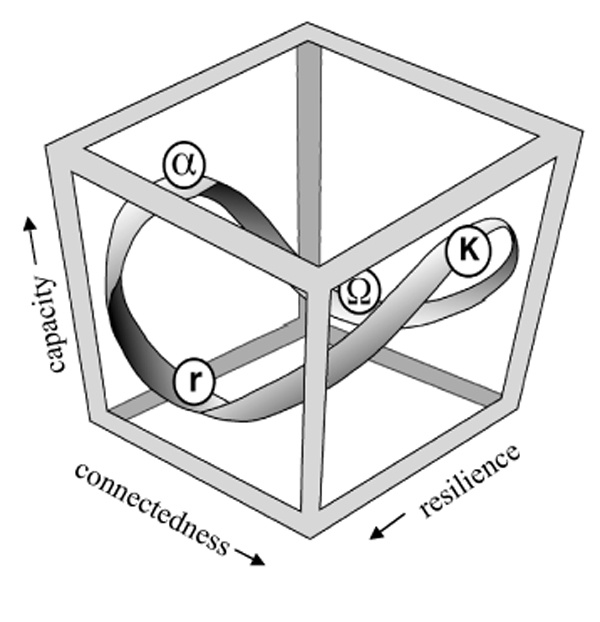
Cox is hoping we can have the radical policy change we need before progress on the current trajectory leads to collapse, which he assumes leads to anarchy and “a mad Max world.” But I think the Powers That Be, those 700+ billionaires and other assorted Mother frackers, are individually determined to keep the profits rolling in at all costs, and the world’s middle classes are in a sort of trance, vaguely thinking that maintaining their lifestyles is more important than maintaining a livable world for their kids and other species. The wealthy and corporate honchos have been working since the Powell memo to cement the reins of power into their own hands, and they have sewn it up. Therefore, it will take a collapse to have any chance of changing policy. Perhaps our best bet is to try to be ready for this collapse, working in our own locales, so that our plans are the “ideas lying around” when crisis comes.
I agree with your point about getting in readiness for collapse. It’s most likely the best we can hope for.
Commentators like Stan Cox – who are forecasting dire times ahead – get written off as scaremongers unless they weave a Hope section into their discourse. Without that element his foreboding forecast would sit uncomfortably alongside the many articles insisting that we have to work from a foundation of Hope.
Which we do. Redefining hope has become central to many peoples’ attitude as we pick our way forward through this entanglement.
Good point!
We are screwed by two groups: The too greedy for their own good using the God simple for their gain.
Pressure in the Capitalist bubble is dropping. Notice the currency manipulation in Japan.
The price was NATObedience.
It seems to me that we are already in the first stage of Catabolic Contraction ( involuntary degrowth).
it is just that it is playing out in the realm of international relations. With the West being separated from the Rest.
keep an eye out for what happens this summer with the BRICS summit on creating a new financial/ trading system that undermines the West.
Very well! I’ve worked in industry for 46 years and the waste generated in these processes in unimaginable to those who have not witnessed it.
Nothing can possibly get better, just worse as our numbers swell by billions more!
Things are going to change, they are really, really going to change, but that change will only be for the worse if humanity is allowed to swell by billions more. If over a twenty-year period a human activity’s impact is reduced by 25% on account of technology or conservation on a per capita basis but on account of population gain and bringing the poor out of poverty the per capita grows by 50% what has been gained? Nothing, it is a net loss. An example being Boeing’s 787 Dreamliner, which uses 20% less fuel per passenger mile; it takes the commercial aviation fleet twenty years to overturn, so let’s say every airliner is using 25% less fuel per passenger mile in 2050, but with the middle class growing in third world countries and trends continue the airlines will be flying 300% of the air miles they fly today, so even though each airplane will be more efficient, many more of them than there are today will still be spewing 225% of what they are spewing into the environment of what they are spewing today, which is better than the 300% they could be spewing. And to add to that, our wealthy have already started flying into space, and it takes a hundred times the amount of energy to put a pound into orbit as it does to take it to 30,000 feet.
Commercial airlines will be gone by 2040. That’s A Good Thing™.
Billionaires already have their own jets. They won’t care that they’re the only ones flying.
This is blatant ecomodernist bullshit. Many of the assumptions made in this article are not tested and very likely untrue – in fact the truth is likely to be the opposite. There is no evidence that increasing equality will reduce emissions, or any one of many manifestations of overshoot, and there is absolutely no evidence that renewable energy will avert climate disaster; in fact through its huge land use area and direct & indirect ecological effects, it is in fact likely to make climate change worse, as well as having terrible effects on biodiversity and ecosystems integrity, as well as adding to huge mountains of toxic garbage & poisoning of land, water & seas.
Also it ignores the terrible effect of overpopulation & population trajectories, and gives a free pass to rapidly increasing per capita impacts in developing countries.