

This article was produced by Human Bridges.
The famous American astronomer Carl Sagan once said, “You have to know the past to understand the present.” But can we ever know the history of human origins well enough to understand why humans wage large-scale acts of appalling cruelty on other members of our own species? In January 2024, the Geneva Academy was monitoring no less than 110 armed conflicts globally. While not all of these reach mainstream media outlets, each is equally horrific in terms of the physical violence and mental cruelty we inflict on each other.
Chimpanzees, our closest living relatives, are known to partake in violent intra-specific skirmishes, typically to preserve privileged access to resources in response to breaches in territorial boundaries. But only humans engage so extensively in large-scale warfare.
Do massive acts of intra- or interpopulational violence conform with Darwinian precepts of natural selection, or is this something we do as a competitive response to the stresses of living in such large populations? Looking back in time can help us find answers to such questions. Evidence preserved in the archeological record can tell us about when and under what conditions the preludes to warlike behaviors emerged in the past. Scientific reasoning can then transform this information into viable hypotheses that we can use to understand ourselves in today’s world.
As archeologists continue to unearth new fossil evidence at an increasing rate, so too are they piecing together the human story as one of complex interactions played out by (a growing number of) different species of the genus Homo that lived during the tens of thousands of years preceding the emergence—and eventual global dominance—of our own species: Homo sapiens. In fact, scientists have recognized more than a dozen (now extinct) species of Homo that thrived over the millennia, sometimes sharing the same landscapes and occasionally even interbreeding with one another. Millions of years of hybridization is written into the genomes of modern human populations.
Although we know very little about what these paleo-encounters might have been like, progress in science and technology is helping archeologists to find ways to piece together the puzzle of interspecific human relationships that occurred so long ago and that contributed to making us who we are today. In spite of these advances, the fossil record remains very fragmentary, especially concerning the older phases of human evolution.
First consider Homo, or H. habilis, so-named because a significant increase in stone tool-making is recognized following its emergence some 2.8 million years ago in East Africa. The evidence for the beginnings of this transformational event that would set off the spiraling evolutionary history of human technological prowess is relatively sparse. But such ancient (Oldowan) toolkits do become more abundant from this time forward, at first in Africa, and then into the confines of Eurasia by around 1.8 million years ago. Throughout this period, different kinds of hominins adopted and innovated stone tool making, socializing it into normalized behavior by teaching it to their young and transforming it into a cutting-edge survival strategy. We clearly observe the positive repercussions of this major advancement in our evolutionary history from the expanding increases in both the number of archeological sites and their geographical spread. Unevenly through time, occurrences of Oldowan sites throughout the Old World begin to yield more numerous artifacts, attesting to the progressive demographic trends associated with tool-making hominins.
Tool-making was a highly effective adaptive strategy that allowed early Homo species (like H. georgicus and H. antecessor) to define their own niches within multiple environmental contexts, successfully competing for resources with large carnivorous animals. Early humans used stone tools to access the protein-rich meat, viscera, and bone marrow from large herbivore carcasses, nourishing their energy-expensive brains. The latter show significant increases in volume and organizational complexity throughout this time period.
But were these early humans also competing with one another? So far (and keeping in mind the scarcity of skeletal remains dating to this period) the paleoanthropological record has not revealed signs of intraspecific violence suffered by Oldowan peoples. Their core-and-flake technologies and simple pounding tools do not include items that could be defined as functional armaments. While a lack of evidence does not constitute proof, we might consider recent estimates in paleodemography, backed by innovative digitized modelization methods and an increasing pool of genetic data that indicates relatively low population densities during the Oldowan.
Isolated groups consisted of few individuals, organized perhaps into clan-like social entities, widely spread over vast, resource-rich territories. These hominins invested in developing technological and social skills, cooperating with one another to adapt to new challenges posed by the changing environmental conditions that characterized the onset of the Quaternary period some 2.5 million years ago. Complex socialization processes evolved to perfect and share the capacity for technological competence, abilities that had important repercussions on the configuration of the brain that would eventually set humanity apart from other kinds of primates. Technology became inexorably linked to cognitive and social advances, fueling a symbiotic process now firmly established between anatomical and technological evolution.
By around one million years ago, Oldowan-producing peoples had been replaced by the technologically more advanced Acheulian hominins, globally attributed to H. erectus sensu lato. This phase of human evolution lasted nearly one and a half million years (globally from 1.75 to around 350,000 years ago) and is marked by highly significant techno-behavioral revolutions whose inception is traced back to Africa. Groundbreaking technologies like fire-making emerged during the Acheulian, as did elaborate stone production methods requiring complex volumetric planning and advanced technical skills. Tools became standardized into specifically designed models, signaling cultural diversity that varied geographically, creating the first land-linked morpho-technological traditions. Ever-greater social investment was required to learn and share the techniques needed to manipulate these technologies, as tools were converted into culture and technical aptitude into innovation.
In spite of marked increases in site frequencies and artifact densities throughout the Middle Pleistocene, incidences of interspecific violence are rarely documented and no large-scale violent events have been recognized so far. Were some Acheulian tools suitable for waging inter-populational conflicts? In the later phases of the Acheulian, pointed stone tools with signs of hafting and even wooden spears appear in some sites. But were these sophisticated tool kits limited to hunting? Or might they also have served for other purposes?
Culture evolves through a process I like to refer to as “technoselection” that in many ways can be likened to biological natural selection. In prehistory, technological systems are characterized by sets of morphotypes that reflect a specific stage of cognitive competence. Within these broad defining categories, however, we can recognize some anomalies or idiosyncratic techno-forms that can be defined as potential latent within a given system. As with natural selection, potential is recognized as structural anomalies that may be selected for under specific circumstances and then developed into new or even revolutionary technologies, converted through inventiveness. Should they prove advantageous to deal with the challenges at hand, these innovative technologies are adopted and developed further, expanding upon the existing foundational know-how and creating increasingly larger sets of material culture. Foundational material culture therefore exists in a state of exponential growth, as each phase is built upon the preceding one in a cumulative process perceived as acceleration.
I have already suggested elsewhere that the advanced degree of cultural complexity attained by the Late Acheulian, together with the capacity to produce fire, empowered hominins to adapt their nomadic lifestyles within more constrained territorial ranges. Thick depositional sequences containing evidence of successive living floors recorded in the caves of Eurasia show that hominins were returning cyclically to the same areas, most likely in pace with seasonal climate change and the migrational pathways of the animals they preyed upon. As a result, humans established strong links with the specific regions within which they roamed. More restrictive ranging caused idiosyncrasies to appear within the material and behavioral cultural repertoires of each group: specific ways of making and doing. As they lived and died in lands that were becoming their own, so too did they construct territorial identities that were in contrast with those of groups living in neighboring areas. As cultural productions multiplied, so did these imagined cultural “differences” sharpen, engendering the distinguishing notions of “us” and “them.”
Even more significant perhaps was the emergence and consolidation of symbolic thought processes visible, for example, in cultural manifestations whose careful manufacture took tool-making into a whole new realm of aesthetic concerns rarely observed in earlier toolkits. By around 400,000 years ago in Eurasia, Pre-Neandertals and then Neandertal peoples were conferring special treatment to their dead, sometimes even depositing them with other objects suggestive of nascent spiritual practices. These would eventually develop into highly diverse social practices, like ritual and taboo. Cultural diversity was the keystone for new systems of belief that reinforced imagined differences separating territorially distinct groups.
Anatomically modern humans (H. sapiens) appeared on the scene some 300,000 years ago in Africa and spread subsequently into lands already occupied by other culturally and spiritually advanced species of Homo. While maintaining a nomadic existence, these hominins were undergoing transformational demographic trends that resulted in more frequent interpopulation encounters. This factor, combined with the growing array of material and behavioral manifestations of culture (reflected by artifact multiplicity) provided a repository from which hominin groups stood in contrast with one another. At the same time, the mounting importance of symbolic behaviors in regulating hominin lifestyles contributed to reinforcing both real (anatomic) and imagined (cultural) variances. Intergroup encounters favored cultural exchange, inspiring innovation and driving spiraling techno-social complexity. In addition, they provided opportunities for sexual exchanges necessary for broadening gene pool diversity and avoiding inbreeding. At the same time, a higher number of individuals within each group would have prompted social hierarchization as a strategy to ensure the survival of each unit.
While much has been written about what Middle Paleolithic inter-specific paleo-encounters might have been like, in particular between the Neandertals and H. sapiens, solid evidence is lacking to support genocidal hypotheses or popularized images of the former annihilating the latter by way of violent processes. Today, such theories, fed by suppositions typical of the last century of the relative techno-social superiority of our own species, are falling by the wayside. Indeed, advances in archeology now show not only that we were interbreeding with the Neandertals, but also that Neandertal lifeways and cerebral processes were of comparable sophistication to those practiced by the modern humans they encountered. Presently, apart from sparse documentation for individual violent encounters, there is no evidence that large-scale violence caused the extinction of the Neandertals or of other species of Homo thriving coevally with modern humans. That said, it has been observed that the expansion of H. sapiens into previously unoccupied lands, like Australia and the Americas, for example, coincides ominously with the extinction of mega-faunal species. Interestingly, this phenomenon is not observed in regions with a long record of coexistence between humans and mega mammals, like Africa or India. It has been hypothesized that the reason for this is that animals that were unfamiliar with modern humans lacked the instinct to flee and hide from them, making them easy targets for mass hunting.
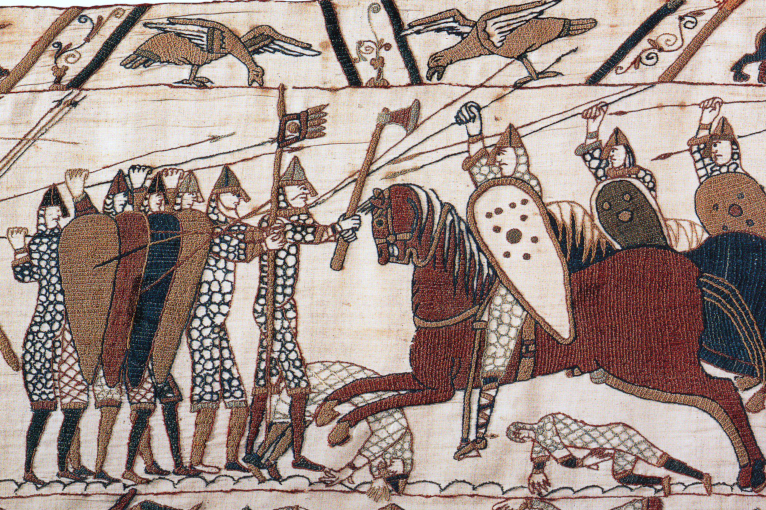
If large-scale human violence is difficult to identify in the Paleolithic record, it is common in later, proto-historic iconography. Evidence for warlike behavior (accumulations of corpses bearing signs of humanly-induced trauma) appear towards the end of the Pleistocene and after the onset of the Neolithic Period (nearly 12,000 years ago) in different parts of the world, perhaps in relation to new pressures due to climate change. Arguably, sedentary lifestyles and plant and animal domestication—hallmarks of the Neolithic—reset social and cultural norms of hunter-gatherer societies. Additionally, it may be that the amassing and storing of goods caused new inter-relational paradigms to take form, with individuals fulfilling different roles in relation to their capacities to benefit the group to which they belonged. The capacity to elaborate an abstract, symbolic worldview transformed land and resources into property and goods that “belonged” to one or another social unit, in relation to claims on the lands upon which they lived and from which they reaped the benefits. The written documents of the first literate civilizations, relating mainly to the quantification of goods, are revelatory of the effects of this transformational period of intensified production, hoarding and exchange. Differences inherent to the kinds of resources available in environmentally diverse parts of the world solidified unequal access to the kinds of goods invested with “value” by developing civilizations and dictated the nature of the technologies that would be expanded for their exploitation. Trading networks were established and interconnectedness favored improvements in technologies and nascent communication networks, stimulating competition to obtain more, better, faster.
From this vast overview, we can now more clearly see how the emergence of the notion of “others” that arose in the later phases of the Lower Paleolithic was key for kindling the kinds of behavioral tendencies required for preserving the production-consumption mentality borne after the Neolithic and still in effect in today’s overpopulated capitalist world.
Evolution is not a linear process and culture is a multifaceted phenomenon, but it is the degree to which we have advanced technology that sets us apart from all other living beings on the planet. War is not pre-programmed in our species, nor is it a fatality in our modern, globalized existence. Archeology teaches us that it is a behavior grounded in our own manufactured perception of “difference” between peoples living in distinct areas of the world with unequal access to resources. A social unit will adopt warlike behavior as a response to resource scarcity or other kinds of external challenges (for example, territorial encroachment by an ‘alien’ social unit). Finding solutions to eradicating large-scale warfare thus begins with using our technologies to create equality among all peoples, rather than developing harmful weapons of destruction.
From the emergence of early Homo, natural selection and technoselection have developed in synchronicity through time, transforming discrete structural anomalies into evolutionary strategies in unpredictable and interdependent ways. The big difference between these two processes at play in human evolution is that the former is guided by laws of universal equilibrium established over millions of years, while the latter exists in a state of exponential change that is outside of the stabilizing laws of nature.
Human technologies are transitive in the sense that they can be adapted to serve for different purposes in distinct timeframes or by diverse social entities. Many objects can be transformed into weapons. In the modern world plagued by terrorism, for example, simple home-made explosives, airplanes, drones, or vans can be transformed into formidable weapons, while incredibly advanced technologies can be used to increase our capacity to inflict desensitized and dehumanized destruction on levels never before attained.
Meanwhile, our advanced communication venues serve to share selected global events of warfare numbing the public into passive acceptance. While it is difficult to determine the exact point in time when humans selected large-scale warfare as a viable behavioral trait, co-opting their astounding technological prowess as a strategy to compete with each other in response to unprecedented demographic growth, there may yet be time for us to modify this trajectory toward resiliency, cooperation, and exchange.





Comments
We changed commenting systems on September 10, 2026 as part of a site-wide functionality and security upgrade. Your past comments have not disappeared, and you can still log in with your old Disqus account credentials if you wish. Contact us with any questions.
Are you willing to consider that we “will be warlike as long as there is competition for resources.” is normalized as a ‘reasonable’ or ‘acceptable’ way of behaving?
In other words, have we not been socialized to normalize extremist, widespread, violent behaviours firmly attached to materialism and anti-democratic political economics?
What if we chose to not engage in ‘warfare for resources’ as a celebrated form of living and made it obsolete or nearly so? There is no necessity in our current traditions of warfare violence – only a fabricated ‘necessity’ formed into human beliefs generation after generation of Homo warfarus on this War Planet. People are pushed into this savagery while proclaiming ‘civilization’.
In ecology, there’s a tenet that high-energy biomes foster competition, while low-energy biomes foster cooperation.
In the lush tropics, there may be dozens of different little furry creatures, feasting on the broad diversity of prolific primary production. Dozens of mid-trophic-level omnivores compete over the herbivores and insectivores at the bottom. Ten or more apex predator carnivores fight over those.
In arctic and alpine biomes, there’s generally only 10-20 or so herbivores, feeding perhaps a half-dozen mid-level omnivores, and perhaps only a couple apex predators — and even they “cooperate” by splitting the meagre hunting temporally, as the Snowy Owl and Ferrugious Hawk hunt by night or day.
Here’s to a cooperative low-energy future… if we don’t extinguish ourselves getting there.
Thanks for that. Cooperative low energy future….. well said.
I value eco-science in particular, however, i am not a fan of applying the ecology of non-humans to humans ( i do think we have much to learn about sociality and peace from some of our animal friends). While i also appreciate animal intelligence (sometimes quite superior to our own), i believe that humans are gifted in the intelligence department (largely through language) and have myriad opportunities to intentionally form our social order and power relations.
Despite that, we see the unfolding order of installed authoritarian power relations, social conformity to them and the burying of necessary positive possibilities under a technocratic, hegemonic and cognitive imperialism. The prevailing power of an anti-intelligence, anti-social order where installed institutions and economic processes constitute our undoing, where the imposed constraints block and reduce the power of our pro-social intelligence and our vast creativity to reform the economic politics, is literally killing us for ‘happiness’. More like an addiction than a civilization of freedom, intelligence, wisdom and compassion.
I’m not a huge fan of so-called “human intelligence.” I don’t think it’s bought us much. After we’re gone, perhaps evolution will regard intelligence as an abject failure.
My hope is that any intelligent bonobos, cetaceans, canids, etc. that arise after we’re gone will discover our remaining artifacts, and take them as a warning sign.
In My Ishmael, Daniel Quinn talks of “Erratic Retaliation Strategy” that kept an undulating peace between neighbouring tribes. This appears to be the common cultural pattern prior to the dawn of agriculture, which brought the capability to store food for more than one season, which subsequently birthed the concept of money.
Erratic retaliation can be summarized as “give as good as you get, but don’t be too predictable.” When a transgression occurred, a response could be firm or yielding, on a random basis. You don’t want to be seen as a pushover, but neither do you want to commit undue resource to what is often a minor squabble.
Such a strategy rarely resulted in many deaths, certainly not the obscene slaughter that is common in warfare since the advent of agriculture.
E.O. Wilson got this started with his argument that our eusociality and group cooperation let us move up the food chain to top predator. This results in in group cooperation, out of group violence. I suspect that’s where all the megafauna went.
Laland’s “Darwin’s Unfinished Symphony” expands on this, arguing that group culture and our ability to teach and retain culture through generations creates a next level Darwinian fitness evolution. Those cultures best able to succeed when intergroup conflict arrises will persist.
Bottom line, we wield a two edged sword, and will be warlike as long as there is competition for resources.
Fascinating article, and great discussion in Comments. Surprised there are not more!
“After we’re gone, perhaps evolution will regard intelligence as an abject failure.” Which is the point of my favorite Kurt Vonnegut novel Galapogos – It laments the problems our big brains have created and portrays a future in which they’ve been down-sized to the point where they don’t cause any trouble. I don’t want to describe the plot any more for those who haven’t read it. Let’s just say that furry swimming mammals are involved.
Life could be worse that to be swimming around, surrounded by food.
At this point, with the twin pincers of climate change and resource depletion coming hard at us, I think the best we can hope for are what Richard Heinberg called “lifeboat communities.”
Yes, the oncoming Planet of the Apes (lol) may be more more peaceful and ‘productive’ than the current War Planet we reside upon.
Yes, our human intelligence has been misused, corrupted and misdirected in so many ways…….yet, as intelligence is a creation of mind, intelligence is able to reform itself at the speed of light, if only we can get enough humans to sign on to sanity, equality, thriving and peace for all!