

Ed. note: This piece was published on Bill’s blog before the end of the COP28.
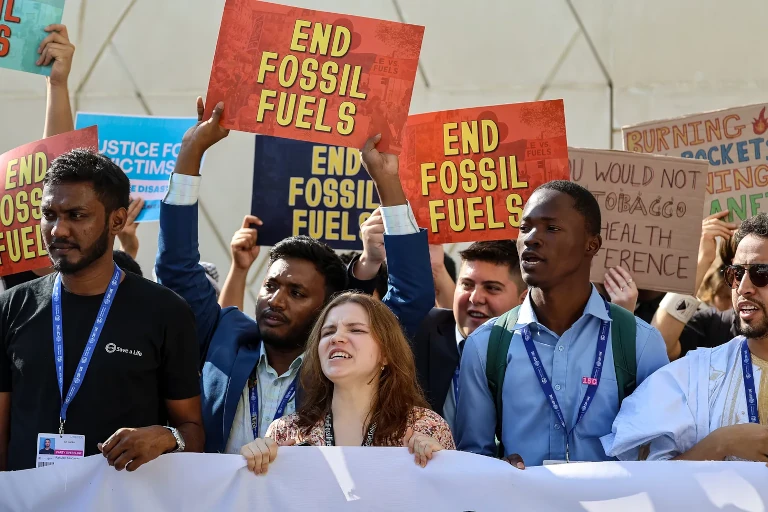
For two weeks every December, the giant global climate meeting—this year with at least 70,000 delegates, lobbyists, activists, and journalists enjoying the tacky spaceport that is Dubai—provides a cascade of feelings. This year that intensity is concentrated on a sentence in the “global stocktake” section: there’s much drama around whether it will include the phrase “phaseout of fossil fuels.” This morning’s update: Canada, gentle giant of the north, has been drafted to draft the relevant sentence.
“We have been asked by the UAE presidency to help find common language that will be acceptable to all parties,” its environment minister Steven Guilbeault told the Guardian. “This is what we will be doing in the coming days with many of our allies both north and south,” he said.
“I am confident we have to leave Dubai and Cop28 with some language on fossil fuels. Will it be everything we want it to be? We’ll have to see. Even if it’s not as ambitious as some would want, it would still be a historic moment. I’ve been coming to Cop since Cop1 in 1995 in Berlin. It would be the first time in almost 30 years of international negotiations that we can agree on language regarding fossil fuels.”
Which should tell you something about the climate negotiations, by the way: that it’s taken twenty eight annual sessions to maybe include some language about the thing that is, you know, the source of the problem is a reminder of the fundamental flaw in the whole process. It is designed less to solve a crisis than to guard the interests of the world’s powers (both political and economic) as they relate to that crisis. This week it’s the head of the Saudi delegation and the conference chair, from host UAE, who are playing the villain, but it’s always somebody. What that means is, the outcomes at COP are just a reflection of the current state of the world’s zeitgeist; if we’ve done enough work to mobilize enough people, then that political pressure is reflected in progress in negotiations.
This doesn’t mean the COPs are absurd—given the realities of power, you have to have some forum that lets the world talk things out and pressure each other, and most of the people in attendance are doing useful work. But the COP gives the appearance that it is somehow legislating, which it is not. Let’s say, for instance, that Guilbeault manages to convince everyone to include some phrase about phasing out fossil fuels into the text. It will be vague, ambiguous, unconnected to any particular time—and it will have no authority.
That doesn’t mean it’s useless—the decision, at the behest of small island nations, to include the 1.5 degree target in the Paris text arguably reoriented the way the world thought about the climate challenge, and produced real change. But it does mean that language doesn’t translate into action; it just gives activists one more weapon to use when they return from Dubai to the nations, states, cities and towns (and stock markets) where actual change does or does not get made. Canada, for instance, is currently building big new pipelines to increase its production of tarsands oil and natural gas; if Guilbeault produces good language in the draft he’ll have handed Canadian activists a cudgel with which to beat him around the head and shoulders (and its possible that that’s what he wants; he was, after all, the longtime director of Greenpeace Quebec). But it won’t produce change by itself: Alberta, for instance, continues to threaten to break up the country if any kind of cap is imposed on its oil business.
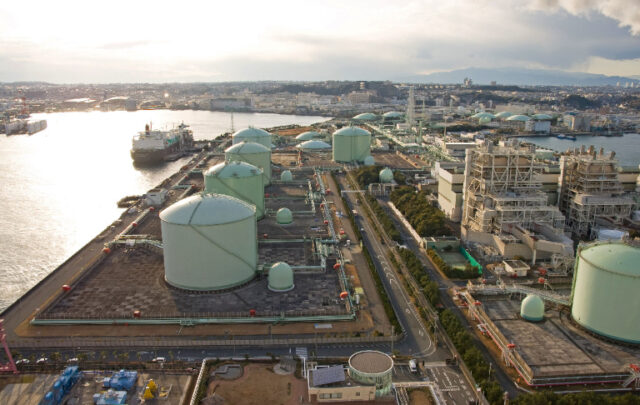
An even better example is the world’s largest hydrocarbon producer and exporter, the US of A. Our representatives to the COP—which so far have included the vice-president (Kamala Harris), the former secretary of state and now climate envoy (John Kerry), and the former chief of staff to Obama and now a senior advisor to the president (John Podesta)—may or may not sign off on “phaseout” (as I explained last week, Kerry is plumping for ‘phaseout of unabated fossil fuels.’) But even if they do, it won’t necessarily mean much—so far this same constellation of worthies has approved every single proposed new LNG export facility that now threaten a final destabilization of the planet’s climate.
And even if they did the right thing, well—one Donald Trump, currently leading in presidential polls, said last week that he would happily come to work as a ‘dictator’ on the very first day of his presidency, in order to ‘drill drill drill.’ If anyone thinks he will be slowed by the language of an agreement initialed by a bunch of functionaries in Dubai, I’d like to sell you the deed to the world’s tallest building, which as it happens is in Dubai.
So the most important thing that happened this week at the COP may have been the attack on those LNG export plans by 250 environmental groups, an attack voiced eloquently as always by Louisiana activist Roishietta Ozane, who said “there’s nothing natural about natural gas.” Say, for argument’s sake, that those groups won (and stay tuned—by next week I’ll have info on how you can help; for the moment, save up some bail money). If they did, and the Biden administration decided to halt this biggest of all fossil fuel buildouts, then the phaseout of fossil fuels would have taken an actual step. I hope every American fighting the good fight in Dubai is ready to come home and fight the real fight here.
And even if we win that fight on LNG, we still need to defeat Trump come November, or else the effort to rein in coal, oil and gas will take at least a four-year hiatus, and not just in America. Our political dysfunction is at the root of the failures of the COP negotiations (the rest of the world long since figured out that the US senate would never have 66 votes for an actual treaty, so instead we have this jury-rigged system f voluntary pledges). But we can, as Biden showed with the IRA, overcome that dysfunction from time to time; the better we do, the better the planet does.
A new poll released this morning by CNN should give us heart—it shows three quarters of Americans want government policies that would slash emissions in half this decade; I mean, damn, half of Republicans think so. That’s the result of past activism, and it shows we can win this fight. But the action is right here, and in all the right heres around the planet, as much as it is in Dubai.
In other energy and climate news:
+A perfect example of great activism paying off. In Massachusetts, which has some of the best climate organizers on the planet, Governor Maura Healey (elected in part because of her true climate bona fides) has now made it clear that natural gas will be, what do you know, phased out in the Commonwealth. As Sabrina Shankman reported in the Globe,
The Massachusetts Department of Public Utilities examined, and ultimately rejected, proposals from the utilities to meet the state’s climate objectives by replacing natural gas with so-called renewable natural gas,typically methane captured from organic materials, like landfills or livestock operations.
The DPU found that option costly, in short supply, and not a clear climate fix, though it said it may be the best option for certain industries where it’s hardest to find analternative to natural gas.
Climate and clean energy advocates cheered the news. “This is potentially the most transformational climate decision in Massachusetts history,” said Kyle Murray, Massachusetts program director at the clean energy advocacy group the Acadia Center.
Marilyn Ray Smith, of the Gas Transition Allies coalition of organizations, researchers and advocates, called it “a major step toward retiring the Commonwealth’s aging gas system.”
+Does everyone listen to David Roberts’ superior podcast Volts? I hope so—his current iteration is on a crucial topic, how to get local communities to welcome renewable energy, and since he’s Down Under currently it has lots of good advice from Aussie campaigners. And here, from veteran analyst Dan Delurey, some powerful thoughts on nimbyism, including this hopeful point:
It turns out that most NIMBYism stems from the squeaky wheel of a minority of people.
A recent Washington Post-University of Maryland Poll found that 75% of Americans would be comfortable living near a solar farm (and almost 70% say the same about wind turbines)
Turning to the inescapable political breakdown of that data, 66% of Republicans say that are OK being near a solar farm and 87% of Democrats say the same.
The poll showed similar numbers (around 70%) in each of the rural, suburban, and urban categories.
+Jim Hansen’s latest report on the state of the climate system is, um, not cheerful
IPCC’s best estimate for equilibrium climate sensitivity (ECS) is 3°C, but we show from paleoclimate data that ECS = 4.8°C ± 1.2°C, which excludes 3°C with > 99% certainty. ECS includes only “fast” feedbacks that occur in response to climate change, the most important being changes of atmospheric water vapor, clouds, and sea ice.; it excludes “slow” feedbacks such as change of ice sheet size and methane (CH4) released from melting permafrost or methane hydrates. Nevertheless, ECS is the proper sensitivity to employ in analysis of human-made climate change to date, because the ice sheets have not yet changed much in size and any slow feedback release of GHGs is accounted for (treated as a climate forcing) in GCM simulations based on measured GHG changes.
Rough translation: the planet will warm even more disastrously than the already disastrous official estimates from the IPCC. You’d have lost a lot of money betting against Hansen over the years.
+A new movie, Finite, chronicles the climate struggle in Germany. Trailer here

+A new investigation of the big Canadian investment firm Brookfield finds some serious greenwashing underway. Meanwhile, at the other end of the economic scale, here’s a penetrating account of what it’s like living next to, and fighting, a pile of toxic coal ash
+Some of the most important documents at each COP come from Tom Athanasiou and his colleagues in the Eco-Equity project. This time they show how an equitable fossil fuel phaseout would actually proceed
To limit warming to 1.5°C and support a globally equitable transition away from fossil fuels, the report argues that no countries can build any new fossil fuel extraction infrastructure, and that wealthy fossil fuel producers whose economies are less dependent on fossil fuel extraction, such as the USA, UK, Australia, Germany and Canada, must phase out all fossil fuel extraction by 2031 at the latest, while also providing significant financial support to poorer countries that are more dependent on fossil fuel revenues and employment.
The research shows that the least dependent fossil producers must phase out extraction by the early 2030s, while poorer countries highly dependent on fossil-fuel related revenue and jobs can take until 2050. In all cases, these phase out deadlines come much sooner than governments are currently planning for. However, this is the only way CO2 emissions can be kept within the nearly depleted 1.5°C budget. The stringency results not from equity constraints, but from the extremely limited remaining carbon budget consistent with the 1.5°C goal.
+The Editorial Board of the Los Angeles Times has really become a towering voice for change; here it takes on the huge state pension funds that continue to invest in fossil fuels. It’s a great editorial because it doesn’t let them get away with their own attempt at greenwashing:
Last month CalPERS, which manages a portfolio of more than $462 billion, announced a new sustainable investments strategy that seems designed to address those calls, but not satisfy them. It includes a plan to more than double investment in low-carbon assets and other climate solutions to $100 billion by 2030. There’s a commitment to make “more selective investments in high emitting sectors” and to hold companies accountable for reducing their carbon footprint, by establishing a process to exit those without “credible net zero plans.”
It’s good to see the nation’s largest public pension fund taking initial steps to shift its portfolio away from some of the highest-polluting companies that refuse to switch to cleaner technologies. But the approach is far too timid, incremental and ill-defined, and doesn’t go nearly far or fast enough to respond to the scope and scale of the climate crisis. And it doesn’t change the need for a real divestment mandate.





Comments
We changed commenting systems on September 10, 2026 as part of a site-wide functionality and security upgrade. Your past comments have not disappeared, and you can still log in with your old Disqus account credentials if you wish. Contact us with any questions.
Fair point about the COP process. It isn’t, and never could be, anything other than an incremental way to build consensus. USA politics aside (what a depressing topic, even for those of us who live elsewhere), the core question boils down to: what replaces the fossil fuels?
There are 3 basic answers:
1. Nothing, as we phase down fossil fuels we’ll just have to use less energy, down to a floor level defined by what ‘renewables’ can be built out and sustained through consuming part of their own output.
2. Nothing, we will use everything we can until it’s done, without restraint. This is the default position today.
3. A combination of other energy sources, coupled with energy storage. So, ‘renewables’ (perhaps ‘replaceables’ is more accurate), nuclear, tidal and geothermal. New hydro might be more useful for buffer storage than primary generation. Biomass will likely be too much in demand for large-scale burning. Problems: The ‘energy trap’, where we need to invest energy in building out all these new energy sources (see 1 above). Long build-out time – how many ‘renewables’ and nuclear power stations can be built in any given year (see 1 above). Lower energy return on investment (see 1 above).
So, is Bill right to think that campaigning on reducing fossil fuels will eventually force change, by shifting the Overton window? If so, what does victory look like?
Reducing FFs would reduce ‘real’ GDP – a relationship with almost perfect correlation. Reduced real GDP will sow chaos in the finance system, with likely major impacts on society including poverty, hardship and turmoil. Nobody will want that, not least because it would act against continued victory. Thus elites and the majority of consumers alike will surely resist any voluntary action which reduces real GDP with all their might. Involuntary reduction lies ahead through depletion and geopolitical change, of course, but nobody needs to campaign about that.
In a prefect world, governments would act top-down to phase out FF and mitigate the effects on society. I can’t think of any large political structure which could even discuss delivering such a radical programme.
How long can our collective cognitive dissonance continue? That is, we know we need to stop burning fossil fuels, but can’t see a way to do that while maintaining our consumption. While the current finance system is in force I can’t honestly see any positive way out. The system does not price pollution, so forces maximum extraction. If it did meaningfully price pollution, then that would crash the system through negative feedback loops, with effects as described above under ‘victory’.
Rather than top-down, how about bottom-up? Opting out and setting up non-extractive alternatives is one positive step that individuals, or even whole communities, could take. But as other bloggers have ruefully noted, opting out in a world dominated by the current system is no easy path. In the short term at least, those who opt out will be weak, vulnerable and poor. Still, it’s probably all that most of us can usefully do, given the unclear and possibly perverse impact of campaigning against the symptoms of our current predicament.