

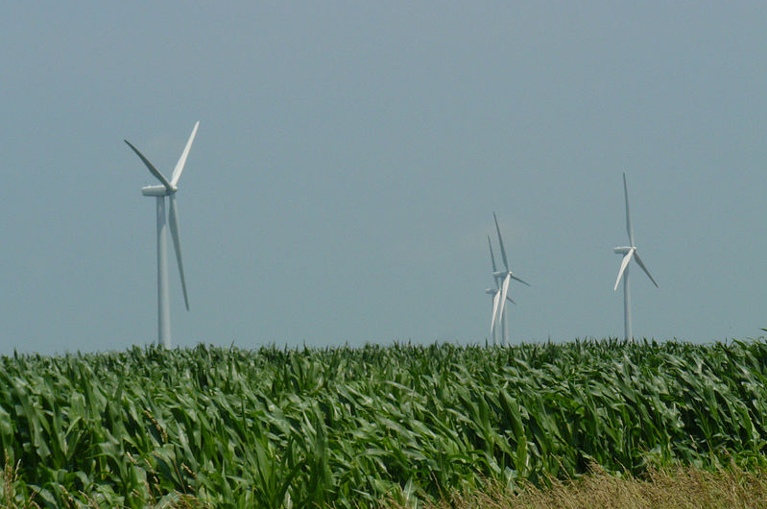
In a Pew Research Center poll early last year 69 percent of American adults said that they “prioritize developing alternative energy sources, such as wind and solar, over expanding the production of oil, coal and natural gas.” Some 72 percent believe the federal government “should encourage the production of wind and solar power.”
So why are there no working wind farms in the waters of Great Lakes, one of the best wind resources in the country? You don’t have to take my word for it that this area is a prime location for wind turbines. Here’s what the National Renewable Energy Laboratory said in a June 2023 news release about its latest report on offshore Great Lakes wind resources:
Wind resource assessments estimate that the Great Lakes’ potential power capacity is 160 gigawatts for fixed-bottom wind turbines and about 415 gigawatts for floating wind energy systems. That wind energy resource potential exceeds the annual electricity consumption in five out of eight of the U.S. states bordering the Great Lakes.
Dig a little deeper into the report and you’ll find that Wisconsin’s share of potential offshore Great Lakes wind power production could exceed six times the state’s current consumption of electricity and Michigan’s share of its potential Great Lakes output could exceed 18 times the state’s current consumption. That’s a lot of electricity, and it’s all renewable.
For a society so favorable to wind power—at least when Americans talk to pollsters—it seems beyond strange that as of May 2023 the country has exactly 30 megawatts of operating offshore wind power off the coast of one state, Rhode Island. There are 800 megawatts under construction off Massachusetts’ shoreline. A megawatt is a million watts. That seems like a lot of capacity unless you consider that total U.S. generating capacity is over 1 million megawatts.
Inside Climate News decided to look into what halted the Great Lakes wind projects that seemed so promising just a decade ago. Among the many objections, one issue kept coming up: People don’t want to look at wind turbines dotting the Great Lakes. So visceral is this objection that even projects that promise to put turbines out of sight of land are dismissed.
Europeans are now used to seeing turbines in waters along the continent’s coastlines. Americans cannot seem to get used to the idea, so they work to block offshore development everywhere they can.
I have said in the past that the only way our current global society could operate on renewable energy exclusively would be first to reduce dramatically our use of energy overall, perhaps by 75 to 80 percent. This would involve major retrofitting of buildings of all types, the broad use of energy efficient design in all products, the banning of unnecessary energy use—there would be a big fight over what’s “unnecessary”—and caps on overall energy use. Then, we might have to get used to not having electricity 24/7 in the amounts we desire, at least until battery technology to store enough electricity is perfected. My premise is that it will be impossible to supply the amount of energy currently supplied by fossil fuels using renewable sources alone in any time frame that allows for a gradual energy transition (that is, before fossil fuel supplies decline and climate change becomes a possible extinction event).
Even if global society were willing to make such an accelerated transition and reduction in energy use—which seems extraordinarily improbable and also unfair to those already living with very little exogenous energy—the resistance which citizens are mounting in the United States and other places to wind power would almost certainly make the dream of a renewable-energy powered society a dead letter.
For however much a renewable energy transition is touted in the media, there is no transition taking place. Renewable energy is adding to our energy production capacity, but it is not leading to an overall reduction in fossil fuel use. In fact, fossil fuel use continues to climb.
I am convinced that this strange state of affairs persists because most citizens and most leaders have no idea how severe the risks are for global society, risks relating to climate change and energy depletion. I’m skeptical they would rally to a real solution even if they understood the scale and urgency of the problem because a real solution would involve considerable material sacrifice in the short run.




Comments
We changed commenting systems on September 10, 2026 as part of a site-wide functionality and security upgrade. Your past comments have not disappeared, and you can still log in with your old Disqus account credentials if you wish. Contact us with any questions.
I'm late to this discussion, but as usual, dismayed by all the commenters who can't accept that "renewables" are a major blight on natural scenery and some of us still have aesthetic values.
Industrial wind turbines, which now seem to average around 500-feet tall, are literally the most visible energy sprawl ever invented. The reason they need so much space become obvious when you study the low density of air vs. water (for hydropower dams). Wind turbines are merely air dams, dispersed much more visibly. Lakes at least exist in nature, though I'm not calling for more dams.
Most talk of wind power NIMBYism is tribal bias from an oddly morphed crowd that used to protest things like ski lifts, phone towers and even billboards. Smokestacks as well; add 3 blades and what would those look like? Suddenly not ugly? Do you think "beautiful" wind turbines could even exist without fossil fuels? Peak Oil (Permian sunset) will test that soon enough.
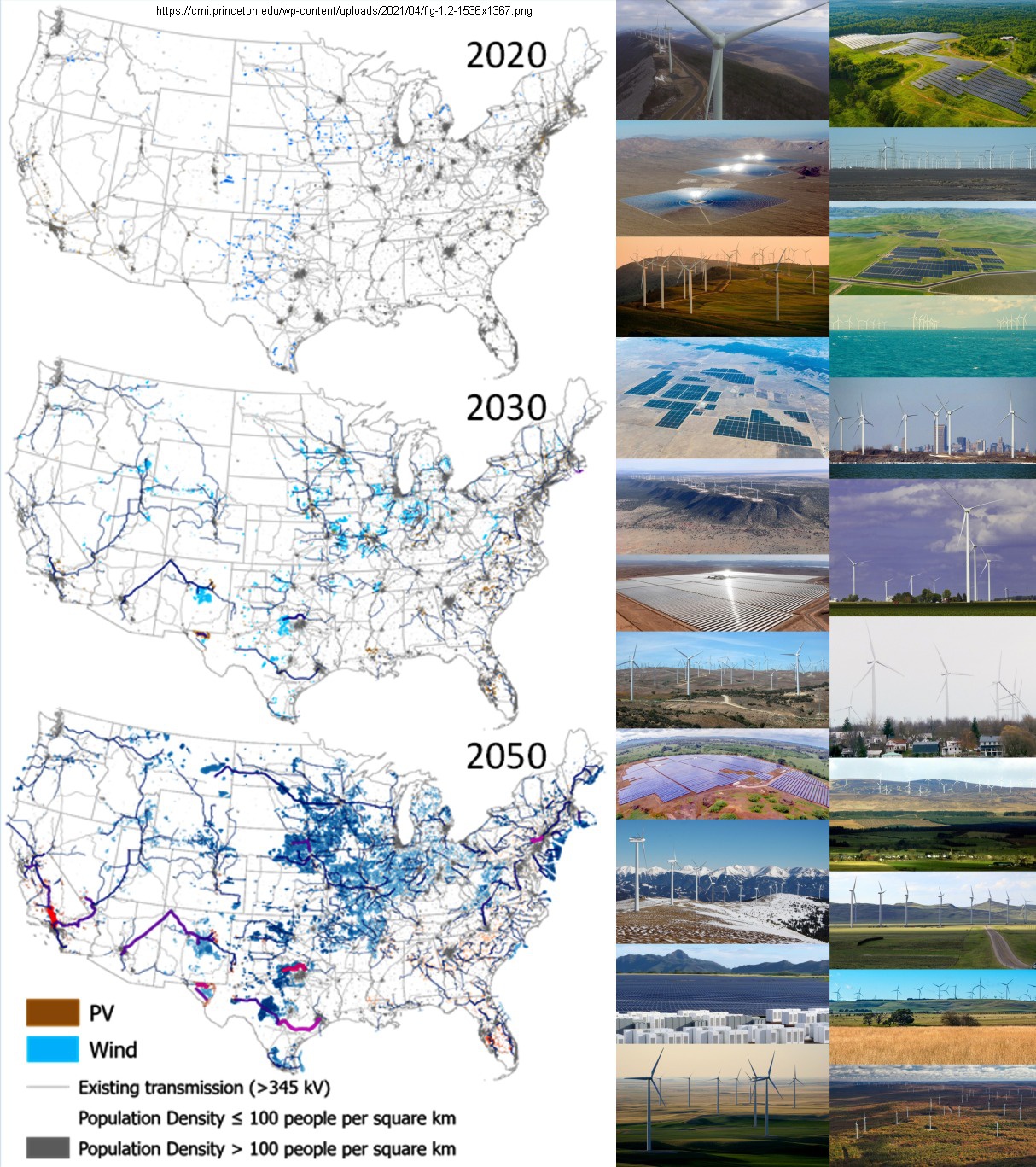
Elsewhere, I've gone into greater depth on this topic (e.g. Windschmerz) but attached a photo collage showing how much land "clean energy" would use if the most zealous plans succeeded and nuclear power didn't put a stop to the stark, whirling insanity.
One commenter called wind turbines a "tiny aesthetic problem of barely visible windmills" and I wonder if he/she was writing from another planet? Speaking of that, look up Mars Hill, Maine. One of the first places in America to catch the morning sun looks like a punker's spiky hairdo with red lights flashing all night. Repeat that on countless prominent ridges and you have what modern Greens call "progress."
I'm not a tool of Big Oil or a global warming denier, just a lamenter of what Big Wind (and solar to a lesser degree) has done to our dwindling natural scenery and quietude. And some quasi-environmentalists want to build 10 times more of it all over the world.
What happened to Tread Lightly, folks? We need more small-footprint nuclear power, made as safe as possible, but we're still probably up a creek after oil production peaks, since it builds all this stuff.
"I'm probably the exception, but I think wind turbines are elegant and aesthetically appealing."
In what numbers are you referring to? You mention "a wind turbine" and "the wind turbine" as it they barely exist in large quantities. The U.S. alone has over 76,000 wind turbines so far! I think the world has somewhere around 400,000; harder to track than using the USGS database map for America's wind energy sprawl.
That's not a satellite map I'd be gloating over, since each machine can be visible dozens of miles away on the ground. They affect much wider areas than where they're physically installed, plus they require new access roads that encourage ATVs and other invasions of open space and quiet. They rarely replace coal mining and drilling scars since they can't be built without adequate wind, which often means maximum exposure on specific ridges.
The UK's Paul Kingsnorth makes some of the most compelling aesthetic arguments against Big Wind, and he lives on a relatively small island already saturated with them. Germany is even denser with them, and Energiewende got a reality check when Putin withheld natural gas that props up the illusion of reliable wind power.
Thanks for your comments, FP.
Just to let you know, we limit the amount of comments in a time period so we don’t get overwhelmed.
Also we try to keep comments responsive to the particular issue under discussion.
Thank you
No. People who actually respect what's left of nature don't pretend that massive machine-sprawl is easier on the eyes than natural vistas, already under assault from too many lower-lying structures like roads and houses. Big Wind is literally urban sprawl made vertical, where it once lurked in transmission towers and pipelines that blend much better with landscapes (not being stark white or 500 feet tall).
Do you get outside much, or ever drive through miles and miles of wind turbines on horizons? Based on your other comments, you have a low understanding of how much land is already used for industrial-scale wind & solar projects (see the USGS Wind Turbine Database, currently showing over 76,000 of them). You seem too obsessed with fossil fuel conspiracy theories to notice that Big Wind and Big Oil are highly intertwined. Big Oil builds, maintains and backs up Big Wind (w/natural gas, typically).
There's an unreachable Green tribal mindset full of heroic thinking, i.e. "We're fighting Big Oil and you must be a global warming/pollution denier if you don't agree wind turbines are magnificent!" In reality, you're just abetting and extending fossil fuels with the worst visual invasion of open space Man has ever created. Those machines are so stark and glaring it's as if some are blind to their very existence, refusing to admit what's going on. Their red flashing FAA lights offer no relief after dark, turning once peaceful nights into what resembles alien landing strips. This is impossible to miss if you travel outside of big cities through wind zones.
The book (better than the movie) "Bright Green Lies" goes into great detail on "renewables" hypocrisy, and American Indians are increasingly among your NIMBYs, resentful of "clean energy" projects greenwashing their ancient lands. Find a PDF called "Room For a (Sacred) View? American Indian Tribes Confront Visual Desecration Caused by Wind Energy Projects." That piece is from 2014 and a lot of energy sprawl has invaded global landscapes since then.
"But–at least here in the US–there is still PLENTY of room to add more renewable energy without the intermittency problem being that big a deal. I think there are always people who think they should not have to be impacted by a tiny aesthetic problem of barely visible windmills…"
Are you blind or partially blind? "Barely visible" is a blatant falsehood, and "PLENTY of room" ignores the aesthetic problem that you wish-away with that lie. There's also the noise & infrasound problem that rural people constantly bemoan (because it's very real).
Start with an Image Search for these terms to debunk your "barely visible" claim: wind turbines mountains/desert/prairie, then study the USGS Wind Turbine Database, which shows over 76,000 "barely visible" gigantic machines as of August, 2025.
Then move on to the future of this sprawling, anti-environmental invasion by studying the Princeton-Andlinger Net-Zero America 2050 projection map, literally blanketing every windy area in the U.S. with wind turbines. If that much industrial scenery doesn't bother you, I'm guessing you're happy living the rest of your life in some urban concrete canyon.
Nuclear power is the small-footprint way to cover electricity demand, but once oil peaks (could happen in U.S. by 2027 per CEOs) we'll start to see the folly of "100% renewables" erode as it get costlier to build and maintain them, and nuclear also has high dependency on fossil fuels. It's unlikely there will ever be a miracle battery with the energy density to replace oil's many portable uses, and then there's all the lubricants and fertilizers made from oil and gas, plus plastics, medicines and all the rest.
The global economy is just far too big, built on fossil fuels, for anything but fossil fuels to run it without major degrowth.
I think it’s good to mention that California is 4 years ahead of it’s Kyoto/Paris commitments. While EVs are only about 5% of the cars on California’s roads, renewable diesel (a better version of biodiesel) accounts for 50% of all diesel use in the state. According to CARB (California Air Resources Board), renewable diesel and ethanol (biofuels) are the number one reason we are ahead of the Kyoto and Paris goals. And biofuels can/are made from waste, thus solving two major problems at once.
If it’s any consolation Kurt, it’s exactly the same here on the Isle of Man, which is a rocky, windswept island in the middle of the Irish Sea. It would be perfect for developing wind power and setting an example to the rest of Europe except that people don’t want to spoil the view. So 90% of our electricity is generated by a gas turbine which uses natural gas imported by pipeline from the UK, and there isn’t a single wind turbine of any significant power anywhere on or near the island.
The problem with this thesis is that there are new fossil fuel projects going up ll the time, people do object to them, but that rarely stops them. There’s something else going on here, NIMBYs are being pointed to as the reason the wind and solar projects don’t go forward, but it looks to me like money and behind-the-scenes push from the fossil fuel players has more to do with the failure of renewable projects.
Ah! If only renewable energy were possible! (When people say renewable energy, they’re thinking about drop-in replacements for hydrocarbon fuels; like that teaser picture of industrial-scale wind power.) As an off-the-gridder myself, energy is the LEAST of my problems. The biggest ones are two: food supply (thank you diesel trucks) and medical care (thank you a host of all the worst sorts of high-energy things you care to talk about).
I’m probably the exception, but I think wind turbines are elegant and aesthetically appealing. Whether one agrees or not, I would like to think that comparing the visual “un-appeal” of fossil fuel based energy plants with a wind turbine would get votes in favor of the wind turbine. Given that we’re all energy users to some degree, we have to accept responsibility for the full impacts and choose the least harmful (scenically or otherwise) options.
Another issue is “renewable” energy. What a vague, feel good, industry co-opted and generally useless word. What we’re talking about largely (I know geothermal, etc., will help) is solar energy, which is ongoing and we should speak in those terms. In effect, solar panels, wind turbines, plant-based energy (which we as living beings rely on directly and indirectly), etc., are means for harvesting energy from the sun’s continued output. Understanding the future of energy through the reality and metaphor of harvesting is a far more useful construct I think. And up to a couple hundred years ago, harvesting energy (directly and indirectly) was largely the only option. Fortunately we know have the technology to make it a much more efficient process, “it” being capturing, concentrating and distributing this energy.