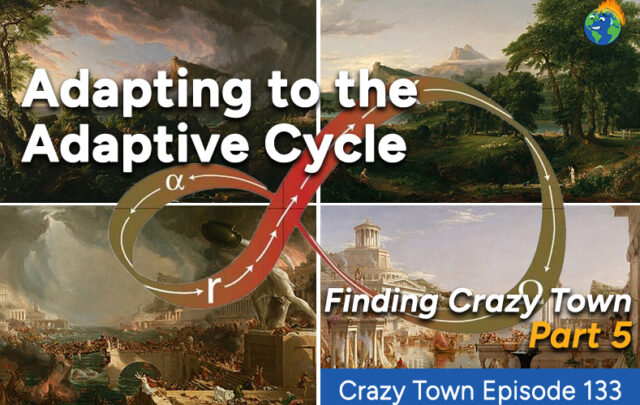
Just how much has the extractivist growth mindset come to dominate Phoenix and other cities in the desert Southwest of the United States? Prepare to turn your indignation meter up to 11 as Jason, Rob, and Asher consider desalination, pipelines, and the folly of pursuing infinite growth in a dry climate.
Warning: This podcast occasionally uses spicy language.
References:
Asher became the Executive Director of Post Carbon Institute in October 2008, after having served as the manager of our former Relocalization Network program. He’s worked in the nonprofit sector since 1996 in various capacities. Prior to joining Post Carbon Institute, Asher founded Climate Changers, an organization that inspires people to reduce their impact on the climate by focusing on simple and achievable actions anyone can take.
Related Articles
'SELECT SQL_CALC_FOUND_ROWS wp_posts.ID
FROM wp_posts LEFT JOIN wp_term_relationships ON (wp_posts.ID = wp_term_relationships.object_id)
WHERE 1=1 AND wp_posts.ID NOT IN (3498777) AND (
wp_term_relationships.term_taxonomy_id IN (3,4,5,8997,46432,47210,47212,47214,47441,47503,47544)
) AND wp_posts.post_type = \'post\' AND ((wp_posts.post_status = \'publish\'))
GROUP BY wp_posts.ID
ORDER BY wp_posts.post_date DESC
LIMIT 0, 3'
By Alex Leff, Resilience.org
We travel to Uganda to speak with human rights defender, environmental activist, and community organizer, Gerald Barekye. Gerald works with communities in oil-affected regions to support those most impacted by environmental degradation and fight for both ecological and human rights.
April 28, 2026
By Nate Hagens, The Great Simplification
In the first instalment of a new series on thinking about the future, Nate Hagens argues that most debates about what lies ahead are shaped by a single competing narrative. He introduces “scenario thinking” as a way to hold multiple possible futures at once, and explores why this is psychologically and culturally difficult in practice.
April 28, 2026
By Reynard Loki, Danica Tomber, Independent Media Institute
Studies show a steep decline in nature-related language, from books to music. Now, projects like children’s books, citizen science platforms and everyday practices like gardening and birdwatching are helping rebuild our ecological vocabulary.
April 27, 2026