Few things I’ve written have garnered quite the enthusiasm as my profile of Millan Millan. People seem to respond to this man, his story, his elegant scientific work in the Mediterranean, his personal travails at being ignored by the climate orthodoxy and his unique and poetic way of explaining the science. As a poet, I am especially charmed by fact that as a boy wandering the Mediterranean hillsides with his father, his father pointed out cloud patterns that he would eventually become the focus of his career, and from which he would gain breakthrough insights. Yes, his father literally pointed to his destiny.
In a sense, the profile lays the backdrop for multiple lines of further inquiry. For example, the observation of his mentor, Ted Munn, that we’ve changed Earth’s landscapes so profoundly we lack a true climate baseline. What would it take to reconstruct such a baseline? Doesn’t this imply an urgent need to respectfully consult indigenous people regarding pre-contact conditions? And what about the split, in the late 1980’s, between the biology-oriented IGBP and the physics-oriented IPCC. How do we now reintegrate the science so it reflects the climate more holistically? After all, the Holocene literally means “time of wholeness.” And how do Millan’s insights about the Western Mediterranean Basin apply to other parts of the world? Recall that in 1995, when Millan first presented his results in California, a regional forest service official remarked to him “if what you say is true California is in a lot of trouble in 20-25 years.” Thus, another question: How long can we afford to ignore Millan’s insights?
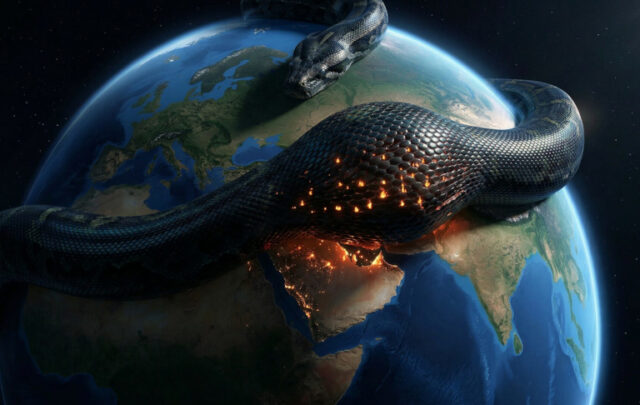
All these topics merit future posts, but it’s his conception of a “two-legged” climate—a leg for land disturbance and hydrological effects (land-use leg) and a leg for greenhouse-gasses and the greenhouse effect (emissions-leg)—that I want to reflect on a little more here. It was indeed a stroke of brilliance for Millan to frame the climate in such a way, for it brings the two aspects of climate together rather than apart, as reductive science tends to do. But most importantly, it joins them to something larger, the body, which in this metaphor is the Earth. So let’s take a brief walk on these two earthly legs of climate and see where they lead us.
Our first step of course is on the land-use leg, and we step a good ways back in time, to around 8,000 years ago when large numbers of humans leave the nomadic path of hunting/gathering to begin what we call the agricultural revolution. By today’s standards the changes occur at a leisurely pace, but as the cities grow and the plowing, deforestation and grazing spread, climates gradually collapse to desert around the world, particularly in the Middle East, North Africa and the Mediterranean but also Western China and Northern India. A time-traveler passing by these places could shake their head and utter the old adage, “desert follows the plow.”
Then in the late 1800’s, with the invention of the coal powered steam engine, followed soon by the internal combustion engine, the emissions-leg steps into the picture. Industrial nations begin belching carbon into the atmosphere and CO2 concentrations leave their long, comfortable Holocene medium of 285 ppm and skyrocket to the current 422 ppm, the highest level in over four million years, hitching the planet to a trajectory completely foreign to human experience.
I’ve suggested a sequential aspect to this journey, first the land-use leg and then the emissions-leg, but it’s actually more complex than that, for the land-use leg didn’t end when the CO2-leg began. Rather, it accelerated. Chainsaws replaced hand saws, followed by machines that could cut, strip and buck a tree in a matter of minutes. Roaring tractors replaced plodding oxen and single bladed plows stretched to long rows of slicing disks. Modern highways, parking lots and urban/suburban sprawl covered once-living landscapes, as mines pocked the continents to feed the frenzy. CO2 emissions weren’t the only thing surging, so was land destruction, wrecking water cycles—the true green infrastructure of climate—around the world.
And yet the official view still only recognizes the emissions-leg as a cause of climate change. It’s like a pogo-stick, pounding and pounding on CO2, beating the drum for a new, accelerated wave of industrialization. Further, those who question the orthodoxy, or suggest a different formulation, are treated as climate deniers.
But here Millan’s two-legged formulation again proves its value, for you can’t make that claim against the two-legged perspective, as the emissions-leg is right there, clearly seen and definitely not denied. In fact, if there’s any climate denial at work here, it’s from the one-legged, CO2-only perspective. By either ignoring the land-use leg of climate, or demoting it to “mitigation factor,” its proponents effectively deny a critical form of climate change.
Should we blame science for this? I don’t think so, certainly not scientists themselves, most of whom are doing their best to make sense of an incredibly complex phenomenon using the most modern tools at hand, reductive as they may be. Arguments within the scientific world don’t determine narratives. Political and economic powers do. And those powers clearly love the one-legged approach to climate. Why wouldn’t they? It not only leaves the industrial growth trajectory unexamined but gives it a whole new rationale: to save the climate through “green” technology. Al Gore’s “Inconvenient Truth” might be better called an “Incomplete Truth Told in the Most Economically Convenient Way Possible.”
The real inconvenient truth is the land-use leg. For when land destruction is fully recognized as a cause of climate change, the “green” energy narrative falls apart. Suddenly all the industrial expansion, and the land-loss that comes along with it, looks not only ecologically heartless, but climatically incoherent. It’s like robbing Peter (the land-use leg) to pay Paul (the emissions-leg.)
So where do we go from here?
Let’s start walking again. Where can we go on this round and circling Earth? There really is only one place: here. Here and here and then here again, rolling forward to where we began, gaining knowledge and understanding as we go. The last few decades have seen enormous strides in our understanding of life on this planet and how it sustains not only the climate but itself. James Lovelock and Lynn Margulis showed how the Earth is like a single organism, self-regulating and beautifully interconnected. Peter Wohlleben and Suzanne Simard revealed how forests, elaborately connected through underground mycelial networks, are more like cooperative communities than the tree vs. tree battlefields assumed by decades of disastrous forestry practice. Microbiologist Walter Jehne showed how living soil is like a sponge, capable of storing and caretaking the very font of life: water. And Millan Millan delineated how living landscapes create and maintain the climates we depend on.
I could go on for pages citing other scientists and their insights about how life works on this planet, how interconnected, intelligent and capable it really is. And I could add many more pages citing the insights of indigenous peoples, which presaged modern science by centuries. They all point the same direction, toward life and the need to respect and learn from it, toward what we could call an Earthward turn.
Or we could continue on the path we’ve been on, the path of away. Away from Earth toward our own mirror, away from the steady, indefatigable genius of life, toward the ever accelerating, profitable inventions of technology. The planet is just barely surviving this later trajectory, and now human culture seems to be unravelling as well. It doesn’t take a rocket scientist to see where we are headed.
The Earthward turn is the inevitable turn. We are on that path whether we recognize it or not. Breath by breath we are reminded. How much better to not only recognize it but choose it. All it takes is a little wisdom, a little patience, a little humility. And perhaps more than a little courage.
And there’s no time to waste. As Millan says, “once you hit rock you’re done.”