

This article is part of openDemocracy’s new series on the care crisis that explores the roots of the problem and inspiring alternatives.
The UK’s care crisis is just one facet of a much bigger problem.
Our economic systems are designed very well to enable the accumulation of wealth for the already affluent. They are not adept at protecting and promoting the right to live a dignified life.
The global expression of this systemic failure is most evident in the climate crisis. Corporations have known, for decades, that fossil fuels are contributing to warming. They have consistently failed to act in accordance with warnings and continue to actively promote misinformation. States also continue to defer action, and instead subsidise fossil fuel companies.
While many families are, rightly, concerned about the rising cost of living and their access to health and social care, the consequences of climate change are also profound. Nearly half the world’s population is already vulnerable to climate change impacts. Damaging coastal erosion in Wales, droughts in the Horn of Africa, storms in the Pacific, wildfires in the US and Australia, floods from England to Pakistan, rising temperatures and seas, toxic air and the spread of disease threaten us all.
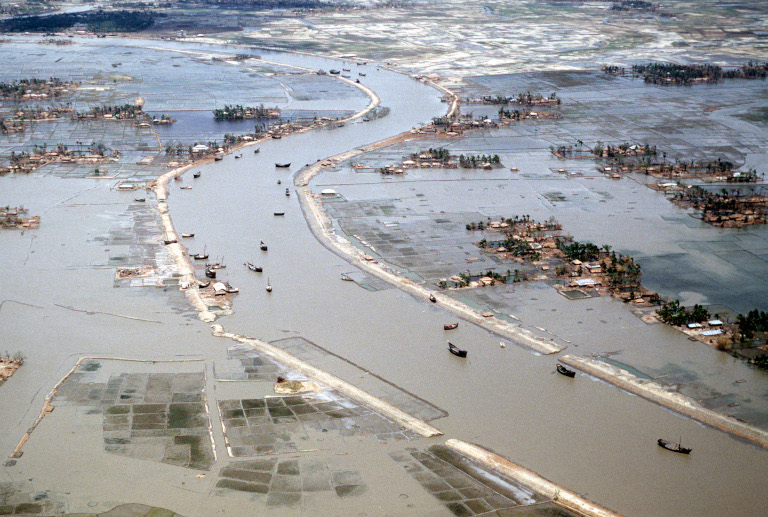
Climate change is taking away our capacity to breathe, eat, drink, and live safely. Homes, schools, healthcare facilities and businesses are being torn apart, crops are failing, hunger and displacement is spreading. Women travel further and further to access clean water. In parts of Bangladesh, where crops fail as salty water encroaches on land, men move to find work in the sweatshops that line the cities. Women are forced to try and maintain subsistence farming in harsh conditions, while continuing their unpaid care labour. When homes suddenly fall into riverbanks, children have been left orphaned or with permanent disabilities.
Care and climate are interlinked. Expanding reliance on fossil fuels contains the signature of a system that prioritises profits for the perpetrators of planetary distress, over ensuring our collective well-being. These multiple crises reveal the need to rethink how we got here and build new ways of working, caring and being, to ensure we can all thrive.
Our current global economic inequities are rooted in multiple injustices, not least the way that our care systems rely on unpaid labour, predominantly by women. If we (unfairly) valued unpaid care work at a minimum wage level, its contribution to the global economy would be at least $10.8tn a year, more than three times the size of the global tech industry.
At the same time, neocolonial trade and investment agreements continue to extract wealth and resources from the Global South. This extraction sits upon violent colonial plunder, slavery, and exploitation. Territories were taken, and forests and mangroves destroyed to make way for quarries, plantations, docks and railways, built to funnel wealth. While tens of millions of people died, and others were enslaved or forced into ruthless work, wealth accumulated among a small bubble of elites in Europe and funded industrialisation.
Early industrialisers are responsible for around 90% of excess emissions, while the rest of the world hosts approximately 85% of humanity. Wealth extraction and exploitation in the Global South has rendered many communities exposed to climate impacts made inevitable by the emissions they did little to cause.
Yet at the very time that infrastructures of care should be developed further, other pressures are mounting. Some countries allocate more to repaying loans than to healthcare, education and environmental or social protection measures. Trade and investment agreements prioritise the profits of mining companies and pharmaceuticals over the needs of people. British aid funds have privatised education abroad, rather than investing in accessible training that can train fossil fuel workers and others in the skills necessary for a just transition.
Mainstream climate solutions repeat the patterns of exploitation and extraction that got us into this mess. Biofuel and natural gas projects have been described as “worse than the disease”, with allegations of land-grabs and deforestation increasing food and water insecurity and emissions across Latin America, South East Asia and Africa. Geothermal initiatives have displaced Indigenous peoples such as the Maasai in Kenya from their sacred territories. Carbon markets and carbon capture and storage plans distract from the imperative to phase out fossil fuels.
The climate crisis provides an existential limit to centuries of failing to centre care. Every increment of warming brings more damage: two billion more people will be subjected to food, water and heat stress, severe drought, and displacement at 2°C compared to 1.5°C.
But it’s still not too late. Centring energy for the provision of the services and activities that would sustain us all well – rather than the profits of a minority – will keep us on track to limit warming to the safest levels still attainable. We could democratise renewable energy generation. We could have a food system that nourishes all. We could build homes and transport systems that need much less energy and which can withstand increasingly strong storms, floods and wildfires. Displaced communities could be ensured dignified lives in new places – and of course, we’ll need to improve health and social care protections for all.
What these measures have in common is that they’re all about strengthening our capacity to care for one another. We urgently need them, to ensure we can cope well with the accelerating shocks and changes to come.
Teaser photo credit: Flooded villages and fields around a river in Bangladesh the day after the 1991 Bangladesh cyclone had struck the country.. By Staff Sergeant Val Gempis (USAF) – Image from the Defense Visual Information Center, ID number DFST9206136. Original image description here., Public Domain, https://commons.wikimedia.org/w/index.php?curid=1701157





Comments
We changed commenting systems on September 10, 2026 as part of a site-wide functionality and security upgrade. Your past comments have not disappeared, and you can still log in with your old Disqus account credentials if you wish. Contact us with any questions.
Thanks for sharing!
Hi.. Sounds compelling and strong her observation and argument “They are not adept at protecting and promoting the right to live a dignified life…”
Until this part, which then makes me question – “Care and climate are interlinked. Expanding reliance on fossil fuels contains the signature of a system that prioritizes profits for the perpetrators of planetary distress…”
1. Does Elon Musk (visionary electric car champion) not ‘ belong ‘ the signature of a system that prioritizes profits?
2. Do companies waving the green energy options, like ENDESA, IBEDROLA, Total, RWE also not ‘ belong ‘ the signature of a system that prioritizes profits??
3. Do companies in China making 80% of the solar energy products not ) not ‘ belong ‘ the signature of a system that prioritizes profits?
4. Do the nations who are signing up for DEEP SEA MINING (Holland, Japan, Canada etc) not ) not ‘ belong ‘ the signature of a system that prioritizes profits
Yes Fossil Fuels must go, yet what is coming next is also based on endless
extraction, ecological destruction and converting the useful into
something useless. Have a nice day out there…
The domination of the human kingdom by “economic man” (now to be referred to as “economic people”) is rightly identified and criticized as sidelining care. Operating economics based upon the profit motive primarily leads exactly to where we are now – in big trouble. Creating a human identity which educates, models, coerces and punishes those who are uncooperative, the propaganda of modern profit-ized ‘civilization’ has worked its predictable consequences. Masses of obedient people perform their economic roles seeking to avoid the sufferings of existence.
In doing so, they add to their suffering, and the sufferings of billions, with much worse to come due to the increasing severity of numerous ideologically created issues. Entrapped conceptually and mostly obedient behaviourally, the debacle unfolds, no longer in slow motion nor in some vague future. Their children will be harmed, and their childrens’ children as well, and suffer due to their compliance with dangerous, anti-social mythologies. Our superstitions are our undoing. Primitive humans are still in charge. The mythology of a rational and knowledgeable modern man has blinded us to our systemic folly.
The instalment of the “economic people” ethos as primary and central to our human identity was a forced and fabricated phenomenon. It is now well ensconced in modern human nature as rational and pragmatic, despite its irrationality and anti-pragmatism. Since the economic pressures created by societies of economic people are not understood by the billions forced to comply and perform, we are faced with a massive social-harm debt due to our fabricated cognitive disconnection from reality.
The actual causes of economic problems are not addressed by most sources. This lack of knowledge is a socialized ignorance, in full display daily issuing from politicians, business leaders, media, particularly business media, and some religions. Our generations of repetitions have dulled our minds and warped them into rigid molds unable to break the authoritarian mold that generations have had to acquiesce to. We see/say what we have been told to see/say.
Perceiving that economics as enforced is THE major cause of our crises, we should naturally understand the false duopolies of undemocratic politics, the “center left and right”, roiling with falsehoods, allegations and nonsense that predictably do not address the essential role this politics has played in creating, enabling and protecting the normalization of irrationality and anti-pragmatism as ‘normal’, ‘good’, ‘great’, and ‘civilized.’ Such behaviour increases the GDP, so it must be good, they say! Madness.
Escaping from the conceptual bondage of traditions that create problems and deny such in the same breath is fully necessary for people to address and resolve our planned and forced failures. A culture of economic people must be replaced by democratic, accountable and transparent caring people who design a socially responsible political economics to serve people. The tradition of economics dominating society and politics while destroying a planet for profit must end very, very soon.