

Ecojesuit shares this think piece, A just transition for Africa: Mining for climate change mitigation by Bryan Galligan SJ, Research and Policy Analyst on Food and Climate Justice at the Jesuit Justice and Ecology Network Africa (JENA), where he reminds that the green energy transition is not necessarily just. Especially for Africa, whose countries have minimally contributed to historical CO2 emissions, the moral urgency of the crisis is more stark. The large deposits of minerals needed for the global transition to green energy are located in the vast lands and waters of the African region and while these can be sources of shared wealth and prosperity, the “prevailing models of colonial resource extraction in its lands and waters do not meet the demands of justice, unless these are uprooted and replaced with more inclusive and sustainable alternatives.”
To avoid the worst effects of climate change, governments and corporations must embark on an ambitious transition away from fossil fuel-based energy sources as soon as possible. At the same time, many voices have argued that a successful energy transition will not just mitigate greenhouse gas emissions; it will also create jobs, minimize economic exclusion, and provide the basis for shared prosperity. This is the conventional meaning of the term ‘just transition.’1
While the idea of a just transition continues to play a significant role in policy debates, these conversations have largely neglected the fact that a green energy transition in the Global North will require vast mineral resources from the Global South as new technologies are deployed at scale.2
This prospective increase in mineral production is likely to bring with it social and ecological devastation on a grand scale if mining is scaled up using a business-as-usual approach. That outcome would be unacceptable. Climate justice, and particularly a just transition, cannot be achieved without justice in mining.
Without a bold and immediate reduction of greenhouse gas emissions on the part of wealthier nations, people and communities in Africa will suffer. In fact, people and communities in Africa already are suffering.
The UN Intergovernmental Panel on Climate Change (IPCC) reports that the continent has “already experienced widespread loss and damage attributable to anthropogenic climate change, including biodiversity loss, water shortages, reduced food production, loss of lives, and reduced economic growth.” (See Africa in Climate Change 2022: Impacts, Adaptation, and Vulnerability – Contribution of Working Group II to the Sixth Assessment Report of the IPCC)
The fact that African countries have only contributed around 3% of historical CO2 emissions adds moral urgency to this crisis: Africa has done little to cause climate change, but is highly vulnerable to it. Thus, it is incumbent upon wealthy, high-emitting nations to reduce their greenhouse gas emissions immediately. Achieving the Paris goal of limiting long-term climate warming to 1.5°C remains possible, but “is implausible without urgent and ambitious action at all scales.” (See the Technical Summary in Climate Change 2022: Mitigation of Climate Change – Contribution of Working Group III to the Sixth Assessment Report on the IPCC)
A global transition to green energy will require vast amounts of minerals such as graphite, lithium, and cobalt, large portions of which will be mined in African countries and, potentially, in waters adjacent to Africa’s coasts.
A World Bank report analyzing 17 minerals found that even an insufficient energy transition – one that would limit warming to 2°C – would likely cause current mineral demand to quadruple by midcentury.
Large deposits of the most important minerals for the energy transition are found in Africa. The Democratic Republic of the Congo, for example, is responsible for over 70% of the world’s cobalt production and home to almost half of global reserves. Significant cobalt deposits are also located over the border in Zambia. In Zimbabwe, production of lithium nearly tripled between 2020 and 2021, rising from 417 to 1,200 metric tons in the space of a year. Other African countries with significant lithium resources include D.R. Congo (3 million tons), Mali (700,000 tons), Ghana (130,000), and Namibia (50,000 tons). (Source: Mineral Commodity Summaries 2022 by the US Geological Survey)
Africa also plays an increasingly important role in graphite production: in 2021, large graphite deposits were under development in Madagascar, northern Mozambique, Namibia, and south-central Tanzania. Significant mineral deposits are also present in the Atlantic and Indian ocean basins, often many times larger than identified terrestrial reserves.
The International Seabed Authority has granted 31 exploration contracts for deep-sea mining, including eight in waters adjacent to Africa’s coastline, none of which are held by African states or corporations. Commercial mining of the deep sea is set to begin in July 2023 unless civil society efforts to impose a precautionary moratorium succeed.
The global transition to green energy will not meet the demands of justice unless prevailing models of resource extraction are uprooted and replaced with more inclusive and sustainable alternatives.
While Africa’s rich natural resources should be the source of shared wealth and prosperity, colonial models of resource extraction endure, resulting in human rights abuses, ecological degradation, and poor governance in many resource-rich countries. Scaling up these models would be a disastrous way to meet rising materials demand in a decarbonizing economy.
An Amnesty International report on artisanal cobalt mining in Kolwezi, Kambove, Likasi, and Lubumbashi, all located in the former Katanga Province of the Democratic Republic of the Congo, found rampant human rights abuses on the part of multinational corporations and corrupt government officials, including child labor, dangerous working conditions, and physical insecurity.
The situation for formal laborers is not much better. An article in The New Yorker describes one instance of abuse, captured on a cellphone video, in which “a Congolese guard with a Kalashnikov slung across his back beats a man who is lying, semi-naked, in mud, his arms bound. Behind the camera, a man otherwise speaking Mandarin starts yelling ‘Piga!’ – the Kiswahili word for ‘beat.’ In the background are seven of the trucks that Congo Dongfang [a Chinese mining company] uses to transport cobalt ore.” The environmental costs of mining are also significant. In some areas near Kolwezi, for example, activities related to mining have so polluted water and soil resources that crops no longer grow, forcing people to seek the only non-agricultural employment available – day labor in the mines.
In addition to the direct impacts poorly managed mining operations have on local ecosystems and livelihoods, they can also have much more widespread effects by causing unplanned migration and urbanization and through conflicts with logging, hydrocarbon, and conservation allotments.
According to a report from the World Bank, “this scenario carries with it the potential for large-scale deforestation and forest degradation” in the Congo Basin, which is home to the second-largest tropical forest in the world, around one-quarter of above-ground tropical forest carbon stocks, and a roughly equal amount of carbon stored below ground in the world’s largest peatland complex.
An increase in deforestation and degradation caused by the expansion of industrial mining would be disastrous for climate change, biodiversity, and livelihoods. It would also undermine climate resilience. The nascent deep-sea mining industry presents similar issues.
Despite persistent knowledge gaps, many in the science and conservation communities fear that large-scale mining of the deep sea will lead to widespread extinctions of the organisms specialized for these sensitive habitats, and that it may also damage oceanic food webs, which are crucial for the economies, cultures, and livelihoods of many coastal regions in Africa.
This is why the IUCN World Conservation Congress passed a motion at its 2021 meeting calling on all member states to support a precautionary moratorium on the activity.
The worst-case scenario – and a very plausible one – would be for the world’s wealthy, high-emitting countries to transition to green energy at a scale and pace insufficient for limiting climate warming to 1.5°C, but still sufficient to damage communities and ecosystems in Africa, thus worsening climate impacts while also undermining the capacity of communities and countries to adapt to their effects.
This result must be avoided by documenting the social and environmental destruction caused by mineral supply chains, holding countries and corporations accountable for their violations of international ethical norms, and advocating for a just transition to green energy that achieves the goals of the Paris Agreement while supporting sustainable development, climate resilience, and shared prosperity in the Global South.
Endnotes:
1. Darren McCauley and Raphael Heffron, Just Transition: Integrating Climate, Energy and Environmental Justice, Energy Policy 119 (1 August 2018): 1-7.
2. But for exceptions, see Roopali Phadke, Climate-Smart Mining: A Conference Report on the World Bank’s Facility Launch, The Extractive Industries and Society 6, no. 4 (1 November 2019): 1373-75; Raphael J Heffron, The Role of Justice in Developing Critical Minerals, The Extractive Industries and Society 7, no. 3 (July 2020): 855-63; Jewellord Nem Singh, Mining Our Way out of the Climate Change Conundrum? The Power of a Social Justice Perspective, Latin America’s Environmental Policies in Global Perspective (Washington, DC: Wilson Center, October 2021); Andy Whitmore, A Material Transition: Exploring Supply and Demand Solutions for Renewable Energy Minerals (London: War on Want, March 2021).
* * * * * * *
Link to the complete article:
A Just Transition for Africa: Mining for Climate Change Mitigation
Bryan P. Galligan, Jesuits Justice and Ecology Network Africa, 13 June 2023
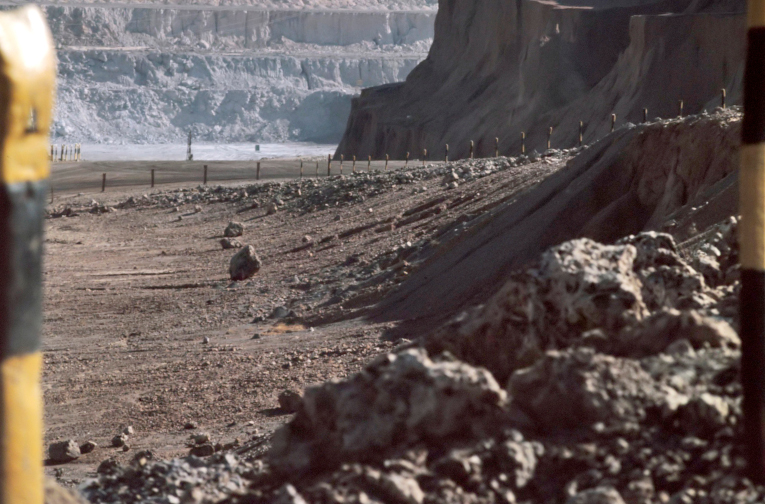
Teaser photo credit: A large industrial copper mine in Kolwezi. By Rob Mieremet / Anefo – Nationaal Archief, CC BY 4.0, https://commons.wikimedia.org/w/index.php?curid=52344322


Comments
We changed commenting systems on September 10, 2026 as part of a site-wide functionality and security upgrade. Your past comments have not disappeared, and you can still log in with your old Disqus account credentials if you wish. Contact us with any questions.
Thanks, pokiwi, I needed a note of cheer to start my day.
Reminds me of Leonard Cohen:
https://www.youtube.com/watch?v=v0nmHymgM7Y
Chuckle – go well
Thanks Mary – exactly! There isn’t enough planet to go around (not at this level of consumption, anyway) and those who are ” winning’, have no intention of letting others into the play-pen. Where I disagree, perhaps, is that I don’t see the globalised flow of money contining – and I’m not sure how long men with guns stay loyal once the pay stops. A whole different winning echelon may emerge – perhaps more ruthless than the current elite.
Actually Hardin’s Lifeboat Essay would apply, if we’re pragmatically looking at overshoot and financial freeze-up.
But I think we’ll end up being local, fast. Take away the delivery of/payment for fossil energy, and nobody moves very far. Some local leaders will hit the ground running, and they may be blessed with food-producing land at hand. Others will be dog-eat-dog (I suspect cities will be thus; no city got to be over 1 million ex fossil energy). Then there will be the raiding bands.
Read Seven Pillars of Wisdom (Lawrence) to get a feel for what that might be like. Astute author – flawed but astute.
Yes…you described exactly ..what the problem is ..thank you…👍
As long as you view certain countries as those which should survive, with others ignored/abandoned, then a Energy Transitioned future may not actually be just a green-washing* scam. This is to say, for instance, if the US sucks up all the mineral resources needed to build enough solar energy generation to keep (for instance) personal electric cars running, then a bunch of countries are required to die from having their mineral resources vacuumed-up by a few such countries (such as China) with which the imagined/fantasized “resilient and sustainable future” might be built. Whether such a future would even function is completely unknown. (It’s would likely not for a plethora of reasons.)
Trying to implement this plan would be the greatest injustice (letting some billions die). A lesser injustice would be rigid class divides within the resulting polities, if the plan even works.
*everyone’s living standard will go down in any conceivable future – and this is evidently sufficiently anathema to risk the survival of civilization – but this is usually not mentioned as a fact-of-life of any future in a horribly degraded planet.

https://www.stockholmresilience.org/research/planetary-boundaries.html
Unless the wealthiest top “consumers” of energy and that includes us–greatly reduce energy consumption–and that needed to happen years ago–we will find that either Mother Nature, or our fellow humans, and likely both of those, will do it for us. In fact, it is already happening.